
Latest News
IEA reaffirms Afghanistan’s commitment to regional peace, cooperation at Termez Dialogue
Afghanistan’s deputy FM said regional cooperation is vital for the benefit of the involved nations and for global peace and stability


Afghanistan’s Deputy Foreign Minister Mohammad Naeem says Afghanistan serves as a natural bridge between Central and South Asia and stands ready to play an active and constructive role in regional and international processes.
Delivering a formal statement at the Termez Dialogue in Uzbekistan, he also highlighted Afghanistan’s commitment to regional peace, cooperation, and sustainable development.
In his remarks, Naeem extended heartfelt gratitude to the government of Uzbekistan for hosting and initiating this regional dialogue under the theme “Creating a Shared Space for Peace, Friendship, and Prosperity.”
He praised Uzbekistan as a close neighbor and strategic partner, acknowledging the growing and unprecedented expansion of bilateral relations in recent years.
He noted that regional cooperation is vital not only for the benefit of the involved nations but also for global peace and stability, and that Afghanistan seeks to be a reliable partner in economic integration and regional connectivity.
Naeem also outlined several ongoing joint initiatives between Afghanistan and Uzbekistan, including the construction of the Afghan–Trans railway line, a vital project aimed at enhancing connectivity between Central and South Asia.
He also referenced the 500-kilovolt power transmission line from Surkhandarya to Pul-e-Khumri, expected to significantly increase Afghanistan’s access to electricity.
Additionally, he highlighted collaborative agricultural projects utilizing modern technologies and emphasized the signing of agreements worth $2.5 billion in energy, agriculture, and industrial sectors between the two nations.
These developments, he emphasized, reflect the shared commitment of both countries toward sustainable development and regional stability.
He also reaffirmed the Islamic Emirate’s foreign policy, which is grounded in economic cooperation, regional engagement, and mutual respect. He reiterated that Afghanistan’s soil would not be used against any other country and called for reciprocal treatment in this regard.
The Deputy Foreign Minister expressed Afghanistan’s readiness to actively participate in regional initiatives across infrastructure, transportation, energy, trade, education, climate change, and sustainable development.
He stressed that balanced regional development, dialogue, understanding, and trust-building are the cornerstones of meaningful and lasting progress.
Naeem urged the international community, regional states, global organizations, and financial institutions to recognize Afghanistan as a trustworthy partner and to support the country through investment in infrastructure, capacity-building, and economic development.
He concluded by reaffirming Afghanistan’s firm support for the Termez Dialogue, which he described as a significant platform for exchanging views, fostering mutual understanding, and building practical cooperation.
“We look forward to the outcomes of this dialogue paving the way for a brighter and more prosperous future for our region and our people,” Naeem stated.






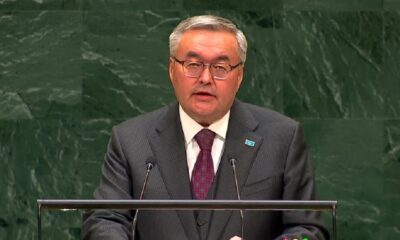

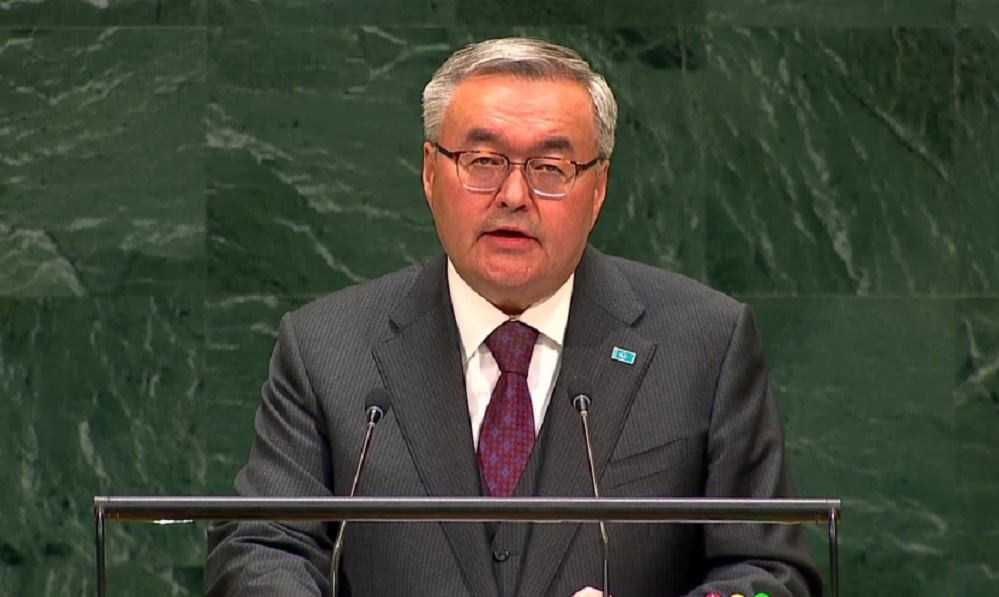
Kazakhstan’s Foreign Minister Mukhtar Tileuberdi has called for pragmatic and coordinated international engagement with Afghanistan, saying the country’s long-term stability is closely linked to the security and sustainable development of Central Asia.
Speaking during the general debate of the 81st session of the United Nations General Assembly in New York on Friday, Tileuberdi said humanitarian assistance to Afghanistan remains essential but alone cannot break the cycle of poverty, displacement and dependency.
He said Kazakhstan supports a “pragmatic, coordinated and step-by-step” approach to international engagement with Afghanistan, with the United Nations playing a central role.
Tileuberdi also said Kazakhstan is working with the UN to operationalize the United Nations Regional Centre for the Sustainable Development Goals for Central Asia and Afghanistan in Almaty.
He said the success of the centre should be measured by the results and assistance it delivers to the region.


Saar: Concerns over Pakistan’s political crisis discussed

Afghanistan Champions League: Omar Zawak Herat beat Toofan Herat 1-0

Blast in Pakistan’s Dera Ismail Khan kills 11, injures 30

Ariana Afghan Airlines increases Kabul-Delhi cargo flights

Khalilzad questions Pakistan’s commitment to Afghan welfare

Saudi energy group signs major Afghanistan deals covering gas exploration and pipeline plans

Trump floats idea of renaming Atlantic or Pacific Ocean

US hits Egyptian bank branches with Iran sanctions as war marks six months

Nepal flood rescue mission enters critical phase as thousands remain missing

Iranian clubs to face Gulf opponents at neutral venues in Asian Champions League Elite
Saar: Concerns over Pakistan’s political crisis discussed

Exclusive interview with Abdul Latif Mansoor, Minister of MRRD

Tawsia: Overview of Afghanistan’s iron mines

Tahawol: Discussion on fresh Pakistani airstrikes on Afghanistan

Saar: Calls for international support for Afghanistan discussed
-

 World5 days ago
CNN, MS NOW and Politico sue Trump, challenging White House ban
-

 Latest News3 days ago
Ariana Afghan Airlines ranks seventh among 45 Central Asian airlines
-

 Latest News4 days ago
UN reiterates call for respect for international law after Kunar airstrikes
-

 Regional3 days ago
US and Iran hold first talks since June after Trump’s ‘annihilation’ threat
-

 Latest News3 days ago
Silk Road highway in Wakhan corridor now reaches the China border
-

 Latest News4 days ago
Afghan Official: Pakistan’s airstrikes will not go unanswered
-
 Regional4 days ago
G7 foreign ministers call on Iran to stop arming Houthis
-

 Sport4 days ago
Afghan boxing referee heads to China for international festival