
Regional
IRGC intelligence chief killed as wave of strikes continues against Iran’s leadership
The killings come against the backdrop of a rapidly intensifying conflict that began with large-scale strikes in late February and has since expanded across multiple fronts.

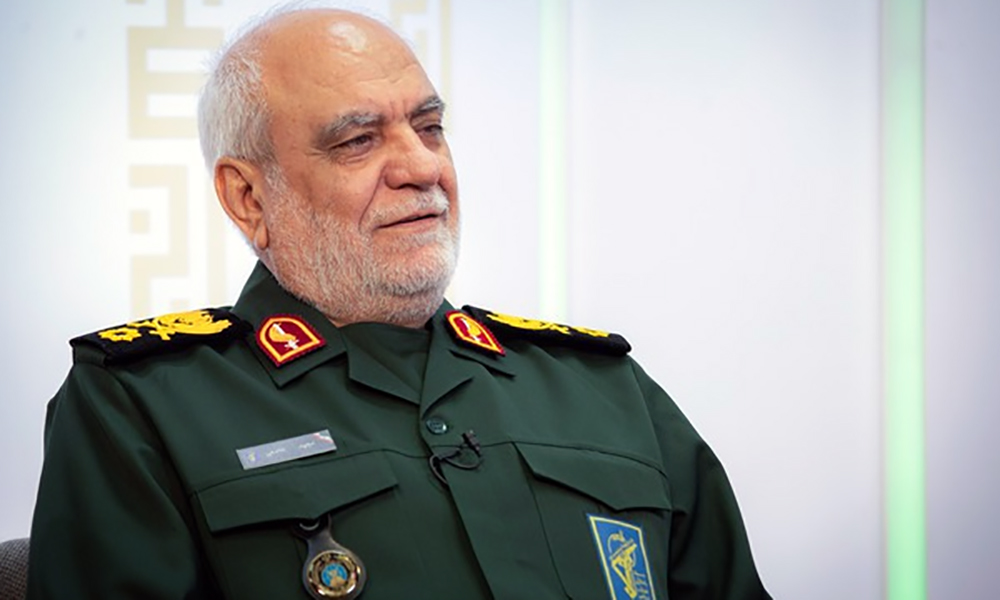
Iran has confirmed the death of Major General Majid Khademi, head of intelligence for the Islamic Revolutionary Guard Corps, in what analysts describe as the latest in a series of high-level killings targeting the country’s security leadership.
State media reported Khademi’s death on April 6 but did not immediately provide details on the circumstances. However, regional and Western sources say he was killed in a targeted strike, underscoring an intensifying campaign against senior Iranian officials amid escalating tensions in the Middle East.
Khademi had only recently taken up the role, replacing his predecessor Mohammad Kazemi, who was himself killed in a similar strike in 2025. The back-to-back deaths of intelligence chiefs highlight what observers see as a sustained effort to weaken Iran’s internal security and command structures.
Series of senior figures killed
Khademi’s killing comes amid a broader wave of assassinations and airstrikes that have removed several high-ranking Iranian figures in recent months.
Among those reported killed:
Ali Larijani, a senior political figure and former head of the Supreme National Security Council, reportedly died in an airstrike earlier this year; Gholamreza Soleimani, a key figure in Iran’s paramilitary Basij forces, was also reported killed in targeted operations; several other commanders linked to the IRGC and its external arm, the Quds Force, have been killed in strikes both inside Iran and across the region.
The killings come against the backdrop of a rapidly intensifying conflict that began with large-scale strikes in late February and has since expanded across multiple fronts. Military exchanges, including missile and drone attacks, have raised fears of a broader regional war.
Analysts say the apparent strategy of targeting senior leadership is aimed at disrupting Iran’s ability to coordinate military and intelligence operations. However, they warn it could also provoke further retaliation and deepen instability across an already volatile region.
Leadership strain and uncertainty
The loss of multiple senior figures in a short period has raised concerns about continuity within Iran’s leadership, particularly within the IRGC, which plays a central role in the country’s security and political system.
While Iranian authorities have moved quickly to appoint replacements, experts say repeated losses at the top level could affect decision-making and operational effectiveness, even as hardline factions appear to be consolidating influence.
For now, the killing of Khademi underscores the intensity of the ongoing conflict and highlights the growing risks facing Iran’s leadership, as the confrontation shows little sign of easing.



Regional
Iran says new sanctions threatened by ‘desperate’ US will fail
While Iran remains defiant, President Masoud Pezeshkian has also called for a diplomatic solution.
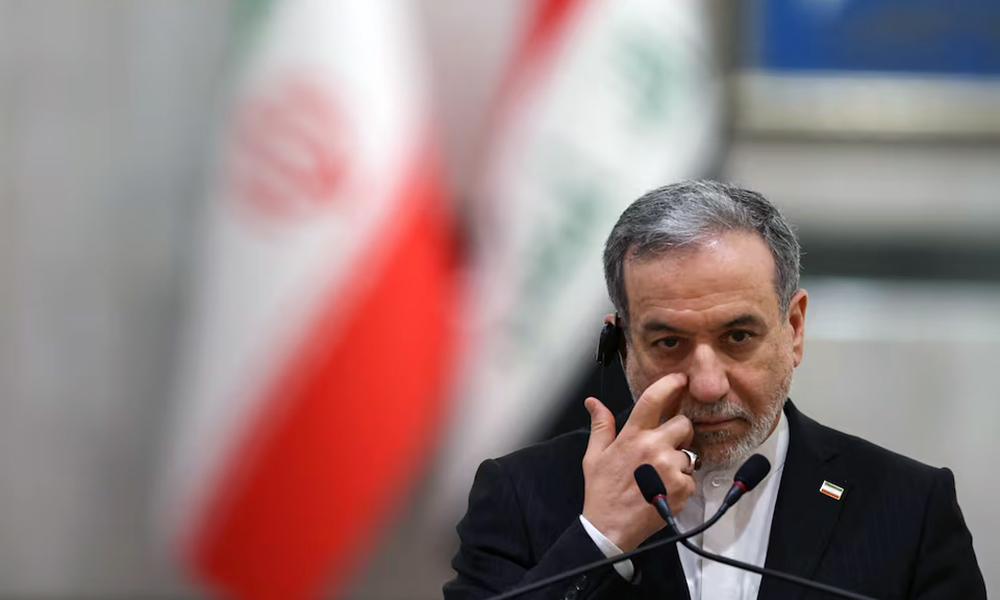
Iran’s foreign minister dismissed the threat of new US sanctions as a sign of desperation on Sunday and said the expected new measures would fail to defeat Tehran, Reuters reported.
US Treasury Secretary Scott Bessent, who is due to hold a press conference at 2 p.m. EDT (1800 GMT) on Monday, has threatened to impose “the toughest sanctions in history” on Iran.
Iran’s economy is already under huge pressure from international sanctions, its infrastructure has been hit repeatedly and thousands of people have been killed in airstrikes on the Islamic Republic since the U.S. and Israel launched attacks on February 28.
But Tehran remains defiant after nearly six months of war and has brought shipping to a virtual standstill in the Strait of Hormuz, refusing to allow unauthorized oil tankers to transit a waterway that is vital for global oil shipments. The effective blockade of the strait has pushed up global oil prices.
Describing what he said were “repetitive scenarios”, Iranian Foreign Minister Abbas Araqchi said in a video posted on Telegram: “The fact that they (US leaders) have moved on from military operations … to bring up the same old plans shows that they are desperate.”
He said Washington must speak to Iran respectfully to find “a solution based on justice and honour.”
“We have never been afraid. All of their actions – whether blockades or other military moves they have made – have failed, and this new issue of theirs will fail as well,” he said.
US President Donald Trump has warned of economic consequences against any country that provides “any type of lifeline to Iran” and Bessent has urged cooperation with Washington by China, which buys more than 80% of Iran’s shipped oil, according to 2025 data from analytics firm Kpler. China has urged diplomacy.
Iran said Pakistan’s army chief, Asim Munir, would visit Tehran on Monday as part of efforts to restore peace and security in the region, but gave few details.
Pakistan has been mediating in the conflict and a Pakistani government source said Munir would touch on recent developments including the U.S. threat of new sanctions.
Trump said on Friday that Washington was observing “what happens” in the conflict, read the report.
“They would love to make a deal, but they’re not ready to make the right deal, in my opinion,” Trump said of Iran.
US attacks have severely diminished Iran’s economy and devastated its navy and air force, but Tehran maintains enough missile and drone capability to impede oil tanker traffic and attack regional rivals.
Iranian Parliament speaker Mohammad Baqer Qalibaf said on Saturday that Tehran had received “numerous messages” from neighbouring countries about establishing new regional security arrangements and economic cooperation.
Qalibaf did not say which countries he was referring to. He accused the US of endangering the security of its allies in the region for the sake of Israel, adding that an independent, “homegrown” regional order would deliver peace and security.
Trump has yet to achieve objectives he set at the start of the war such as dismantling Iran’s nuclear programme — the state of which remains uncertain given that U.N. inspectors have been shut out since 2025 — and creating conditions for Iranians to overthrow their clerical rulers.
While Iran remains defiant, President Masoud Pezeshkian has also called for a diplomatic solution.
“It would be better to end the war today, when we are powerful and have dignity, and the whole world acknowledges our victory and emphasizes that America, contrary to all regulations, attacked our schools, hospitals, and infrastructure and is hated in the world,” the ISNA news agency quoted him as saying on Friday.
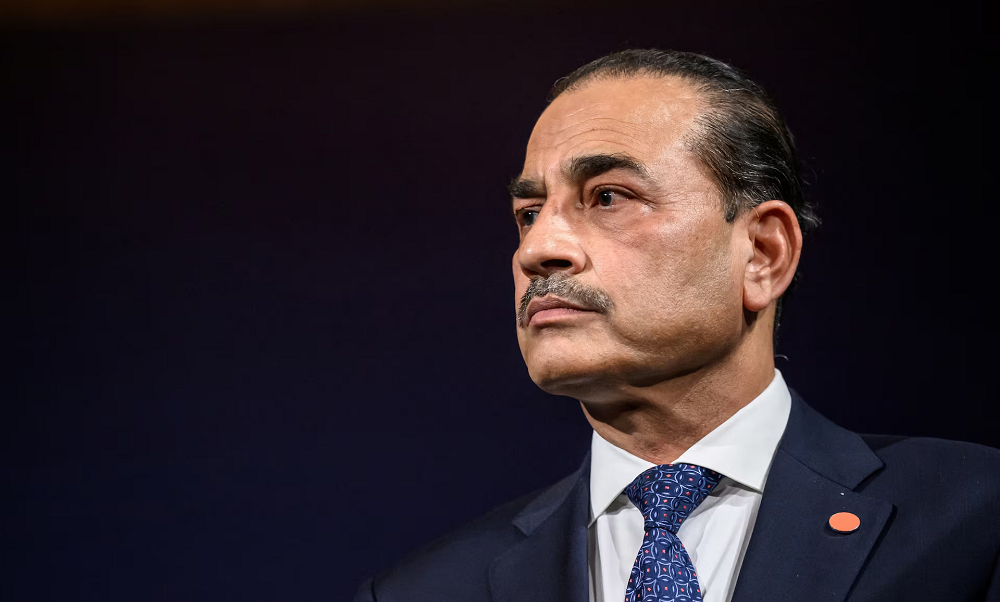
Pakistan’s army chief Asim Munir will visit Tehran on Monday to continue efforts to bring peace and security to the region, Iran’s foreign ministry spokesperson Esmaeil Baghaei said on Sunday, according to a statement by the ministry.
Pakistan has taken on a mediator role in negotiations between Iran and the U.S. aimed at ending the war which began with U.S. and Israeli strikes on Iran in February.
Two Pakistani government sources confirmed Munir’s visit to Reuters. The first source said that Iran and Pakistan were in direct contact.
A second source said the talks would also address recent developments in the conflict, including U.S. President Donald Trump’s threat of tougher sanctions on Iran.
“He (Munir) will discuss peace under Islamabad’s MoU, Trump’s warning and the situation after the Pakistan-Turkey-Saudi Arab Agreement and Houthi issues with Iranian leaders,” the source said.
The visit comes amid heightened tensions as Iran threatens a military response to U.S. plans for sanctions that could further put a strain on the Islamic Republic’s ailing economy.
It will coincide with a Monday announcement on details related to the planned sanctions which U.S. officials have said would be “the toughest sanctions in history” on Iran.
Trump had warned of economic consequences against any country that provided “any type of lifeline to Iran” as he seeks to isolate the Islamic Republic.
Oil shipments are at a virtual standstill in the Strait of Hormuz, with Tehran threatening to strike any unauthorized oil tankers that try to transit the vital waterway, and Iran’s economy is already under immense pressure from sanctions.
Regional
Iran grants permission for a number of Iraqi oil tankers to pass through Hormuz
Iraq produced around 4 million barrels of oil per day before the outbreak of the Iran war.
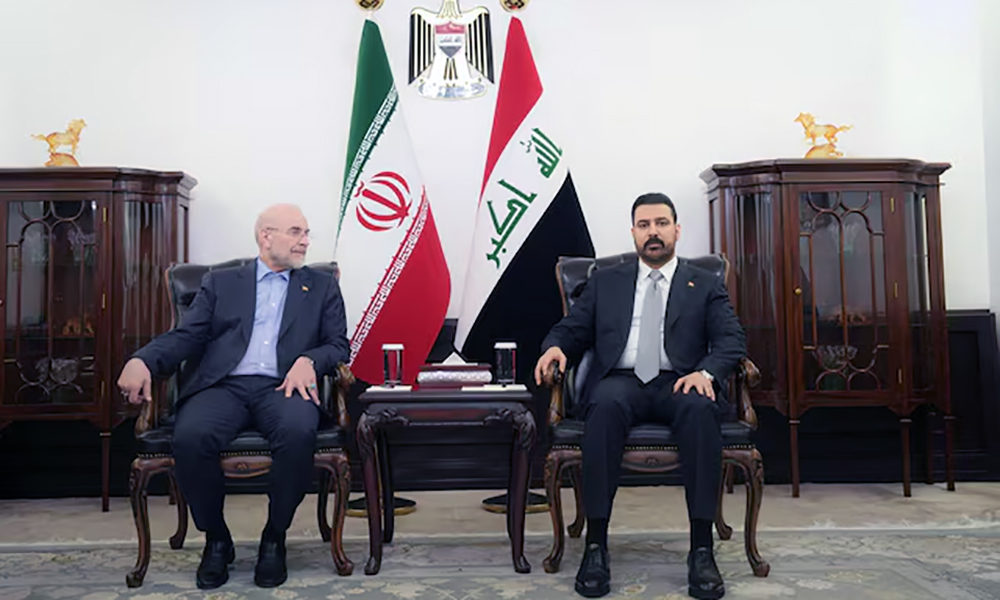
Iran has granted permission for a number of Iraqi oil tankers to pass through the Strait of Hormuz following repeated requests from Baghdad through various channels, Iran’s state news agency IRNA reported on Saturday.
IRNA said obtaining special permission for Iraqi tankers was one of Baghdad’s main requests during Iranian parliament speaker Mohammad Baqer Qalibaf’s visit to Iraq.
Iraqi President Nizar Amedi said on Saturday that Iran had facilitated the passage of vessels carrying Iraqi oil through the Strait in recent days and Baghdad had discussed the export of Iraqi oil through Hormuz with Iranian officials.
The issue remained complicated, he added, speaking at the Baghdad Dialogue policy conference.
Iraq has been among the countries most affected by Iran’s effective closure of the Strait of Hormuz. Traffic in the strait remains significantly below pre-war levels and ships continue to face attacks in the area.
Iraq produced around 4 million barrels of oil per day before the outbreak of the Iran war.
Baghdad is working to expand its exports through Turkey’s Ceyhan port and also to begin exporting oil through Syria’s Baniyas port and Jordan’s Aqaba port, Prime Minister Ali al-Zaidi said on Friday.


Afghanistan unveil squad for three-match T20I series against India

Afghanistan added to Asian Cricket Council presidency rotation

SCO summit to be held without confirmed Afghan invitation

Former US ambassador says Washington could eventually reopen embassy in Kabul

Afghanistan’s polio cases rise to 19 in 2026, WHO says

Pakistan’s governance system has ‘collapsed’: Mohsin Naqvi

Afghanistan exports first stone shipment to US in $100,000 trade milestone

AFC confirms clubs for 2026/27 competitions; draw set for August 18

Only two days to go before Afghanistan and Ireland begin ODI series

Iran seeks to establish free trade zone with Afghanistan and China

Tahawol: IEA seeking Afghanistan seat at UN

Saar: U.S. sanctions against Iran

Saar: Ongoing return of Afghan refugees from Iran and Pakistan discussed

Tahawol: Expansion of IEA’s diplomatic ties with countries discussed

Saar: Ongoing tensions between Iran and US discussed
-
 Latest News2 days ago
Syria and Saudi Arabia condemn Kabul bombing, express solidarity with Afghanistan
-
 Latest News1 day ago
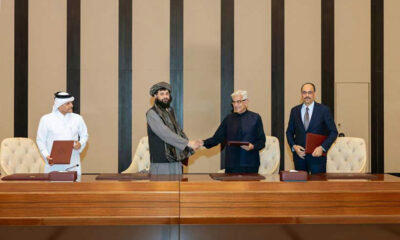
Four mediators struggle to secure lasting Pakistan-Afghanistan ceasefire
-

 Latest News2 days ago
US judge strikes down Trump visa suspension for 75 countries, including Afghanistan
-
 Latest News3 days ago
Qatar and UAE condemn Kabul school bombing that injured dozens
-
 Latest News2 days ago
Achakzai urges Pakistan to end hostility towards Afghanistan
-
 Latest News4 days ago
Pakistan needs national dialogue on Afghan policy: security expert
-
 Science & Technology4 days ago
Ministry of Communications signs contract with AWCC to build 31 telecom towers
-

 Sport2 days ago
Afghanistan-India T20I series could see major schedule change