
Regional
US says it will impose ‘toughest sanctions in history’ on Iran
Iran has weathered near-continuous, punishing economic sanctions for nearly 50 years, since the Islamic Revolution of 1979.

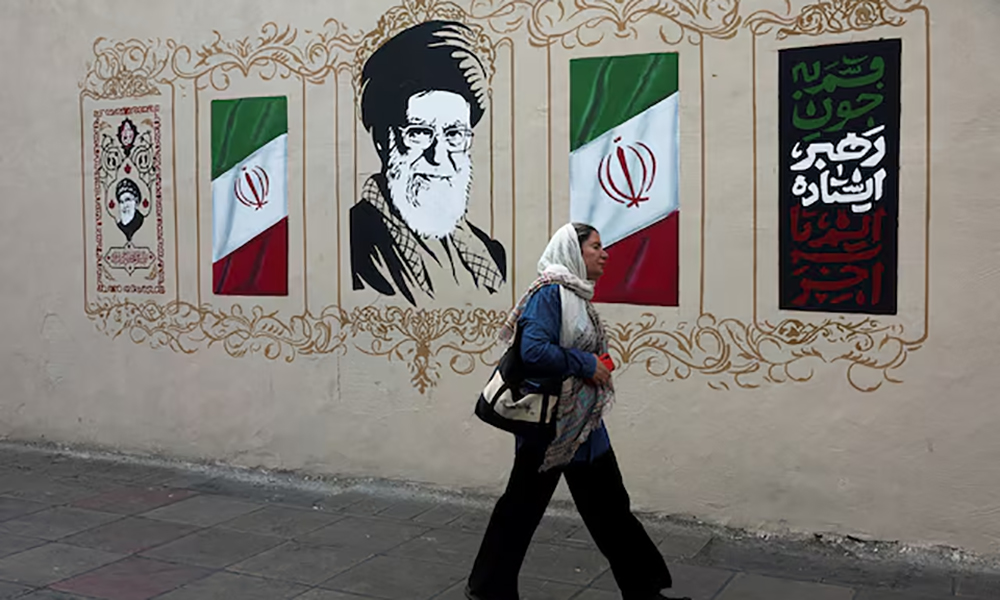
U.S. Treasury chief Scott Bessent said the United States will impose “the toughest sanctions in history” on Iran, a move he suggested would lessen the need for new major military operations, Reuters reported.
Bessent’s comments on Thursday followed President Donald Trump’s threat a day earlier of “Economic Warfare” and warning of economic consequences against any country that provided “any type of lifeline to Iran.” Bessent promised details next week.
Oil prices rose to more than a three-week high on Thursday following those U.S. threats of financial penalties aimed at forcing an end to a nearly six-month-old war that has stranded millions of barrels of Middle Eastern oil.
“I’m not sure why oil has popped up on this,” Bessent told CNBC. “If we are doing the maximum economic pressure, then that means that likely there will not be a large-scale kinetic restart,” he said, using a term referring to military force.
Thousands have been killed in the conflict, which drew in Gulf nations and shocked markets as Iran flexed its ability to curb shipping through the Strait of Hormuz — a waterway that carried about a fifth of all traded oil before February.
The U.S. and Iran have twice announced ceasefire deals, in April and June, aiming to restore the free flow of shipping through Hormuz on a path towards ending the conflict, but both quickly crumbled, read the report.
Iran has weathered near-continuous, punishing economic sanctions for nearly 50 years, since the Islamic Revolution of 1979.
Before Bessent spoke, Iran’s foreign ministry said it condemned U.S. economic and trade sanctions, calling them “economic terrorism” that would not “create even the slightest hesitation in Iranians’ determination to safeguard Iran’s independence, dignity and national sovereignty.”
Bessent told CNBC he would share more details on the latest package and “talk about exactly what we’re going to do” on Iran at a press conference on Monday.
“It is a one-two punch. We have the blockade (on Iran), and we are going to have the toughest sanctions in history,” he added, referring to a U.S. naval blockade imposed on Iran in April and paused for a month in mid-June.
“It is going to work in Iran and we are going to collapse this regime. It is time for our allies and the rest of the world to make a decision,” he said.
China buys more than 80% of Iran’s shipped oil, according to 2025 data from analytics firm Kpler, but engaging in further economic warfare with China, a major exporter to the U.S. including vital rare-earth minerals, risks retaliation against Washington.
When asked if the United States could target China for doing business with Iran, Bessent said many conversations were best to have in private.
“Keep in mind that the Chinese get 50% (of their) energy… from the Gulf. So it would do them a big service to get with the program,” he said.
China’s embassy in Washington said “sanctions and pressure do not help resolve the problem.”
“China calls on the relevant parties to take responsible actions and resolve the issue through political and diplomatic means,” according to an embassy spokesperson.
In a social media message on Wednesday, Trump promised “Economic Warfare and Isolation on an unprecedented scale.” He did not say what specific steps the U.S. would take or name any country, though the warning would appear to extend to U.S. allies that have helped mediate peace talks.
“ANY country that allows its financial institutions, businesses, airports, or government entities to provide any type of lifeline to Iran will itself face TREMENDOUS Economic Consequences,” Trump wrote.
Trump, however, is under pressure at home to end the unpopular war, with high fuel prices dragging down his approval ratings and potentially threatening his party’s control of Congress in midterm elections in November, Reuters reported.
Iranian Foreign Minister Abbas Araqchi called Trump’s comments an attempt to divert American public opinion from domestic financial problems, including record debt and rising interest rates.
He said Washington’s insistence on policies he described as failed would bring further failures and alienate Iranians.
Trump’s social media threats and announcements are not always implemented as written.





Regional
Yemeni government launches offensive to seize all areas from Iran-backed Houthis
As the Yemeni government, known as the Presidential Leadership Council, made its announcement, the Houthis said they had launched ballistic missiles and drones at Saudi Aramco sites in Riyadh and the Khurais area of Saudi Arabia.
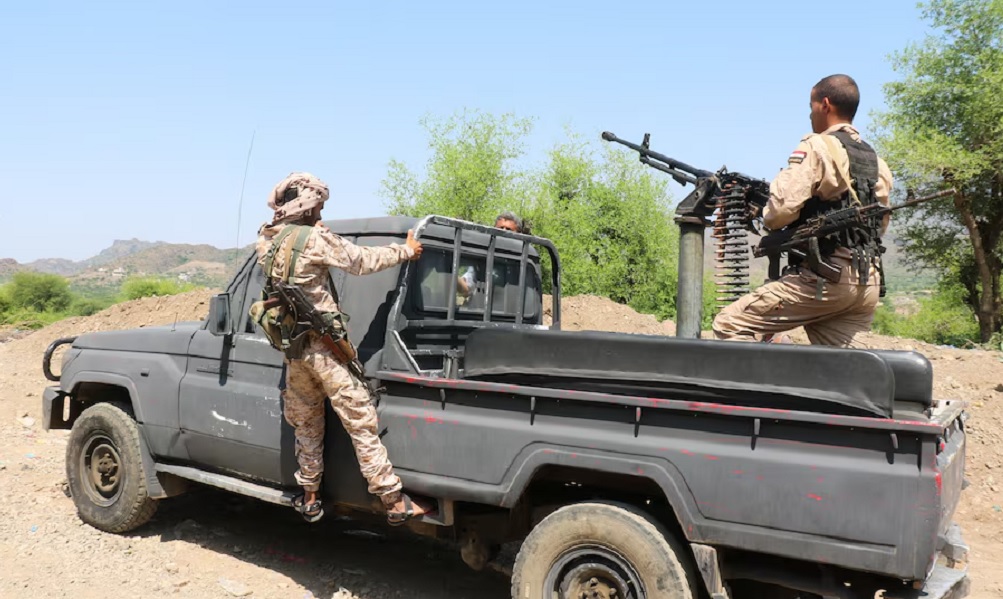
Yemen’s Saudi-backed, internationally recognised government said on Sunday it was launching a major military campaign to recapture all areas of the country controlled by the Iran-backed Houthis.
The government’s armed forces would press the offensive “until the country is liberated from the grip of the terrorist militia,” Yemeni President Rashad al-Alimi said in a televised address. A military spokesman later called on the Houthis to lay down their weapons, Reuters reported.
The Houthis, known formally as Ansar Allah, have held Yemen’s capital Sanaa and vast parts of the northwest, where most of the population live, since 2014. They have so far withstood a series of attacks over the years by Saudi Arabia, the UAE and their Western allies, and have updated their weaponry with the help of Iran.
The movement launched a surprise offensive last month which captured the strategic Bab el-Mandeb strait and some 150 km (90 miles) of coast on the Red Sea in a matter of weeks, giving the Houthis new leverage over the international shipping route.
That advance also opened a new front in the wider US-Israeli war launched in February against Iran, to which Tehran’s responses included choking oil shipping through the Strait of Hormuz to the other side of the Arabian Peninsula.
HOUTHIS SAY THEY STRUCK SAUDI ARABIA
As the Yemeni government, known as the Presidential Leadership Council, made its announcement, the Houthis said they had launched ballistic missiles and drones at Saudi Aramco sites in Riyadh and the Khurais area of Saudi Arabia.
They claimed the attacks caused major fires and were in response to what they said were 50 Saudi-led air and missile strikes in Yemen in the past 12 hours.
There was no immediate confirmation from Saudi Arabia.
Alimi said the decision to launch the counteroffensive came after all chances of de-escalating the conflict had been exhausted.
He thanked Saudi Arabia for its support and called on Yemen’s regional allies and international partners to support PLC forces and institutions.
Regional and western officials had told Reuters earlier this week that Saudi Arabia and its Yemeni allies were planning to launch an assault on the Houthis, with the Saudis leading aerial combat and Yemeni forces fighting on the ground.
NEW FRONT IN MIDEAST WAR
The US is already providing intelligence to support Riyadh’s operations in Yemen, while some regional and European nations are providing mainly defensive military aid to the kingdom, six people with knowledge of the Saudi preparations told Reuters.
The United States’ war on Iran has decimated a layer of Iranian military and political leadership, but has also entangled Washington in a new engagement in the Middle East and depleted crucial military hardware.
Yemen has been mired in conflict for years, with an array of local armed groups and factions backed by competing regional and international actors.
After a popular uprising that was part of the Arab Spring movements in 2011, the Houthis, an armed group of Zaidi Shi’ite Muslims, captured Sanaa.
The Saudi-backed PLC, which is also recognised by the United Nations, has since the Houthi takeover controlled the south and east of the country, based in the former South Yemen capital of Aden.
Saudi Arabia entered Yemen’s civil war in 2015 at the head of an Arab coalition in support of the PLC, but failed to defeat the Houthis.
A truce agreed between the warring parties in 2022 largely held until this year, when the Houthis launched missile and drone attacks on Saudi shipping and oil infrastructure in a spillover from the Iran war.
HOUTHIS ON FRONT FOOT
The Houthis have maintained the initiative on the ground since seizing control of the Bab el-Mandeb Strait in their lightning offensive last month that saw government forces collapse.
Bab el-Mandeb is the southern exit passage of the Red Sea, a key shipping route between the Mediterranean and Asia that has assumed even more importance this year as an alternative to the Strait of Hormuz.
In the last 48 hours, the Houthis have also made gains against government and local forces on strategic hilltops near Yemen’s Taiz, military sources said, advancing on the last road between the city and Aden on the southern coast.
Houthi control over the Taiz-Aden road would lead to an effective siege of the city, Yemen’s third-largest, inhabited by hundreds of thousands of civilians and where thousands of government forces are also stationed.
The city is important not just for its strategic location; Alimi is from the region, and a siege of Taiz would amplify an already-dire humanitarian situation in the country.
Three in four families in parts of Yemen are going hungry from the impact of the surge in fighting, which has displaced tens of thousands of people and disrupted supplies to millions, the World Food Programme said last week.
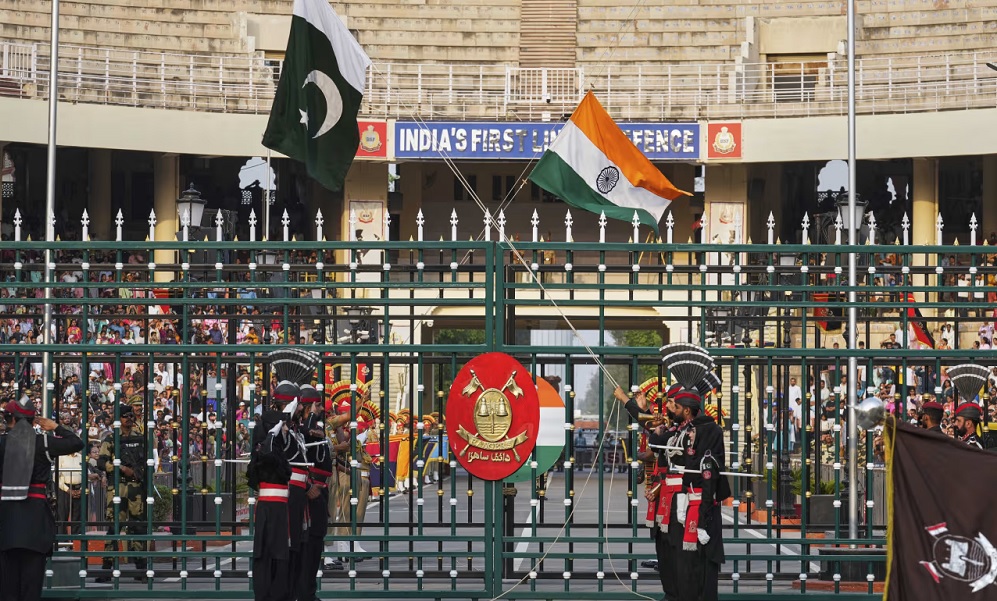
India and Pakistan summoned each other’s top diplomats on Saturday over a border incident on October 2, with New Delhi rejecting Islamabad’s allegation that Indian forces had killed two unarmed Pakistani civilians and saying those involved had crossed illegally into Indian territory.
Pakistan’s foreign ministry said earlier on Saturday that personnel from India’s Border Security Force had used “unprovoked lethal force” against two unarmed Pakistani civilians in the Bedian sector along the international border on Friday, Reuters reported.
“Pakistan categorically rejects any attempt to mischaracterize the deceased as ‘infiltrators’,” the ministry said in a statement.
Pakistan said it had summoned India’s chargé d’affaires to lodge a protest over the incident and called for an “immediate, transparent and credible investigation”.
India’s foreign ministry later rejected what it called “baseless and motivated allegations” and said it had summoned the chargé d’affaires of the Pakistan High Commission to protest at the “continued facilitation of illegal cross-border infiltration from Pakistan”.
The ministry said three people had crossed into Indian territory in the Ferozepur sector of Punjab and continued moving towards the border fence despite multiple warnings from the BSF to return to Pakistan.
“The BSF was compelled to engage them for posing an imminent security threat,” the ministry said.
India said the incident reflected “a clear pattern of repeated cross-border movement by armed narcotics syndicates operating from Pakistan” and urged Islamabad to investigate what it described as cross-border infiltration and drug-smuggling activities.
India also urged Pakistan to respect the international border, observe bilateral arrangements and ensure its forces prevented unauthorised movement from its side.
Relations between the two nuclear-armed rivals have been strained since a four-day war in 2025, the worst in decades, followed by a militant attack on tourists in Indian Kashmir that killed 26 people.
New Delhi accused Pakistan of backing the attack, which Islamabad denied.
Regional
Pakistan says Mecca pact members to hold emergency talks on engaging Houthis
More than six countries are keen to join the pact, Dar said, without naming them or saying whether all were Muslim-majority nations. New membership requests cannot be entertained until the pact is fully operational, which could take up to a year, he added.
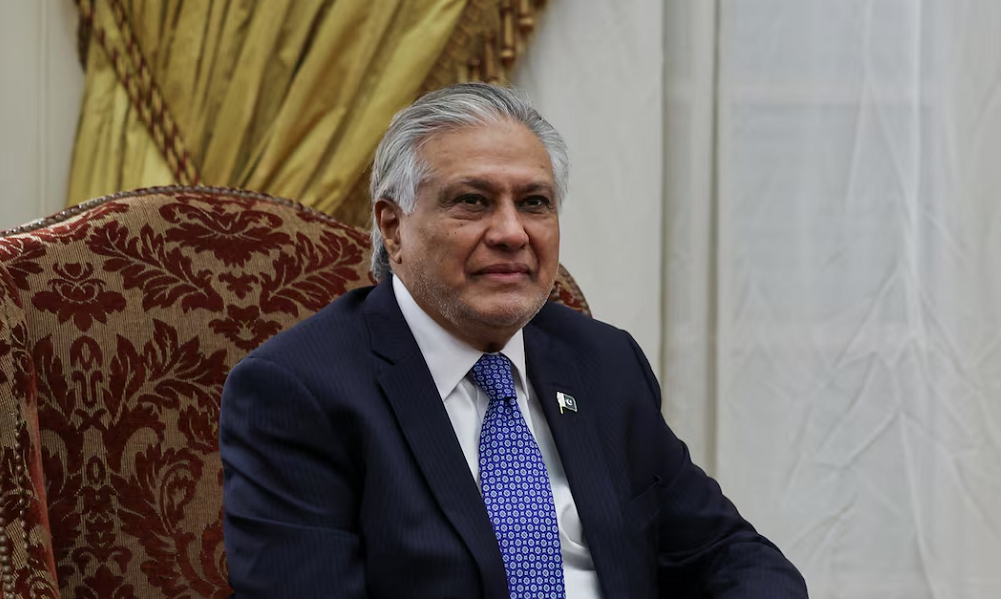
Pakistan’s foreign minister said Iran has suggested engaging Yemen’s Houthis politically after attacks by the group, an idea a committee of the Mecca defence pact will discuss at an emergency meeting in Riyadh next week.
The proposal comes as Saudi Arabia, which has accused the Houthis of targeting Islam’s two holiest cities, faces escalating attacks, Reuters reported.
Saudi Arabia, Turkey and Pakistan, the pact’s three members, will decide next steps at the meeting, Foreign Minister Ishaq Dar told a news conference. He said the date would be confirmed later.
Dar said Iran had distanced itself from the Houthis and Iraqi militias, and that President Masoud Pezeshkian and Foreign Minister Abbas Araqchi both want the matter concluded. He said he had also briefed Tehran on the defence pact and how Pakistan would honour it.
“There is no written, solid offer. It is brainstorming between two foreign ministers,” Dar said, describing the political approach as a suggestion made in good faith. It would be discussed as an alternative to “kinetic action”.
More than six countries are keen to join the pact, Dar said, without naming them or saying whether all were Muslim-majority nations. New membership requests cannot be entertained until the pact is fully operational, which could take up to a year, he added.
Saudi Arabia, Turkey and Pakistan signed the Mecca Joint Defence Agreement on August 7, pledging to treat an armed attack on any one of them as an attack on all three. Their military chiefs met in Riyadh on September 25 and condemned Houthi attacks.
Pakistan’s military said in a statement on Friday that its top commanders strongly condemned Houthi attacks on Saudi Arabia, expressing solidarity with the kingdom and commitment to the security of Islam’s holy sites.
Dar also said there should be no fee or charges to cross the Strait of Hormuz. The blockaded strait has become the central bargaining chip in efforts to end the nearly seven-month US-Iran conflict.


Omar Zawak beat Ariana FC 2-0 in Afghanistan Champions League clash

UN envoy urges progress on women’s rights during Afghanistan visit

Muttaqi, Lavrov discuss expanding Afghanistan-Russia ties

ACL: Abu Muslim Farah maintain momentum with 2-0 win over Arman FC

Tahawol: Afghanistan-Iran: shared opportunities and challenges discussed

Saudi energy group signs major Afghanistan deals covering gas exploration and pipeline plans

Khalilzad: Afghanistan ready to attract major investment

Messi returns to Inter Miami after Argentina retirement

Imam Abu Hanifa exhibition to draw exhibitors from more than 20 countries

Maryam Nawaz says Punjab faces greater security threats from neighbouring provinces
Tahawol: Afghanistan-Iran: shared opportunities and challenges discussed

Saar: Pakistan’s hostile policy toward Afghanistan discussed

Tahawol: Doha process seeks new cooperation opportunities

Saar: Moscow forum 8th consultative meeting on Afghanistan

Tahawol: Escalation of internal political crisis in Pakistan discussed
-
 Latest News4 days ago
Four members of one family killed in Helmand in Pakistan airstrike
-
 Sport3 days ago
ACB announces Afghanistan squads for Bangladesh, Zimbabwe series
-
 Latest News5 days ago
Moscow to host 8th meeting of Afghanistan consultations on October 5
-

 Latest News3 days ago
Russia expects to ease Afghanistan-Pakistan tensions at Moscow Format meeting
-

 Sport4 days ago
Rashid Khan, Azmatullah Omarzai maintain top spots in ICC ODI rankings
-

 International Sports4 days ago
Afghanistan to face Pakistan, India and Australia at 2027 Cricket World Cup
-
 Regional4 days ago
Saudi-led coalition says Houthis attacked power station for Prophet’s Mosque in Medina
-
 Regional3 days ago
Cargo stacks up as Pakistan seizes containers to block capital routes