
Latest News
ISIS Leader Abu Bakr Al-Baghdadi Killed By U.S. Forces

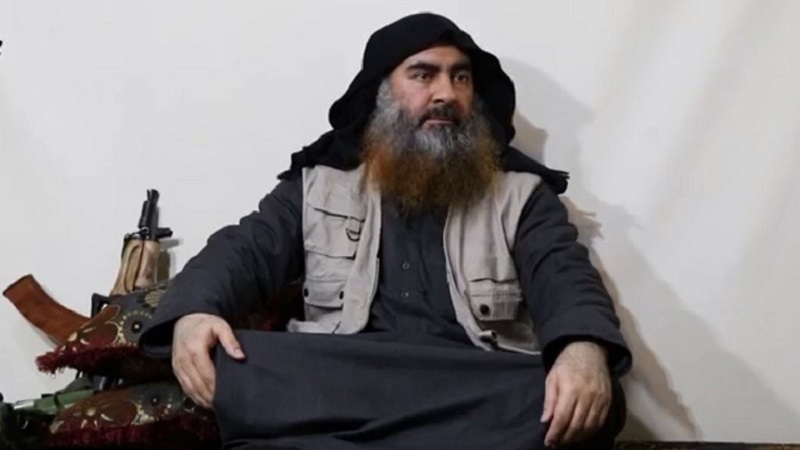
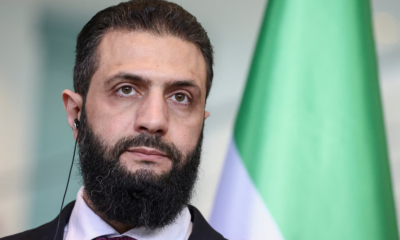
Abu Bakr Al-Baghdadi, the leader of the Islamic State (IS) group was killed in an operation by U.S. forces in Syria, U.S. media reported.
A U.S. official told The Associated Press late Saturday that al-Baghdadi was targeted in Syria’s northwestern Idlib province. The official said confirmation that the IS chief was killed in an explosion is pending. No other details were available. The official was not authorized to discuss the strike and spoke on condition of anonymity.
Meanwhile, sources have told CNN that Al-Baghdadi is believed to have detonated a suicide vest during the raid.
U.S. President Donald Trump has shared a puzzling tweet saying, “Something very big just happened!”
The White House said that Trump would be making a “major statement” on Sunday in this regard.
The Syrian Observatory for Human Rights, a Syria war monitor, reported an attack carried out by a squadron of eight helicopters accompanied by a warplane belonging to the international coalition on positions of the Hurras al-Deen, an al-Qaida-linked group, in the Barisha area north of Idlib city, after midnight on Saturday. IS operatives are believed to be hiding in the area, it said.
It said the helicopters targeted IS positions with heavy strikes for about 120 minutes, during which jihadists fired at the aircraft with heavy weapons. The Britain-based Observatory, which operates through a network of activists on the ground, documented the death of 9 people as a result of the coalition helicopter attack. It is not yet known whether al-Baghdadi is one of them, it said, adding that the death toll is likely to rise due to a large number of wounded.
Al-Baghdadi’s presence in the village, which is a few kilometers away from the Turkish border, would come as a surprise, even if some IS leaders are believed to have fled to Idlib after losing their last territories in Syria to U.S.-allied Kurdish forces in March. The surrounding areas are largely controlled by a rival of the Islamic State group — the al-Qaida-linked Hayat Tahrir al-Sham, or HTS — although other jihadi groups sympathetic to IS operate there. Unverified video circulated online by Syrian groups appeared to support the Observatory claim that the operation occurred in Barisha.
Al-Baghdadi has led IS for the last five years, presiding over its ascendancy as it cultivated a reputation for beheadings and attracted hundreds of thousands of followers to a sprawling and self-styled caliphate in Iraq and Syria. He remained among the few IS commanders still at large despite multiple claims in recent years about his death and even as his so-called caliphate dramatically shrank, with many supporters who joined the cause either imprisoned or jailed.
His exhortations were instrumental in inspiring terrorist attacks in the heart of Europe and in the United States. Shifting away from the airline hijackings and other mass-casualty attacks that came to define al-Qaida, al-Baghdadi and other IS leaders supported smaller-scale acts of violence that would be harder for law enforcement to prepare for and prevent.
They encouraged jihadists who could not travel to the caliphate to kill where they were, with whatever weapon they had at their disposal. In the U.S., multiple extremists have pledged their allegiance to al-Baghdadi on social media, including a woman who along with her husband committed a 2015 massacre at a holiday party in San Bernardino, California.
With a $25 million U.S. bounty on his head, al-Baghdadi has been far less visible in recent years, releasing only sporadic audio recordings, including one just last month in which he called on members of the extremist group to do all they could to free IS detainees and women held in jails and camps.
The purported audio was his first public statement since last April when he appeared in a video for the first time in five years.
In 2014, he was a black-robed figure delivering a sermon from the pulpit of Mosul’s Great Mosque of al-Nuri, his only known public appearance. He urged Muslims around the world to swear allegiance to the caliphate and obey him as its leader.
“It is a burden to accept this responsibility to be in charge of you,” he said in the video. “I am not better than you or more virtuous than you. If you see me on the right path, help me. If you see me on the wrong path, advise me and halt me. And obey me as far as I obey God.”
Though at minimum a symbolic victory for Western counterterrorism efforts, his death would have an unknown practical impact on possible future attacks. He had been largely regarded as a symbolic figurehead of the global terror network and was described as “irrelevant for a long time” by a coalition spokesman in 2017.
Al-Baghdadi was born Ibrahim Awwad Ibrahim Ali al-Badri al-Samarrai in 1971 in Samarra, Iraq, and adopted his nom de guerre early on. Because of anti-U.S. militant activity, he was detained by U.S. forces in Iraq and sent to Bucca prison in February 2004, according to IS-affiliated websites.
He was released 10 months later, after which he joined the al-Qaida branch in Iraq of Abu Musab al-Zarqawi. He later assumed control of the group, known at the time as the Islamic State of Iraq.
After Syria’s civil war erupted in 2011, al-Baghdadi set about pursuing a plan for a medieval-style Islamic State, or caliphate. He merged a group known as the Nusra Front, which initially welcomed moderate Sunni rebels who were part of the uprising against Syrian President Bashar Assad, with a new one known as the Islamic State of Iraq and the Levant. Al-Qaida’s central leadership refused to accept the takeover and broke with al-Baghdadi.
Al-Baghdadi’s fighters captured a contiguous stretch of territory across Iraq and Syria, including key cities, and on June 2014, it announced its own state — or caliphate. Al-Baghdadi became the declared caliph of the newly renamed Islamic State group. Under his leadership, the group became known for macabre massacres and beheadings —often posted online on militant websites — and strict adherence to an extreme interpretation of Islamic law.
Over the years, he has been reported multiple times to have been killed, but none has been confirmed. In 2017, Russian officials said there was a “high probability” he had been killed in a Russian airstrike on the outskirts of Raqqa, but U.S. officials later said they believed he was still alive.








Latest News
Eight dead after 5.8-magnitude earthquake hits Afghanistan
The family members who perished included a father, mother, four daughters, and two sons. In addition to the deaths, a child was reported injured in the incident.
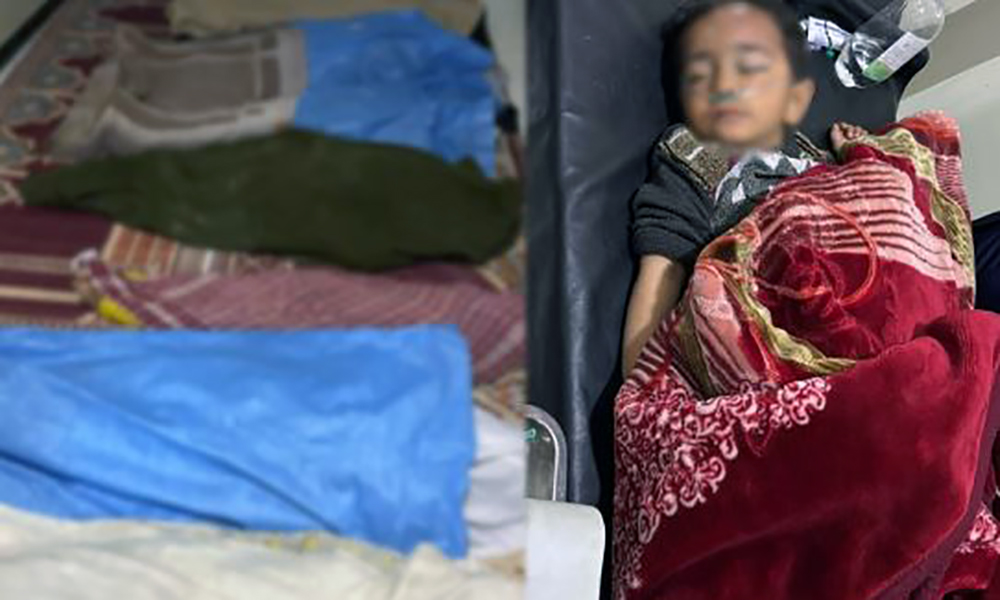
A powerful 5.8-magnitude earthquake struck Afghanistan on Friday, killing at least eight people and injuring a child when a house collapsed in Kabul. According to local officials, the victims were all members of the same family.
Hafiz Basharat, spokesperson for the Kabul Governor, confirmed that the fatalities occurred in the Bagrami district of Kabul. The family members who perished included a father, mother, four daughters, and two sons. In addition to the deaths, a child was reported injured in the incident.
The earthquake, which originated in the Hindu Kush region of Afghanistan, struck at a depth of approximately 177 kilometers, according to the German Research Centre for Geosciences. Tremors were felt across a wide area, including Kabul, Pakistan’s capital Islamabad, and India’s capital New Delhi.
Local authorities have yet to release additional details regarding the extent of the damage or any further casualties caused by the earthquake.
As rescue operations continue, Afghan authorities are assessing the full impact of the earthquake, which has left many concerned about the potential for more aftershocks in the region.
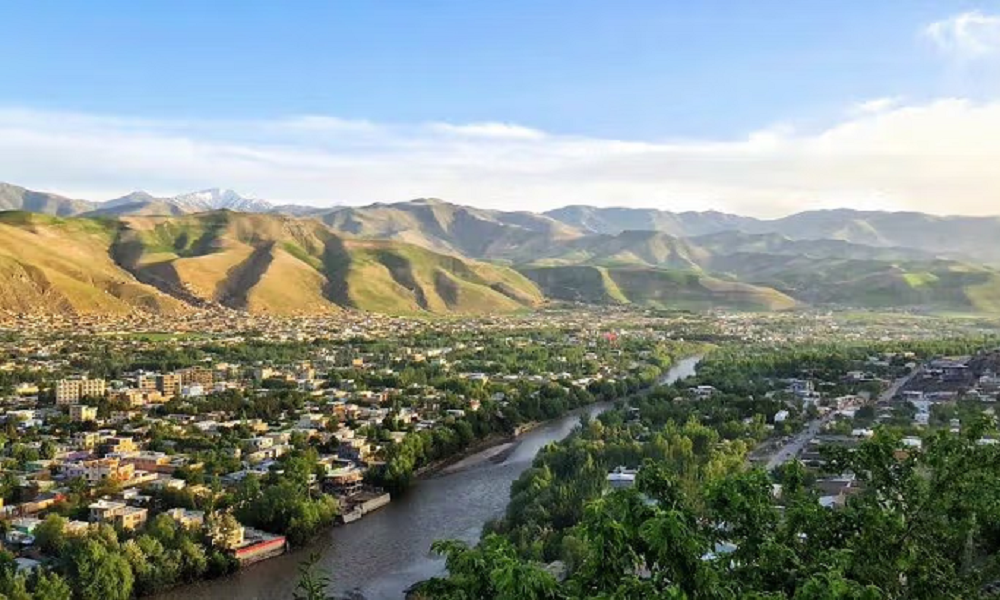
A strong earthquake measuring 5.8 on the Richter scale struck parts of Afghanistan on Friday night, according to the United States Geological Survey (USGS).
The epicenter was reported in Jurm district of Badakhshan province, with a depth of 186 kilometers.
There have been no immediate reports of casualties or damage.
Latest News
China says Afghanistan–Pakistan peace talks show progress
China has positioned itself as a facilitator, aiming to create conditions for dialogue and provide a platform for negotiations.
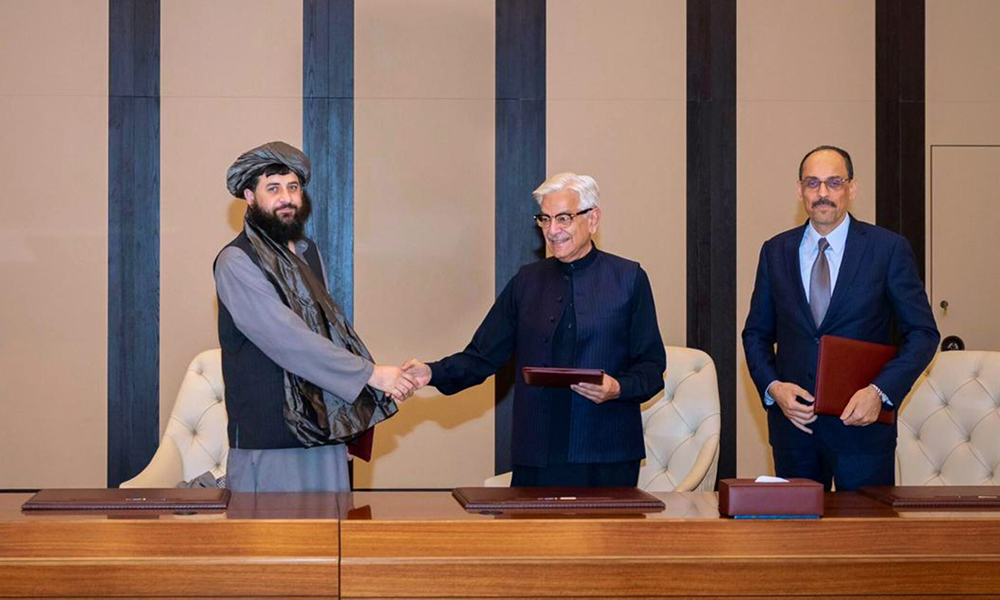
Negotiations between Afghanistan and Pakistan are making steady progress, China said on Friday, as efforts continue to ease tensions in their most serious conflict since the return of the Islamic Emirate of Afghanistan in 2021.
Speaking at a regular press briefing, Chinese foreign ministry spokesperson Mao Ning said both sides had welcomed Beijing’s mediation and were willing to resume dialogue. “This is a positive development,” she said, noting that China remains in close communication with both governments.
Beijing— which shares a border with both countries—has stepped up diplomatic engagement in recent months, including calls with foreign ministers and a visit by a special envoy in March. Previous rounds of talks have reportedly taken place in Urumqi, though officials did not confirm the latest venue.
China has positioned itself as a facilitator, aiming to create conditions for dialogue and provide a platform for negotiations. Mao said further details would be released jointly by the three countries “in due course.”
Clashes between Afghan and Pakistani forces since October have killed dozens on both sides, with Afghan civilians bearing the brunt of the violence. Islamabad has accused Kabul of harboring militants responsible for cross-border attacks—an allegation Afghan authorities deny, calling militancy a domestic issue for Pakistan.
The renewed diplomatic push signals cautious optimism that tensions between the neighbors could ease through sustained dialogue under Chinese mediation.


Eight dead after 5.8-magnitude earthquake hits Afghanistan

Punjab Kings clinch thrilling 5-wicket victory over Chennai Super Kings in IPL 2026

5.8-magnitude earthquake shakes parts of Afghanistan

Tawsia: This week’s key economic developments in Afghanistan discussed

Iran claims it shot down US F-35 jet

Prominent Muslim scholar issues fatwa calling for Afghanistan-Pakistan ceasefire

IEA Supreme Leader issues Eid-ul-Fitr message urging unity and support for Islamic system

14 Pakistani soldiers killed after military post falls along Durand line: MoD

Afghanistan steps in to replace Iran in supplying fruits and vegetables to Russia

Afghan airstrikes target Pakistani military sites in retaliation for air attacks
Tawsia: This week’s key economic developments in Afghanistan discussed

Tahawol: Start of talks between Kabul-Islamabad in China discussed

Saar: Ongoing US and Israeli attacks on Iran discussed

Tahawol: Ongoing US–Israeli war with Iran discussed

Saar: Afghanistan-Pakistan talks in China discussed
-
 Latest News5 days ago
TAPI gas pipeline advances 25 km in Afghanistan
-
 Business5 days ago
Afghanistan opens doors to agribusiness investments amid rising opportunities
-
 Latest News3 days ago
Baradar approves 17 projects worth over one billion AFN
-
 Latest News5 days ago
Afghan diaspora protests in London and Oslo over Pakistan strikes
-
 Business4 days ago
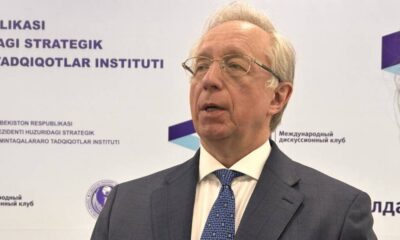
Russia backs Uzbekistan–Afghanistan trade hub, praises regional economic cooperation
-

 Sport4 days ago
ATN secures broadcast rights for inaugural Afghanistan Wrestling Premier League
-

 International Sports5 days ago
Amnesty International raises alarm over deportations, protests ahead of FIFA World Cup
-

 Sport3 days ago
ATN to broadcast second season of Ariana Snooker Championship