
World
Israeli defense minister claims responsibility for first time for Hamas leader Haniyeh’s assassination
Haniyeh, normally based in Qatar, had been the face of Hamas’ international diplomacy as the war set off by the Hamas-led attack on Israel on Oct. 7 has raged in Gaza.

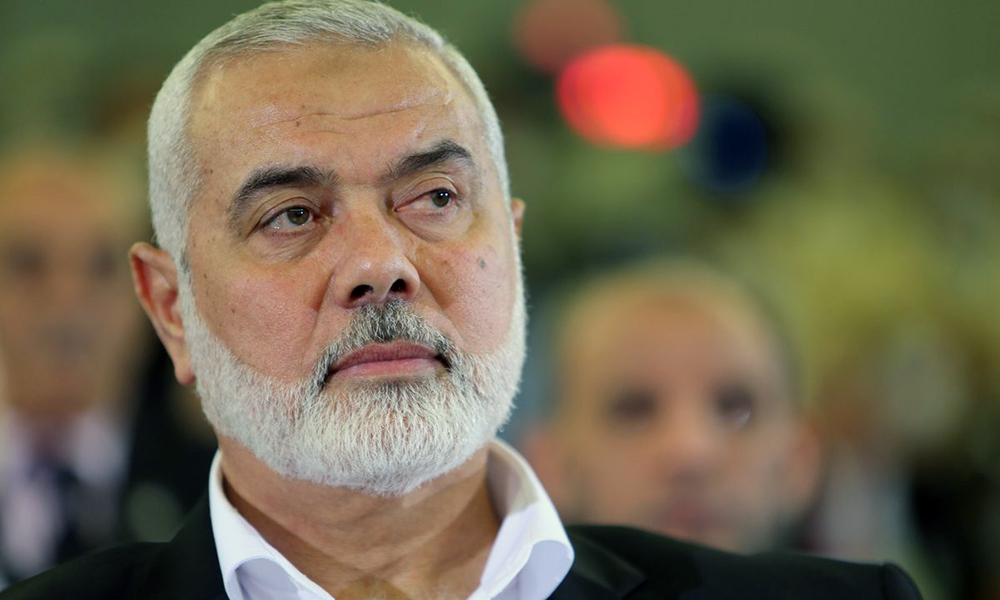
Israeli Defense Minister Israel Katz admitted on Monday for the first time publicly to Israel’s killing of Hamas leader Ismail Haniyeh in Iran in July, further risking tensions between Tehran and its arch-enemy Israel in a region shaken by Israel’s war in Gaza and the conflict in Lebanon, Reuters reported.
“These days, when the Houthi terrorist organization is firing missiles at Israel, I want to convey a clear message to them at the beginning of my remarks: We have defeated Hamas, we have defeated Hezbollah, we have blinded Iran’s defense systems and damaged the production systems, we have toppled the Assad regime in Syria, we have dealt a severe blow to the axis of evil, and we will also deal a severe blow to the Houthi terrorist organization in Yemen, which remains the last to stand,” Katz said.
Israel will “damage their strategic infrastructure, and we will behead their leaders – just as we did to Haniyeh, Sinwar and Nasrallah in Tehran, Gaza and Lebanon – we will do it in Hodeidah and Sana’a,” Katz said during an evening honoring defense ministry personnel.
The Iran-backed group in Yemen has been attacking commercial shipping in the Red Sea for more than a year to try to enforce a naval blockade on Israel, saying they are acting in solidarity with Palestinians in Israel’s year-long war in Gaza, read the report.
In late July, the political leader of the Palestinian Islamist group Hamas was killed in Tehran in an assassination blamed on Israel by Iranian authorities. There was no direct claim of responsibility by Israel for the killing of Haniyeh at the time.
Haniyeh, normally based in Qatar, had been the face of Hamas’ international diplomacy as the war set off by the Hamas-led attack on Israel on Oct. 7 has raged in Gaza. He had been taking part in internationally brokered indirect talks on reaching a ceasefire in the Palestinian enclave, Reuters reported.
Months after, Israeli forces in Gaza killed Yahya Sinwar, Haniyeh’s successor and the mastermind of the Oct. 7, 2023, attack that triggered the latest bloodshed in the decades-old Israeli-Palestinian conflict.



World
US rescues 2nd F-15 pilot hit above Iran: Trump
Noting that the officer suffered injuries, Trump said he “will be just fine.”
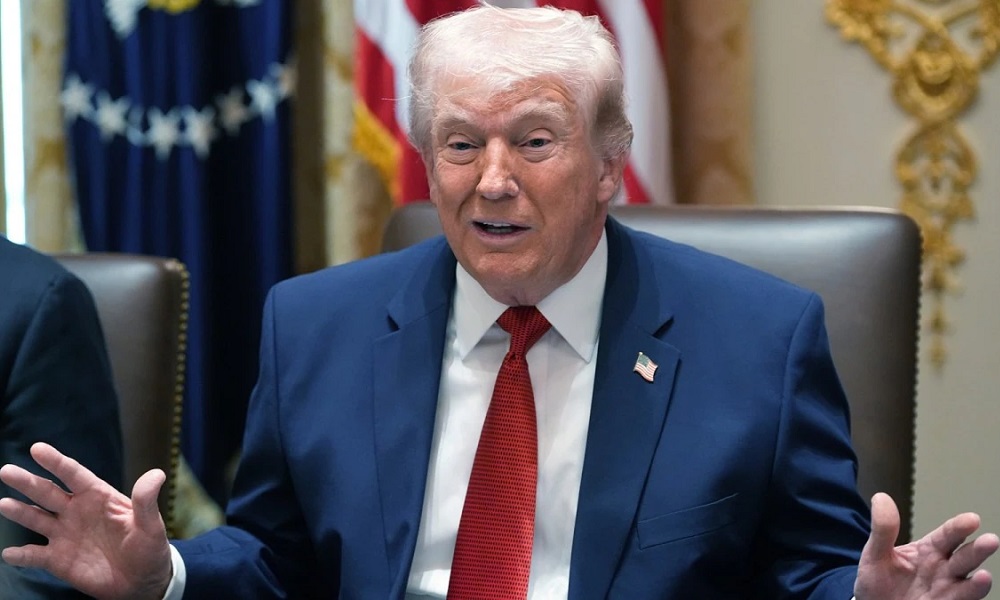
President Donald Trump said Sunday that the US rescued a military officer, identified as a colonel, in “one of the most daring Search and Rescue Operations in US history.”
Trump said on his Truth Social that the officer was trapped behind enemy lines in Iran’s mountainous terrain and was being pursued by hostile forces before being safely recovered in a major military operation involving dozens of aircraft.
Noting that the officer suffered injuries, Trump said he “will be just fine.”
He said the mission followed the separate rescue of another US pilot on Friday, which was not announced earlier to avoid jeopardizing the second operation.
“At my direction, the US Military sent dozens of aircraft, armed with the most lethal weapons in the World, to retrieve him,” he said. “This is the first time in military memory that two U.S. Pilots have been rescued, separately, deep in Enemy Territory.”
He also claimed the operations were completed without any Americans killed or wounded.
Calling the missions proof of US air superiority over Iran, Trump praised the armed forces as “the best, most professional, and lethal military in the history of the World.”
He said the rescues were a moment for all Americans to take pride in.
World
US Army chief of staff fired by Hegseth, sources say
The Pentagon said in a statement it was grateful for George’s decades of service. “We wish him well in his retirement,” it said.
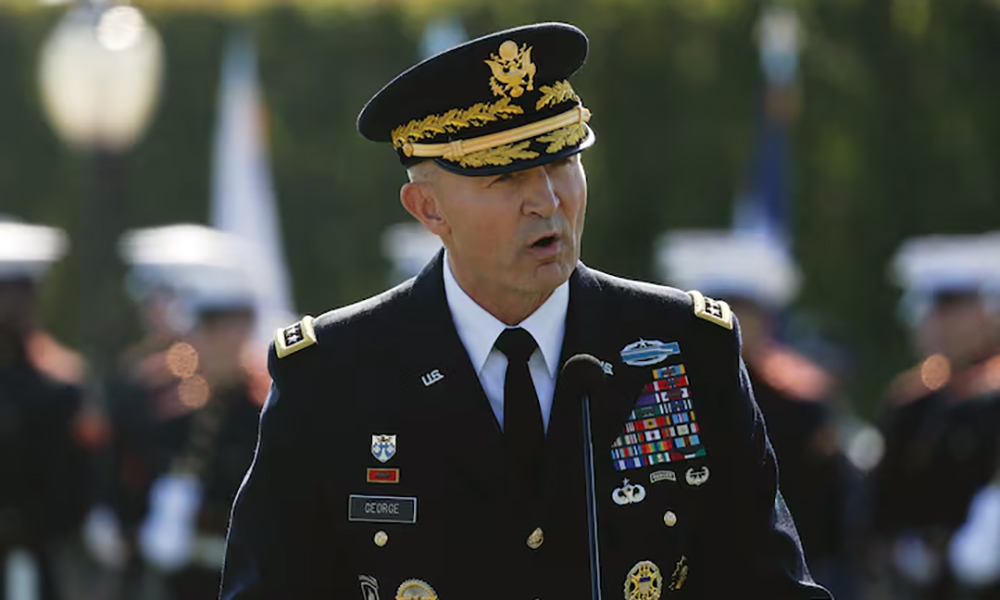
U.S. Army Chief of Staff Randy George was fired on Thursday by Defense Secretary Pete Hegseth, three U.S. defense officials told Reuters, in the latest purge among the Pentagon’s most senior ranks, Reuters reported.
Even as Hegseth, a former Fox News host, has moved quickly to reshape the department, firing a general during wartime is nearly without precedent.
The Pentagon confirmed that George, who had more than a year left in his term, “will be retiring from his position as the 41st Chief of Staff of the Army effective immediately.”
The Pentagon said in a statement it was grateful for George’s decades of service. “We wish him well in his retirement,” it said.
Two of the officials, speaking on the condition of anonymity, said Hegseth has also fired General David Hodne, who leads the Army’s Transformation and Training Command, and Major General William Green, head of the Army’s Chaplain Corps.
The department did not give a reason for George’s departure, which comes as the U.S. military builds up its forces in the Middle East while carrying out operations against Iran.
The U.S. strikes in the region are largely being carried out by the Navy and Air Force, although U.S. Army soldiers have been dispatched to the Middle East for air defense systems. The Army is the largest branch of the U.S. military, with about 450,000 active-duty soldiers.
Thousands of soldiers from the U.S. Army’s elite 82nd Airborne Division have also started arriving in the Middle East, potentially for ground operations in Iran.
There had been no public signs of friction between Hegseth and George, even as Hegseth pursued controversial moves such as firing the Army’s top lawyer and arranging a massive military parade to celebrate the Army’s 250th birthday, which coincided with Trump’s birthday, read the report.
Earlier this week, Hegseth also reversed an Army decision to investigate Army pilots who were flying attack helicopters near singer Kid Rock’s house, in an apparent show of support for the vocal Trump backer.
CBS News, which first reported the dismissal, said it was not related to the Kid Rock incident.
One of the officials said Hegseth’s former military aide and Army vice chief of staff, General Christopher LaNeve, will take over George’s role in an acting capacity.
Another of the officials added that senior Army leadership learned about George’s firing at the same time as it was made public.
George, an infantry officer who served in Iraq and Afghanistan, was confirmed to the top Army post in 2023. Terms in that role usually run for four years.
Prior to holding the top job, George was the vice chief of the Army and, before that, the senior military adviser to then-Defense Secretary Lloyd Austin.
He was considered close to Army Secretary Dan Driscoll. The two worked together to take on large defense companies, in the Army’s drive to speed up weapons development and drive down costs.
George’s removal adds to recent upheaval at all levels of leadership at the Pentagon, including the firing last year of the previous chairman of the Joint Chiefs of Staff, Air Force General C.Q. Brown, as well as the chief of naval operations and Air Force vice chief of staff.
The office for George did not immediately respond to a request for comment.
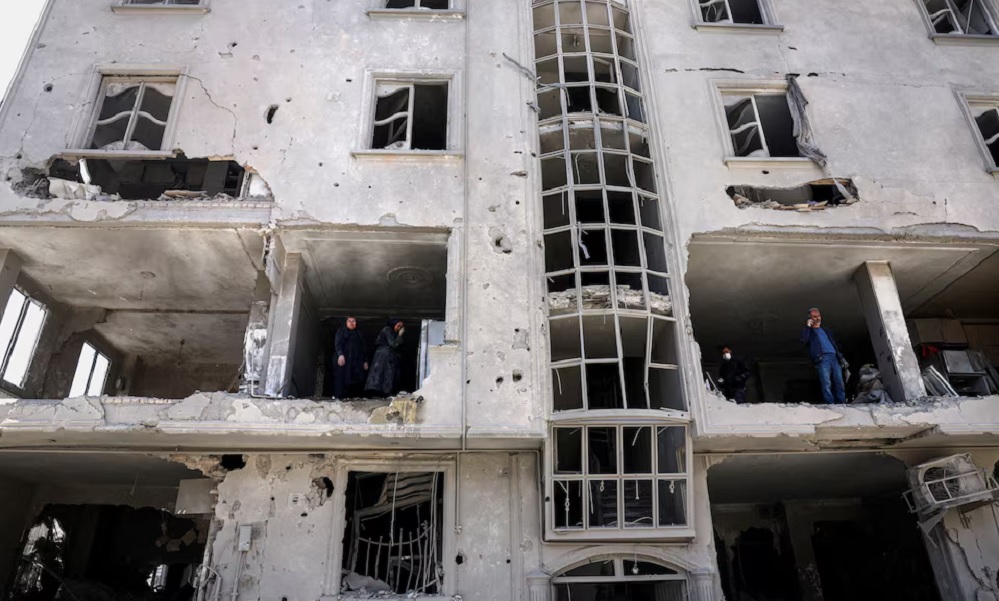
The United States will carry out aggressive strikes on Iran over the next two to three weeks and is nearing completion of its main strategic objectives in the war, President Donald Trump said in a prime-time address to the nation on Wednesday.
Addressing a war-weary U.S. public, Trump said his military had delivered “swift, decisive, overwhelming victories on the battlefield,” during 32 days of military strikes and that Iran was no longer a security threat, Reuters reported.
“I can say tonight that we are on track to complete all of America’s military objectives shortly, very shortly,” Trump said in a nationally televised address.
“We’re going to hit them extremely hard over the next two to three weeks. We’re going to bring them back to the Stone Ages where they belong.”
Thousands of people have been killed across the Middle East since February 28, when the U.S. and Israel struck Iran, triggering Iranian attacks on Israel, U.S. bases and the Gulf states, while opening a new front in Lebanon.
The conflict, which prompted Iran to shut the Strait of Hormuz — a key waterway carrying about a fifth of global oil supplies — has rattled financial markets and weighed on Trump’s sagging approval ratings months ahead of pivotal midterm congressional elections.
Stocks fell and oil prices rose sharply after Trump’s speech, with investors disappointed that a clearer path to swiftly ending the conflict was not spelled out.
Trump said the United States does not need the Strait of Hormuz and he challenged U.S. allies who rely on oil in the region to work toward reopening it.
“Many Americans have been concerned to see the recent rise in gasoline prices here at home,” Trump said. “This short-term increase has been entirely the result of the Iranian regime launching deranged terror attacks against commercial oil tankers of neighboring countries that have nothing to do with the conflict.”
The International Monetary Fund, World Bank and International Energy Agency on Wednesday warned the war was having “substantial, global and highly asymmetric” effects and said they would coordinate their response, including through potential financial support to those countries hit hardest.
NUCLEAR THREAT
In an interview with Reuters earlier on Wednesday, Trump said U.S.-Israeli strikes had ensured Iran would not obtain nuclear weapons, adding that U.S. forces could return with “spot hits” if the threat resurfaces.
“They were right at the doorstep (of a nuclear weapon),” Trump said in his TV address, without providing evidence.
“In these past four weeks, our armed forces have delivered swift, decisive, overwhelming victories on the battlefield,” he said. “We are systematically dismantling the regime’s ability to threaten America or project power outside of their borders.”
Prior to Trump’s address, Iranian President Masoud Pezeshkian said in a letter addressed to the American people that his country harbors no enmity towards ordinary Americans.
Yet prospects for a near-term end to the fighting remained elusive. A senior Iranian source told Reuters on Wednesday that Tehran is demanding a guaranteed ceasefire to halt its attacks and said no talks have taken place through intermediaries on a temporary truce. The New York Times reported separately that U.S. intelligence agencies assess Iran is currently unwilling to engage in substantial negotiations to end the war.
Trump said that discussions were ongoing with Iranian leaders he considered less radical than previous leaders.
“Yet if during this period of time, no deal is made we have our eyes on key targets,” Trump said. “If there’s no deal, we are going to hit each and every one of their electric generating plants, very hard and probably simultaneously.”
TRUMP CONSIDERS QUITTING NATO
Trump said on social media earlier on Wednesday that Iran had asked for a ceasefire but that he would not consider it until Tehran ceased blocking the Strait of Hormuz, which carries a fifth of global oil and liquefied natural gas.
Iran denied making any such request.
Two security sources from Pakistan, which is mediating in the conflict, told Reuters that Islamabad had proposed a temporary ceasefire but had not heard back from either side.
U.S. Vice President JD Vance communicated with intermediaries from Pakistan about the Iran conflict as recently as Tuesday, according to a source briefed on the matter, making clear that Trump was open to a ceasefire if certain demands were met, including reopening the Strait of Hormuz, the source said.
Trump had suggested on Tuesday he could wind down the war in two to three weeks even without a deal, while scaling up threats to pull the U.S. out of the NATO defence alliance if European states did not help stop Iran from blocking the waterway.
In his remarks to Reuters on Wednesday, Trump said he had planned to express his disgust with NATO for what he considers the alliance’s lack of support for U.S. objectives in Iran.
Trump did not explicitly mention NATO in his address, but appeared to be sending a message to European allies, urging countries in need of oil to buy it from the United States or to “build up some delayed courage” and use the Strait of Hormuz.
“Go to the Strait and just take it,” Trump said. “Iran has been essentially decimated. The hard part is done, so it should be easy.”
European states have taken pains to appear unruffled, and France’s junior army minister Alice Rufo said operations by NATO in the Strait of Hormuz would be a breach of international law.


IPL 2026: Rajasthan Royals, Delhi Capitals go top as double-header delivers thrills

Afghanistan hosts inaugural Afghanistan–Central Asia Consultative Dialogue to strengthen regional cooperation

Iran claims it shot down US C-130 support aircraft in Isfahan

Flash floods and natural disasters leave dozens dead, thousands affected across Afghanistan

IEA accuses Pakistan of war crimes amid heavy civilian losses

Prominent Muslim scholar issues fatwa calling for Afghanistan-Pakistan ceasefire

IEA Supreme Leader issues Eid-ul-Fitr message urging unity and support for Islamic system

14 Pakistani soldiers killed after military post falls along Durand line: MoD

Afghanistan steps in to replace Iran in supplying fruits and vegetables to Russia

Afghan airstrikes target Pakistani military sites in retaliation for air attacks

Tahawol: Continuation of Middle East crisis discussed

Saar: Ongoing Kabul-Islamabad talks in China discussed

Tawsia: This week’s key economic developments in Afghanistan discussed

Tahawol: Start of talks between Kabul-Islamabad in China discussed

Saar: Ongoing US and Israeli attacks on Iran discussed
-
 Latest News4 days ago
Baradar approves 17 projects worth over one billion AFN
-

 Sport4 days ago
ATN to broadcast second season of Ariana Snooker Championship
-

 Business2 days ago
Tripartite agreement to launch new Russia–Turkmenistan–Afghanistan transit corridor
-

 Latest News4 days ago
Afghan delegation heads to China for talks with Pakistan
-

 Sport4 days ago
Punjab Kings edge Gujarat Titans in thrilling IPL clash as tournament gathers pace
-
 Latest News2 days ago
China says Afghanistan–Pakistan peace talks show progress
-

 Regional4 days ago
Emirates airline says Iranian nationals barred from entering or transiting UAE
-
 Latest News4 days ago
Peshawar jirga urges Pakistan, Afghanistan to halt clashes and pursue peace through dialogue