
Latest News
It’s too early to consider recognition of IEA: US

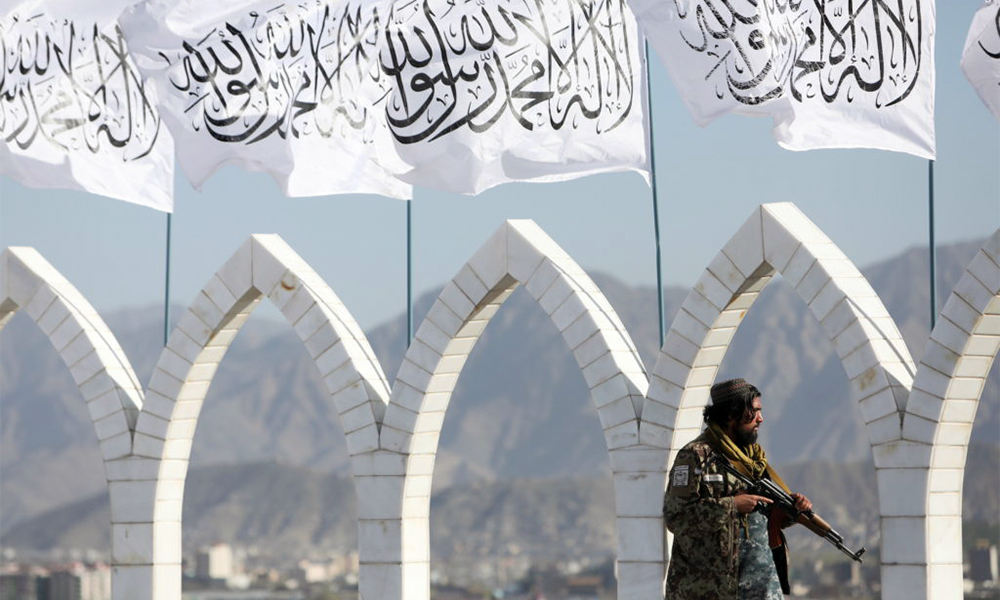
The United States said Wednesday no foreign government is contemplating legitimacy for the new government in Afghanistan.
“I think there’s actually a global consensus to include Moscow and Beijing and Iran, that it’s too early to look at recognition,” Donald Lu, U.S. assistant secretary of state for South and Central Asia, told VOA in an interview.
“Yes, some countries are beginning a very slow process of normalization of relations. No one is talking about formal recognition,” Lu said.
The U.S. diplomat noted that international discussions instead were focused on seeking an engagement with the IEA that can help improve the situation on the ground in Afghanistan in terms of the rights of women and girls, and security.
“We, as partner countries, should also be working with authorities in Afghanistan to create a better world for Afghan people to try to influence what is happening in Afghanistan for the betterment of the people of Afghanistan, but also a stable region.”
The IEA seized power last August when U.S. and NATO partners withdrew their final troops, ending almost two decades of foreign military intervention in the country.
The US urges the IEA to remove sanctions on women, reopen girls’ schools above the sixth grade and allow them to have access to work if it wants to be recognized.
“It’s critical that all of us work together to try to encourage the Taliban (IEA) onto a constructive path,” Lu said. He emphasized the IEA “now has to get to the business of governance.”
Washington has made it clear repeatedly that no legitimacy is possible unless and until the IEA reverse their restrictions on women and induct representatives of other ethnic Afghan groups into the government.
Lu cautioned the IEA rulers that the investment made by the global community over the past 20 years “will shape the future” of the country, and they “cannot merely impose their own will” on millions of Afghans.
Lu said that the IEA supreme leader renewed his resolve Wednesday in a message he issued in connection with this week’s Muslim festival of Eid-ul-Adha.
“The Islamic Emirate is committed to upholding all the rights of its citizens, as Islam commands us to grant and protect the rights of all people. And within the framework of the Sharia law, the rights of women will be ensured,” IEA’s supreme leader said.
“Within the framework of mutual interaction and commitment, we want good, diplomatic, economic and political relations with the world, including the United States, and we consider this in the interest of all sides,” Mullah Haibatullah Akhunzada further added.
Neighboring and regional countries, including China and Pakistan — which shares a long border with Afghanistan — have kept their diplomatic and trade contacts open with the IEA, citing dire humanitarian and economic emergencies facing the country’s estimated 40 million population.
But these nations also are pressing the IEA to rule the country through a politically inclusive administration, ease curbs on women and desist from cracking down on dissent before they decide to consider the IEA’s call for a formal recognition of their government.
“We hope Afghanistan to be stable, peaceful, pursues a moderate policy and to meet the expectations,” said Wang Yu, China’s ambassador to Kabul, while addressing a rare news conference Tuesday in the Afghan capital.
Lu told VOA that Central Asian countries also are worried about security threats coming from Afghanistan. The U.S. is talking with them about how it can help with cross-border security and “facilitate conversation with this very unusual IEA’s government,” he added.
Meanwhile, Akhundzada reassured Afghanistan’s neighbors and the world at large Wednesday that the IEA would not allow anyone to use their territory to threaten the security of other countries.
In his Eid message, the leader of the Islamic Emirate called for diplomatic relations with all countries, including the United States.
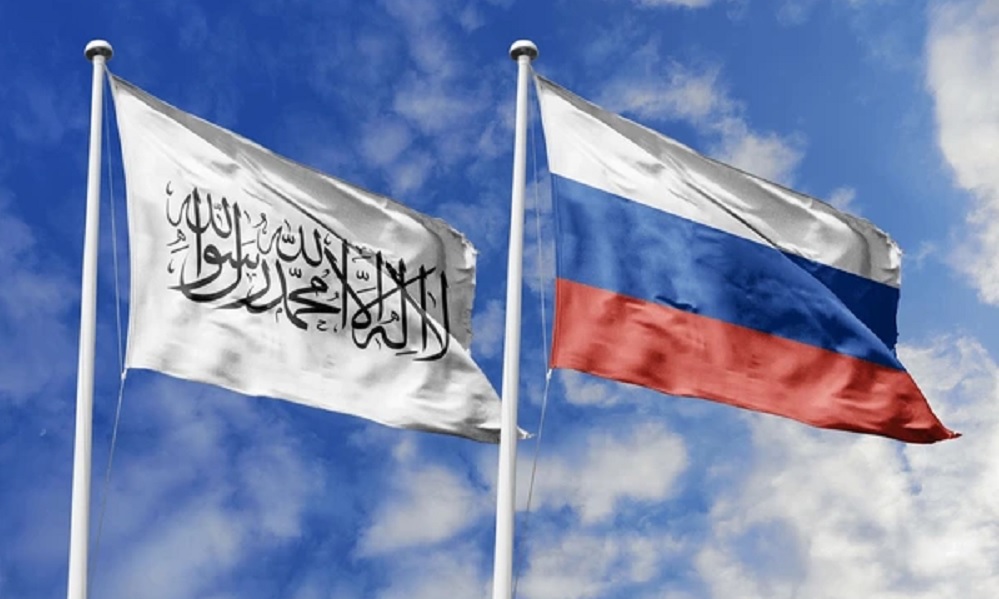
Russia, China, Iran, Pakistan, Qatar, UAE, Turkey, India, and even Saudi Arabia, which are important regional countries, have asked the Islamic Emirate to create an inclusive government, but the IEA considers the current system to be inclusive.



Latest News
Afghanistan, Russia convene first meeting of joint economic and trade commission in Kazan


DABS CEO, Iran envoy discuss expansion of power and energy cooperation

Afghanistan, Russia convene first meeting of joint economic and trade commission in Kazan

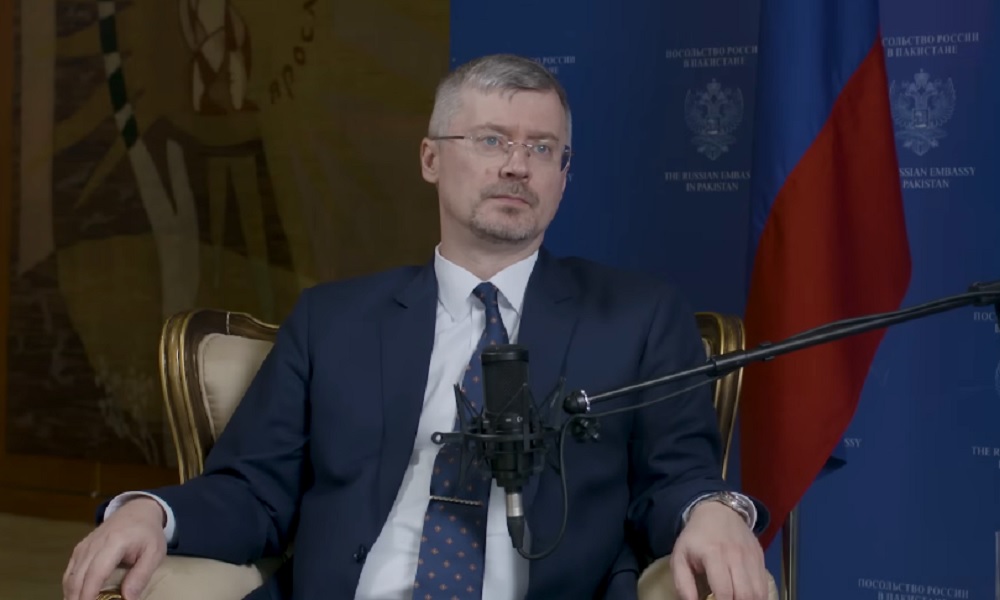
Afghanistan-Pakistan tensions delaying major projects across the region: Russian envoy

China’s Xi signals trade progress as ‘biggest summit’ with Trump begins

Tahawol: Donald Trump’s trip to China discussed

New Afghanistan-China transport corridor launched via Turkmenistan

Bayat Power extends gas supply deal with Afghan Gas

Germany to launch online visa system for Afghan study and work applicants in Pakistan

Afghanistan moves toward self-sufficiency in car battery production

War driving hidden climate crisis in Middle East, think tank warns
Tahawol: Donald Trump’s trip to China discussed

Saar: Hopes for easing tensions between Kabul-Islamabad discussed

Tahawol: China’s optimism on Kabul–Islamabad talks discussed

Saar: IEA high-ranking delegation’s visit to Kazan discussed

Tahawol: Fresh Remarks About Ending the Ukraine War
-

 Sport5 days ago
Canada to host opening ceremony for FIFA World Cup 2026 in Toronto
-
 Latest News5 days ago
SAARC failure pushes Pakistan toward trilateral ties with Afghanistan, China, Bangladesh: Dar
-
 Latest News3 days ago
Japan announces MEXT scholarships for Afghan students for 2027 academic year
-
 Business4 days ago
Afghanistan, Uzbekistan sign 13 trade MoUs worth over $100 million
-
 Sport5 days ago
Afghan cricket delegation travels to China for technical cooperation
-

 Sport5 days ago
Los Angeles to welcome the world with historic FIFA World Cup 2026 opening event
-
 Latest News5 days ago
Karzai: Pakistan seeking to legitimize Durand Line, authorities must clarify
-

 Science & Technology4 days ago
Meta turns off Instagram’s private messaging encryption worldwide