
Latest News
Kabul school bombings condemned worldwide

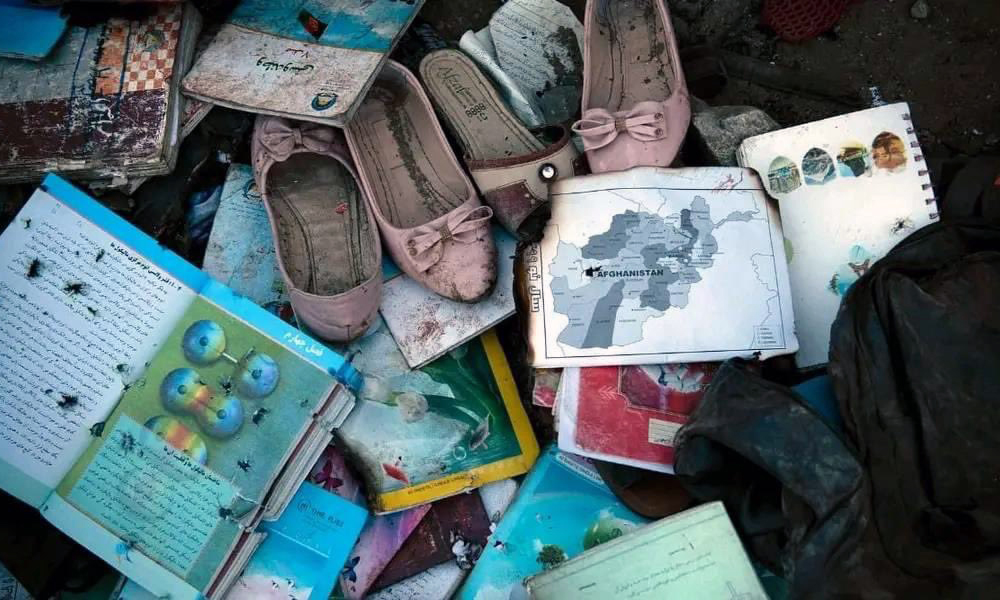
Explosions targeting a high school in western Kabul on Tuesday have sparked widespread condemnation around the world.
Three explosions at a high school in western Kabul killed at least six people and injured 11, Afghan security and health officials said.
The blast targeted educational institutions and many of the casualties were young students.
“Three blasts have taken place…in a high school, there are some casualties to our Shia people,” said Khalid Zadran, the spokesman for Kabul’s commander.
He said later that six people had been killed and 11 injured in the explosions.
There was no immediate claim of responsibility for the attack.
An official familiar with the matter who declined to be named said the explosive devices had been hidden in backpacks and one had detonated inside the school gates, Reuters reported.
The incident was condemned both on a national and an international level.
Former president Hamid Karzai condemned the blast, calling it a crime against humanity and an act by the enemies of peace in Afghanistan and an act against education in the country.
The former chairman of the High Council for National Reconciliation, Abdullah Abdullah, also condemned the attack, calling those responsible the enemies of peace and development in Afghanistan.
The United States condemned the attacks and called for an investigation.
The US State Department in a statement offered condolences to the Afghan families and said the perpetrators must be brought to justice
“The United States joins the international community in expressing outrage at today’s heinous attacks on the Mumtaz Education Center and the Abdul Rahim Shahid school in Kabul, Afghanistan. We offer sincere condolences to the families and other loved ones of those killed in these cowardly acts. The perpetrators must be brought to justice,” US State Department Spokesperson Ned Price said in a statement.
“All Afghan children deserve to pursue their studies safely and without fear of violence,” he added.
UN reacts to “heinous” attacks
The United Nations also condemned the deadly bomb blasts.
Ramiz Alakbarov, UN Humanitarian Coordinator in the country, issued a statement strongly condemning the “horrific” attacks.
“Violence in or around schools is never acceptable. For the people of Afghanistan, already beleaguered by forty years of war, schools should be safe havens, and places where children can learn and flourish,” he said.
Alakbarov underlined that attacks against civilians and civilian infrastructure, including schools, are strictly prohibited under international humanitarian law.
The UN Assistance Mission in Afghanistan (UNAMA) took to Twitter to condemn the “heinous” attacks.
“Those responsible for the crime targeting schools and children must be brought to justice,” the UNAMA tweet said, noting that Mission chief Deborah Lyons has extended her deepest sympathies to the families of the victims, and wishes for a speedy recovery for the wounded.
Filippo Grandi, the UN High Commissioner for Refugees, also joined Lyons in extending condolences to the bereaved families.
“Afghanistan’s ethnic, religious and linguistic diversity is at great risk. It must be respected and kept safe,” Grandi wrote on his official Twitter account.
UN Secretary-General António Guterres has also denounced the bombings.
“I condemn the deadly attacks on schools in Kabul and send my deepest condolences to the families of the victims. Attacks against civilians & civilian infrastructure, including schools, are strictly prohibited under international humanitarian law,” Guterres tweeted.
Save the Children organization in turn said: “We are horrified and outraged at the reported attack on a high school in Kabul.
“Children in Afghanistan have endured years of violence. Enough is enough. They have the right to access a safe education,” Save the Children said, added that: “The time is NOW to Stop the War on Children.”
Meanwhile, Amnesty International called the school bombing in Afghanistan a ‘reprehensible attack’ on religious and ethnic minorities.
Jasper Wieck, Special Representative of the German Federal Government for Afghanistan & Pakistan, U.S. Special Representative Thomas West and Chargé d’Affaires Ian McCary in series of tweets also strongly condemned the bombings.
“I strongly condemn today’s attacks in Kabul. Targeting the future of a country, its children & schools, is utmost heinous. It is the responsibility of the de facto authorities to protect the people of Afghanistan from violence & terror, no matter their age, gender & believes,” Wieck tweeted.
“The United States condemns in the strongest terms the horrific and cowardly attacks on students in Kabul today. No one should have to worry about their safety while being educated. My thoughts and prayers are with the families of the victims.” West tweeted.
“I deplore the horrific attacks on Mumtaz Education Center and the Abdul Rahim Shahid school in Kabul. We offer deepest condolences to the victims & families of the deceased. All Afghans should be able to pursue their studies safely and without fear,” McCary tweeted.
IEA says attack was “painful and sad”
IEAs officials meanwhile said they are committed to finding and punishing the perpetrators of the attack and preventing such incidents from taking place in future.
“The attack on our innocent children was very painful and sad. The Islamic Emirate is responsible for the security of every citizen,” said Inamullah Samangani, IEA’s deputy spokesman.












Kazakhstan’s Foreign Minister Mukhtar Tileuberdi has called for pragmatic and coordinated international engagement with Afghanistan, saying the country’s long-term stability is closely linked to the security and sustainable development of Central Asia.
Speaking during the general debate of the 81st session of the United Nations General Assembly in New York on Friday, Tileuberdi said humanitarian assistance to Afghanistan remains essential but alone cannot break the cycle of poverty, displacement and dependency.
He said Kazakhstan supports a “pragmatic, coordinated and step-by-step” approach to international engagement with Afghanistan, with the United Nations playing a central role.
Tileuberdi also said Kazakhstan is working with the UN to operationalize the United Nations Regional Centre for the Sustainable Development Goals for Central Asia and Afghanistan in Almaty.
He said the success of the centre should be measured by the results and assistance it delivers to the region.


Abu Muslim Farah defeat Khurasan Faryab 2-0 in ACL season six

Saar: Concerns over Pakistan’s political crisis discussed

Afghanistan Champions League: Omar Zawak Herat beat Toofan Herat 1-0

Blast in Pakistan’s Dera Ismail Khan kills 11, injures 30

Ariana Afghan Airlines increases Kabul-Delhi cargo flights

Saudi energy group signs major Afghanistan deals covering gas exploration and pipeline plans

Trump floats idea of renaming Atlantic or Pacific Ocean

US hits Egyptian bank branches with Iran sanctions as war marks six months

Nepal flood rescue mission enters critical phase as thousands remain missing

Iranian clubs to face Gulf opponents at neutral venues in Asian Champions League Elite
Saar: Concerns over Pakistan’s political crisis discussed

Exclusive interview with Abdul Latif Mansoor, Minister of MRRD

Tawsia: Overview of Afghanistan’s iron mines

Tahawol: Discussion on fresh Pakistani airstrikes on Afghanistan

Saar: Calls for international support for Afghanistan discussed
-

 World5 days ago
CNN, MS NOW and Politico sue Trump, challenging White House ban
-

 Latest News3 days ago
Ariana Afghan Airlines ranks seventh among 45 Central Asian airlines
-

 Latest News5 days ago
UN reiterates call for respect for international law after Kunar airstrikes
-

 Regional4 days ago
US and Iran hold first talks since June after Trump’s ‘annihilation’ threat
-

 Latest News4 days ago
Silk Road highway in Wakhan corridor now reaches the China border
-

 Regional3 days ago
Iran airlines cancel flights as US sanctions hit
-

 Latest News5 days ago
Afghan Official: Pakistan’s airstrikes will not go unanswered
-

 Sport5 days ago
Afghan boxing referee heads to China for international festival