
Latest News
MoI says controversial Wardak clash is being investigated

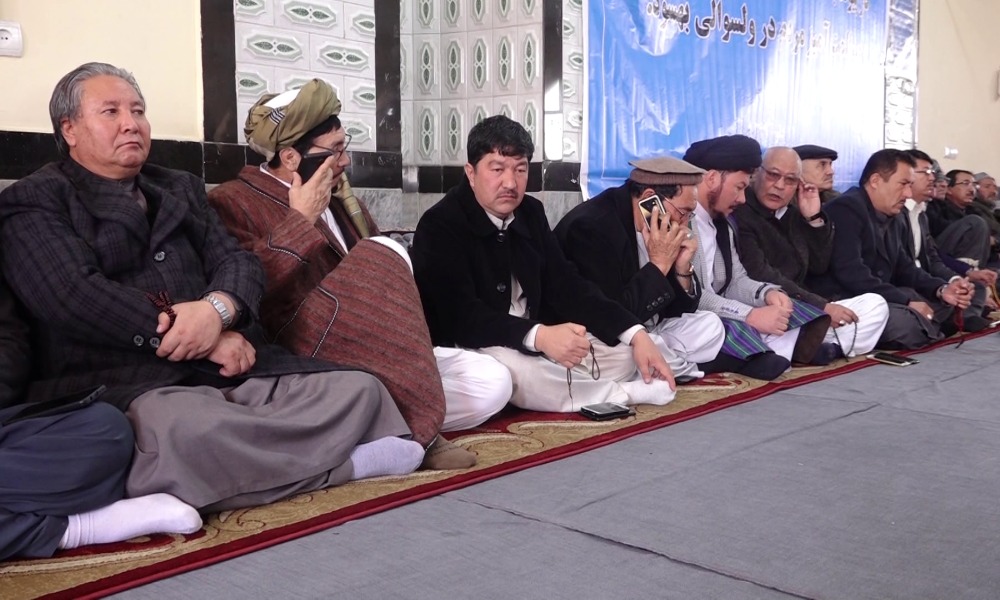
The Interior Ministry has refuted claims that unarmed civilians were targeted by police during a protest in Bihsud district in Maidan Wardak province on Friday that left at least eleven people dead.
The incident happened late Friday outside the district government compound and also left at least 25 people wounded.
A number of MPs from Wardak province claimed the residents were targeted by police special forces despite being unarmed.
The Interior Ministry however rejected these claims and said irresponsible gunmen opened fire on police and civilians in the district. They said the incident is being investigated.
The incident happened outside the district government compound after a group of locals embarked on a peaceful protest, said MP Mahdi Rasikh.
Rasikh said a group of about 30 elders had gathered to find out why a “special unit” had been dispatched to Bihsud district.
He said it was then that security forces opened fire on the group, adding that all were civilians and were unarmed.
“Eleven civilians, including children, were killed in the incident, and more than 25 others were wounded, and the wounded remained on the snow for hours,” he said adding that they were not allowed to be removed from the area.
Rasikh also said that security forces prevented about 150 others from leaving the area and that they had since been taken into custody.
“The crime of those who were targeted was because they believe in civilization, and not a single shot was fired by these people, but they were targeted as oppressors; we want to pursue this issue seriously,” said Ali Akbar Qasimi another MP from Ghazni.
Meanwhile, a former deputy interior minister says the attack on civilians in Bihsud district by security forces was unjustifiable.
“This attack is a cruel attack and we warn that as soon as possible, innocent people who have no authority and have been taken hostage in this incident should be released and a decision should be made as soon as possible to resolve this issue, and if the incident is a mistake even, it should not be forgiven,” said Murad Ali Murad, the former deputy minister of interior.
“Yesterday there was a shooting and the government shot at us and I got wounded in my back,” said Ahmad Jawed, a resident of Bihsud district.
However the Interior Ministry rejects these claims and states irresponsible gunmen were responsible for the bloody incident in Bihsud.
“Irresponsible gunmen gathered in Bihsud district and used local residents and shot and killed a number of local residents, injuring and martyring them. This issue is under investigation and a delegation has been sent to Wardak to investigate this incident thoroughly,” said Tairq Arian, the interior ministry’s spokesman.
However, protesters warned that if government does not take the incident seriously and does not release those in custody, they will stage large-scale demonstrations in Wardak and Kabul.
This comes after the MoI said earlier that clashes happened after “irresponsible armed men” loyal to commander Alipoor, an anti-Taliban commander known as Commander Shamshir (Sword), resisted the appointment of police chiefs for Hisa-i-Awal and Hisa-i-Dowom in Bihsud district.
According to the statement by the MoI’s spokesman Tariq Arian, Alipoor’s men, who were armed, gathered outside of the district compound and “opened fire on security forces and people…as a result of this chaos a number of security forces and five civilians were wounded.”
Arian stated police fired in the air to control the situation, adding that 68 irresponsible armed men loyal to Alipoor have been arrested in connection with the clashes.









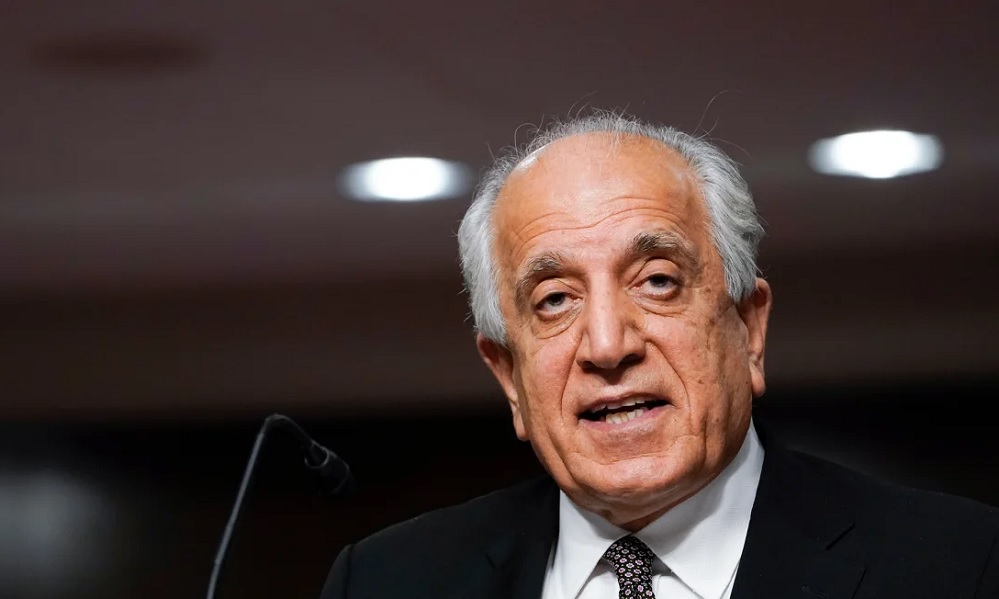
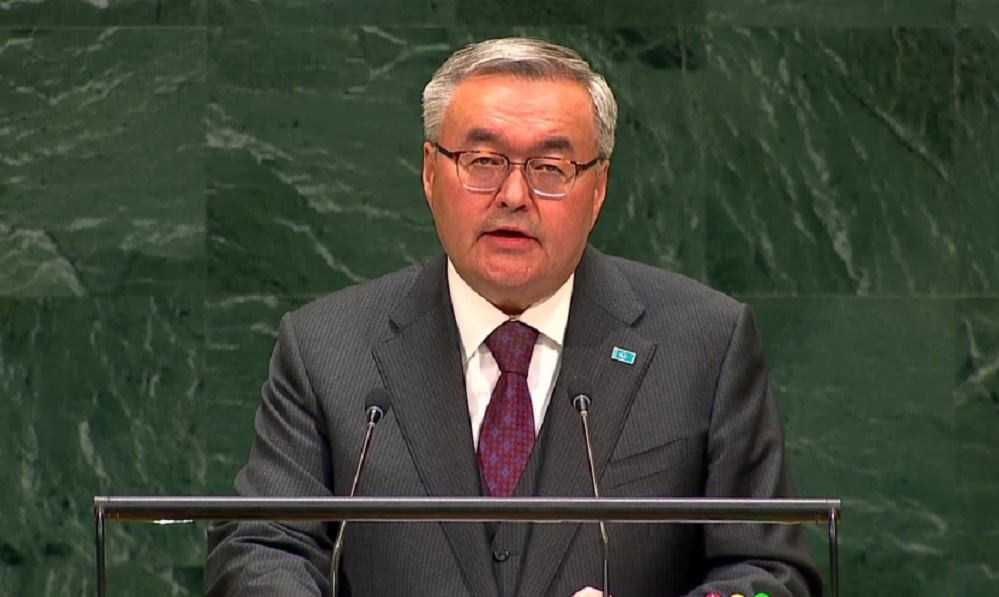
Kazakhstan’s Foreign Minister Mukhtar Tileuberdi has called for pragmatic and coordinated international engagement with Afghanistan, saying the country’s long-term stability is closely linked to the security and sustainable development of Central Asia.
Speaking during the general debate of the 81st session of the United Nations General Assembly in New York on Friday, Tileuberdi said humanitarian assistance to Afghanistan remains essential but alone cannot break the cycle of poverty, displacement and dependency.
He said Kazakhstan supports a “pragmatic, coordinated and step-by-step” approach to international engagement with Afghanistan, with the United Nations playing a central role.
Tileuberdi also said Kazakhstan is working with the UN to operationalize the United Nations Regional Centre for the Sustainable Development Goals for Central Asia and Afghanistan in Almaty.
He said the success of the centre should be measured by the results and assistance it delivers to the region.


Abu Muslim Farah defeat Khurasan Faryab 2-0 in ACL season six

Saar: Concerns over Pakistan’s political crisis discussed

Afghanistan Champions League: Omar Zawak Herat beat Toofan Herat 1-0

Blast in Pakistan’s Dera Ismail Khan kills 11, injures 30

Ariana Afghan Airlines increases Kabul-Delhi cargo flights

Saudi energy group signs major Afghanistan deals covering gas exploration and pipeline plans

Trump floats idea of renaming Atlantic or Pacific Ocean

US hits Egyptian bank branches with Iran sanctions as war marks six months

Nepal flood rescue mission enters critical phase as thousands remain missing

Iranian clubs to face Gulf opponents at neutral venues in Asian Champions League Elite
Saar: Concerns over Pakistan’s political crisis discussed

Exclusive interview with Abdul Latif Mansoor, Minister of MRRD

Tawsia: Overview of Afghanistan’s iron mines

Tahawol: Discussion on fresh Pakistani airstrikes on Afghanistan

Saar: Calls for international support for Afghanistan discussed
-

 World5 days ago
CNN, MS NOW and Politico sue Trump, challenging White House ban
-

 Latest News3 days ago
Ariana Afghan Airlines ranks seventh among 45 Central Asian airlines
-

 Latest News4 days ago
UN reiterates call for respect for international law after Kunar airstrikes
-

 Regional3 days ago
US and Iran hold first talks since June after Trump’s ‘annihilation’ threat
-

 Latest News3 days ago
Silk Road highway in Wakhan corridor now reaches the China border
-

 Latest News4 days ago
Afghan Official: Pakistan’s airstrikes will not go unanswered
-

 Sport4 days ago
Afghan boxing referee heads to China for international festival
-

 Regional5 days ago
G7 foreign ministers call on Iran to stop arming Houthis