
Business
Gold climbs to record high as tariff worries bolster safe-haven demand

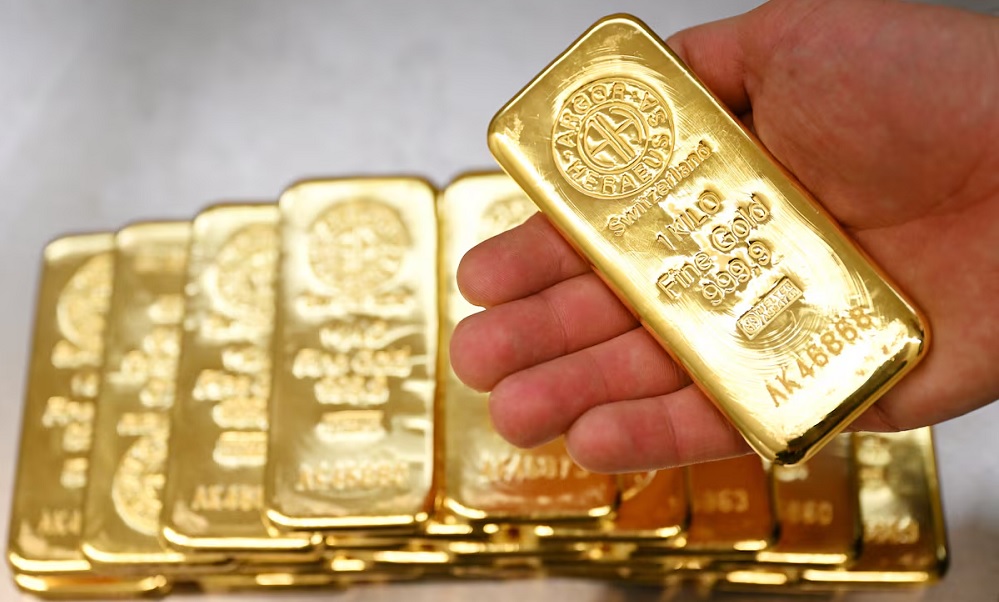
Gold’s record run extended to another all-time high on Tuesday, buoyed by safe-haven demand as investors brace for U.S. President Donald Trump’s planned announcement on reciprocal tariffs.
Spot gold was up 0.3% at $3,131.56 an ounce at 0914 GMT, after hitting a record high of $3,148.88 earlier, Reuters reported.
U.S. gold futures were 0.3% higher at $3,159.10.
“Trump’s tariff comments and his increasingly volatile stance on Russia’s war against Ukraine are proving the perfect chaos for new record gold prices,” surpassing even the COVID pandemic five years ago, said Adrian Ash, head of research at online marketplace BullionVault.
Trump said on Sunday his reciprocal tariffs to be announced on Wednesday would include all countries, rather than a limited number.
Goldman Sachs on Monday raised the probability of a U.S. recession to 35% from 20% and said it expected more rate cuts by the Federal Reserve, as Trump’s tariffs roil the global economy and upend financial markets.
Gold, traditionally seen as a hedge against uncertainty and inflation, has risen more than 15% this year. Non-yielding bullion also tends to do well in a low interest rate environment.
“The market is watching April 2 closely for further economic indicators that could impact Federal Reserve policy decisions. If rate cuts are confirmed, this would provide additional support for gold’s upward trajectory,” said Alexander Zumpfe, a precious metals trader at Heraeus Metals Germany.
Bullion’s rally this year has also been supported by strong demand from central banks, geopolitical instability in the Middle East and Europe, and increased flows into gold-backed exchange-traded funds.
In the last session, gold closed out its strongest quarter since 1986, and climbed over $3,100/oz, marking one of the most significant upswings in the precious metal’s history.
Investors will also monitor U.S. job openings data later on Tuesday and the U.S. non-farm payrolls report on Friday.
Silver steadied at $34.06 an ounce, platinum fell 0.4% to $988.35, and palladium gained 0.3% to $985.86.







Business
Afghanistan, Turkmenistan agree to establish joint road transport commission
The sides also agreed to establish a joint commission to address road transport issues and improve coordination.
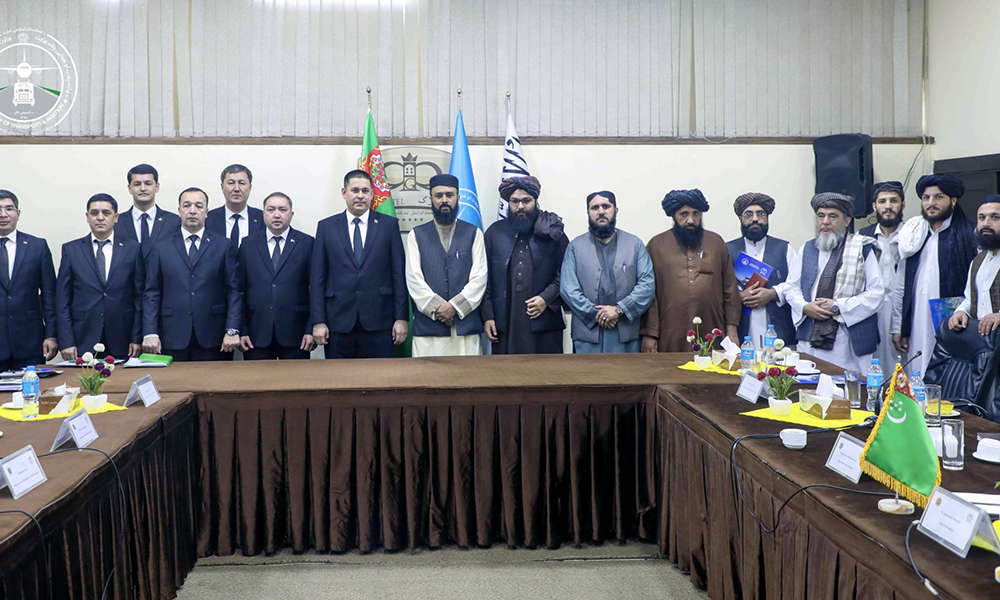
Afghanistan and Turkmenistan have agreed to establish a joint commission on road transport and facilitate transit between the two countries following two days of talks in Herat.
Afghanistan’s Ministry of Transport and Civil Aviation said the meeting brought together technical delegations from both countries to strengthen bilateral transport and transit cooperation.
The talks focused on easing visa procedures for Afghan and Turkmen drivers and traders, operationalising the Lapis Lazuli transit corridor and increasing the movement of transit vehicles between the two countries.
The sides also agreed to establish a joint commission to address road transport issues and improve coordination.
Representatives from Afghanistan’s ministries of foreign affairs, industry and commerce and the railway authority attended the talks, alongside the Ministry of Transport and Civil Aviation. Railway links, bilateral trade and wider transit cooperation were also discussed, with private-sector representatives expected to participate in future discussions.
The agreement comes as Turkmenistan works to strengthen its role as a regional transport and logistics hub, using its road, rail and Caspian Sea infrastructure to connect Central Asia with markets to the west and south.
A key part of that network is the International Seaport of Turkmenbashi, which links Turkmenistan with Azerbaijan and onward routes towards the South Caucasus and Europe.
Turkmenistan’s transport infrastructure also forms part of the wider Middle Corridor, or Trans-Caspian International Transport Route, connecting China and Central Asia with Azerbaijan, Georgia and Türkiye before reaching European markets.
For Afghanistan, the Lapis Lazuli Corridor is particularly important. It connects Afghanistan through Turkmenistan and across the Caspian Sea to Azerbaijan, Georgia and Türkiye, providing a potential route towards European markets.
Rail links such as the Herat-Torghundi line could further connect Afghanistan’s markets with Turkmenistan’s wider transport network.
The latest agreement puts road transport and transit facilitation at the centre of efforts by the two neighbours to expand trade and strengthen regional connectivity.
Business
TAPI gas deliveries to Afghanistan and Pakistan expected to begin in 2027
Turkmenistan regards TAPI as a key project for diversifying its gas exports and strengthening regional economic cooperation.
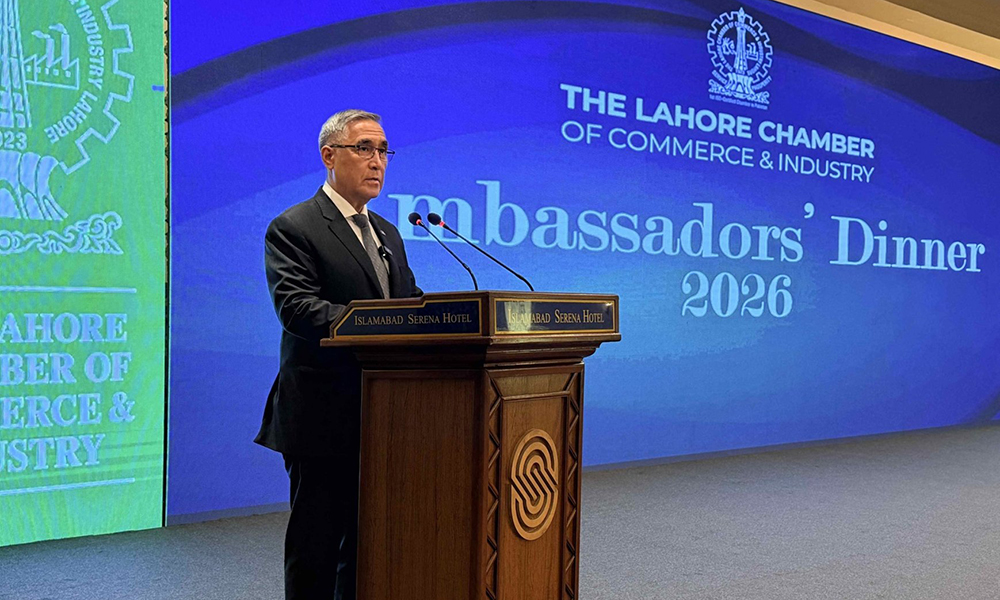
Turkmenistan expects natural gas supplies to Afghanistan and Pakistan through the Turkmenistan-Afghanistan-Pakistan-India (TAPI) pipeline to begin in 2027, according to the Turkmen Embassy in Islamabad.
Turkmen Ambassador Atajan Movlamov said construction of the strategically important Serhetabat-Herat section of the pipeline is expected to be completed by the end of this year.
Movlamov made the remarks during an Ambassadors’ Dinner hosted by the Lahore Chamber of Commerce and Industry in Islamabad.
He said the implementation of TAPI and other regional energy projects could strengthen Pakistan’s energy security while creating new opportunities for industrial development and economic growth.
The planned 1,800-kilometre pipeline is designed to transport up to 33 billion cubic metres of natural gas annually from Turkmenistan’s giant Galkynysh gas field through Afghanistan to Pakistan and India.
Turkmenistan regards TAPI as a key project for diversifying its gas exports and strengthening regional economic cooperation.
The Galkynysh field, which is the main resource base for TAPI, is among the world’s largest gas fields, with estimated reserves of more than 27 trillion cubic metres.
The project has faced years of delays, but recent construction and developments in the regional energy sector have renewed attention to TAPI as a potential link between Central Asian gas resources and South Asian energy markets.
Business
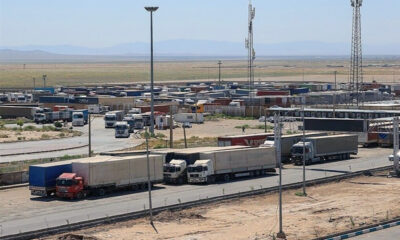
Dogharoun handles 60% of Iran’s exports to Afghanistan
Modoudi invited machinery manufacturing companies in Iran to establish operations in the area.
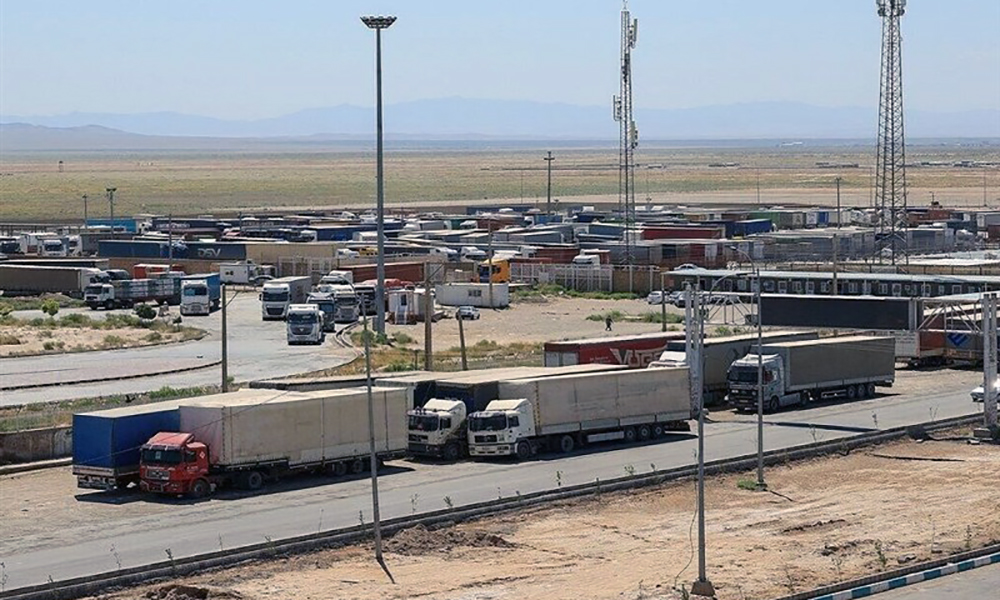
Mohammadreza Modoudi, CEO of the Dogharoon Free Zone, has criticized what he described as the neglect of Dogharoun’s potential, saying Iran ranks first among all countries in terms of exports of goods to Afghanistan.
He said 60 percent of this large volume of exports passes through the Dogharoun border crossing, adding that, despite this, the region’s significant potential has been overlooked.
Modoudi invited machinery manufacturing companies in Iran to establish operations in the area.
He said it is time to take a realistic approach and transform Dogharoun from a transit route into a major hub for production, value-chain development and a driving force for international trade.


Saudi Grand Mufti tells troops to be ready to sacrifice their lives fighting Houthis

Afghanistan wins two bronze medals in wushu at Asian Games

White House reinstates access to CNN, MS NOW and Politico following judge’s order

Toofan Herat beat Khurasan Faryab 2–1 in Afghanistan Champions League

Tahawol: Discussion on fresh Pakistani airstrikes on Afghanistan

Saudi energy group signs major Afghanistan deals covering gas exploration and pipeline plans

ATN secures exclusive rights to broadcast T20I series in India across Afghanistan

Trump floats idea of renaming Atlantic or Pacific Ocean

US hits Egyptian bank branches with Iran sanctions as war marks six months

Nepal flood rescue mission enters critical phase as thousands remain missing
Tahawol: Discussion on fresh Pakistani airstrikes on Afghanistan

Saar: Calls for international support for Afghanistan discussed

Tahawol: Opening of the 81st UN General Assembly Session

Saar: OIC Assessment of Afghanistan’s humanitarian and development situation discussed

Tahawol: Reactions to Pakistan’s attacks on Afghanistan discussed
-

 Sport4 days ago
Afghanistan to face Japan and Nepal in Asian Games cricket group stage
-
 Latest News5 days ago
Pakistan says Kohat attackers had roots in Afghanistan
-
 Regional4 days ago
Iran and US trade threats after Houthi attacks escalate regional conflict
-

 World3 days ago
CNN, MS NOW and Politico sue Trump, challenging White House ban
-
 Business5 days ago
Dogharoun handles 60% of Iran’s exports to Afghanistan
-
 World5 days ago
World leaders return to UN amid wars in Middle East and Ukraine
-

 Health4 days ago
Four-day polio vaccination campaign begins across Afghanistan
-
 Latest News4 days ago
Khalilzad condemns Pakistan airstrikes, says current strategy is not working