
Latest News
Pakistan’s PM claims TTP ‘resides’ and has training camps in Afghanistan

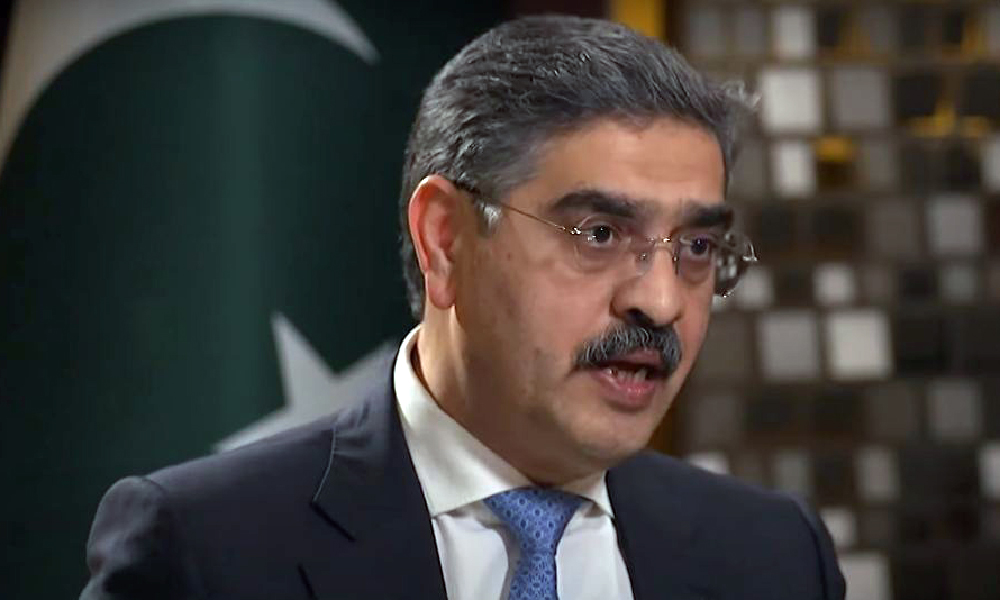
Pakistan’s Caretaker Prime Minister, Anwar ul Haq Kakar said this week that Tehreek-e-Taliban Pakistan (TTP) does “reside on Afghan soil” and that they even have training camps in the country.
In an interview with TRT this week, he said: “We do raise such issues with them (the IEA), there are training camps over there, on their soil (Afghanistan) which is a point of concern for us.”
He added however that Islamabad was not entirely sure whether “it’s all intentional,” and questioned whether the TTP enjoys “the patronage of that government (IEA).” That remains to be seen, he said, adding that Islamabad does not want to complicate the “relationship (with Afghanistan) as far as our security operations are concerned.”
Kakar went on to say that Pakistan is looking “at that complex web and trying to draw the right conclusion and devise our security policy accordingly.”
He denied Pakistan’s direct involvement in having helped bring the IEA back into the political arena and said instead “the Taliban (IEA) was actually acknowledged by the United States and its allies as one of the important players in Afghanistan.”
He went on to say however that Pakistan did play a role “of encouragement” prior to August 2021, as it was of the view that the IEA was “an important player in Afghan society.”
He said negotiating with a group like the IEA, pre-August 2021, had been a global challenge, and that Pakistan had been a “participant” in the “big picture”.
Kakar stated that while Pakistan did give its input, there was nothing they did that he regrets. He also said that leading up to the collapse of the former government many “powers” and international groups had been in a “rush to leave” Afghanistan.
They are the ones that should have thought about a political settlement, about creating an environment where the various groups and parties in Afghanistan could have held negotiations. This did not happen, and the government at the time had not even been included in talks, he said.
This exit strategy had been planned by the rest of the world, not Pakistan, he said.
Kakar stated that Pakistan has lost a total of about 90,000 people to terrorism but stated Pakistan has been successful in fighting the scourge and will continue to fight it.
The IEA meanwhile has repeatedly rejected claims that the TTP operate out of Afghanistan. The Islamic Emirate has said on numerous occasions that no group will be allowed to threaten another country from Afghanistan.






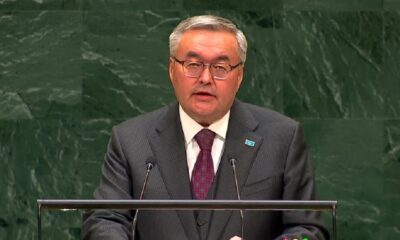




Kazakhstan’s Foreign Minister Mukhtar Tileuberdi has called for pragmatic and coordinated international engagement with Afghanistan, saying the country’s long-term stability is closely linked to the security and sustainable development of Central Asia.
Speaking during the general debate of the 81st session of the United Nations General Assembly in New York on Friday, Tileuberdi said humanitarian assistance to Afghanistan remains essential but alone cannot break the cycle of poverty, displacement and dependency.
He said Kazakhstan supports a “pragmatic, coordinated and step-by-step” approach to international engagement with Afghanistan, with the United Nations playing a central role.
Tileuberdi also said Kazakhstan is working with the UN to operationalize the United Nations Regional Centre for the Sustainable Development Goals for Central Asia and Afghanistan in Almaty.
He said the success of the centre should be measured by the results and assistance it delivers to the region.


Afghanistan Champions League: Omar Zawak Herat beat Toofan Herat 1-0

Blast in Pakistan’s Dera Ismail Khan kills 11, injures 30

Ariana Afghan Airlines increases Kabul-Delhi cargo flights

Khalilzad questions Pakistan’s commitment to Afghan welfare

India, UN envoy discuss Afghanistan’s humanitarian needs

Saudi energy group signs major Afghanistan deals covering gas exploration and pipeline plans

Trump floats idea of renaming Atlantic or Pacific Ocean

US hits Egyptian bank branches with Iran sanctions as war marks six months

Nepal flood rescue mission enters critical phase as thousands remain missing

Iranian clubs to face Gulf opponents at neutral venues in Asian Champions League Elite

Exclusive interview with Abdul Latif Mansoor, Minister of MRRD

Tawsia: Overview of Afghanistan’s iron mines

Tahawol: Discussion on fresh Pakistani airstrikes on Afghanistan

Saar: Calls for international support for Afghanistan discussed

Tahawol: Opening of the 81st UN General Assembly Session
-

 World4 days ago
CNN, MS NOW and Politico sue Trump, challenging White House ban
-

 Latest News3 days ago
Ariana Afghan Airlines ranks seventh among 45 Central Asian airlines
-

 Latest News4 days ago
UN reiterates call for respect for international law after Kunar airstrikes
-
 Latest News5 days ago
Khalilzad condemns Pakistan airstrikes, says current strategy is not working
-

 Regional3 days ago
US and Iran hold first talks since June after Trump’s ‘annihilation’ threat
-

 Latest News3 days ago
Silk Road highway in Wakhan corridor now reaches the China border
-

 Latest News4 days ago
Afghan Official: Pakistan’s airstrikes will not go unanswered
-

 Sport4 days ago
Afghan boxing referee heads to China for international festival