
Health
Russian fighting destroys, damages nearly 400 hospitals, medical centres, Zelenskiy says


Russia’s invasion of Ukraine has devastated hundreds of hospitals and other medical institutions and left doctors without drugs to tackle cancer or the ability to perform surgery, President Volodymyr Zelenskiy said.
Zelenskiy said many places lacked even basic antibiotics in eastern and southern Ukraine, the main battlefields.
“If you consider just medical infrastructure, as of today Russian troops have destroyed or damaged nearly 400 healthcare institutions: hospitals, maternity wards, outpatient clinics,” Zelenskiy said in a video address to a medical charity group on Thursday.
In areas occupied by Russian forces the situation was catastrophic, he said.
“This amounts to a complete lack of medication for cancer patients. It means extreme difficulties or a complete lack of insulin for diabetes. It is impossible to carry out surgery. It even means, quite simply, a lack of antibiotics.”
In one of the most widely denounced acts of the war, a maternity hospital was all but destroyed on March 9 in the besieged port city of Mariupol. Russia alleged pictures of the attack were staged and said the site had been used by armed Ukrainian groups.
The Kremlin says it targets only military or strategic sites and does not target civilians. Ukraine daily reports civilian casualties from Russian shelling and fighting, and accuses Russia of war crimes. Russia denies the allegations.
Pavlo Kyrylenko, governor of Donetsk region, said 25 people had been injured in intense shelling in the town of Kramatorsk, site of a railway station bombing last month in which more than 50 died. He said a total of 32 residential buildings had been damaged in the shelling.
Reuters could not immediately verify battlefield reports by Russia and Ukraine.
Russia calls its actions in Ukraine a “special operation” to disarm Ukraine and protect it from fascists. Ukraine and the West say the fascist allegation is baseless and that the war is an unprovoked act of aggression. More than 5 million Ukrainians have fled abroad since the start of the invasion.
Russia has turned its heaviest firepower on Ukraine’s east and south, after failing to take the capital Kyiv. The new front is aimed at limiting Ukraine’s access to the Black Sea, vital for its grain and metal exports, and linking Russian-controlled territory in the east to Crimea, seized by Moscow in 2014.
In the port city of Mariupol an estimated 200 civilians, along with Ukrainian resistance fighters, are trapped undergound in the Azovstal steel plant with little food or water.
The steel works was rocked by heavy explosions on Thursday as Russian forces fought for control of Ukraine’s last stronghold and the United Nations rushed to evacuate civilians.
President Vladimir Putin said Russia was prepared to provide safe passage for the civilians but reiterated calls for Ukrainian forces inside to disarm.
Putin declared victory over Mariupol on April 21 and ordered his forces to seal off the Soviet-era plant but not venture inside its underground tunnel network.
Ukraine’s stubborn defence of Azovstal has underlined Russia’s failure to take major cities in a 10-week-old war that has united Western powers in arming Kyiv and punishing Moscow with sanctions.
Clinging on desperately, Ukrainian fighters have reported fierce battles with Russian troops in Azovstal.
A Ukrainian fighter who said he was holed up in Azovstal accused Russian forces of breaching the plant’s defences for a third day despite an earlier pledge by Moscow to pause military activity to permit civilian evacuations.
“Heavy, bloody fighting is going on,” said Captain Sviatoslav Palamar of Ukraine’s Azov Regiment. “Yet again, the Russians have not kept the promise of a ceasefire.” Reuters could not independently verify his account or location.
The Kremlin denies Ukrainian allegations that Russian troops stormed the plant in recent days.
Aerial footage of the plant, released Thursday by Ukraine’s Azov Regiment, showed three explosions striking different parts of the vast complex, which was engulfed in heavy, dark smoke.
Reuters verified the footage location by matching buildings with satellite imagery, but was unable to determine when the video was filmed.
Russia’s military promised to pause its activity for the next two days to allow civilians to leave. The Kremlin said humanitarian corridors from the plant were in place.
Ukrainian Deputy Prime Minister Iryna Vereshchuk said on Thursday that people would be evacuated from Mariupol on Friday at 1200 local time (0900 GMT).
Sweeping sanctions from Washington and European allies have hobbled Russia’s $1.8 trillion economy, while billions of dollars worth of military aid has helped Ukraine frustrate the invasion.
European Union countries are “almost there” in agreeing the bloc’s proposed new package of sanctions against Russia, including an oil embargo, EU foreign policy chief Josep Borrell said. read more
The Kremlin said Russia was weighing responses to the EU plan.
Ukrainian officials have warned that Russia might step up its offensive before May 9, when Moscow commemorates the Soviet Union’s victory over Nazi Germany in World War Two.



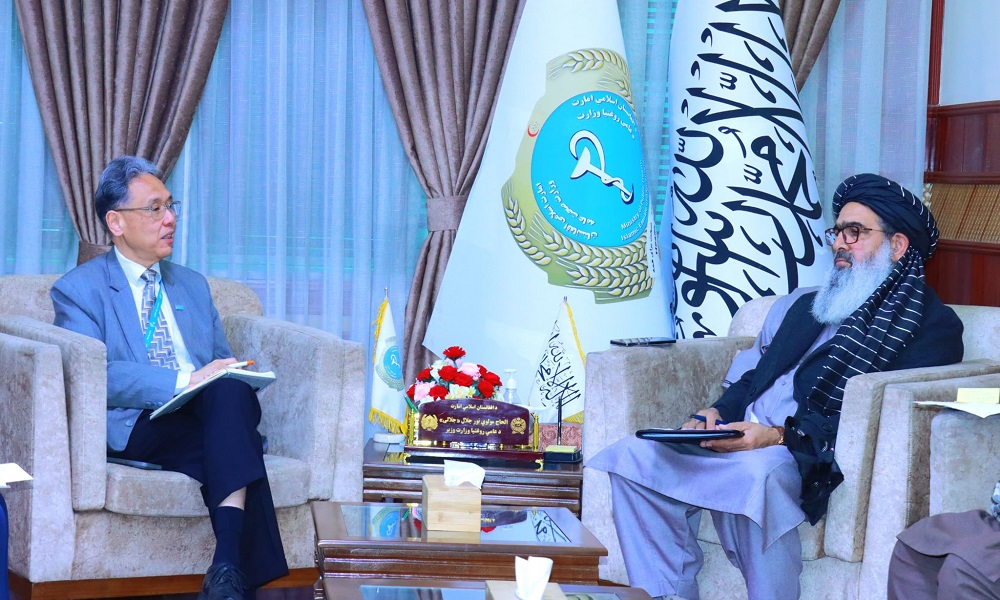
Afghanistan’s Minister of Public Health, Noor Jalal Jalali, met with the head of the World Health Organization in Afghanistan, Edwin Ceniza Salvador, to discuss expanding healthcare services and strengthening coordination in the country.
According to a statement issued Tuesday by the Ministry of Public Health, the meeting was attended by officials from the WHO and other representatives and focused on key health sector priorities and areas of mutual cooperation.
Participants discussed the expansion of health services across Afghanistan, capacity-building initiatives for healthcare workers, and the development of cancer-related services. They also reviewed operational coordination, transparency in the delivery of health services, and preparations for upcoming health-related meetings.
During the meeting, Jalali emphasized the importance of aligning health projects and services with the ministry’s national policies and strategic documents.
He stressed that all health initiatives should be implemented based on the priorities and needs identified by the Ministry of Public Health.
The minister also urged WHO officials to enhance transparency and strengthen coordination with the ministry while taking practical steps to improve the quality of health services and ensure broader public access to healthcare across the country.
For his part, Salvador reaffirmed the WHO’s commitment to maintaining close cooperation with the Afghan health ministry and to delivering essential health services in accordance with the ministry’s policies and priorities.
Health
Afghanistan faces acute shortage of specialist doctors, officials urge ethics and expansion of health services
Noor Jalal Jalali, the Minister of Public Health, said the ministry is making sustained and intensive efforts to address the gap and expand access to healthcare services in remote and underserved areas of the country.
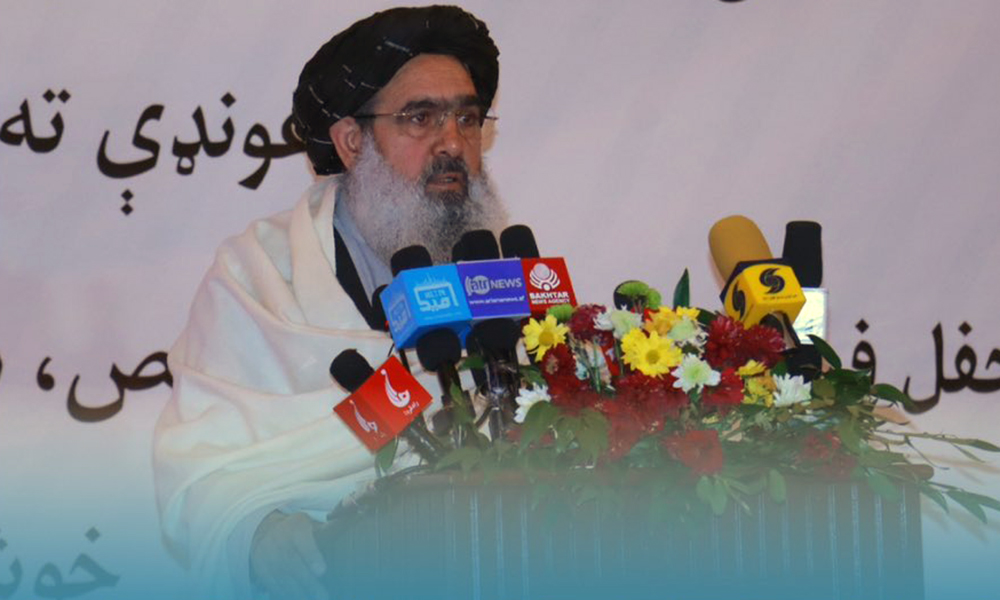
Afghanistan is continuing to face a serious shortage of specialist doctors, health officials said during the graduation ceremony of specialist physicians from the General Directorate of Medical Specialization for the year 1404.
Noor Jalal Jalali, the Minister of Public Health, said the ministry is making sustained and intensive efforts to address the gap and expand access to healthcare services in remote and underserved areas of the country.
According to Jalali, hospitals are still absent across 318 districts nationwide. He added that initial construction work for hospitals has been completed in 100 of these areas, stressing that strengthening health infrastructure and training qualified specialists remain top priorities for the ministry.
Jalali also called on doctors and health officials to uphold their professional and religious responsibilities by treating patients with compassion, dignity, and good conduct. He emphasized that medical practice should not be driven by material gain, but by the pursuit of public service and the well-being of the people.
Speaking at the same ceremony, Hamdullah Nomani, Minister of Communications and Information Technology noted a decline in public trust toward some medical professionals, saying that despite the presence of many committed and ethical doctors, the behavior of a few motivated solely by financial gain has undermined patient confidence. He urged newly graduated specialists to serve with sincerity and restore public trust in Afghanistan’s healthcare system.
Meanwhile, Abdul Wali Sadiqi, the financial and administrative deputy minister of public health, advised graduates to remain committed to their profession, fulfill their responsibilities honestly, and serve the public with dedication. He stressed that efforts in national service should match those made in personal affairs.
In addition, Abdul Baqi Haqqani, head of the National Examinations Authority, highlighted that humans carry two fundamental responsibilities: worship of Allah and preservation of health, underscoring the vital role doctors play in safeguarding public health.
Health sector experts say Afghanistan now needs skilled and professional medical personnel more than ever, calling for increased investment in specialist training and healthcare infrastructure to meet the country’s growing needs.
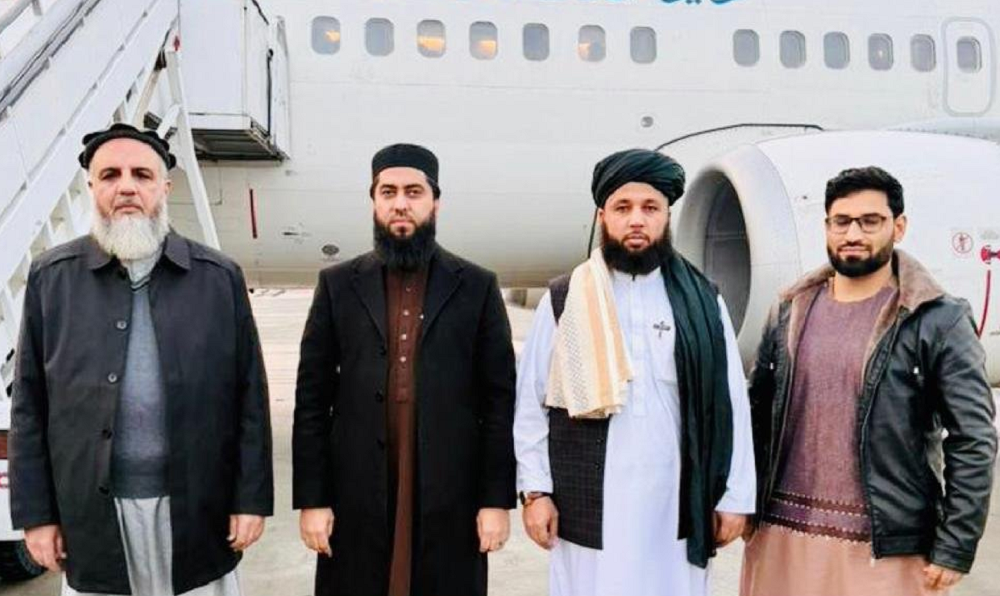
Naemullah Ayoubi, Director General of Drug and Health Products Regulation at Afghanistan’s Ministry of Public Health, has departed for Turkey on an official visit accompanied by a technical delegation.
The Ministry of Public Health said the delegation will hold meetings with officials from Turkey’s pharmaceutical regulatory authority and discuss a number of key issues related to the regulation of medicines and health products.
The delegation is also scheduled to visit several pharmaceutical manufacturing factories in Turkey.
According to the ministry, the visit aims to strengthen coordination between the two countries in the production and import of medicines, in order to ensure the availability of high-quality and affordable pharmaceuticals for people in Afghanistan in both the short and long term.


Human Rights Watch calls Pakistani airstrike on Kabul rehab center ‘unlawful’

Torkham crossing closes again hours after brief reopening

Trump signature to appear on US currency, ending 165-year tradition

Tahawol: Discussion on day 27 of Iran–US war

Turkey invites IEA’s commerce minister to Antalya Diplomacy Forum

Pakistani military jet downed in Afghanistan’s Jalalabad, pilot captured alive

Afghan Air Force conducts airstrikes in Islamabad, other cities

Prominent Muslim scholar issues fatwa calling for Afghanistan-Pakistan ceasefire

Afghan air force strikes key Pakistani military installations in retaliatory operation

IEA: Special circle in Pakistan has launched mission to destabilize region
Tahawol: Discussion on day 27 of Iran–US war

Saar: Islamic Emirate confident of Durand Line control

Tahawol: Efforts to release Mohammad Rahim from Guantanamo Bay Detention Camp

Saar: End of ceasefire between Afghanistan-Pakistan reviewed

Tahawol: Escalating threats between Iran-US discussed
-
 Latest News5 days ago
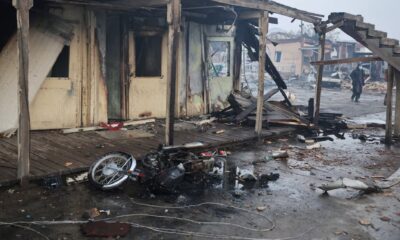
Deadly violence likely without dialogue between Afghanistan and Pakistan: ICG
-

 Latest News4 days ago
Pakistan seeks Russian mediation to resolve Afghanistan tensions
-
 Business5 days ago
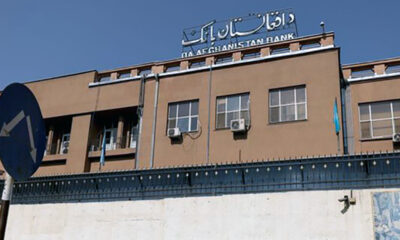
Afghani strengthens nearly 10% against US dollar amid banking sector reforms
-
 Latest News4 days ago
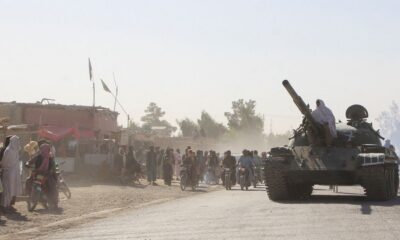
World must re-engage to prevent all-out Afghanistan-Pakistan war: Financial Times
-

 Sport3 days ago
Afghanistan squad hit by withdrawals ahead of AFC Asian Cup Qualifiers
-
 Latest News3 days ago
Around 2.3 million tourists visited Afghanistan’s recreational areas during Eid: Ghufran
-
 Latest News3 days ago
Islamic Emirate releases American prisoner Dennis Coyle
-
 Latest News5 days ago
Pakistani military violates Afghanistan ceasefire again