
Tahawol: Concerns over Russia-Ukraine ongoing war discussed










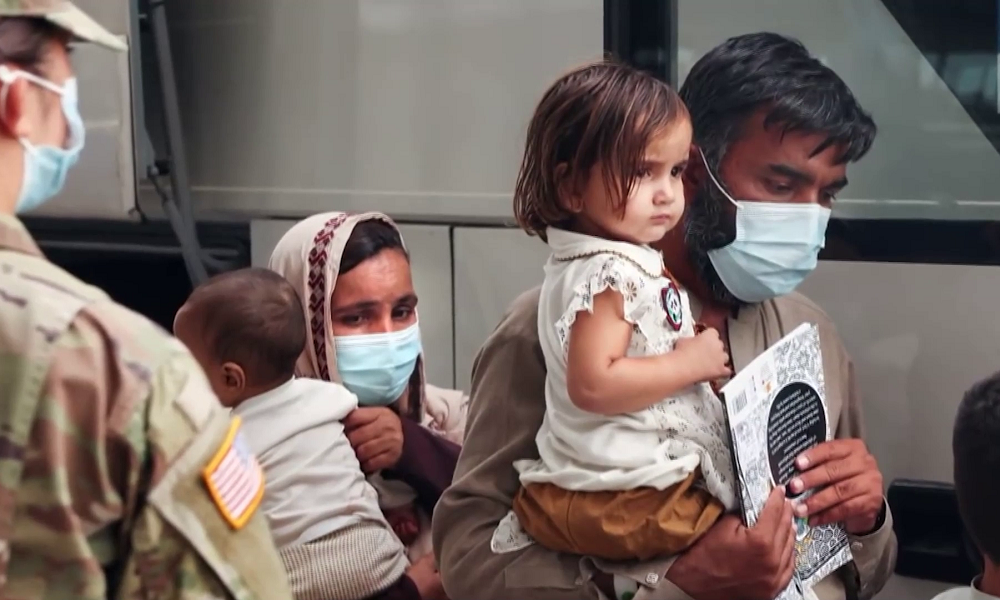
Hundreds of former U.S. officials are calling on Washington to cancel a reported plan to relocate Afghan refugees from Qatar to the Democratic Republic of the Congo.
In an open letter addressed to the U.S. State Department, more than 600 former civilian and military officials, along with around 100 organizations, urged the administration to stop the proposed transfer. The letter was sent to Marco Rubio.
The signatories argue that the Afghan nationals in question were brought to Qatar by the United States to complete legal immigration procedures after undergoing extensive security vetting. The letter states that while the individuals were cleared for resettlement in the United States, they are now being considered for relocation to Congo, a country for which they were never screened.
“Those individuals were vetted and approved for the United States, not for the Democratic Republic of the Congo,” the letter reads.
According to the report, more than 1,100 Afghan allies and their family members are currently being held at Camp As Sayliyah in Qatar under U.S. supervision. Around 800 of them have already completed all security checks and received authorization to travel to the United States. More than half are women and children, and many have remained in transit limbo for over 15 months.
The situation has drawn criticism from former officials and policy observers, who describe the proposed relocation as a betrayal of Afghan allies who supported U.S. missions and risked their lives during the war in Afghanistan. Critics also warn that the move could damage U.S. credibility with future partners.
Several members of the U.S. Congress had previously expressed opposition to the proposal, cautioning that it could significantly undermine trust in the United States among its allies.
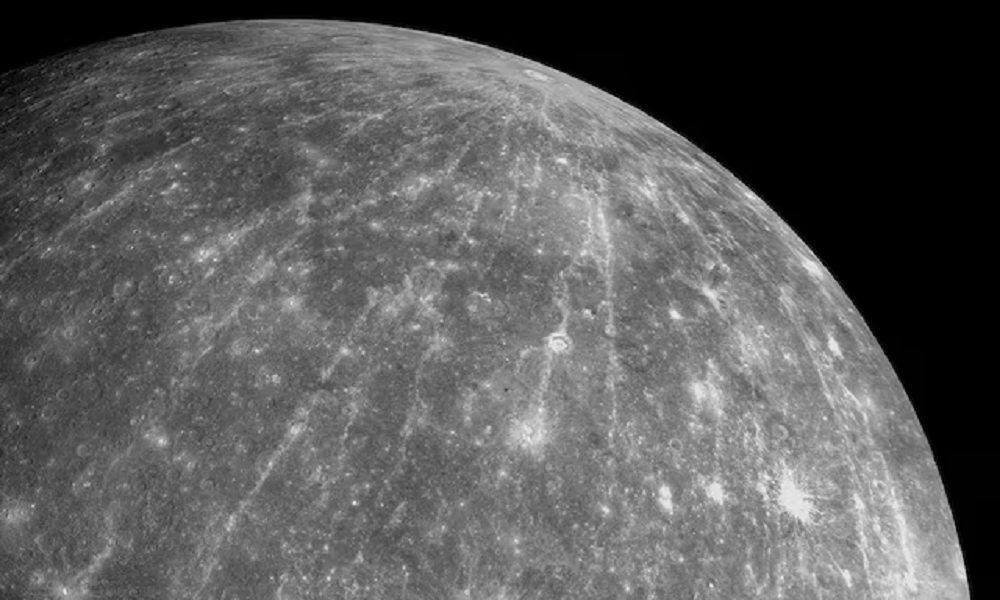
Astronomers using NASA’s James Webb Space Telescope have obtained the clearest view yet of the surface of a rocky exoplanet, revealing a scorched, atmosphere-free world that scientists say resembles a giant version of Mercury.
The planet, known as LHS 3844 b and nicknamed “Kua’kua,” appears to be a barren, uninhabitable world with extreme temperature swings and no detectable atmosphere, according to a study published this week in Nature Astronomy.
Researchers said the planet’s surface is likely covered in dark volcanic rock and ancient regolith — loose rocky debris formed over billions of years from relentless bombardment by radiation and micrometeorite impacts.
“This planet is not a nice place,” said astronomer Laura Kreidberg, senior author of the study. “It’s a hellish, barren rock — much more similar to Mercury than Earth.”
Located about 49 light-years away, LHS 3844 b orbits a small red dwarf star and completes a full orbit every 11 hours. The planet is tidally locked, meaning one side permanently faces its star while the other remains in darkness — similar to how the Moon always shows the same face to Earth.
Scientists found the planet’s dayside reaches roughly 1,340 degrees Fahrenheit (725 degrees Celsius), while the nightside showed almost no detectable heat.
Using Webb’s infrared instruments, researchers were able to directly analyze light coming from the planet’s surface — a major breakthrough for exoplanet science.
“Different rocks have different spectral fingerprints,” said lead author Sebastian Zieba. “Dark volcanic rocks like basalt matched our observations much better than brighter rocks like granite.”
The findings mark a new phase in exoplanet research, shifting beyond atmospheric studies toward direct analysis of alien geology and surface composition.
Since becoming operational in 2022, the Webb telescope has transformed scientists’ understanding of planets beyond the solar system, helping identify atmospheric chemistry, weather patterns and now even the nature of distant planetary surfaces.
Researchers said the absence of an atmosphere on LHS 3844 b means there is little protection from stellar radiation and virtually no possibility of liquid water — a key ingredient for life.
“So overall, this is almost certainly not a habitable world,” Zieba said.
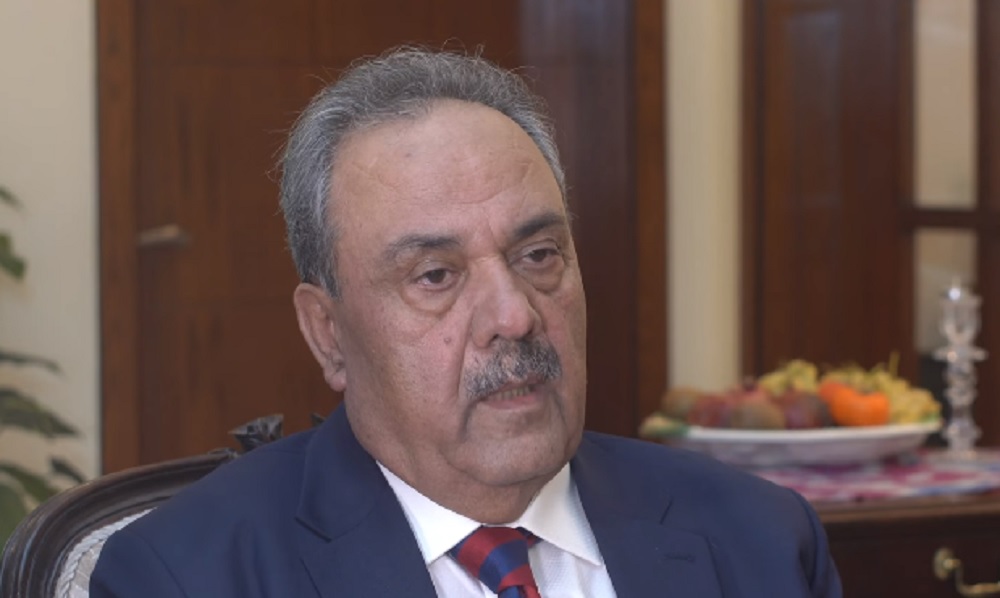


Former US officials urge halt to plan relocating Afghan refugees from Qatar to Congo

James Webb Telescope captures clearest-ever view of exoplanet’s surface

Ex-Pakistan envoy Durrani urges non-interference in Afghanistan’s internal affairs

New Afghanistan-China transport corridor launched via Turkmenistan

Uzbekistan and Japan discuss joint projects for Afghanistan’s socio-economic development

Bayat Power extends gas supply deal with Afghan Gas

Etihad Airways to expand Kabul–Abu Dhabi flights to daily service amid surging demand

Afghanistan’s new cricket head coach Richard Pybus arrives in Kabul

Afghanistan moves toward self-sufficiency in car battery production

ATN seals Ariana Snooker Championship deal for five seasons

Tahawol: Pressure on Afghan refugees from Tajikistan to Europe discussed

Saar: Ongoing criticism of Pakistan’s Afghanistan policy discussed

Tahawol: Diplomatic turn in Iran–US confrontation discussed

Saar: Expanding interaction between countries and IEA discussed

Tahawol: Deportation of Afghan refugees from Germany discussed
-

 Regional5 days ago
Iran says it has received US response to its latest offer for talks
-

 Sport4 days ago
Afghanistan set for Maldives four-nation tournament
-

 Business4 days ago
Kazakhstan grain exports to Afghanistan jump sharply
-

 Tahawol5 days ago
Tahawol: Efforts for US-Iran agreement
-

 Regional4 days ago
US plans operation to assist ships stranded in Strait of Hormuz
-
 Latest News4 days ago
Leadership reshuffle announced across Afghanistan’s admin and security sectors
-

 Latest News3 days ago
Pakistan’s Achakzai pushes for Afghanistan dialogue amid economic strain
-

 Latest News4 days ago
Austrian interior minister heads to Uzbekistan to finalize Afghan deportation deal