
Latest News
Thousands of Afghan evacuees flagged for security concerns in US since 2021
The Justice Department’s Inspector General reported in June that 55 individuals on the U.S. terror watch list had reached ports of entry by May 2023, including some added to the list during the evacuation period.

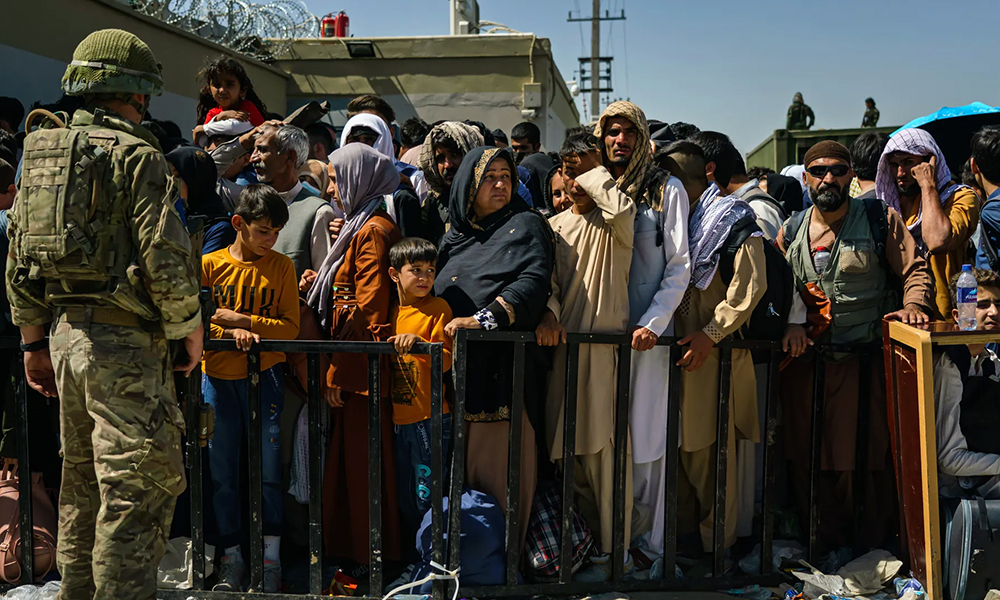
Newly released federal data reveals that thousands of Afghans who entered the United States following the 2021 withdrawal were flagged for potential security or background concerns, putting renewed scrutiny on the Operation Allies Welcome resettlement program.
According to figures provided by the Department of Homeland Security (DHS) to Senate Judiciary Committee Chair Chuck Grassley, authorities identified “potential derogatory information” on 6,868 Afghan evacuees who arrived after the fall of Kabul. Of those:
5,005 were linked to potential national security concerns
956 were flagged for public safety issues
876 for possible fraud indicators
While most of the concerns were later resolved, DHS reported that 885 individuals remained with unresolved national security flags as of September.
Grassley, who has long questioned vetting procedures during the rapid evacuation, said the new data demonstrates “glaring red flags” in the process that brought more than 70,000 Afghans to the United States.
Figures Emerge Amid Fallout From Washington Shooting
The disclosure comes days after a deadly shooting near the White House that killed National Guard member Sarah Beckstrom, 20, and critically injured Andrew Wolfe, 24. The suspect, Rahmanullah Lakanwal, a 29-year-old Afghan evacuee who arrived in 2021, has been charged with first-degree murder and multiple counts of assault.
The attack reignited national debate over vetting standards. President Donald Trump ordered an immediate review of screening procedures for migrants from high-risk countries, directed federal agencies to pause asylum decisions, and suspended visa issuance for all Afghan passport holders while the process is reassessed.
Inspectors General Raised Vetting Concerns
Correspondence from DHS Secretary Kristi Noem to Grassley noted that the department had faced “obstacles to screen, vet, and inspect all evacuees.” Additional watchdog reports have highlighted weaknesses:
A DHS Inspector General review found a “fragmented process” for tracking potential security risks within the program.
The Justice Department’s Inspector General reported in June that 55 individuals on the U.S. terror watch list had reached ports of entry by May 2023, including some added to the list during the evacuation period.
The FBI has similarly warned that the speed of the 2021 evacuation “overtook normal processes,” increasing the risk that dangerous individuals could slip through screening.
Federal prosecutors recently charged two Afghan nationals—Nasir Ahmad Tawhedi and Abdullah Haji Zada—with plotting an ISIS-inspired attack to disrupt the 2024 election in Oklahoma City. Tawhedi pleaded guilty in June and faces up to 35 years in prison; Zada was sentenced to 15 years.
Fallout and Political Response
The Washington shooting placed renewed attention on Trump’s crime-prevention deployment in the capital, where both Beckstrom and Wolfe had been serving. Following the attack, Trump ordered an additional 500 National Guard personnel into Washington, with nearly 2,200 troops now operating under the joint task force.
Lakanwal, who lived in Washington state with his family, previously served in a CIA-backed “Zero Unit” in Kandahar, according to federal officials and relatives.
Trump accused the Biden administration of enabling the suspect’s entry in 2021. Immigration officials later confirmed that Lakanwal had applied for asylum under former president Joe Biden but was granted asylum earlier this year under Trump.
The policy reversals have drawn criticism from advocacy groups. Shawn VanDiver, president of #AfghanEvac, said the administration was “using a single violent individual as cover for a policy they have long planned,” arguing that the changes unfairly punish Afghan allies.
Ongoing Review of Vetting Standards
USCIS Director Joseph Edlow said asylum decisions will remain paused “until we can ensure every alien is vetted and screened to the maximum degree possible.” Secretary of State Marco Rubio announced that visa issuance for Afghan passport holders is also temporarily suspended.
The new DHS data is now at the center of a broader political and security debate that has intensified following the Washington attack, with federal agencies under pressure to demonstrate that updated vetting procedures are robust and comprehensive.





Latest News
Five years out of school: Amnesty raises alarm over Afghan girls’ education
Five years on, millions of Afghan girls remain out of secondary school and unable to return to their classrooms.

Amnesty International says five years have passed since millions of girls in Afghanistan were deprived of secondary education, warning that the continued restrictions are affecting the future and aspirations of an entire generation.
The organization’s South Asia regional office said Thursday, September 17, on X that five years without access to education represent five years of injustice and lost opportunities for Afghan girls.
Despite the restrictions, Amnesty said girls across Afghanistan continue to seek ways to pursue their education, including through online learning, protests and, for some, migrating abroad to continue their studies.
Amnesty International has called on the international community to stand with Afghan women and girls and urge the Islamic Emirate to reopen girls’ secondary schools as soon as possible.
Five years on, millions of Afghan girls remain out of secondary school and unable to return to their classrooms.
The Islamic Emirate, however, has described girls’ education above the sixth grade as an internal matter and said efforts are underway to address the issue.
Latest News
Afghanistan condemns alleged drone attack on Mecca
Balkhi also warned that any threat to the holy sites could deeply anger Muslims and contribute to further instability in the region.
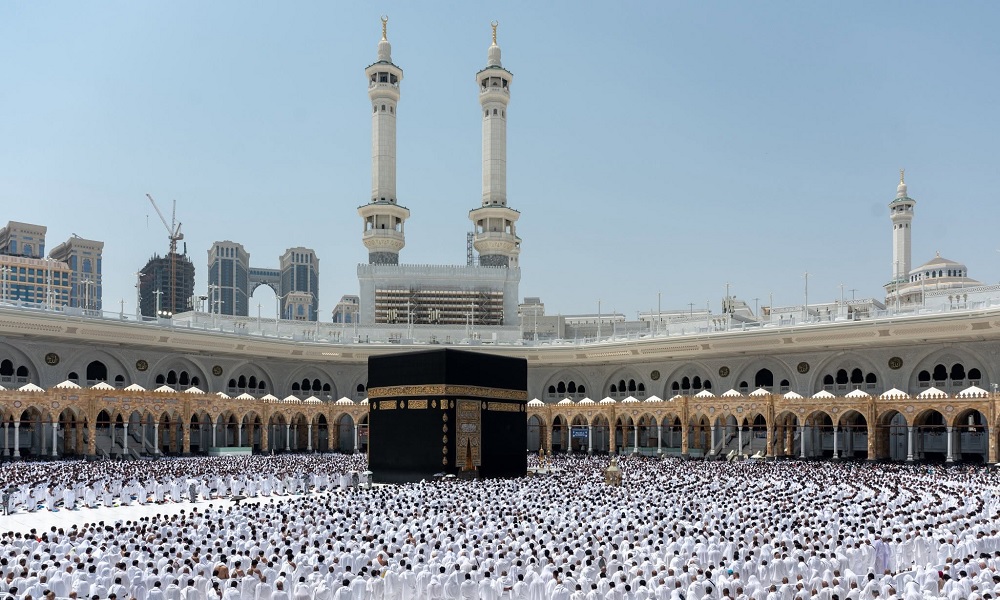
Afghanistan’s Ministry of Foreign Affairs has strongly condemned an alleged drone attack on Mecca, calling any threat to the Two Holy Cities an “unforgivable crime.”
“Any action against the Two Holy Cities that threatens the security and sanctity of these sacred sites is an unforgivable crime,” Abdul Qahar Balkhi, spokesperson for the ministry, said.
He stressed that the Two Holy Cities are sacred and highly respected sites shared by the Muslim world, and that their security and sanctity must be protected from conflicts, violence and military actions.
Balkhi also warned that any threat to the holy sites could deeply anger Muslims and contribute to further instability in the region.
Saudi Arabia’s air defences intercepted and destroyed a Houthi drone south of Mecca on Tuesday before it entered prohibited airspace over the holy city, said a spokesman for the Saudi-led military coalition fighting Yemen’s Iran-aligned Houthis.
A Houthi military source denied the group posed any threat to Mecca or other holy sites, in comments carried by the Houthi-run SABA news agency on Tuesday.
Latest News
Quetta commissioner calls for stronger coordination on Afghan refugee repatriation
According to the briefing, approximately 23,000 Afghan refugees remain in Quetta, with relevant departments continuing efforts to facilitate their repatriation.
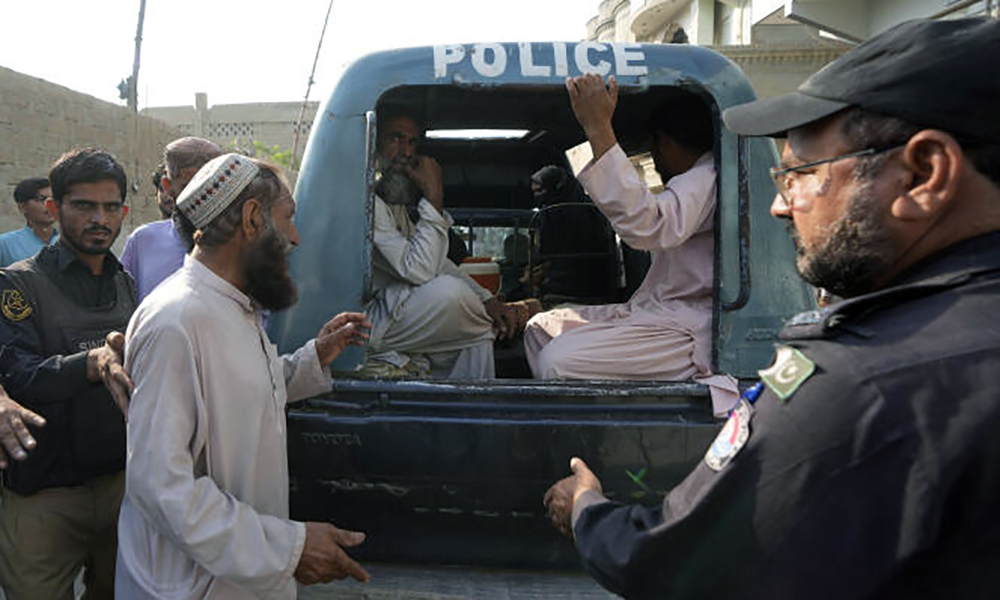
Quetta Commissioner Zeeshan Lashari has directed relevant departments to strengthen coordination to ensure the effective repatriation of Afghan refugees from Balochistan to Afghanistan.
A meeting chaired by Lashari reviewed administrative arrangements and measures related to the return of Afghan refugees.
Officials told the meeting that around 800,000 Afghan refugees in Balochistan have already been repatriated to Afghanistan, while more than 350,000 others have returned voluntarily.
According to the briefing, approximately 23,000 Afghan refugees remain in Quetta, with relevant departments continuing efforts to facilitate their repatriation.
The meeting also discussed the issue of Afghan refugees who return to Afghanistan but later attempt to re-enter Pakistan. Officials agreed to seek guidance from the Home Department on how such cases should be handled.
Lashari directed authorities to improve coordination among relevant institutions and ensure that the repatriation process is carried out effectively.
He also instructed officials to take action in accordance with applicable laws and government policy against those who attempt to re-enter Pakistan after returning to Afghanistan.


Five years out of school: Amnesty raises alarm over Afghan girls’ education

Afghanistan condemns alleged drone attack on Mecca

Quetta commissioner calls for stronger coordination on Afghan refugee repatriation

US sentences Afghan man to 20 year in case linked to 2021 Kabul airport bombing

Top Qatari official meets Afghan interior minister in Kabul

Four mediators struggle to secure lasting Pakistan-Afghanistan ceasefire

Afghanistan’s trade diversification challenges Pakistan

Syria and Saudi Arabia condemn Kabul bombing, express solidarity with Afghanistan

Saudi energy group signs major Afghanistan deals covering gas exploration and pipeline plans

Afghanistan-India T20I series could see major schedule change

Tahawol: Afghanistan’s readiness for US relations discussed

Saar: UN Security Council meeting on Afghanistan discussed

Tahawol: Afghanistan at the center of UN discussions

Saar: Afghanistan’s relations with regional countries discussed

Tahawol: Houthis’ return to regional power dynamics
-

 Sport4 days ago
Zadran calls on Afghan fans to rally behind team against India
-
 Latest News4 days ago
Khalilzad warns US risks losing influence in Afghanistan to China and Russia
-
 Business4 days ago
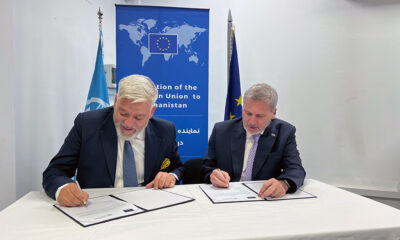
EU and FAO launch €5m programme to strengthen Afghanistan’s agrifood sector
-
 World4 days ago
Houthi advance in Yemen puts U.S. in a new bind
-

 Regional4 days ago
Iran and UAE back joint BRICS statement urging restraint in war
-

 Sport4 days ago
India beat Afghanistan by seven wickets in first T20I
-
 Latest News5 days ago
Chinese ambassador, Muttaqi discuss expanding bilateral relations
-
 Latest News3 days ago
Helmand governor, UNAMA discuss province’s key challenges