
Business
Uruzgan mayor determines Kaldar as second valuable exchange

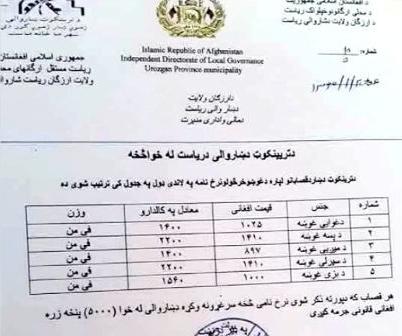

Officials in Directorate of Local Governance have stated that the Uruzgan mayor has announced the Pakistani rupees called Kaldar as the second exchange currency in the markets, using foreign currencies will decrease the values of the Afghan currency within the markets, saying investigation will be launched to pursue the following issue.
Officials in Ministry of Finance urged exchanging of foreign notes while purchasing goods are contrary to Afghanistan Finance laws.
Media accessed document indicating that Uruzgan mayor has determined Pakistani rupees called Kaldar as the second valuable exchanged while purchasing meat and some other basic food from the markets.
Officials in Directorate of Local Governance have confirmed the following food price list saying investigation is underway to pursue the following issue.
Directorate of Local Governance Spokeswoman Munira Yusofzada said,” We confirm the following price list of the basic food released by the Uruzgan Municipal, the Governor of Uruzgan will investigate about the issue and is willing to share the results soon with media.”
Uruzgan Governor Spokesman Dost Mohammad Nayab said,” We promise pursuing the issue and sharing the results with central Government and the media outlets soon, after the investigation it will be declared if the following Mayor still can hold his position.”
Meanwhile officials in Ministry of Finance despite of giving no comments calling the following action against the law.
Ministry of Finance Spokesman Ajmal Hameed AbdulRahimzai said,” I don’t want to say any words about that but in general the following action is contrary to financial law.”
Economy experts believed that using foreign notes on daily purchasing process will decrease the values of the Afghani currency, based on the reports that in some provinces of Afghanistan foreign currencies Kaldar, Tuman and even US Dollars are being used to purchase goods or to carrying the business.
Reported by Ali Asghari

Business
Gold extends gains after US, Iran reach peace deal
The U.S. dollar fell to a 10-day low, making greenback-priced bullion cheaper for other currency holders, while oil prices slipped more than 4%.
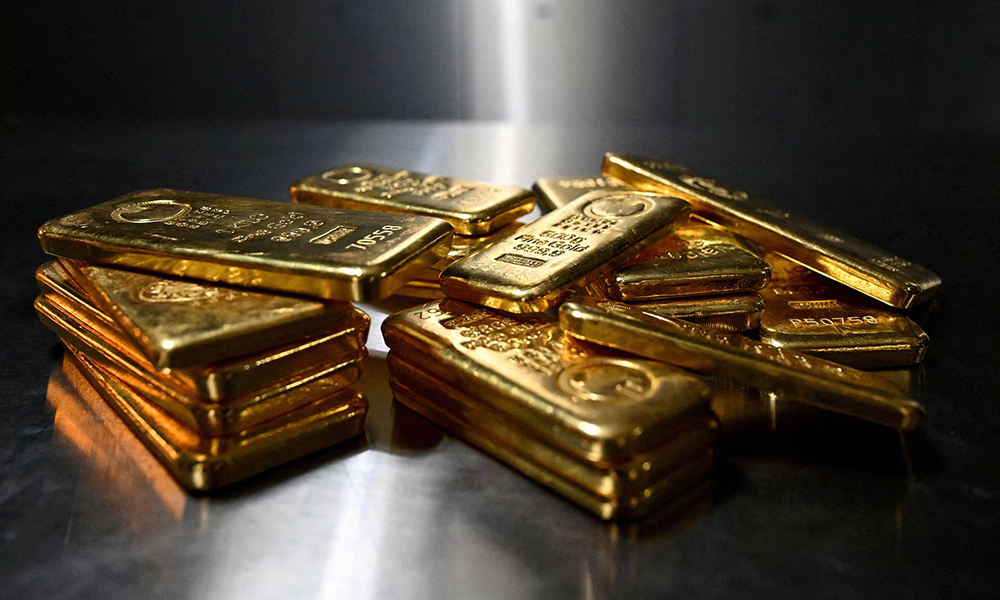
Gold rose more than 2% on Monday after U.S. and Iran officials said they had reached an initial agreement to end their war, pushing oil prices lower and easing concerns about inflation and higher interest rates, Reuters reported.
Spot gold climbed 2.5% to $4,322.87 per ounce by 0312 GMT, hitting its highest level since June 9 and extending gains for a third straight session. U.S. gold futures for August delivery rose 2.5% to $4,344.80.
U.S. and Iranian officials said on Sunday they had agreed on a framework to end their war, halt the U.S. blockade of Iran and reopen the Strait of Hormuz.
The pact will be officially signed on Friday in Switzerland, Pakistani Prime Minister Shehbaz Sharif said in a post on X.
The U.S. dollar fell to a 10-day low, making greenback-priced bullion cheaper for other currency holders, while oil prices slipped more than 4%.
“Lower oil prices and a softer dollar, stemming from reduced geopolitical risk and the anticipated reopening of the Strait of Hormuz, are helping to calm inflation expectations,” said Tim Waterer, chief market analyst at KCM Trade.
“This combination is providing the precious metal with its best tailwind in recent weeks, though sustainability will depend on how durable the peace agreement proves to be.”
Gold prices have fallen about 20% since the start of the U.S.-Israeli war against Iran in late February. The effective closure of the Strait of Hormuz has led to a sharp increase in global oil prices, stoking inflation concerns and raising expectations of interest rates staying higher for longer.
Bullion loses appeal in a high-interest-rate environment as it is a non-yielding asset.
Markets have scaled back expectations for a U.S. rate hike in December to 48% after the peace deal, down from 69% last week, according to the CME FedWatch tool. FEDWATCH
Investors now await the Federal Reserve policy decision and remarks, the first under Chair Kevin Warsh, on Wednesday, with rates widely expected to remain unchanged, read the report.
“Currency debasement concerns, fiscal risks and ongoing geopolitical fragmentation continue to underpin long-term demand (for gold). A moderation in energy-led inflation could help these themes regain traction,” OCBC said in a note.
Spot silver rose 3.6% to $70.39 per ounce, platinum gained 3.3% to $1,773.70 and palladium climbed 3.3% to $1,324.75.
Business
Iranian investors eye Afghanistan’s mining sector as bilateral cooperation expands
Representatives of the Iran-Afghanistan Joint Chamber of Commerce praised the ministry’s efforts to attract investment, saying improved security conditions and growing business opportunities have encouraged Iranian firms to explore projects in Afghanistan.
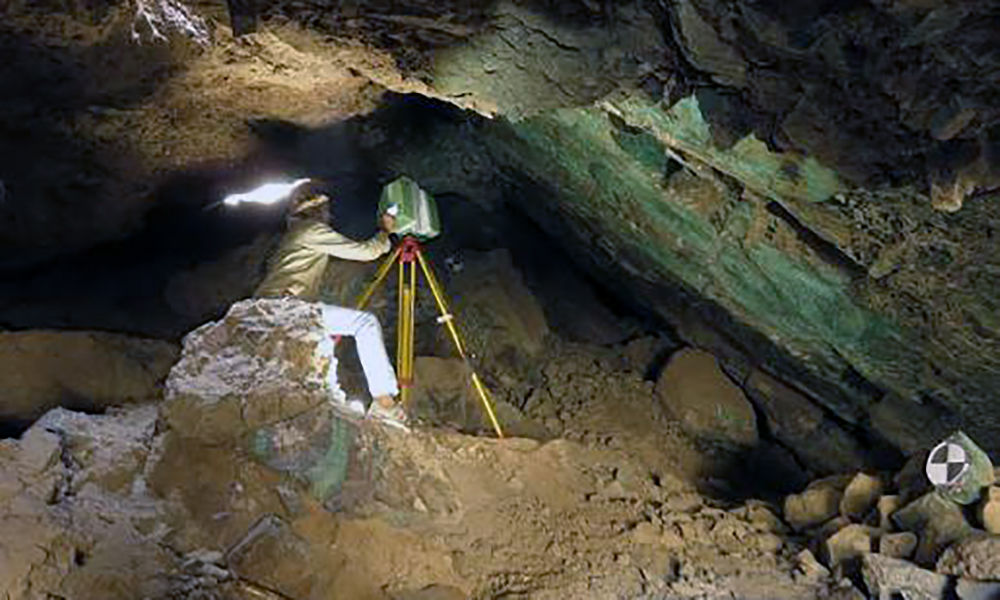
Afghanistan’s Ministry of Mines and Petroleum says a number of Iranian companies and investors have expressed interest in investing in the country’s mining and petroleum sectors as economic cooperation between the two neighbors continues to expand.
According to the ministry, Deputy Minister for Policy and Programs Abdul Rahman Qanit met on Saturday with Iran’s ambassador to Afghanistan, Alireza Bikdeli, representatives of the Afghanistan-Iran Joint Chambers of Commerce, and an accompanying delegation to discuss investment opportunities and bilateral cooperation.
During the meeting, Bikdeli outlined plans and initiatives linked to agreements reached during a previous visit by officials from Afghanistan’s Ministry of Mines and Petroleum to Iran. He emphasized the importance of strengthening cooperation between the two countries, particularly in the mining industry.
Qanit welcomed the delegation and highlighted Afghanistan’s significant mineral wealth, reaffirming the ministry’s commitment to supporting foreign investment in the sector.
“Afghanistan is a mineral-rich country, and the Ministry of Mines and Petroleum welcomes all international investors interested in investing in the country’s mining sector,” he said, adding that the ministry is prepared to provide the necessary facilities and support for investors.
Representatives of the Iran-Afghanistan Joint Chamber of Commerce praised the ministry’s efforts to attract investment, saying improved security conditions and growing business opportunities have encouraged Iranian firms to explore projects in Afghanistan.
They noted that Iranian investors are especially interested in the mining and petroleum sectors and expressed the private sector’s willingness to cooperate in technical training, engineering development, and the transfer of expertise in mineral exploration and extraction.
At the conclusion of the meeting, Qanit assured participants that the ministry would provide full cooperation to investors in line with Afghanistan’s Mining Law and established procedures.
The discussions come as Afghanistan seeks to attract foreign investment to develop its vast untapped mineral resources and strengthen regional economic ties.
Business
Iranian private sector delegation arrives in Kabul to boost trade and investment cooperation
The Iranian delegation is expected to continue consultations with a wide range of Afghan business representatives and private sector stakeholders during its seven-day stay.
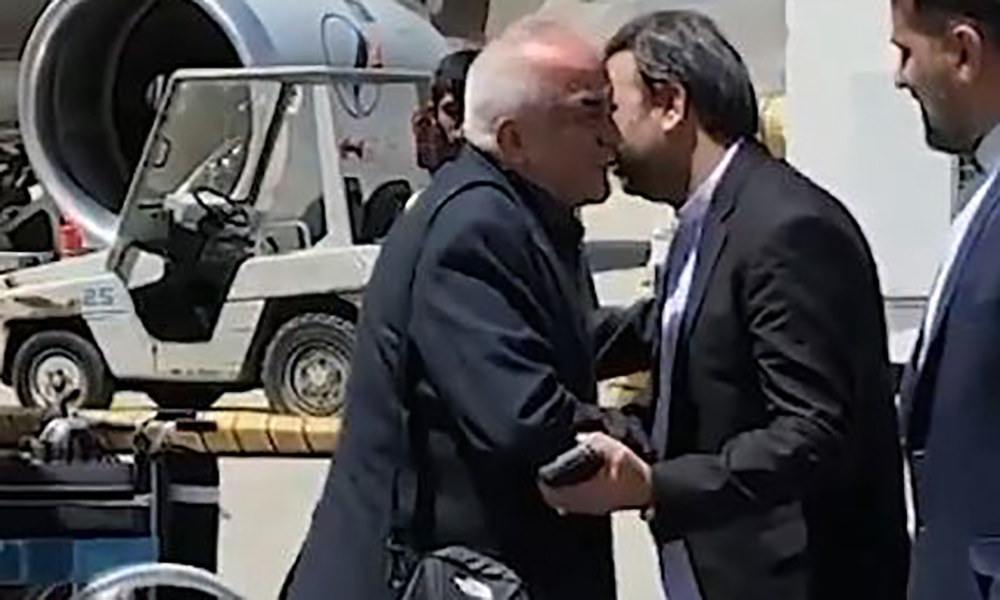
A high-level Iranian private sector delegation, led by the head of the Iran–Afghanistan Joint Chamber of Commerce, has arrived in Kabul for a week-long visit aimed at expanding trade and investment cooperation between Afghanistan and Iran.
According to the Iranian Embassy in Kabul, the delegation will hold a series of meetings with Afghan business leaders and officials in Kabul before traveling to Mazar-i-Sharif. Discussions will focus on strengthening bilateral trade relations, increasing trade volumes, and exploring new investment opportunities in key economic sectors.
Officials from the Afghanistan Chamber of Commerce and Investment (ACCI) said talks with the visiting delegation have already centered on enhancing commercial cooperation, supporting private sector partnerships, and increasing Afghan exports to Iranian markets.
Sayed Karim Hashimi, head of the ACCI, highlighted Afghanistan’s growing investment potential, stating that the country currently offers favorable conditions and significant opportunities for regional and international investors.
Meanwhile, Iran’s ambassador to Kabul said the delegation will assess existing trade-related challenges and work with Afghan counterparts to identify practical measures for improving economic cooperation and facilitating cross-border commerce.
Afghan trade officials noted that one of the primary objectives of the visit is to secure greater market access for Afghan products in Iran while laying the groundwork for stronger long-term economic partnerships between the two neighboring countries.
The Iranian delegation is expected to continue consultations with a wide range of Afghan business representatives and private sector stakeholders during its seven-day stay.


World Cup 2026: Havertz, Ayari and Balogun lead Golden Boot standings

Peshawar economy under pressure amid ongoing crossing closures

G7 leaders meet in France after US and Iran declare agreement to end war

Gold extends gains after US, Iran reach peace deal

Global leaders react to announcement of US-Iran peace agreement

Norway’s Viking-inspired World Cup team photo goes viral

Large blast near Beit Shemesh part of pre-planned test: Israeli defense firm

Trump returns from China with stability but little progress

Afghanistan announce squad for India series

Afghanistan, Russia sign military cooperation agreement

Tahawol: Pakistan PM defending Durand Line fencing

Saar: Afghanistan-Pakistan tensions discussed

Saar: Possible agreement between Iran and US discussed

Tawsia: Increase in Afghanistan’s saffron exports discsused

Tahawol: Middle East crisis and future of Islamic world discussed
-

 Sport4 days ago
Afghanistan A edge India A by four runs in rain-hit Tri-Nation opener
-

 International Sports4 days ago
Mexico and South Africa set to open historic 2026 World Cup
-
 Regional5 days ago
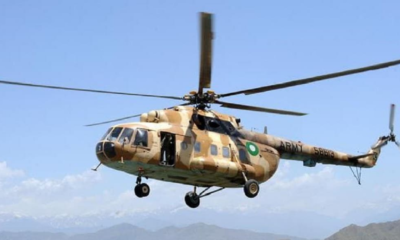
Pakistan says all aboard military helicopter killed in crash in Pakistani Kashmir
-
 Latest News3 days ago
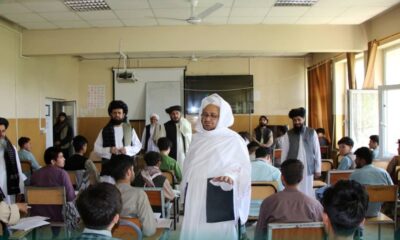
Final round of 1405 Kankor exam concludes in Afghanistan
-
 Regional24 hours ago
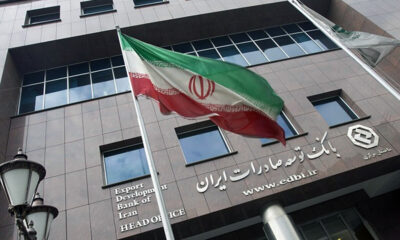
Iran banks hit by major cyber attack
-
 Latest News2 days ago
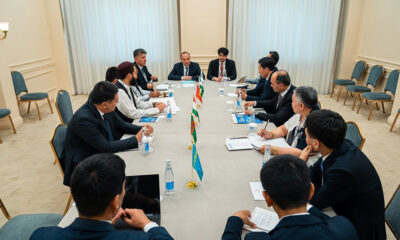
Central Asia–Afghanistan dialogue underscores regional connectivity and stability
-
 World4 days ago
US, Iran exchange attacks as Trump threatens further escalation
-

 Business4 days ago
Etihad Airways to launch twice-daily Kabul flights from July