
Regional
IRGC intelligence chief killed as wave of strikes continues against Iran’s leadership
The killings come against the backdrop of a rapidly intensifying conflict that began with large-scale strikes in late February and has since expanded across multiple fronts.

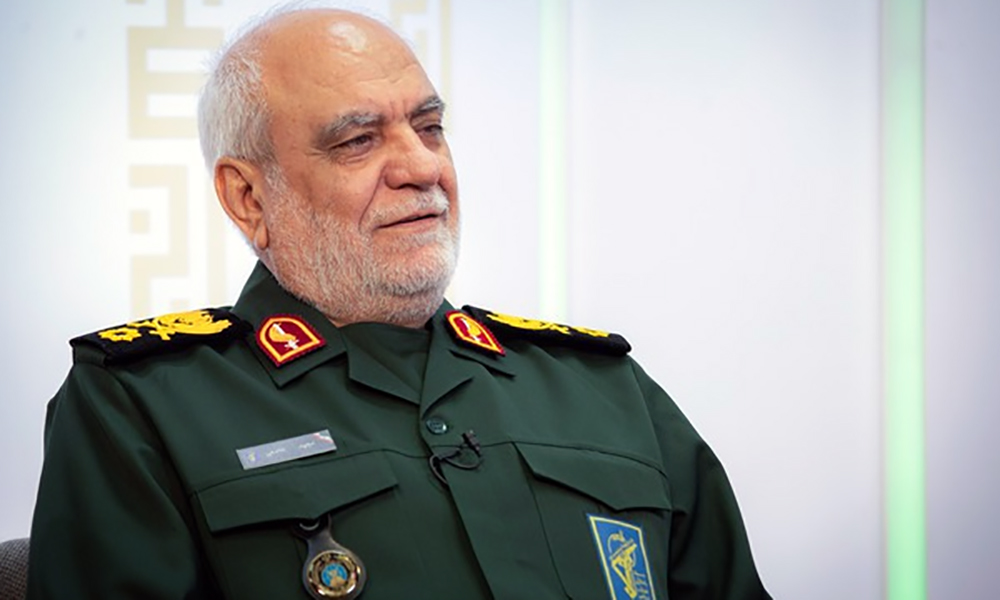
Iran has confirmed the death of Major General Majid Khademi, head of intelligence for the Islamic Revolutionary Guard Corps, in what analysts describe as the latest in a series of high-level killings targeting the country’s security leadership.
State media reported Khademi’s death on April 6 but did not immediately provide details on the circumstances. However, regional and Western sources say he was killed in a targeted strike, underscoring an intensifying campaign against senior Iranian officials amid escalating tensions in the Middle East.
Khademi had only recently taken up the role, replacing his predecessor Mohammad Kazemi, who was himself killed in a similar strike in 2025. The back-to-back deaths of intelligence chiefs highlight what observers see as a sustained effort to weaken Iran’s internal security and command structures.
Series of senior figures killed
Khademi’s killing comes amid a broader wave of assassinations and airstrikes that have removed several high-ranking Iranian figures in recent months.
Among those reported killed:
Ali Larijani, a senior political figure and former head of the Supreme National Security Council, reportedly died in an airstrike earlier this year; Gholamreza Soleimani, a key figure in Iran’s paramilitary Basij forces, was also reported killed in targeted operations; several other commanders linked to the IRGC and its external arm, the Quds Force, have been killed in strikes both inside Iran and across the region.
The killings come against the backdrop of a rapidly intensifying conflict that began with large-scale strikes in late February and has since expanded across multiple fronts. Military exchanges, including missile and drone attacks, have raised fears of a broader regional war.
Analysts say the apparent strategy of targeting senior leadership is aimed at disrupting Iran’s ability to coordinate military and intelligence operations. However, they warn it could also provoke further retaliation and deepen instability across an already volatile region.
Leadership strain and uncertainty
The loss of multiple senior figures in a short period has raised concerns about continuity within Iran’s leadership, particularly within the IRGC, which plays a central role in the country’s security and political system.
While Iranian authorities have moved quickly to appoint replacements, experts say repeated losses at the top level could affect decision-making and operational effectiveness, even as hardline factions appear to be consolidating influence.
For now, the killing of Khademi underscores the intensity of the ongoing conflict and highlights the growing risks facing Iran’s leadership, as the confrontation shows little sign of easing.






Regional
Yemeni government forces seize strategic strait from Houthis
The Yemeni forces of the internationally recognised government, backed by heavy Saudi air strikes, reached the outskirts of Mocha late on Monday and Houthi fighters were retreating into the highlands, four government sources said. The Defence Ministry said the city had fallen.
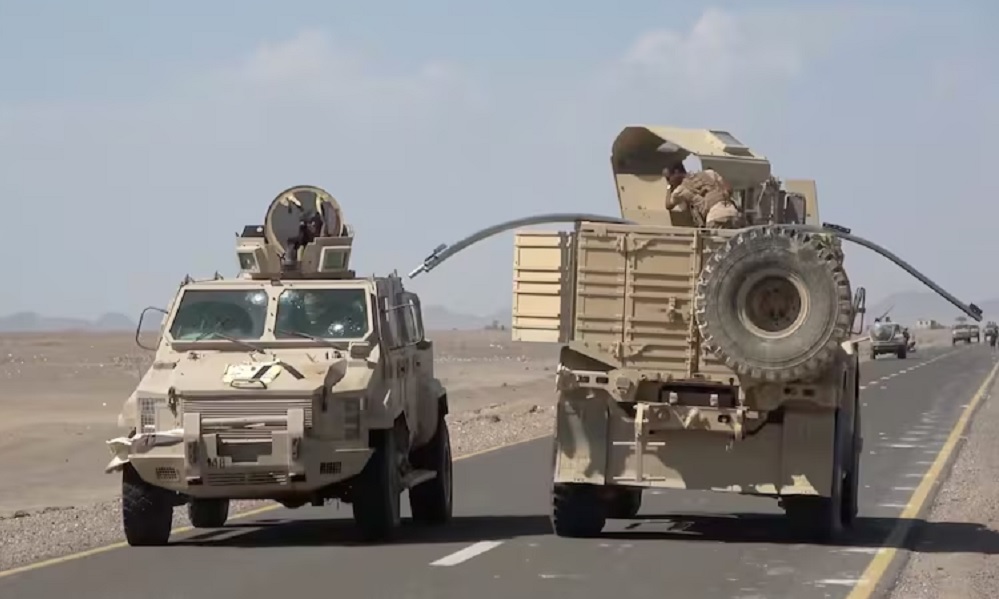
Saudi-backed Yemeni government forces staged a lightning advance on Monday to retake the coast around the Bab el-Mandeb Strait up to the city of Mocha, the government said, pushing the Iran-backed Houthis out of most of the areas they seized last month.
In response, the Houthis said they had attacked key locations in Saudi Arabia including the King Khalid International Airport in Riyadh, an Aramco refinery in Rabigh, the Abha international airport and the Khamis Mushait military base, Reuters reported.
The claims could not be immediately verified. Saudi Arabia and Aramco did not immediately respond to a request for comment.
The Yemeni forces of the internationally recognised government, backed by heavy Saudi air strikes, reached the outskirts of Mocha late on Monday and Houthi fighters were retreating into the highlands, four government sources said. The Defence Ministry said the city had fallen.
The advance, if confirmed, would loosen the Houthis’ grip on a vital Red Sea oil route already roiling energy markets alongside Iran’s closure of the Strait of Hormuz, though the group could still strike vessels with drones from other positions.
Fighting has raged along several front lines in Yemen for weeks since a dormant civil war erupted in a spillover from the US-Iran conflict, with the Houthis seeking to control the Bab el-Mandeb Strait and firing missiles and drones at Saudi cities and infrastructure.
The Saudi-led coalition fighting the Houthis also said late on Monday that naval forces carried out a military operation in Yemen’s Red Sea governorate of Hodeidah. The government forces had already taken key positions including an airstrip in the Dhubab district at the mouth of the strait whose seizure by the Houthis last month sent shock waves through energy markets.
Reuters could not independently verify the extent of the government gains. The Houthis, who have controlled many of Yemen’s more populous areas including the capital Sanaa since 2014, said the Saudi-backed government’s claims were baseless.
Meanwhile, the Houthis themselves made important advances near the third-largest city of Taiz, gaining sections of a mountain road to leave government forces besieged, according to five military sources with the Yemeni government. One government source denied the road had been cut.
The group also threatened to attack traffic in Saudi airspace.
The escalating conflict has prompted Riyadh’s allies to act. Saudi Arabia, Turkey and Pakistan agreed at an emergency meeting in Riyadh on Monday to rapidly deploy military forces and capabilities in Saudi Arabia under their Mecca defence pact, according to a joint statement.
The fighting has worsened a humanitarian crisis in Yemen, the poorest state in the Arab region. The UN migration agency said on Monday that 184,000 people had been displaced since the war resumed.
Yemen’s internationally recognised president, Rashad al-Alimi, swore on Sunday to fight “until the country is liberated from the grip of the terrorist militia”.
Saudi Arabia said on Monday it had attacked hundreds of targets to provide air cover for the Bab el-Mandeb Strait and Yemeni ground forces. The Yemeni government said it had launched attacks on several fronts including in Sanaa province.
The Houthi-run health ministry said two people had been killed and seven wounded in strikes on the province’s Sanhan and Sa’wan districts.
HEAVIEST FIGHTING IS IN SOUTHWEST YEMEN
While the war has raged on several fronts, the heaviest fighting has been in the southwest, both in the coastal area near the strait and in the hills around Taiz.
The Houthis damaged a culvert on the Taiz-Aden road, making it impassable, and on Sunday their fighters made new advances into the town of al-Turbah, five government military sources said, though another government source denied this.
A Houthi-run news agency on Monday cited a military source as saying the group had driven government forces from the al-Mawasit district of Taiz province, reaching the home of Alimi, head of Yemen’s interim presidential council.
The advances left Taiz,a city with a population of over half a million and a garrison of thousands of government fighters, surrounded by Houthi forces, the government military sources said.
In al-Mudhaffar area, just outside Taiz but within the area besieged by the Houthis, a long queue formed outside a petrol station as people waited for fuel and cooking gas canisters.
“This is the daily state in Taiz,” said Shehab Hazaa.
MECCA ALLIANCE AGREES TO DEPLOY MILITARY FORCES IN SAUDI
In a statement following their meeting, Saudi Arabia, Turkey and Pakistan accused the Houthis of attempting to target Islam’s holiest sites, Mecca and Medina.
“The Parties also condemned in the strongest terms the attempted targeting of Mecca and Medina, as well as the continuing attacks targeting cities and civilian and economic facilities in the Kingdom, reaffirming their unequivocal rejection of any attack or threat against the Kingdom’s security and territorial integrity,” the statement said.
The “Mecca Joint Defence Agreement,” signed in August, is intended to strengthen collective deterrence against any act of aggression and stipulates that an armed attack against any of the three countries would be regarded as an attack on all.
Regional
Yemeni government launches offensive to seize all areas from Iran-backed Houthis
As the Yemeni government, known as the Presidential Leadership Council, made its announcement, the Houthis said they had launched ballistic missiles and drones at Saudi Aramco sites in Riyadh and the Khurais area of Saudi Arabia.
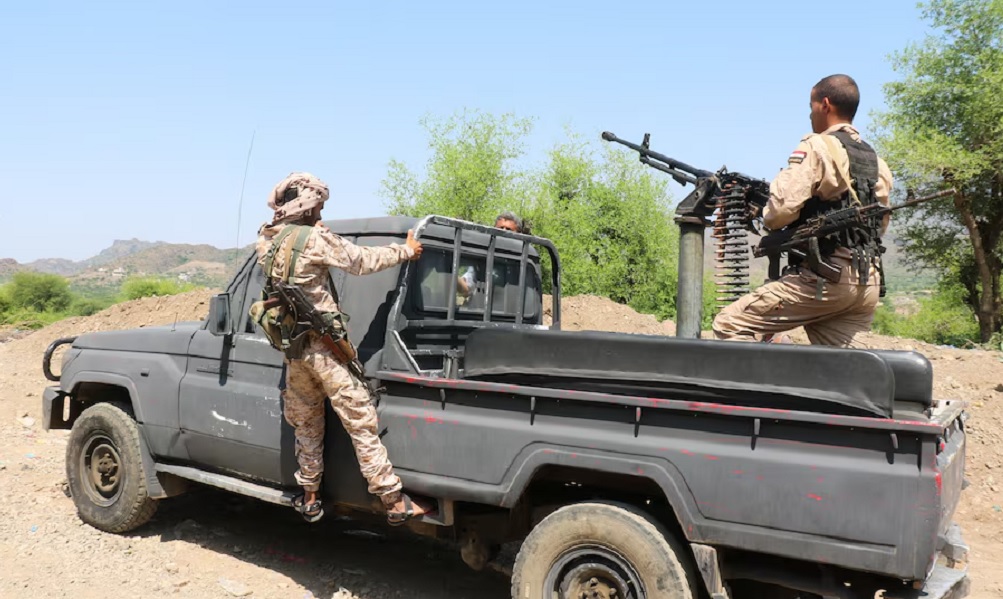
Yemen’s Saudi-backed, internationally recognised government said on Sunday it was launching a major military campaign to recapture all areas of the country controlled by the Iran-backed Houthis.
The government’s armed forces would press the offensive “until the country is liberated from the grip of the terrorist militia,” Yemeni President Rashad al-Alimi said in a televised address. A military spokesman later called on the Houthis to lay down their weapons, Reuters reported.
The Houthis, known formally as Ansar Allah, have held Yemen’s capital Sanaa and vast parts of the northwest, where most of the population live, since 2014. They have so far withstood a series of attacks over the years by Saudi Arabia, the UAE and their Western allies, and have updated their weaponry with the help of Iran.
The movement launched a surprise offensive last month which captured the strategic Bab el-Mandeb strait and some 150 km (90 miles) of coast on the Red Sea in a matter of weeks, giving the Houthis new leverage over the international shipping route.
That advance also opened a new front in the wider US-Israeli war launched in February against Iran, to which Tehran’s responses included choking oil shipping through the Strait of Hormuz to the other side of the Arabian Peninsula.
HOUTHIS SAY THEY STRUCK SAUDI ARABIA
As the Yemeni government, known as the Presidential Leadership Council, made its announcement, the Houthis said they had launched ballistic missiles and drones at Saudi Aramco sites in Riyadh and the Khurais area of Saudi Arabia.
They claimed the attacks caused major fires and were in response to what they said were 50 Saudi-led air and missile strikes in Yemen in the past 12 hours.
There was no immediate confirmation from Saudi Arabia.
Alimi said the decision to launch the counteroffensive came after all chances of de-escalating the conflict had been exhausted.
He thanked Saudi Arabia for its support and called on Yemen’s regional allies and international partners to support PLC forces and institutions.
Regional and western officials had told Reuters earlier this week that Saudi Arabia and its Yemeni allies were planning to launch an assault on the Houthis, with the Saudis leading aerial combat and Yemeni forces fighting on the ground.
NEW FRONT IN MIDEAST WAR
The US is already providing intelligence to support Riyadh’s operations in Yemen, while some regional and European nations are providing mainly defensive military aid to the kingdom, six people with knowledge of the Saudi preparations told Reuters.
The United States’ war on Iran has decimated a layer of Iranian military and political leadership, but has also entangled Washington in a new engagement in the Middle East and depleted crucial military hardware.
Yemen has been mired in conflict for years, with an array of local armed groups and factions backed by competing regional and international actors.
After a popular uprising that was part of the Arab Spring movements in 2011, the Houthis, an armed group of Zaidi Shi’ite Muslims, captured Sanaa.
The Saudi-backed PLC, which is also recognised by the United Nations, has since the Houthi takeover controlled the south and east of the country, based in the former South Yemen capital of Aden.
Saudi Arabia entered Yemen’s civil war in 2015 at the head of an Arab coalition in support of the PLC, but failed to defeat the Houthis.
A truce agreed between the warring parties in 2022 largely held until this year, when the Houthis launched missile and drone attacks on Saudi shipping and oil infrastructure in a spillover from the Iran war.
HOUTHIS ON FRONT FOOT
The Houthis have maintained the initiative on the ground since seizing control of the Bab el-Mandeb Strait in their lightning offensive last month that saw government forces collapse.
Bab el-Mandeb is the southern exit passage of the Red Sea, a key shipping route between the Mediterranean and Asia that has assumed even more importance this year as an alternative to the Strait of Hormuz.
In the last 48 hours, the Houthis have also made gains against government and local forces on strategic hilltops near Yemen’s Taiz, military sources said, advancing on the last road between the city and Aden on the southern coast.
Houthi control over the Taiz-Aden road would lead to an effective siege of the city, Yemen’s third-largest, inhabited by hundreds of thousands of civilians and where thousands of government forces are also stationed.
The city is important not just for its strategic location; Alimi is from the region, and a siege of Taiz would amplify an already-dire humanitarian situation in the country.
Three in four families in parts of Yemen are going hungry from the impact of the surge in fighting, which has displaced tens of thousands of people and disrupted supplies to millions, the World Food Programme said last week.
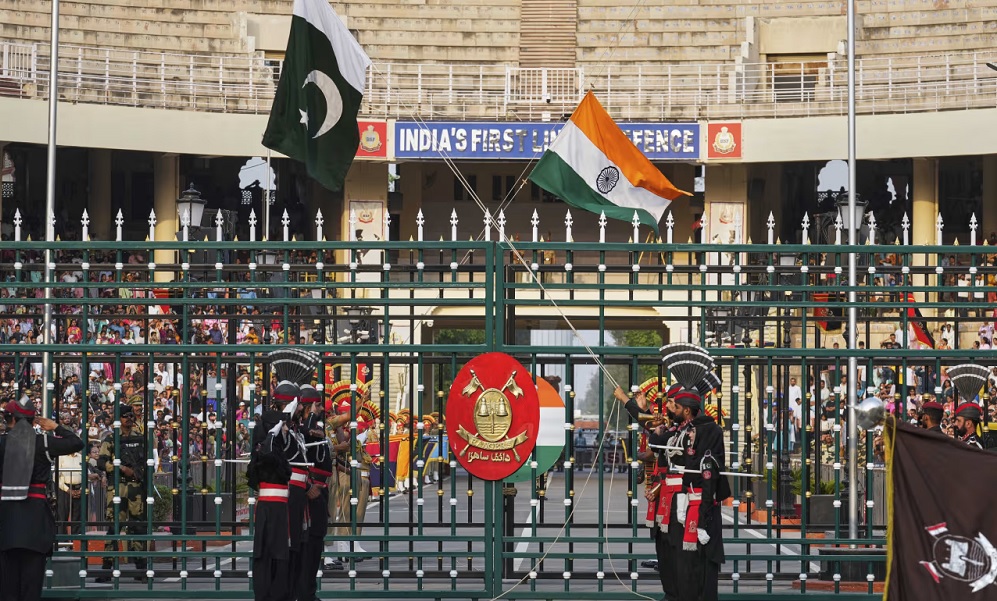
India and Pakistan summoned each other’s top diplomats on Saturday over a border incident on October 2, with New Delhi rejecting Islamabad’s allegation that Indian forces had killed two unarmed Pakistani civilians and saying those involved had crossed illegally into Indian territory.
Pakistan’s foreign ministry said earlier on Saturday that personnel from India’s Border Security Force had used “unprovoked lethal force” against two unarmed Pakistani civilians in the Bedian sector along the international border on Friday, Reuters reported.
“Pakistan categorically rejects any attempt to mischaracterize the deceased as ‘infiltrators’,” the ministry said in a statement.
Pakistan said it had summoned India’s chargé d’affaires to lodge a protest over the incident and called for an “immediate, transparent and credible investigation”.
India’s foreign ministry later rejected what it called “baseless and motivated allegations” and said it had summoned the chargé d’affaires of the Pakistan High Commission to protest at the “continued facilitation of illegal cross-border infiltration from Pakistan”.
The ministry said three people had crossed into Indian territory in the Ferozepur sector of Punjab and continued moving towards the border fence despite multiple warnings from the BSF to return to Pakistan.
“The BSF was compelled to engage them for posing an imminent security threat,” the ministry said.
India said the incident reflected “a clear pattern of repeated cross-border movement by armed narcotics syndicates operating from Pakistan” and urged Islamabad to investigate what it described as cross-border infiltration and drug-smuggling activities.
India also urged Pakistan to respect the international border, observe bilateral arrangements and ensure its forces prevented unauthorised movement from its side.
Relations between the two nuclear-armed rivals have been strained since a four-day war in 2025, the worst in decades, followed by a militant attack on tourists in Indian Kashmir that killed 26 people.
New Delhi accused Pakistan of backing the attack, which Islamabad denied.


Tahawol: Consequences of US war in Afghanistan reviewed

Saar: Expulsion of Afghan refugees from Pakistan discussed

Kohi shines as Toofan Herat beat Abu Muslim Farah 2–0

Muttaqi and Iranian representative discuss expansion of bilateral relations

Baradar opens Fifth Imam Abu Hanifa International Exhibition in Kabul

UAE firm eyes investment in Salang’s second tunnel and pharmaceutical factories

US Treasury ratchets up pressure on Iran with sweeping new aviation sanctions

AI could pose ‘existential’ risk to humanity, UN rights chief warns

EU and FAO launch €5m programme to strengthen Afghanistan’s agrifood sector

Omar Zawak, Toofan Herat secure victories in Afghanistan Champions League
Tahawol: Consequences of US war in Afghanistan reviewed
Saar: Expulsion of Afghan refugees from Pakistan discussed

Tahawol: Discussion on outcome of Moscow Format meeting

Saar: Expansion of relations between Kabul and Moscow discussed

Tahawol: Afghanistan-Iran: shared opportunities and challenges discussed
-

 Sport3 days ago
Cricket Bonanza: Afghanistan set for packed international schedule
-
 Latest News5 days ago
Kazakhstan, Uzbekistan and UAE sign MoU on CASA railway project via Afghanistan
-
 Regional5 days ago
Pakistan says Mecca pact members to hold emergency talks on engaging Houthis
-
 Regional4 days ago
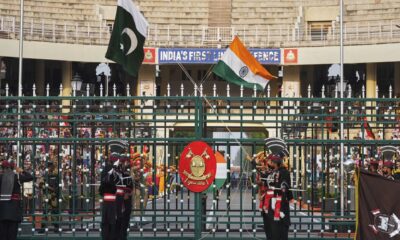
India, Pakistan summon top diplomats over border incident
-
 Latest News4 days ago
Afghanistan inaugurates 121 km Wakhan road to China border
-

 Sport5 days ago
Rashid Khan plans to build cricket academy and stadium in Nangarhar
-

 Sport3 days ago
ACL: Sorkh Poshan extend perfect run with 1-0 win over Khurasan
-

 Sport3 days ago
Afghanistan U19 to face Bangladesh, Oman in Youth ODIs