
Regional
Azerbaijan hosts record-breaking World Urban Forum in Baku
The event is also seen as an opportunity for Azerbaijan to showcase its long-term vision for sustainable urban planning and regional development to a global audience.

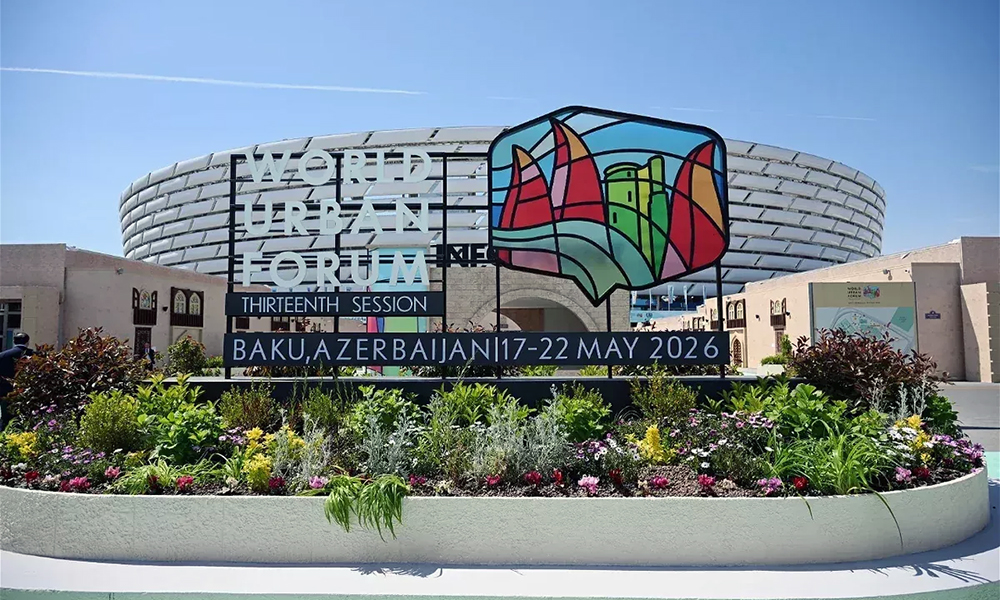
Azerbaijan is hosting the 13th session of the World Urban Forum in Baku from May 17 to May 22, bringing together tens of thousands of participants from around the world to discuss the future of sustainable cities and urban development.
The forum officially opened on Saturday at the Baku Olympic Stadium and is being organized jointly by the Azerbaijani government and UN-Habitat.
According to organizers, more than 40,000 participants from 182 countries have registered for the event, making it the largest edition in the forum’s history and highlighting Azerbaijan’s growing role as a host of major international gatherings.
Government officials, urban planners, investors, academics and representatives from international organizations and civil society are expected to participate in discussions on sustainable urbanization, climate resilience, affordable housing, digital transformation and the development of environmentally friendly cities.
A key focus of this year’s forum will be Azerbaijan’s reconstruction and development projects in Karabakh and East Zangazur. Officials are expected to present the country’s “smart city” and “smart village” initiatives in the formerly conflict-affected territories, alongside plans to develop the region as a green energy zone.
The event is also seen as an opportunity for Azerbaijan to showcase its long-term vision for sustainable urban planning and regional development to a global audience.
For the first time in the history of the World Urban Forum, the event will include a special Leaders’ Summit segment aimed at increasing high-level political dialogue on global urban challenges.
To accommodate the large international audience, simultaneous interpretation is being provided in the six official United Nations languages — Arabic, Chinese, English, French, Russian and Spanish — as well as Azerbaijani and Turkish.
Regional media representatives, including reporters covering the forum from Baku, are also attending the event to provide on-the-ground coverage of the discussions and outcomes.







Regional
US, Iran separately talk with mediators in latest bid to end war
US officials separately spoke with mediators on Monday, US President Donald Trump told reporters at the White House, without giving further details.
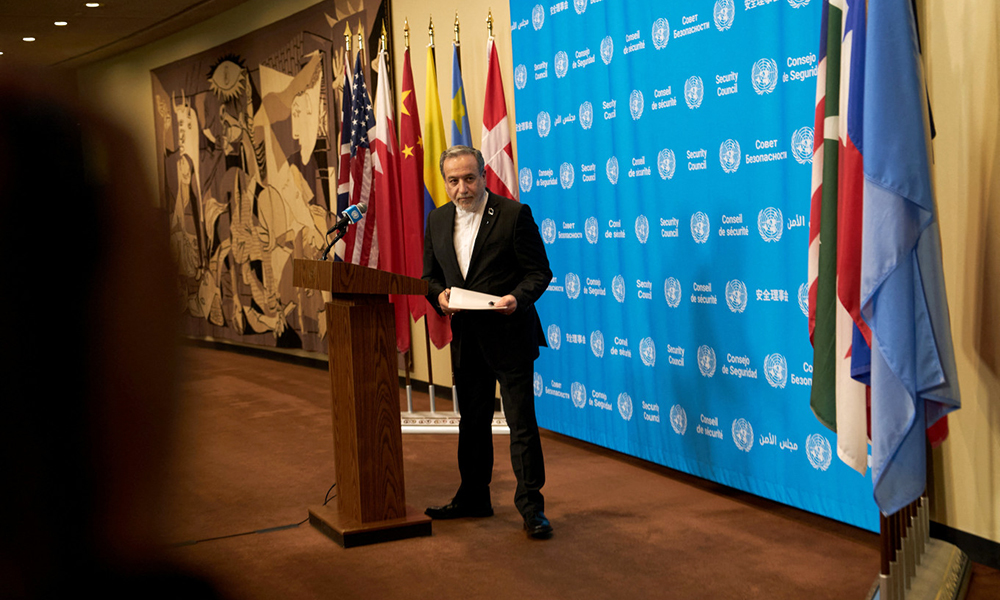
US and Iranian officials spoke separately with mediators on Monday as part of a renewed effort to end seven months of war, according to officials of both countries, Reuters reported.
Any further talks are expected to focus on an amended version of a seven-day proposal that Iran presented last week on the sidelines of the United Nations General Assembly, an official briefed on the negotiations told Reuters.
The war began in late February with US and Israeli attacks on Iran, killing thousands of people over seven months and shocking global markets as vital waterways for oil remained choked. The US and Iran have twice previously agreed to ceasefires in mediated peace talks, in April and June. Those agreements quickly unraveled.
Iranian Foreign Minister Abbas Araqchi, who remained in New York after attending the General Assembly, said Iran expected to receive the US response to its latest ceasefire proposals and its conditions for restoring passage of maritime traffic in the Strait of Hormuz, according to state news agency IRNA.
“If the Americans claim they are seeking an agreement or a peaceful solution, we have presented that solution,” Araqchi said.
US officials separately spoke with mediators on Monday, US President Donald Trump told reporters at the White House, without giving further details.
Iran’s seven-day plan envisages an end to all hostilities in Iran and Lebanon, the unfreezing of billions of dollars’ worth of Iranian assets, an end to sanctions on Iranian oil and the lifting of the US blockade on Iranian ports.
Iran would then allow the reopening of the Strait of Hormuz, a vital conduit for oil tankers, and the two sides would also resume talks on Iran’s nuclear program and Trump’s wish to seize or eliminate its highly enriched uranium, read the report.
Trump said on Saturday he had rejected Iran’s proposal, saying Iran wanted a swift agreement because of the crippling economic pressure it is under. However, he also told Axios on Sunday that he expected US negotiators to engage in further talks this week.
Araqchi said on Sunday that mediators had not formally conveyed a US rejection, and that Iran was awaiting Washington’s definitive position before deciding its next steps.
“Our conditions are clear, and any move toward reopening the Strait of Hormuz is contingent on these conditions being met,” he said on Sunday, adding that only a negotiated solution could resolve the impasse.
Regional
Floods, landslides kill 56 in India and 14 in Nepal
In India, the Central Water Commission said 30 river-monitoring stations across seven states indicated a “severe situation”.
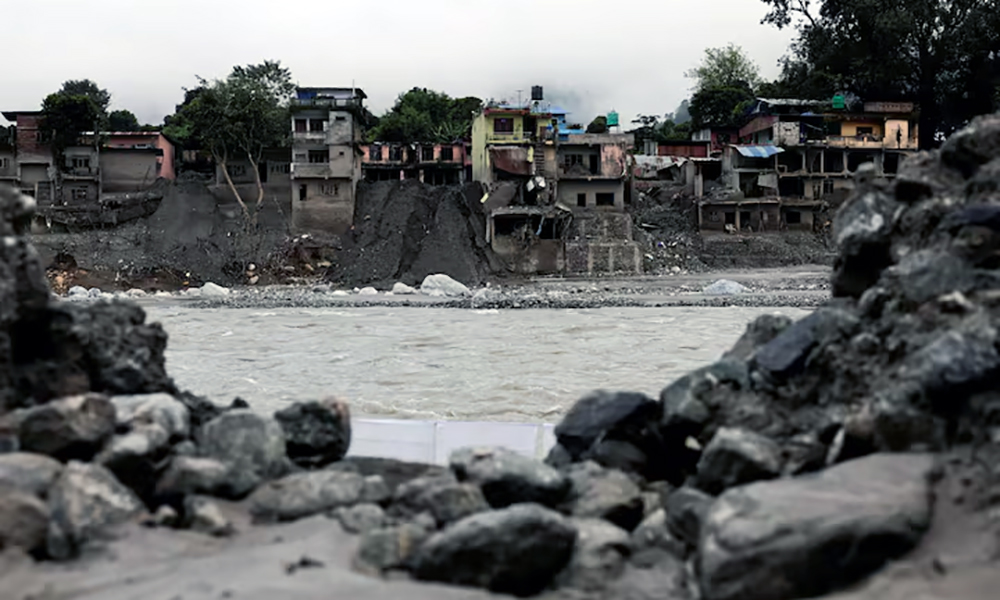
Heavy rain and storms have triggered floods and landslides that killed 56 people in India, while in Nepal, 14 have died and another 11 are missing, with authorities there warning on Sunday that more flash floods are possible, Reuters reported.
India’s northern state of Uttar Pradesh recorded 66.5 mm of rain between September 25 and the morning of September 27, compared with a normal 7.6 mm for the period, Hrishikesh Bhaskar Yashod, the state’s relief commissioner, said on Sunday.
Authorities are carrying out rescue operations in waterlogged areas and distributing relief, while officials have been told to assess crop damage and provide compensation.
In addition to the 56 deaths, 46 people have been injured and more than 1,000 houses have been damaged.
Nepali authorities warned of possible flash floods in 49 of the country’s 77 districts, with more than half facing high flood or flash-flood risks as water levels in major rivers and tributaries continued to rise.
Shanti Mahat, a spokesperson for the National Disaster Risk Reduction and Management Authority, said Rasuwa and Nuwakot, areas hit by last month’s deadly floods that killed more than 1,450 people and left thousands still missing, should remain “alert” but were not currently considered high-risk areas.
Power supply has been completely disrupted in the Manang, Mustang, Myagdi and Baglung districts, with authorities working to restore electricity, energy ministry officials said.
Flooding of the Rahuganga River damaged the structure and transmission-line towers of a 40-megawatt hydropower project, Water Resources and Energy Minister Biraj Bhakta Shrestha said.
In India, the Central Water Commission said 30 river-monitoring stations across seven states indicated a “severe situation”.
Several major rivers, including the Ganga, Gandak, Kosi, Bagmati and Narmada, were above danger levels, read the report.
Floods and landslides also disrupted telecommunications in parts of Nepal after damage to optical fibres and power supplies, Communications Minister Bikram Timilsinha said.
In a separate incident in Nepal, 10 local workers were also missing after an avalanche buried the base camp of the 7,126-metre (23,379-ft) Himlung Himal in the northern Manang district, hiking officials said.
The workers had been setting up tents for foreign climbers, who were not present when the avalanche struck.
Regional
Aimal Wali Khan calls Dera Ismail Khan attack a ‘state failure’
Khan called on the federal and Khyber Pakhtunkhwa governments to take greater responsibility for protecting citizens and addressing the deteriorating security situation in the province.
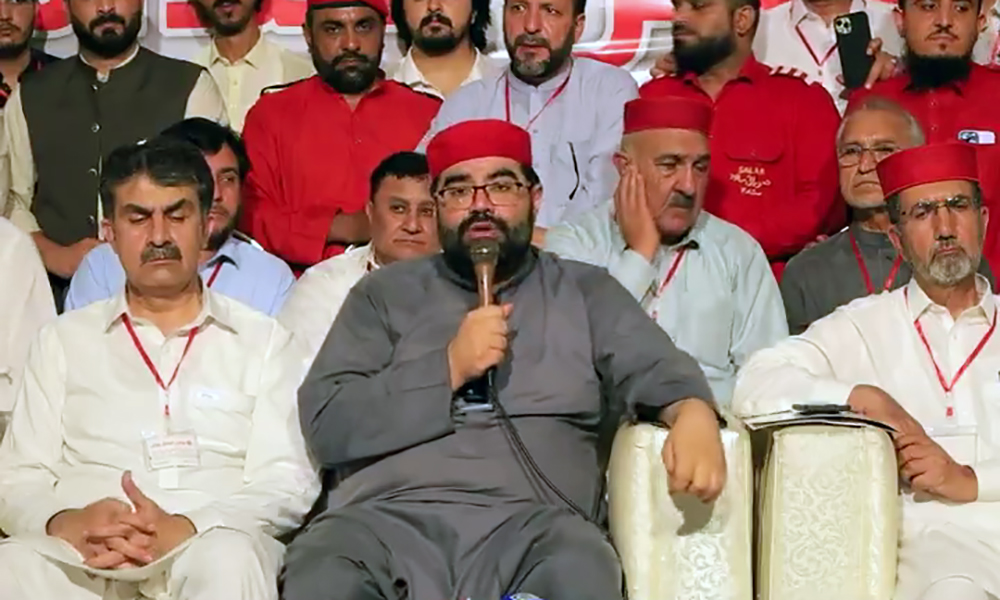
Awami National Party (ANP) President and Senator Aimal Wali Khan has condemned the suicide attack on the Aman Mela checkpoint in the Darazinda area of Pakistan’s Dera Ismail Khan district, describing it as a failure by the state to ensure the security of citizens.
According to Dawn, Khan called on the federal and Khyber Pakhtunkhwa governments to take greater responsibility for protecting citizens and addressing the deteriorating security situation in the province.
In a statement, Khan said Khyber Pakhtunkhwa is experiencing one of the darkest periods in its history. He alleged that the Pashtun population is facing systematic violence and said prolonged insecurity has left the province deeply affected by terrorism.
Khan also condemned an attack on an ambulance reportedly carrying the body of a person killed in the blast, describing it as an “inhumane act.”
The ANP leader questioned the government’s response to the worsening security situation, saying that blaming groups referred to by authorities as “Fitna al-Khawarij” and “Fitna al-Hindustan” does not absolve the state of its responsibility to protect citizens.
He urged the federal and provincial governments to stop blaming each other and instead focus on restoring peace and strengthening security across Khyber Pakhtunkhwa.


Afghanistan Champions League: Toofan Herat and Aino Mina Kandahar draw 1-1

Tahawol: Absence of Afghanistan’s envoy at UNGA discussed

Saar: Assessment of war between Afghanistan and US discussed

Istiqlal Kabul beat Khurasan Faryab 2-0 with late goals

Islamic Emirate summons Pakistan’s chargé d’affaires over Nuristan incident

Saudi energy group signs major Afghanistan deals covering gas exploration and pipeline plans

Iranian clubs to face Gulf opponents at neutral venues in Asian Champions League Elite

Khalilzad: Afghanistan ready to attract major investment

Ariana Television Network secures exclusive rights to Afghanistan’s 2026/27 cricket series

Afghanistan drawn in Group A of AFC U17 Asian Cup qualifiers
Tahawol: Absence of Afghanistan’s envoy at UNGA discussed
Saar: Assessment of war between Afghanistan and US discussed

Saar: Afghanistan’s image at UNGA

Saar: Concerns over Pakistan’s political crisis discussed

Exclusive interview with Abdul Latif Mansoor, Minister of MRRD
-

 Sport2 days ago
Afghan bodybuilder Ali Bilal finishes runner-up at Mr Olympia for third straight year
-

 Latest News2 days ago
Afghanistan says 28 killed, 32 captured in Nuristan operation
-
 World3 days ago
Trump rejects Iranian proposal to open Hormuz and end fighting
-
 Sport4 days ago
Afghanistan to face India in Asian Games cricket quarter-final
-

 Sport4 days ago
Afghanistan Champions League: Arman FC and Aino Mina play out goalless draw
-

 Latest News3 days ago
Khalilzad questions Pakistan’s commitment to Afghan welfare
-
 World4 days ago
Iran awaits US move after WSJ report says Trump rejects peace plan
-

 Business3 days ago
Ariana Afghan Airlines increases Kabul-Delhi cargo flights