
Regional
Iran banks hit by major cyber attack
Officials said a technical investigation confirmed that the disruptions were the result of a cyberattack.

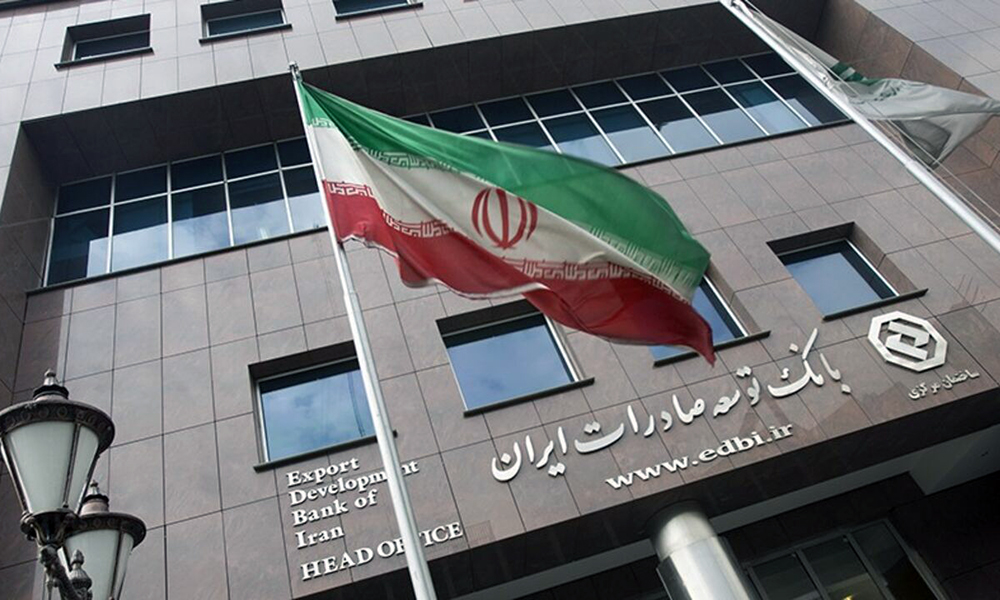
Several major Iranian banks experienced service disruptions on Saturday following a cyberattack, according to the Coordinating Committee of Iran’s state-owned banks.
The outage affected four major financial institutions, including Bank Melli Iran, Bank Saderat Iran, and Bank Tejarat, causing interruptions to mobile and online banking services, automated teller machines (ATMs), point-of-sale (POS) terminals, and some card transactions.
Officials said a technical investigation confirmed that the disruptions were the result of a cyberattack.
The affected banks stated that their technical teams immediately implemented precautionary measures after detecting the incident in an effort to safeguard customer information and protect banking infrastructure.
Qatasi, secretary of the Coordinating Committee of Iran’s state-owned banks, said necessary recovery and repair measures had been carried out.
Authorities said there is currently no evidence that customer data was accessed without authorization, and no data breach has been reported.






Regional
Saudis shut down oil pipeline as Houthis tighten grip on Red Sea shipping
The 1,200-kilometre (745-mile) pipeline running across the Arabian Peninsula had helped Saudi Arabia to bypass a shipping logjam in the Strait of Hormuz, where tanker traffic has slowed to a trickle due to the war between the U.S. and Iran.

Saudi Arabia has shut down its East-West pipeline after the vital oil conduit came under aerial attack in the widening Middle East war.
The world’s largest crude oil exporter temporarily closed the pipeline after a drone attack that both Baghdad and Riyadh said had originated in Iraq, where Iranian-backed militias operate. Iraq dismissed a military commander on Saturday in response to the attack, Reuters reported.
The 1,200-kilometre (745-mile) pipeline running across the Arabian Peninsula had helped Saudi Arabia to bypass a shipping logjam in the Strait of Hormuz, where tanker traffic has slowed to a trickle due to the war between the U.S. and Iran.
The Saudi energy ministry said it had shut the pipeline as a precaution. The line has been moving 4 million to 5 million barrels per day in recent months, amounting to 4% to 5% of global supply, according to ship tracking companies and analysts.
The attack comes as Iran-aligned Houthi rebels in Yemen tightened their grip in the Red Sea, which combined with the Strait of Hormuz disruptions has put an energy squeeze on both sides of the Arabian Peninsula and sent global oil prices back above $100 per barrel.
Four Yemeni government sources told Reuters that Houthis had seized the strategic island of Perim on Friday at the mouth of the Red Sea, in the Bab el-Mandeb Strait.
The dual attacks reported on Friday – on the pipeline and Perim island – could represent a dangerous escalation while diplomatic efforts to end the war have stalled.
Saudi Arabia has asked Washington for military help with the Houthis, sources said, at a time when higher fuel prices during the war have already exacted a political toll on U.S. President Donald Trump and his Republican Party ahead of November congressional elections.
The East-West pipeline was hit on Thursday morning in Saudi Arabia’s Riyadh and Medina regions, the Saudi energy ministry said.
It was not immediately clear who was responsible for the strikes. Satellite images showed black smoke rising from an area of the pipeline south of Medina. The attack resulted in some injuries and damage that was being assessed, the Saudi foreign ministry said without detailing the impact on exports.
The cashiered Iraqi military commander had led operations in Maysan province, according to Saturday’s statement by the Iraqi prime minister’s office. Maysan province, which borders Iran in southeastern Iraq, has long been regarded as an area where Iran-backed Shi’ite militias operate and maintain influence.
Saudi Arabia has opted against retaliation so far following a request from the Iraqi prime minister, the Saudi foreign ministry said in a statement, while adding the kingdom reserves the right to “take all measures necessary” to protect its interests. Iraq’s government condemned attacks.
Saudi crude supply fell to the lowest levels in more than three decades, the International Energy Agency said on Friday, partly due to attacks on ships transiting Bab el-Mandeb by Houthi-linked groups.
Iraq responded by ordering the closure of the Shalamcheh border crossing between Iraq and Iran as a precautionary measure, two security sources told Reuters. The crossing serves as one of the main routes for imports to Iraq of vegetables and other food supplies from Iran.
The two sources said a widescale operation was under way to find those responsible for the pipeline attack.
COUNTERATTACK PLANNED
If the Houthis gain control of the Bab el-Mandeb Strait, their backer Iran could gain a critical advantage in its war with the U.S.
Yemeni government forces indicated they would try to retake areas captured by the Houthis — mountain fighters who withstood years of devastating Saudi airstrikes during Yemen’s civil war — in their lightning offensive this week along the Red Sea coastline.
Reuters reported on Thursday that the dramatic Houthi advance down Yemen’s Red Sea coast came with direct guidance from Iran’s Revolutionary Guards.
Iran told the Houthis last week to escalate their attacks on Saudi Arabia and promised more funding, weapons and senior officers to help them do so, two Iranian sources said.
Iran describes the Houthis as an ally but publicly denies giving them military direction, saying they are “not a proxy”.
The Houthi military spokesperson, Yahya Saree, said maritime navigation remained safe for all shipping except Saudi vessels subject to a previously announced ban.
SAUDIS SEEK HELP
Saudi Crown Prince Mohammed bin Salman called Trump at least twice on Thursday to request U.S. military help in fighting the Houthis, two sources familiar with the matter told Reuters on Friday, confirming an earlier report by Axios.
Washington told Riyadh it was not willing to take direct military action for now but would help with intelligence sharing and targeting, the two sources said.
The White House did not address a Reuters question on any phone calls between the two leaders, but a senior administration official speaking on the condition of anonymity said Washington was in continuous dialogue with Saudi Arabia and the Yemeni government.
Regional
Pakistan warns Iran to rein in Houthis as Riyadh strikes back
Pakistan’s warning to Iran carries significant weight because of its defence pact with Saudi Arabia and Turkey.
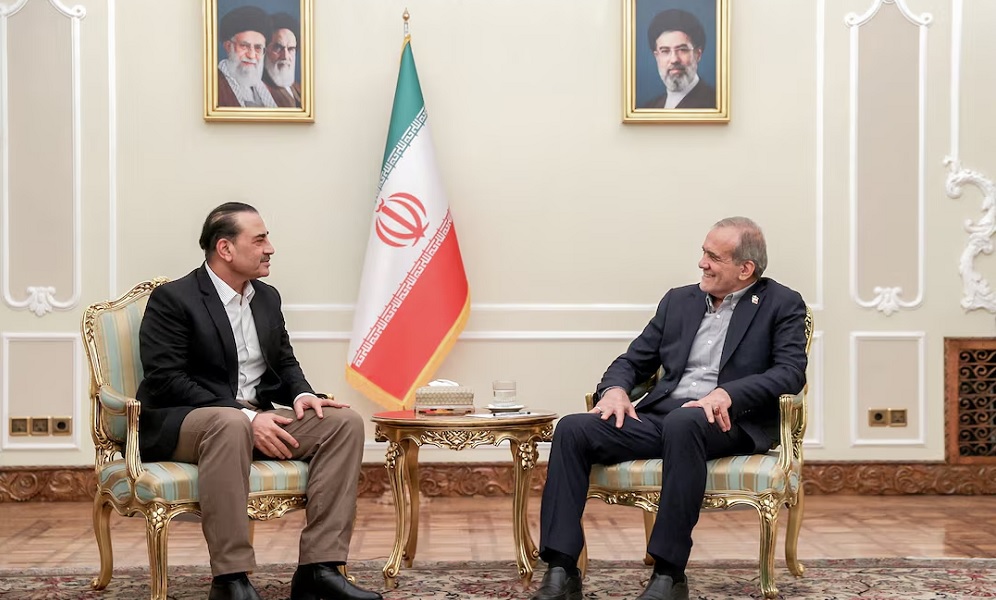
Pakistan has delivered a Saudi warning to Iran to rein in its Yemeni Houthi allies after they stepped up attacks on the kingdom, in a coordinated effort to prevent the crisis from spiralling, Reuters reported, citing Saudi, Pakistani and Iranian sources.
The Houthis struck an airbase in Khamis Mushait and oil infrastructure in nearby cities on Tuesday, wounding 73 people, in one of the biggest attacks on Saudi Arabia since the start of the U.S.-Israeli war on Iran in February.
Houthi military spokesman Yahya Saree said on Wednesday that Saudi warplanes carried out 54 airstrikes across various Yemeni provinces over the past 12 hours, adding that they would “not go unanswered and unpunished”.
The escalating conflict, which represents a second theatre of war to threaten global energy supplies, comes as Iran and the United States wage their biggest declared wave of tit-for-tat attacks on shipping in the Gulf region since their war began.
Pakistan’s warning to Iran carries significant weight because of its defence pact with Saudi Arabia and Turkey.
While officials in Islamabad stressed any military role would be confined to defending Saudi territory, Pakistani Defence Minister Khawaja Asif said attacks spilling into the kingdom could trigger a joint security arrangement involving Riyadh, Ankara and Islamabad.
“An aggression on one country will be considered an aggression on all three countries,” Asif said on Pakistani TV.
“There is no ambiguity or doubt… Unprovoked aggression or spillover… into Saudi Arabia will definitely make this agreement operational.”
The Pakistani defence ministry, foreign ministry and the military did not respond to a Reuters request for comment.
FEARS OF PROXY WAR TURNING INTO WIDER REGIONAL CRISIS
Pakistan’s intervention, after years of balancing ties with Saudi Arabia and Iran, has underscored the seriousness of the Houthi attacks. The message to Tehran is clear: rein in the Houthis or risk turning a proxy conflict into a broader regional security crisis, the sources said.
A senior regional diplomat said Pakistan had conveyed the message to Iran over the past 24 hours, urging Tehran to use its influence to halt Houthi attacks on Saudi Arabia.
A senior Iranian official confirmed that Pakistan conveyed the message to Tehran on Tuesday and Tehran’s response was that “Iran does not control the Houthis”.
However, two Iranian sources said Tehran had told the Houthis last week to carry out attacks on Saudi Arabia. Tehran promised additional funding and weapons, they said, while several Islamic Revolutionary Guard Corps commanders had travelled to Yemen to help coordinate the attacks.
The regional diplomat said Islamabad was seeking to restrain the Houthis before the escalation reached a point where Riyadh could press Pakistan to play a more active role in defending it.
“Pakistan has an agreement with Saudi Arabia, but I am hopeful the situation will not reach the point where Pakistan has to practically step in,” the diplomat told Reuters. “It will pursue a diplomatic solution for now.”
PAKISTANI SUPPORT FOR SAUDIS
The Pakistani source said Saudi officials had met senior Pakistani and Turkish military representatives in Riyadh to coordinate their response. The three countries agreed that their troops would not enter Yemen and that any response would be launched from Saudi territory, the source added.
A second Pakistani source said no decision had been made to join retaliatory strikes, stressing that its military pact with Riyadh was defensive and limited to protecting Saudi territory. Pakistani forces could provide military, technical, ground or air support within Saudi Arabia, but would not take part in combat operations on foreign soil, the source said.
The pressure campaign waged by Iran and the Houthis could have the opposite effect to that intended by Tehran, the regional diplomat said.
By targeting Gulf security in a bid to pressure Washington over its blockade of Iranian ports, Tehran risks driving Saudi Arabia, Pakistan, Turkey and other U.S.-aligned states into closer security coordination rather than fracturing their ties.
TRUMP’S BLOCKADE OF IRAN SET TO CONTINUE
Regional officials also see little sign that Washington is prepared to relent.
President Donald Trump appears committed to maintaining the U.S. blockade until Iran reaches an agreement with Washington, the diplomat said, while Qatar is quietly exploring new proposals aimed at bringing both sides back to negotiations.
Another regional source said Saudi Arabia’s military response would remain focused on the Houthis rather than Iran itself. Nor do Saudi officials believe Houthi attacks will achieve Tehran’s broader objective of ending the U.S. blockade.
Riyadh is not expected to press Washington to lift the blockade, that source said, stressing that Trump believes sustained economic coercion is the most effective pathway to negotiations.
“The question is how much pain Iran can absorb, and for how long,” the source said. “Trump does not want a military solution. He wants to squeeze them through the blockade.”
Regional
Iran attacks US base in Jordan, ships near Hormuz after tankers sunk
Iran has targeted U.S. assets and allies in the region throughout the war, including in Jordan several times, killing at least two U.S. military personnel during one strike in July.
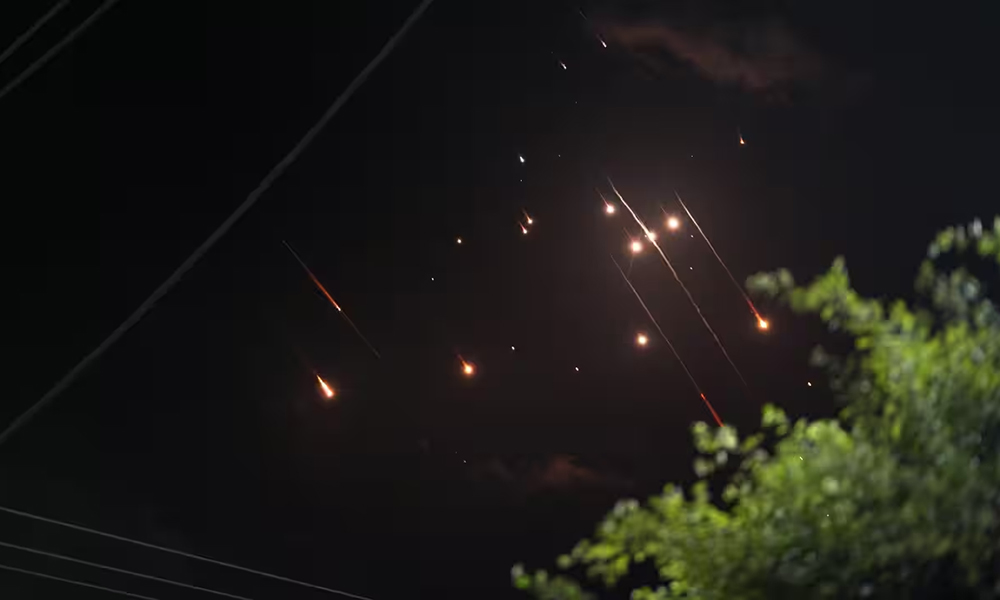
Iran’s Revolutionary Guard said it fired ballistic missiles at a base in Jordan used by the U.S. military and attacked 10 ships on Wednesday, after the U.S. said it had destroyed five Iranian oil tankers, in a sharp escalation of the six-month-old war, Reuters reported.
Increased attacks by both the U.S. and Iran have shattered a month of relative calm, hitting military, shipping and energy assets, sending oil prices surging and drawing in regional allies in recent days.
The Americans said they destroyed five Iranian oil tankers on Tuesday. The U.S. military’s Central Command posted video of the strikes, which it called a response to Iran’s Islamic Revolutionary Guard Corps (IRGC) targeting a U.S. Navy warship twice with ballistic missiles over the previous two days. No Americans were harmed, the U.S. said.
“Iran continues to try to hit U.S. naval ships, and for every time they do that or try to do that, they’re going to lose tankers,” U.S. Secretary of State Marco Rubio told reporters during a visit to Colombia.
Iran then carried out a ballistic missile attack on a base used by U.S. forces near Al Azraq in Jordan, according to an IRGC statement on state media.
Although Iran said its missiles inflicted heavy damage, Jordan said its air defences intercepted 18 of the 20 Iranian missiles, with two falling in unpopulated areas, and that there were no casualties. A U.S. official said Iran’s strikes in Jordan were ineffective and all American troops were accounted for.
The IRGC said on Wednesday it also attacked 10 ships, including two U.S. vessels and eight oil tankers, attempting to cross a “prohibited and unsafe” area of the Strait of Hormuz, a vital energy conduit largely choked off by Iranian attacks.
Iran has targeted U.S. assets and allies in the region throughout the war, including in Jordan several times, killing at least two U.S. military personnel during one strike in July.
Iran has also threatened oil tankers in Kuwaiti and Bahraini ports, according to a statement carried by state media. A maritime security source reported a liquefied natural gas tanker was damaged in the Emirati port of Khor Fakkan, though it was unclear who was responsible.
Oil prices extended gains in early trade on Wednesday with Brent crude nearing $100 a barrel on market concerns over the disruption of oil tanker traffic in the Strait of Hormuz. Recent attacks by Yemen’s Iran-aligned Houthis on top energy producer Saudi Arabia have added to supply concerns, read the report.
On Tuesday, Houthis launched an attack on several cities in Saudi Arabia, further undermining regional stability.
The Houthi attacks wounded 73 people and set oil installations ablaze in what appeared to be a major expansion of the conflict, which began on February 28 with joint U.S.-Israeli attacks on Iran.
The Houthis, who control most of Yemen’s populated areas, including the capital, have further pressured U.S. allies by periodically disrupting shipping on the other side of the Arabian Peninsula, at the entrance to the Red Sea.
They said they had launched a broad operation deep into Saudi territory, using drones and missiles to strike a Saudi air base in the southern city of Khamis Mushait as well as Saudi state oil company assets in the cities of Abha, Najran and Jazan.
Saudi authorities reported blazes at the sites and said women and children were among the wounded.
Saudi Arabia has led an Arab coalition battling against the Houthis in Yemen for more than a decade, after the Houthis drove the Yemeni government from the capital. That war had calmed in recent years, but a ceasefire there has broken down.
The wider war in the Gulf has turned into a test of wills between the U.S. and Iran, with each side hoping that economic pressure from competing blockades will force the other to yield.
Washington is trying to increase the flow of oil to world markets by guiding ships through the Strait of Hormuz, while cutting off Iran’s exports with a blockade, Reuters reported.
Central Command said the tankers it destroyed on Tuesday were part of a shadow network that funds the IRGC and its regional proxies. Iran has long supported what it calls an “Axis of Resistance”, which includes the Palestinian Islamist group Hamas, Lebanon’s Hezbollah, Iraqi Shi’ite militias and the Houthis.


Tahawol: Norwegian delegation’s call for engagement with Afghanistan discussed

Sorkh Poshan Khafi and Ariana Khost claim victories in ACL season six

Saar: Pakistan’s dual policy towards Afghanistan reviewed

Chinese ambassador, Muttaqi discuss expanding bilateral relations

Afghan official highlights Badakhshan operation at China security forum

Four mediators struggle to secure lasting Pakistan-Afghanistan ceasefire

Juma Khan Fateh surrenders to IEA forces in Badakhshan

Afghanistan’s trade diversification challenges Pakistan

Syria and Saudi Arabia condemn Kabul bombing, express solidarity with Afghanistan

Afghanistan crowned champions of five-match ODI series against Ireland
Tahawol: Norwegian delegation’s call for engagement with Afghanistan discussed
Saar: Pakistan’s dual policy towards Afghanistan reviewed

Exclusive interview with ACB CEO Naseeb Khan

Saar: UN reaffirming support for Afghanistan discussed

Saar: Pakistan’s decision to expel Afghan medical students discussed
-
 Latest News4 days ago
Amnesty International condemns Pakistan order requiring Afghan medical students to return
-
 Latest News4 days ago
Afghan Embassy in Islamabad calls for halt to expulsion of Afghan students
-

 Latest News4 days ago
Kabul police spokesman condemns Pakistan order expelling Afghan medical students
-
 Latest News5 days ago
IEA: US military equipment left in Afghanistan belongs to Afghan government
-

 Latest News5 days ago
Qatar reaffirms commitment to supporting dialogue and engagement on Afghanistan
-

 Science & Technology5 days ago
AI could pose ‘existential’ risk to humanity, UN rights chief warns
-
 Latest News3 days ago
Muttaqi and Bangladeshi delegation discuss expansion of bilateral ties
-

 Business3 days ago
UAE firm eyes investment in Salang’s second tunnel and pharmaceutical factories