
Business
Afghanistan’s trade with Central Asia records sharp growth

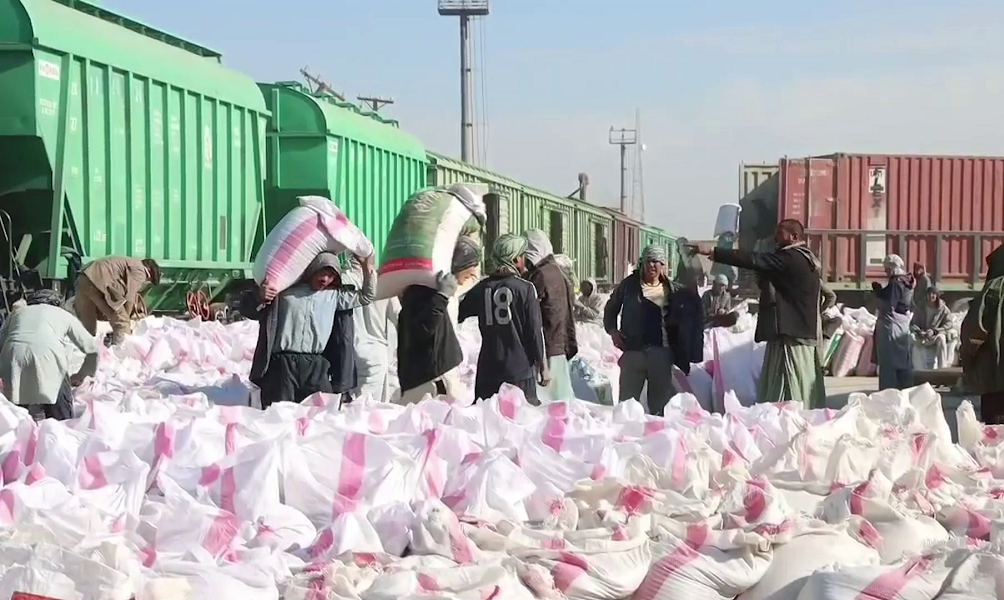
Trade between Afghanistan and Central Asian countries has increased significantly, with imports rising by 43 percent and exports by 77 percent in 2025, according to the Ministry of Industry and Commerce.
The ministry said imports from Central Asian countries increased from $1.679 billion in 2024 to $2.399 billion in 2025. Exports also rose from $122 million to $216 million during the same period.
Abdul Salam Jawad, spokesperson for the Ministry of Industry and Commerce, said the figures reflect a substantial expansion in Afghanistan’s trade ties with the region.
Traders say transportation services at Hairatan Port have been operating 24 hours a day following disruptions and a decline in trade through Pakistan.
Asadullah Asadi, head of the secretariat of the Balkh Chamber of Commerce and Investment, attributed the growth in trade to Afghanistan’s increasing role as a regional transit hub.
Uzbekistan remains Afghanistan’s largest trading partner in Central Asia, with economic cooperation between the two countries continuing to expand.
Over the past two months, Afghanistan’s private sector and Uzbekistan’s Republic of Karakalpakstan signed agreements worth more than $210 million in various sectors.
Despite the growth in trade, Afghan traders say challenges related to visa issuance and cross-border money transfers remain unresolved.
Economic analysts say the ports of Hairatan, Aqina, and Torghundi play a crucial role in Afghanistan’s trade network, adding that further investment in infrastructure could strengthen the country’s position in regional commerce.
Afghanistan mainly imports flour, wheat, vegetable oil, petroleum products, electricity, and chemical fertilizers from Central Asian countries, while exporting dried fruits, cotton, non-alcoholic beverages, and mineral products.



Business
Afghanistan, Belarus discuss expanding industrial and trade cooperation
Particular attention was given to companies producing tractors, industrial machinery, and equipment and vehicles used in the mining sector.
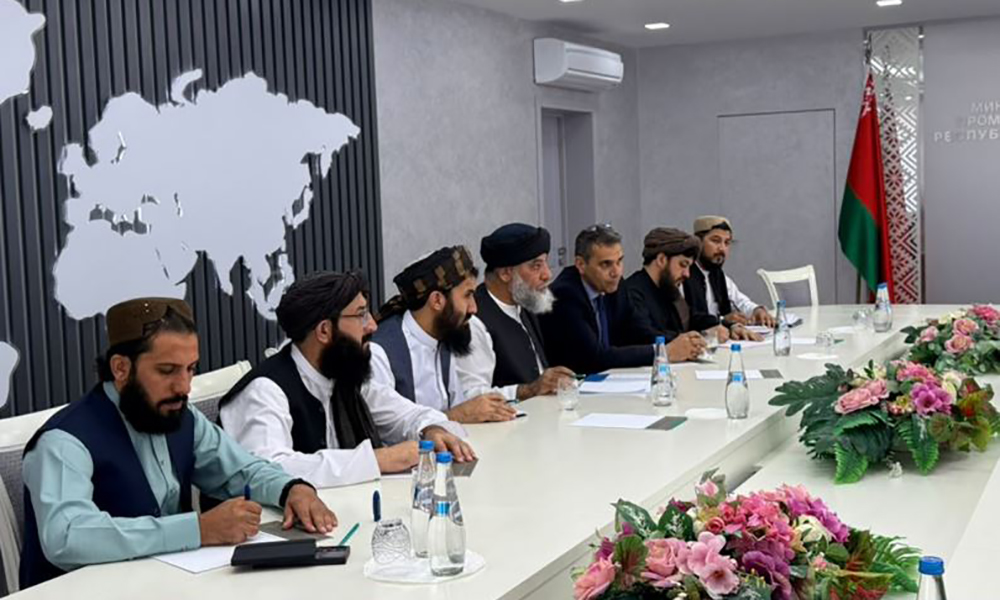
Afghanistan’s Minister of Industry and Commerce, Nooruddin Azizi, met with Belarus’ Minister of Industry during an official visit to the country.
The two sides discussed the establishment of manufacturing plants in Afghanistan, the regular organization of the Afghanistan-Belarus Business Forum, and follow-up on issues raised through the countries’ economic commission.
Belarusian officials expressed appreciation for Afghanistan’s participation in the country’s international industrial exhibition and voiced interest in expanding the presence of Belarusian manufacturing companies in Afghanistan.
Particular attention was given to companies producing tractors, industrial machinery, and equipment and vehicles used in the mining sector.
The second International Industrial Exhibition of Belarus is being held with the participation of around 500 companies from different countries. The exhibition has also attracted visitors from European and Asian countries.
Business
Afghanistan, Tajikistan seek stronger trade and investment ties
The two sides discussed increasing trade exchanges, establishing direct links between traders and investors, and organizing joint economic programs.
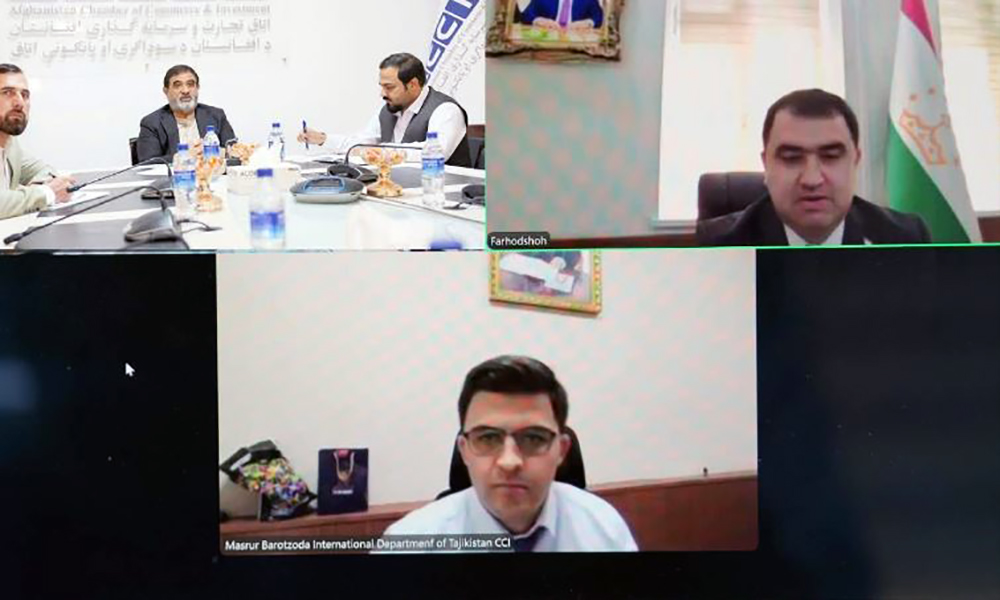
The heads of the chambers of commerce and industry of Afghanistan and Tajikistan have agreed to strengthen bilateral trade, promote investment and expand cooperation between the private sectors of the two countries.
Sayed Karim Hashemi, head of the Afghanistan Chamber of Commerce and Investment (ACCI), held an online meeting with Farhad Shah Rahman Alizoda, head of the Chamber of Commerce and Industry of Tajikistan, to discuss ways to expand economic ties.
The two sides discussed increasing trade exchanges, establishing direct links between traders and investors, and organizing joint economic programs.
Hashemi invited Tajik traders and investors to participate in the fifth Imam Abu Hanifa International Exhibition in Kabul.
Alizoda, meanwhile, invited an Afghan business delegation to attend a major trade and industrial exhibition in Dushanbe.
The two sides also stressed the importance of exchanging business delegations and developing long-term cooperation between the private sectors of Afghanistan and Tajikistan.
Business
Kazakhstan grain shipments to Afghanistan rise over 4-fold
Of the total, 7.2 million tons were transported for export, while 2.1 million tons were supplied to the domestic market.
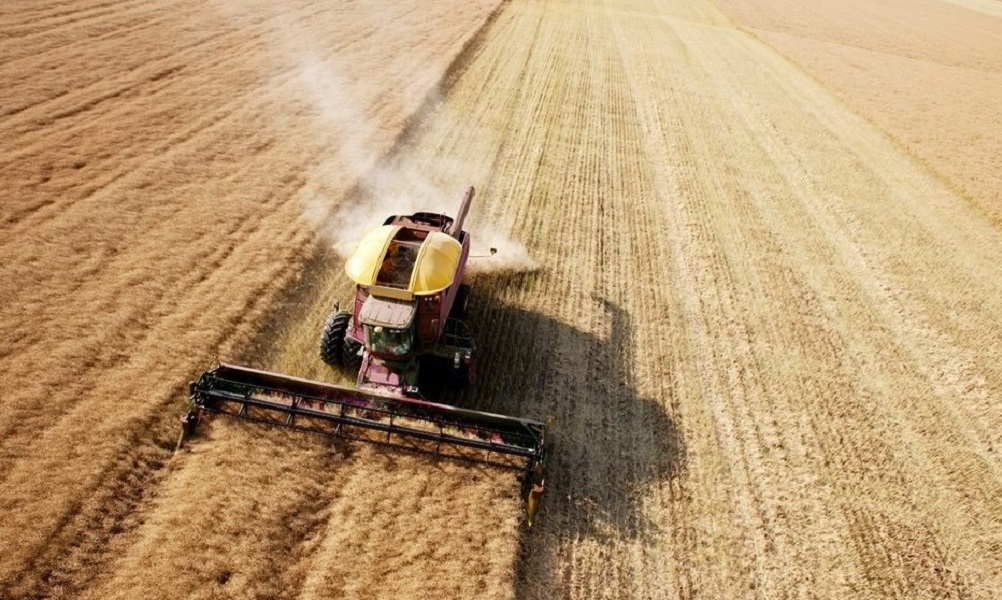
Grain shipments from Kazakhstan to Afghanistan increased 4.4 times in the first eight months of the year, reaching 655,000 tons, according to Kazakhstan’s Transport Vice Minister Zhanibek Taizhanov.
Speaking at a government meeting, Taizhanov said Kazakhstan transported 9.3 million tons of grain by rail during the period, a 13% increase compared with the same period in 2025.
Of the total, 7.2 million tons were transported for export, while 2.1 million tons were supplied to the domestic market.
Taizhanov said grain shipments to Central Asia increased by 37%, while shipments to China rose by 34%. Grain exports through Russian ports also increased by 9%.
Meanwhile, combined fodder exports rose by 38% to 2.6 million tons.
Earlier, Kazakhstan’s Vice Minister of Agriculture Azat Sultanov said the country plans to commission 15 additional vegetable storage facilities by the end of 2026, with a combined capacity of 129,000 tons.


Saar: Expansion of relations between Kabul and Moscow discussed

Aino Mina Kandahar defeat Istiqlal Kabul 3–2

Muttaqi and Shoigu discuss regional security and Afghanistan-Russia cooperation

Muttaqi, Russian deputy PM discuss expanding economic ties

Russia investigates suspected pneumonic plague; Trump ready to ‘help’

Saudi energy group signs major Afghanistan deals covering gas exploration and pipeline plans

Khalilzad: Afghanistan ready to attract major investment

UAE firm eyes investment in Salang’s second tunnel and pharmaceutical factories

US Treasury ratchets up pressure on Iran with sweeping new aviation sanctions

AI could pose ‘existential’ risk to humanity, UN rights chief warns
Saar: Expansion of relations between Kabul and Moscow discussed

Tahawol: Afghanistan-Iran: shared opportunities and challenges discussed

Saar: Pakistan’s hostile policy toward Afghanistan discussed

Tahawol: Doha process seeks new cooperation opportunities

Saar: Moscow forum 8th consultative meeting on Afghanistan
-
 Sport4 days ago
ACB announces Afghanistan squads for Bangladesh, Zimbabwe series
-

 Sport1 day ago
Cricket Bonanza: Afghanistan set for packed international schedule
-
 Latest News4 days ago
Russia expects to ease Afghanistan-Pakistan tensions at Moscow Format meeting
-

 International Sports4 days ago
Afghanistan to face Pakistan, India and Australia at 2027 Cricket World Cup
-
 Regional4 days ago
Saudi-led coalition says Houthis attacked power station for Prophet’s Mosque in Medina
-
 Regional4 days ago
Cargo stacks up as Pakistan seizes containers to block capital routes
-
 Latest News3 days ago
Kazakhstan, Uzbekistan and UAE sign MoU on CASA railway project via Afghanistan
-
 Regional4 days ago
Pakistan says Mecca pact members to hold emergency talks on engaging Houthis