
Latest News
US yet to approve any help following Afghanistan earthquake

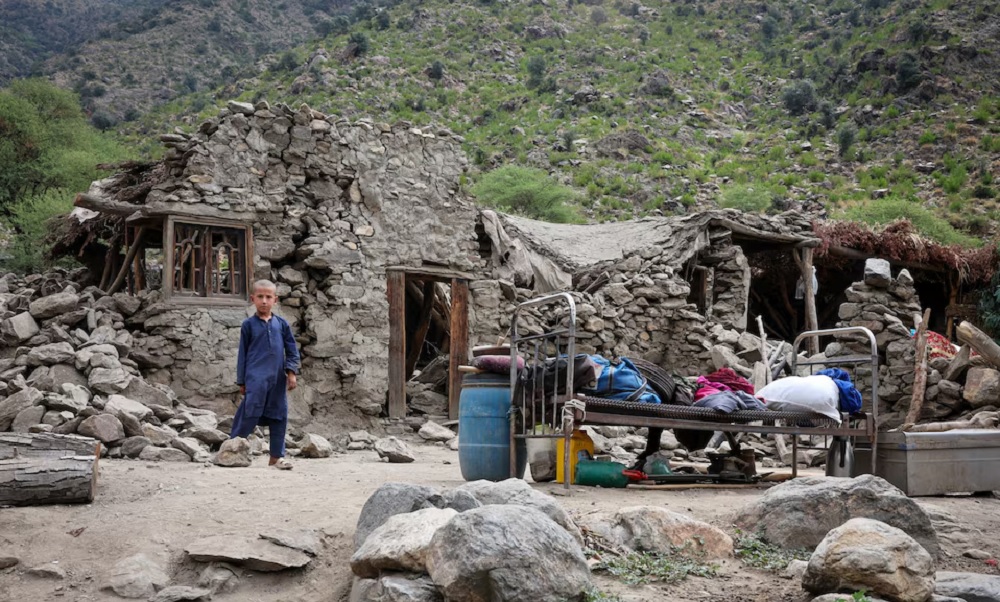
Nearly a week after an earthquake killed more than 2,200 people in Afghanistan and left tens of thousands homeless, the United States has not taken the first step to authorize emergency aid, and it was unclear if it plans to help at all, Reuters reported on Saturday citing two former senior U.S. officials and a source familiar with the situation.
The lack of response by Washington to one of Afghanistan’s deadliest quakes in years underscores how President Donald Trump has forfeited decades of U.S. leadership of global disaster relief with his deep foreign aid cuts and closure of the main U.S. foreign assistance agency, said the source and the former officials.
The U.S. Agency for International Development was officially shuttered on Tuesday.
The State Department on Monday extended its “heartfelt condolences” to Afghanistan in an X post.
As of Friday, however, the State Department had not approved a declaration of humanitarian need, the first step in authorizing U.S. emergency relief, said the former officials, both of whom worked at USAID, and the third source, speaking on condition of anonymity for fear of reprisal.
Such a declaration is usually issued within 24 hours of a major disaster.
The sources said State Department officials had considered recommendations for U.S. disaster aid for Afghanistan. One former senior official said the White House also has considered the issue, but decided against reversing a policy of ending aid to Afghanistan.
When asked if the U.S. would provide any emergency aid to Afghanistan following the magnitude 6 quake on Sunday, which was followed by powerful aftershocks on Thursday and Friday, a State Department spokesperson said: “We have nothing further to announce at this time.”
The United States was, until this year, the largest aid donor to Afghanistan, where it fought a 20-year war that ended with a chaotic U.S. withdrawal and the Islamic Emirate’s seizure of Kabul in 2021.
But in April, the Trump administration ended virtually all aid – totaling $562 million – to Afghanistan, citing a U.S. watchdog report that humanitarian groups receiving U.S. funds had paid $10.9 million in taxes, fees, and duties to the Islamic Emirate.
Asked whether the U.S. would provide emergency relief for earthquake survivors, a White House official said, “President Trump has been consistent in ensuring aid does not land in the hands of the Taliban regime, which continues to wrongfully detain U.S. citizens.”
‘STUCK IN STORAGE’
United Nations aid chief Tom Fletcher said the Afghan earthquake was “the latest crisis to expose the cost of shrinking resources on vital humanitarian work.”
“Massive funding cuts have already brought essential health and nutrition services for millions to a halt; grounded aircraft, which are often the only lifeline to remote communities; and forced aid agencies to reduce their footprint,” he said in a statement on Thursday.
The Trump administration also has yet to respond to a request by the International Rescue Committee humanitarian organization to send $105,000 worth of U.S.-funded medical supplies following the first earthquake.
The materials include stethoscopes, first aid supplies, stretchers, and other essentials, said Kelly Razzouk, vice president of policy and advocacy for the IRC.
“The stocks are stuck in storage,” said Razzouk, who served on former U.S. President Joe Biden’s National Security Council. “In recent memory, I can’t remember a time when the U.S. did not respond to a crisis like this.”
The IRC needs Washington’s permission to send the equipment to Afghanistan because it had been funded by an unrelated U.S. grant that the Trump administration had since canceled.
“Beyond the loss of life, we have also seen basic infrastructure and livelihoods destroyed,” Stephen Rodriguez, the representative in Afghanistan for the U.N. Development Programme, told reporters on Friday.
He said donations of money, goods, and services have come from Britain, South Korea, Australia, India, Pakistan, Iran, Turkey, and other countries.
“Far more is needed.”












Kazakhstan’s Foreign Minister Mukhtar Tileuberdi has called for pragmatic and coordinated international engagement with Afghanistan, saying the country’s long-term stability is closely linked to the security and sustainable development of Central Asia.
Speaking during the general debate of the 81st session of the United Nations General Assembly in New York on Friday, Tileuberdi said humanitarian assistance to Afghanistan remains essential but alone cannot break the cycle of poverty, displacement and dependency.
He said Kazakhstan supports a “pragmatic, coordinated and step-by-step” approach to international engagement with Afghanistan, with the United Nations playing a central role.
Tileuberdi also said Kazakhstan is working with the UN to operationalize the United Nations Regional Centre for the Sustainable Development Goals for Central Asia and Afghanistan in Almaty.
He said the success of the centre should be measured by the results and assistance it delivers to the region.


Abu Muslim Farah defeat Khurasan Faryab 2-0 in ACL season six

Saar: Concerns over Pakistan’s political crisis discussed

Afghanistan Champions League: Omar Zawak Herat beat Toofan Herat 1-0

Blast in Pakistan’s Dera Ismail Khan kills 11, injures 30

Ariana Afghan Airlines increases Kabul-Delhi cargo flights

Saudi energy group signs major Afghanistan deals covering gas exploration and pipeline plans

Trump floats idea of renaming Atlantic or Pacific Ocean

US hits Egyptian bank branches with Iran sanctions as war marks six months

Nepal flood rescue mission enters critical phase as thousands remain missing

Iranian clubs to face Gulf opponents at neutral venues in Asian Champions League Elite
Saar: Concerns over Pakistan’s political crisis discussed

Exclusive interview with Abdul Latif Mansoor, Minister of MRRD

Tawsia: Overview of Afghanistan’s iron mines

Tahawol: Discussion on fresh Pakistani airstrikes on Afghanistan

Saar: Calls for international support for Afghanistan discussed
-

 World5 days ago
CNN, MS NOW and Politico sue Trump, challenging White House ban
-

 Latest News3 days ago
Ariana Afghan Airlines ranks seventh among 45 Central Asian airlines
-

 Latest News4 days ago
UN reiterates call for respect for international law after Kunar airstrikes
-

 Regional3 days ago
US and Iran hold first talks since June after Trump’s ‘annihilation’ threat
-

 Latest News3 days ago
Silk Road highway in Wakhan corridor now reaches the China border
-

 Latest News4 days ago
Afghan Official: Pakistan’s airstrikes will not go unanswered
-

 Sport4 days ago
Afghan boxing referee heads to China for international festival
-
 Regional5 days ago
G7 foreign ministers call on Iran to stop arming Houthis