
Latest News
ISIS Leader Abu Bakr Al-Baghdadi Killed By U.S. Forces

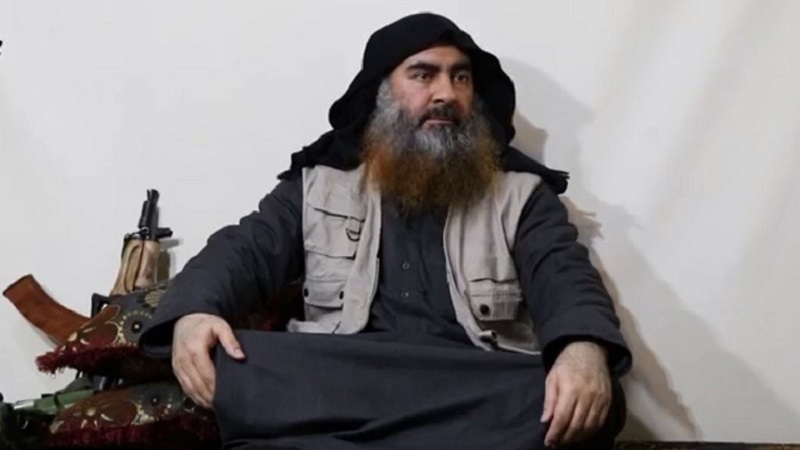
Abu Bakr Al-Baghdadi, the leader of the Islamic State (IS) group was killed in an operation by U.S. forces in Syria, U.S. media reported.
A U.S. official told The Associated Press late Saturday that al-Baghdadi was targeted in Syria’s northwestern Idlib province. The official said confirmation that the IS chief was killed in an explosion is pending. No other details were available. The official was not authorized to discuss the strike and spoke on condition of anonymity.
Meanwhile, sources have told CNN that Al-Baghdadi is believed to have detonated a suicide vest during the raid.
U.S. President Donald Trump has shared a puzzling tweet saying, “Something very big just happened!”
The White House said that Trump would be making a “major statement” on Sunday in this regard.
The Syrian Observatory for Human Rights, a Syria war monitor, reported an attack carried out by a squadron of eight helicopters accompanied by a warplane belonging to the international coalition on positions of the Hurras al-Deen, an al-Qaida-linked group, in the Barisha area north of Idlib city, after midnight on Saturday. IS operatives are believed to be hiding in the area, it said.
It said the helicopters targeted IS positions with heavy strikes for about 120 minutes, during which jihadists fired at the aircraft with heavy weapons. The Britain-based Observatory, which operates through a network of activists on the ground, documented the death of 9 people as a result of the coalition helicopter attack. It is not yet known whether al-Baghdadi is one of them, it said, adding that the death toll is likely to rise due to a large number of wounded.
Al-Baghdadi’s presence in the village, which is a few kilometers away from the Turkish border, would come as a surprise, even if some IS leaders are believed to have fled to Idlib after losing their last territories in Syria to U.S.-allied Kurdish forces in March. The surrounding areas are largely controlled by a rival of the Islamic State group — the al-Qaida-linked Hayat Tahrir al-Sham, or HTS — although other jihadi groups sympathetic to IS operate there. Unverified video circulated online by Syrian groups appeared to support the Observatory claim that the operation occurred in Barisha.
Al-Baghdadi has led IS for the last five years, presiding over its ascendancy as it cultivated a reputation for beheadings and attracted hundreds of thousands of followers to a sprawling and self-styled caliphate in Iraq and Syria. He remained among the few IS commanders still at large despite multiple claims in recent years about his death and even as his so-called caliphate dramatically shrank, with many supporters who joined the cause either imprisoned or jailed.
His exhortations were instrumental in inspiring terrorist attacks in the heart of Europe and in the United States. Shifting away from the airline hijackings and other mass-casualty attacks that came to define al-Qaida, al-Baghdadi and other IS leaders supported smaller-scale acts of violence that would be harder for law enforcement to prepare for and prevent.
They encouraged jihadists who could not travel to the caliphate to kill where they were, with whatever weapon they had at their disposal. In the U.S., multiple extremists have pledged their allegiance to al-Baghdadi on social media, including a woman who along with her husband committed a 2015 massacre at a holiday party in San Bernardino, California.
With a $25 million U.S. bounty on his head, al-Baghdadi has been far less visible in recent years, releasing only sporadic audio recordings, including one just last month in which he called on members of the extremist group to do all they could to free IS detainees and women held in jails and camps.
The purported audio was his first public statement since last April when he appeared in a video for the first time in five years.
In 2014, he was a black-robed figure delivering a sermon from the pulpit of Mosul’s Great Mosque of al-Nuri, his only known public appearance. He urged Muslims around the world to swear allegiance to the caliphate and obey him as its leader.
“It is a burden to accept this responsibility to be in charge of you,” he said in the video. “I am not better than you or more virtuous than you. If you see me on the right path, help me. If you see me on the wrong path, advise me and halt me. And obey me as far as I obey God.”
Though at minimum a symbolic victory for Western counterterrorism efforts, his death would have an unknown practical impact on possible future attacks. He had been largely regarded as a symbolic figurehead of the global terror network and was described as “irrelevant for a long time” by a coalition spokesman in 2017.
Al-Baghdadi was born Ibrahim Awwad Ibrahim Ali al-Badri al-Samarrai in 1971 in Samarra, Iraq, and adopted his nom de guerre early on. Because of anti-U.S. militant activity, he was detained by U.S. forces in Iraq and sent to Bucca prison in February 2004, according to IS-affiliated websites.
He was released 10 months later, after which he joined the al-Qaida branch in Iraq of Abu Musab al-Zarqawi. He later assumed control of the group, known at the time as the Islamic State of Iraq.
After Syria’s civil war erupted in 2011, al-Baghdadi set about pursuing a plan for a medieval-style Islamic State, or caliphate. He merged a group known as the Nusra Front, which initially welcomed moderate Sunni rebels who were part of the uprising against Syrian President Bashar Assad, with a new one known as the Islamic State of Iraq and the Levant. Al-Qaida’s central leadership refused to accept the takeover and broke with al-Baghdadi.
Al-Baghdadi’s fighters captured a contiguous stretch of territory across Iraq and Syria, including key cities, and on June 2014, it announced its own state — or caliphate. Al-Baghdadi became the declared caliph of the newly renamed Islamic State group. Under his leadership, the group became known for macabre massacres and beheadings —often posted online on militant websites — and strict adherence to an extreme interpretation of Islamic law.
Over the years, he has been reported multiple times to have been killed, but none has been confirmed. In 2017, Russian officials said there was a “high probability” he had been killed in a Russian airstrike on the outskirts of Raqqa, but U.S. officials later said they believed he was still alive.









Latest News
Afghan citizens reported among casualties in US, Israeli attacks, Iran says
As of now, authorities of the Islamic Emirate of Afghanistan have not issued an official response to the claims.
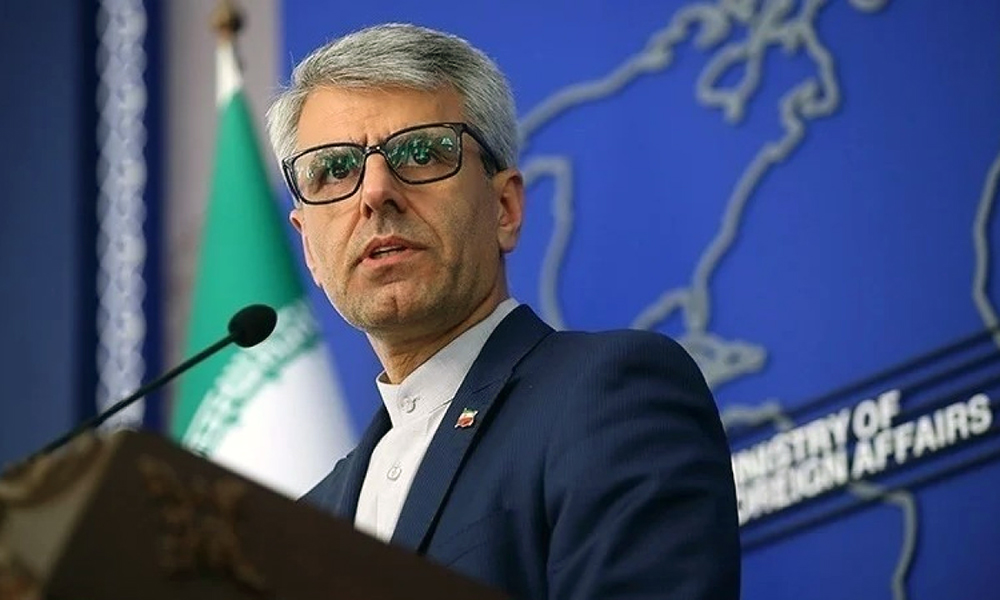
Iran’s Embassy in Kabul, citing Foreign Ministry spokesperson Esmaeil Baghaei, has stated that a number of Afghan citizens were killed or injured during what Tehran described as a 35-day military campaign carried out by the United States and Israel.
According to the statement, the Afghan nationals were living in Iran at the time of the attacks. Baghaei referred to them as “honored guests” of the country, adding that some lost their lives while others sustained injuries during the reported strikes.
He did not provide specific figures regarding the number of Afghan casualties or further details about the incidents.
As of now, authorities of the Islamic Emirate of Afghanistan have not issued an official response to the claims.
Latest News
Save the Children: Nearly one Afghan child killed or injured daily by explosive remnants
Despite the efforts of aid organizations and demining groups, the scale of the contamination remains overwhelming.
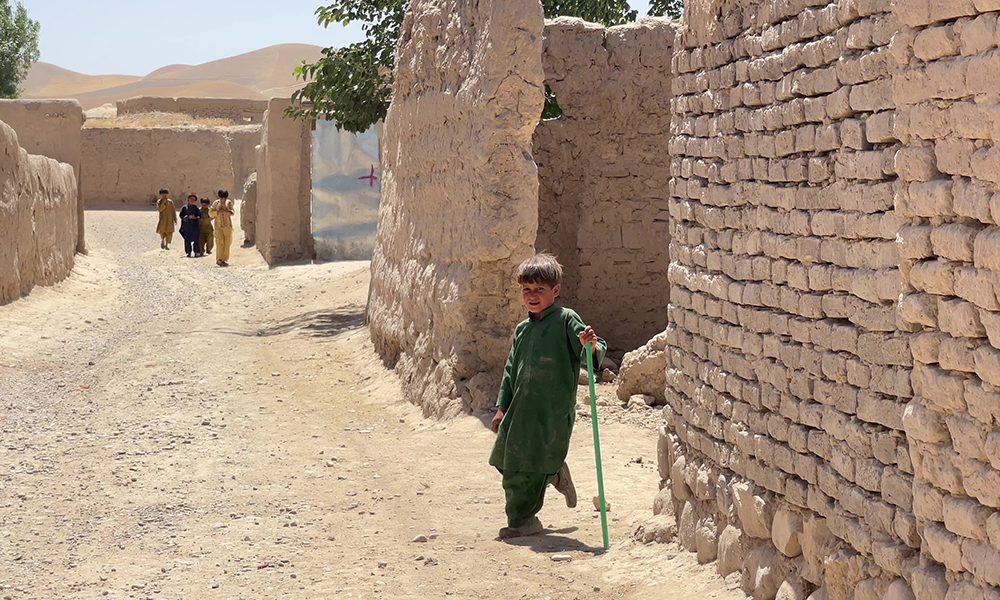
Save the Children has issued a stark warning, revealing that nearly one Afghan child is killed or injured every day by explosive remnants of war (ERW). In its latest report, the global humanitarian organization emphasized the ongoing and deadly impact of landmines and unexploded ordnance scattered across the country, a legacy of decades of conflict.
From January 2025 to January 2026, 338 Afghan children were killed, injured, or permanently disabled by explosive remnants. Shockingly, children represented nearly 70 percent of all casualties from such explosions during this period. Save the Children’s report underscores that Afghanistan continues to have the highest number of child casualties due to explosive remnants worldwide.
The report highlights that vast swathes of Afghanistan remain contaminated with hazardous materials, with more than 2.7 million people – including many children – living within one kilometer of these dangerous zones. These hazardous areas, often located in fields, pastures, and farmlands, remain uncleared despite ongoing demining efforts. Afghanistan is now considered one of the most contaminated countries globally, with nearly 5,000 hazardous sites still awaiting clearance.
The danger is particularly acute for rural and nomadic communities, including the Kuchi, who traverse long distances in search of water and grazing lands. These communities face severe challenges in accessing healthcare, education, and protection services, further compounding the risks posed by unexploded devices.
To address the growing threat, Save the Children has launched mobile awareness programs aimed at teaching children, particularly in remote and underserved regions, how to identify and avoid explosive hazards. These programs are crucial in helping to reduce the number of child casualties, as children are often unaware of the dangers in their environment.
Despite the efforts of aid organizations and demining groups, the scale of the contamination remains overwhelming. Funding shortages continue to hamper the progress of clearance operations, leaving families and children exposed to the deadly remnants of past conflicts.
“Explosive remnants of war are not just a legacy of Afghanistan’s past; they are an ongoing humanitarian emergency that continues to claim innocent lives,” said Save the Children. “The international community must step up its support to ensure the safety of Afghan children and accelerate efforts to clear these life-threatening hazards.”
As the country struggles to recover from years of conflict, the need for comprehensive and sustained demining operations, alongside better access to education and healthcare for at-risk communities, has never been more urgent.
Latest News
Eight dead after 5.8-magnitude earthquake hits Afghanistan
The family members who perished included a father, mother, four daughters, and two sons. In addition to the deaths, a child was reported injured in the incident.
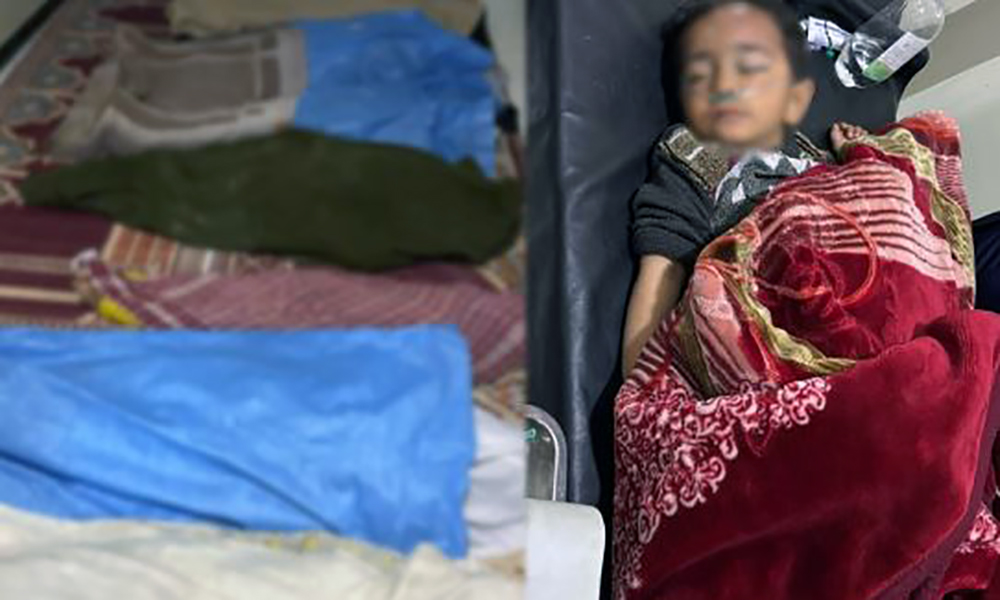
A powerful 5.8-magnitude earthquake struck Afghanistan on Friday, killing at least eight people and injuring a child when a house collapsed in Kabul. According to local officials, the victims were all members of the same family.
Hafiz Basharat, spokesperson for the Kabul Governor, confirmed that the fatalities occurred in the Bagrami district of Kabul. The family members who perished included a father, mother, four daughters, and two sons. In addition to the deaths, a child was reported injured in the incident.
The earthquake, which originated in the Hindu Kush region of Afghanistan, struck at a depth of approximately 177 kilometers, according to the German Research Centre for Geosciences. Tremors were felt across a wide area, including Kabul, Pakistan’s capital Islamabad, and India’s capital New Delhi.
Local authorities have yet to release additional details regarding the extent of the damage or any further casualties caused by the earthquake.
As rescue operations continue, Afghan authorities are assessing the full impact of the earthquake, which has left many concerned about the potential for more aftershocks in the region.


Afghan citizens reported among casualties in US, Israeli attacks, Iran says

Save the Children: Nearly one Afghan child killed or injured daily by explosive remnants

Eight dead after 5.8-magnitude earthquake hits Afghanistan

Punjab Kings clinch thrilling 5-wicket victory over Chennai Super Kings in IPL 2026

5.8-magnitude earthquake shakes parts of Afghanistan

Prominent Muslim scholar issues fatwa calling for Afghanistan-Pakistan ceasefire

IEA Supreme Leader issues Eid-ul-Fitr message urging unity and support for Islamic system

14 Pakistani soldiers killed after military post falls along Durand line: MoD

Afghanistan steps in to replace Iran in supplying fruits and vegetables to Russia

Afghan airstrikes target Pakistani military sites in retaliation for air attacks

Tawsia: This week’s key economic developments in Afghanistan discussed

Tahawol: Start of talks between Kabul-Islamabad in China discussed

Saar: Ongoing US and Israeli attacks on Iran discussed

Tahawol: Ongoing US–Israeli war with Iran discussed

Saar: Afghanistan-Pakistan talks in China discussed
-
 Latest News5 days ago
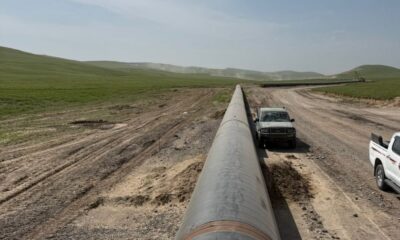
TAPI gas pipeline advances 25 km in Afghanistan
-
 Business5 days ago
Afghanistan opens doors to agribusiness investments amid rising opportunities
-
 Latest News3 days ago
Baradar approves 17 projects worth over one billion AFN
-
 Latest News5 days ago
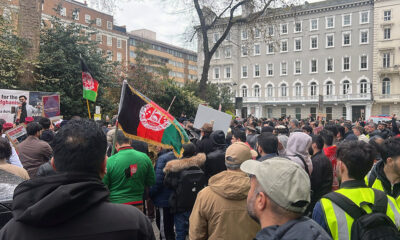
Afghan diaspora protests in London and Oslo over Pakistan strikes
-
 Business4 days ago
Russia backs Uzbekistan–Afghanistan trade hub, praises regional economic cooperation
-

 Sport4 days ago
ATN secures broadcast rights for inaugural Afghanistan Wrestling Premier League
-

 Sport3 days ago
ATN to broadcast second season of Ariana Snooker Championship
-
 Regional4 days ago
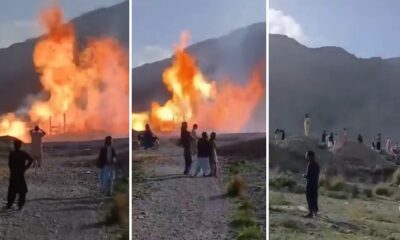
Gas pipeline blown up in southern Pakistan, says official