
Latest News
Taliban urges US, Afghan gov’t to clarify allegations against 600 controversial prisoners

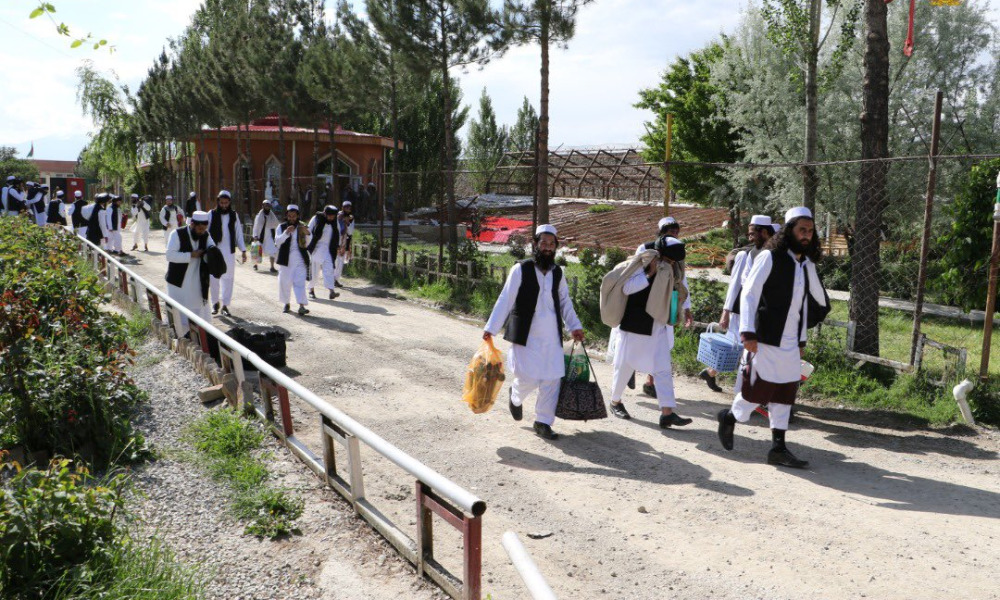
Following the Afghan government’s refusal to release 600 Taliban inmates who were believed to be involved in what was referred to as big attacks, the group called on the Afghan government and US to provide evidence for the allegations against their prisoners.
The government says 600 Taliban prisoners charged with serious offenses will not be released, but the Taliban’s political office in Doha says that when a political agreement is reached between the group and the United States, the issue of Taliban prisoners’ crimes will be eliminated.
Mohammad Nabi Omari, a member of the Taliban’s political bureau and negotiating team, said: “Once a political agreement has been reached, there is no need to review the prisoners’ files and if there is, we are ready. Indirectly, it is said to the Afghan government and Dr. Khalilzad to provide evidence about prisoners.”
The Taliban’s political bureau says it has received a list of 24 people from the government, said to be foreign nationals, and the government will not release them, but the Taliban say at least 12 people on the list have Afghan IDs, but the Taliban confirmed the possibility that some of them may have dual citizenship.
Mohammad Nabi Omari added: “By creating fake cases, some high-ranking figures of the Islamic Emirate or commanders are among the prisoners that the Kabul administration does not want to be released.”
The presidency, however, says the government has released 4,400 Taliban detainees and that Intra-Afghan dialogues must be started immediately.
“So far, 4,400 Taliban prisoners have been released and we want talks to begin immediately. Attacks by the Taliban have slowed the process, and the blame for the war lies with the Taliban,” said Sediq Sediqqi, the president’s spokesman.
At the same time, the Charge d’Affaires of the US Embassy in Kabul tweeted urging the Afghan leaders to form a new government and a High Council of Reconciliation as soon as possible, complete the prisoner exchange and start negotiations between the Afghans.
“Our negotiating team is ready to talk to the Taliban, and the Taliban must be prepared, and the formation of the High Reconciliation Council will be announced soon,” said Feraydoun Khawzoon, spokesman for the High National Reconciliation Council.
The government and the Taliban also disagree on the number of prisoners released. The government says it has released 4,400 Taliban prisoners and only half of the government prisoners have been released by the Taliban, but the Taliban political bureau says 4,000 Taliban prisoners and more than 800 government prisoners have been released.

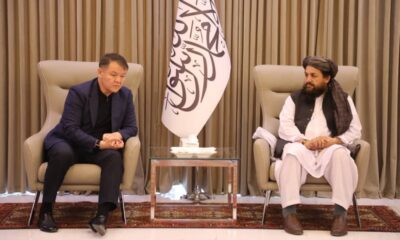




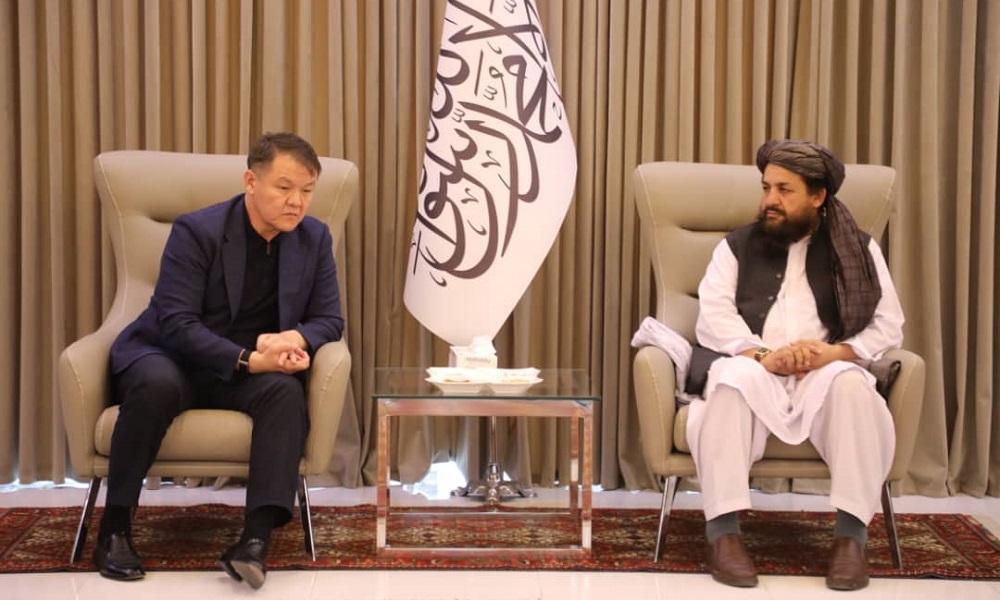
A high-ranking Uzbek delegation comprising government officials and private sector representatives from the Republic of Karakalpakstan arrived in Kabul on Saturday to discuss the expansion of trade and economic cooperation with Afghanistan.
The delegation is headed by Amanbay Orinbayev, Chairman of the Supreme Council of Karakalpakstan.
According to a statement from the Ministry of Industry and Commerce, the delegation is expected to hold talks with Nooruddin Azizi, the Minister of Industry and Commerce, focusing on strengthening bilateral trade and economic relations.
The ministry said the visiting delegation will also participate in trade connectivity meetings and business-to-business sessions aimed at enhancing commercial cooperation between the two sides.
As part of the visit, the Uzbek delegation is also scheduled to travel to Balkh province, where members will attend additional trade meetings and inaugurate an exhibition showcasing Uzbekistan’s domestic products.
Latest News
SAARC failure pushes Pakistan toward trilateral ties with Afghanistan, China, Bangladesh: Dar
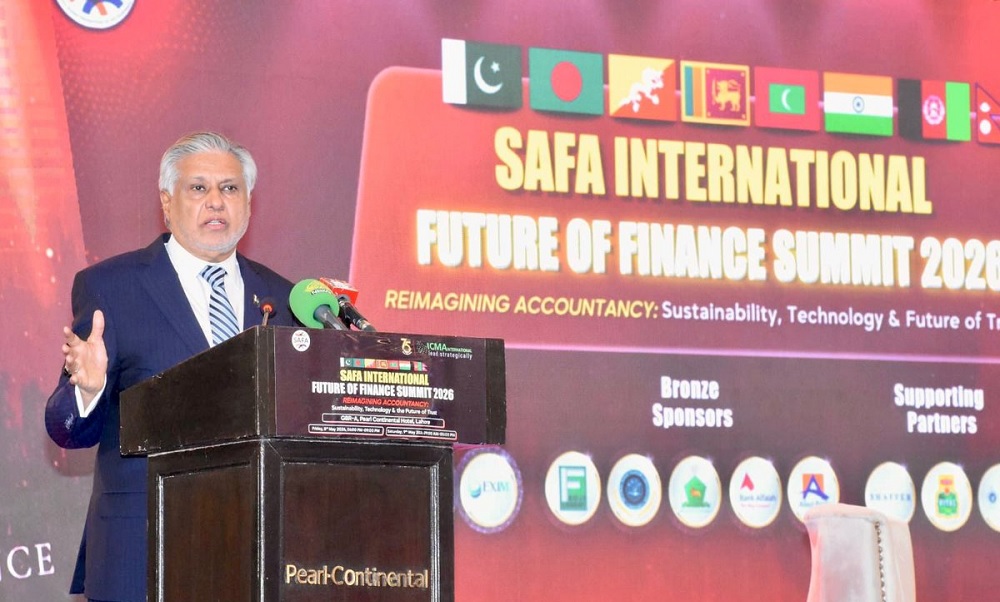
Pakistan’s Deputy Prime Minister and Foreign Minister Mohammad Ishaq Dar has said that the failure of the South Asian Association for Regional Cooperation (SAARC) is pushing Pakistan toward exploring trilateral cooperation frameworks involving Afghanistan, China, and Bangladesh.
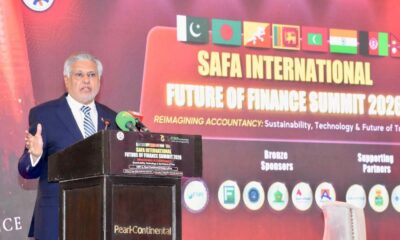
Speaking at the South Asian Federation of Accountants (SAFA) Conference in Lahore on Friday, Dar said SAARC has “unfortunately not been able to kick off,” limiting regional economic integration and cooperation.
He said Pakistan is now looking at alternative regional arrangements to strengthen economic connectivity and trade, including trilateral formats such as China–Pakistan–Afghanistan and China–Pakistan–Bangladesh.
Dar stressed that South Asia cannot remain in “isolation,” noting that the region, home to nearly two billion people, is missing significant economic opportunities due to weak cooperation among neighbouring countries.
The South Asian Association for Regional Cooperation (SAARC) was established in 1985 to promote economic and regional integration among South Asian countries, including Afghanistan, Bangladesh, Bhutan, India, Maldives, Nepal, Pakistan, and Sri Lanka.
The organisation was designed to encourage cooperation in areas such as trade, development, education, and cultural exchange. However, in recent years, SAARC’s effectiveness has been significantly limited due to political tensions between member states, particularly between India and Pakistan, leading to stalled summits and reduced regional engagement.
As a result, regional economic cooperation in South Asia has largely remained underdeveloped compared to other regional blocs around the world.


High-ranking Uzbek delegation arrives in Kabul to boost trade ties

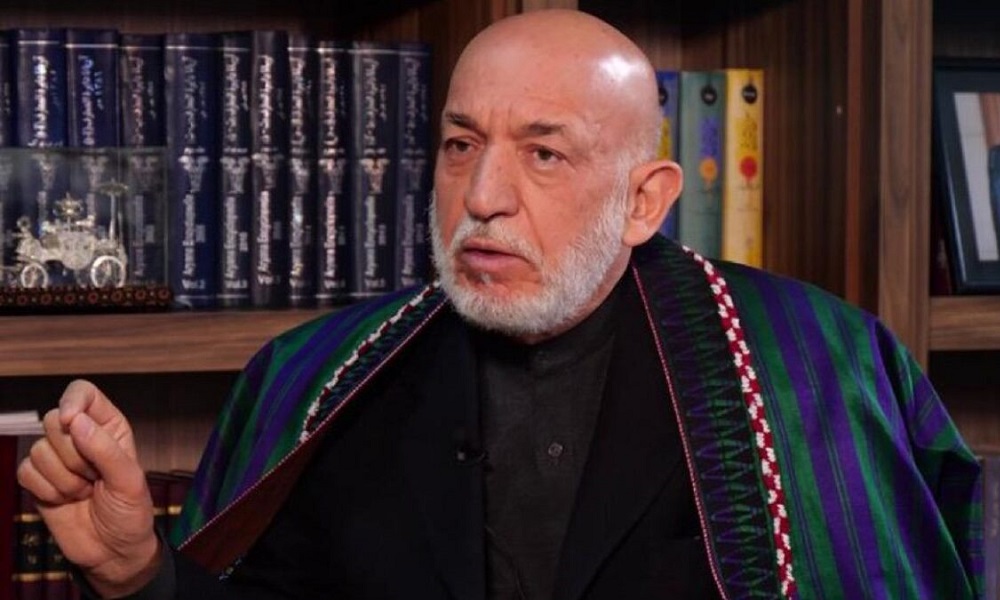
Karzai: Pakistan seeking to legitimize Durand Line, authorities must clarify

Los Angeles to welcome the world with historic FIFA World Cup 2026 opening event

SAARC failure pushes Pakistan toward trilateral ties with Afghanistan, China, Bangladesh: Dar

Canada to host opening ceremony for FIFA World Cup 2026 in Toronto

Bayat Power extends gas supply deal with Afghan Gas

Etihad Airways to expand Kabul–Abu Dhabi flights to daily service amid surging demand

Afghanistan’s new cricket head coach Richard Pybus arrives in Kabul

Afghanistan moves toward self-sufficiency in car battery production

Germany to launch online visa system for Afghan study and work applicants in Pakistan

Tawsia: Discussion on Afghanistan’s economic path and position

Tahawol: Pressure on Afghan refugees from Tajikistan to Europe discussed

Saar: Ongoing criticism of Pakistan’s Afghanistan policy discussed

Tahawol: Diplomatic turn in Iran–US confrontation discussed

Saar: Expanding interaction between countries and IEA discussed
-
 Business1 day ago
New Afghanistan-China transport corridor launched via Turkmenistan
-
 Latest News4 days ago
Pakistan’s Achakzai pushes for Afghanistan dialogue amid economic strain
-
 Business3 days ago
Afghanistan presses Chinese contractor over delays in Mes Aynak copper project
-
 Business3 days ago
Uzbekistan launches new cargo corridor linking China and Afghanistan
-
 Latest News4 days ago
Food prices surge 20% in Afghanistan as Hormuz crisis disrupts supply routes
-
 Latest News5 days ago
Austrian interior minister heads to Uzbekistan to finalize Afghan deportation deal
-

 Sport5 days ago
All eyes on Jeddah as AFC U-17 Asian Cup 2026 kicks off
-

 International Sports4 days ago
Mumbai Indians pull off record chase as IPL action continues