
Latest News
Humanitarian actors pledge to deliver aid to millions of Afghans in need

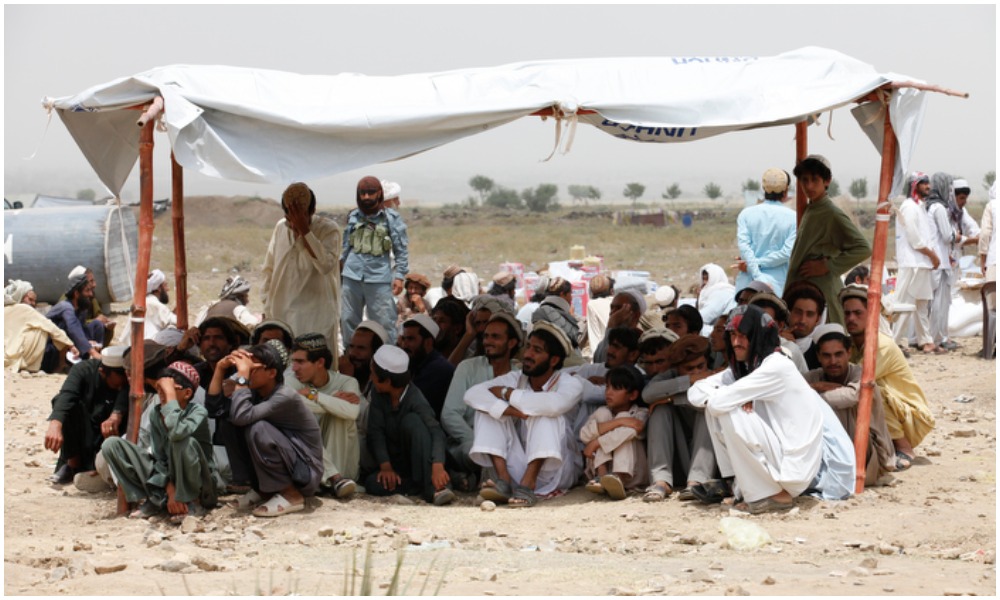
Humanitarian actors in Afghanistan (the UN and national and international NGOs) are committed to staying and delivering impartial and neutral assistance to millions of people in need, according to a statement on Monday. Ongoing conflict, spiralling food insecurity and the adverse impact of the COVID-19 pandemic have resulted in a near-doubling of people in need in the space of 12 months – up from 9.4 million in January 2020 to 18.4 million in January 2021.
While intra-Afghan negotiations present the opportunity for a lasting peace, humanitarian actors are deeply concerned by continued violence across the country characterized by high levels of civilian casualties and almost 100,000 people internally displaced just this year.
Increasing conflict and bureaucratic impediments have required humanitarian organisations to assess, mitigate and navigate the changing operational space. Despite these challenges, some 165 humanitarian organisations continued working across the country and reached nearly 12 million people with life-saving assistance in 2020. Even with significant funding and operational challenges, 3.7 million people received aid during the first three months of 2021, demonstrating a strong capacity to stay and deliver assistance and protection to people in need, including in challenging environments. In the context of growing need driven by the pandemic, food insecurity, conflict and a looming threat of drought, humanitarian organisations are mobilising to scale-up support and continue to respond wherever assistance is most needed.
In order to achieve the above, humanitarian actors in Afghanistan ask the following to parties to the conflict:
Protect civilians, aid workers and civilian infrastructure such as schools and hospitals in compliance with International Humanitarian Law.
Provide unimpeded access and ensure that aid workers and service providers can deliver assistance and services without interference, in accordance with the principles of independence, impartiality and neutrality.
To donors and the international community:
Urgently release and increase funding to the Afghanistan Humanitarian Response Plan.
In 2021, the UN and humanitarian partners in Afghanistan require US $1.3 billion to help 15.7 million people in need. Only $166.8 million (13 per cent) of the funding has been received so far.
Humanitarian Coordinator Dr. Ramiz Alakbarov says, “The COVID-19 crisis has already had significant consequences on the lives and livelihoods of Afghans and on humanitarian operations. At this critical time, it is more important than ever that we continue to work together to uphold the rights of all people in Afghanistan, including their right to life-saving aid.”




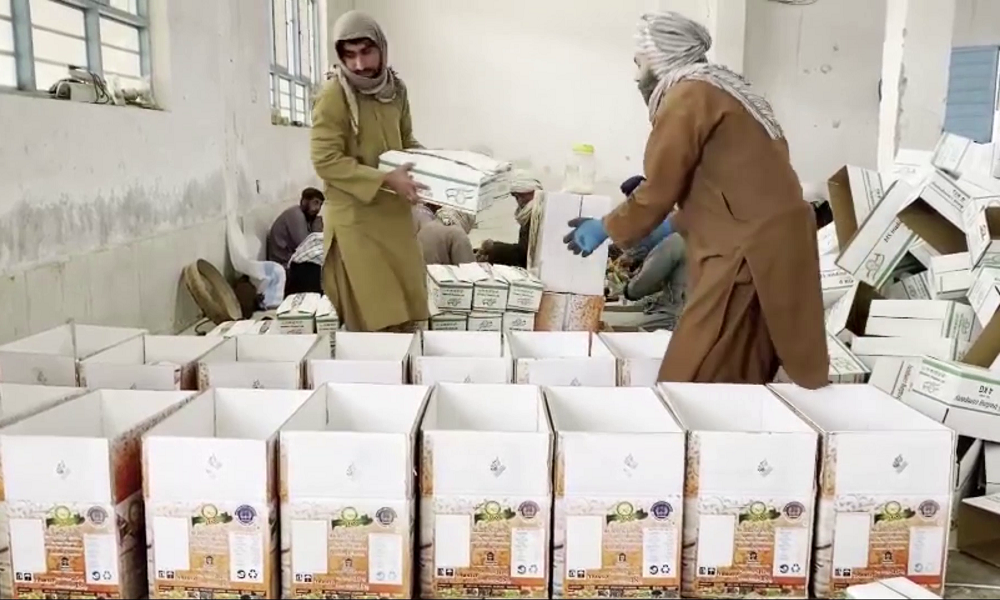
Officials from the Kandahar Chamber of Commerce and Investment say that 294,000 tons of fresh and dried fruit have been exported from the province to foreign countries over the past year.
According to them, the total value of these exports amounts to $519 million.
Abdulbaqi Bina, Deputy Head of the Kandahar Chamber of Commerce and Investment, says the products were exported to India, Pakistan, the United Arab Emirates, the United States, Canada and several other countries.
Meanwhile, fresh and dried fruit traders are calling on the government to provide alternative transit routes, new markets, and greater facilitation for obtaining visas and transportation for the export of these products.
This comes as nearly 59,000 tons of fresh and dried fruit were exported from Kandahar to foreign countries
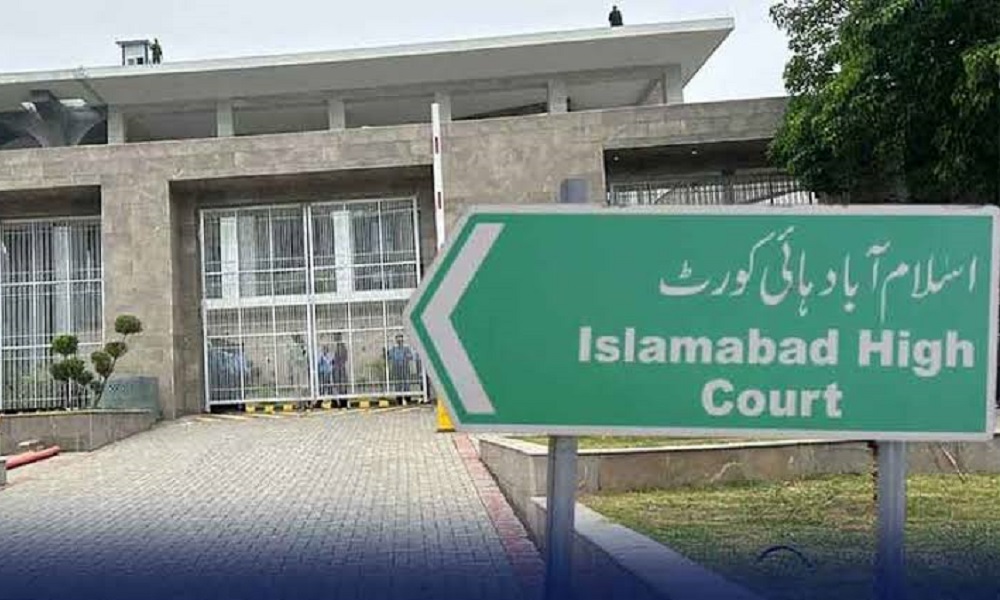
The case of 87 Afghan students seeking extensions of their study visas has reached the Islamabad High Court, with the students also asking for protection from arrest, detention and deportation, Pakistan’s Dawn newspaper reported.
According to Pakistani journalist Tahir Khan, the students have petitioned the court to order the government to extend their visas and prevent law-enforcement agencies from harassing, arresting, detaining or deporting them solely because their previous study visas have expired.
During Friday’s hearing, lawyer Aimal Khan Mandokhel told the court that Pakistan’s Interior Ministry had issued study visas to the Afghan students about a year ago. However, the students say authorities have since stopped extending existing visas and issuing new ones.
The Afghan Students Union at the International Islamic University Islamabad has also said Pakistani authorities have suspended study visa extensions for Afghan students for an extended period. It added that several students have allegedly been arrested and deported in recent months.
The hearing was adjourned following an exchange between Justice Khadim Hussain Soomro and lawyer Aimal Khan Mandokhel.
The case is expected to be heard again later this month.
Latest News
Wali Khan urges Pakistan to resolve tensions with Afghanistan through diplomacy
Wali Khan called on Islamabad to pursue a serious diplomatic approach to de-escalate tensions with Afghanistan and other neighboring countries.
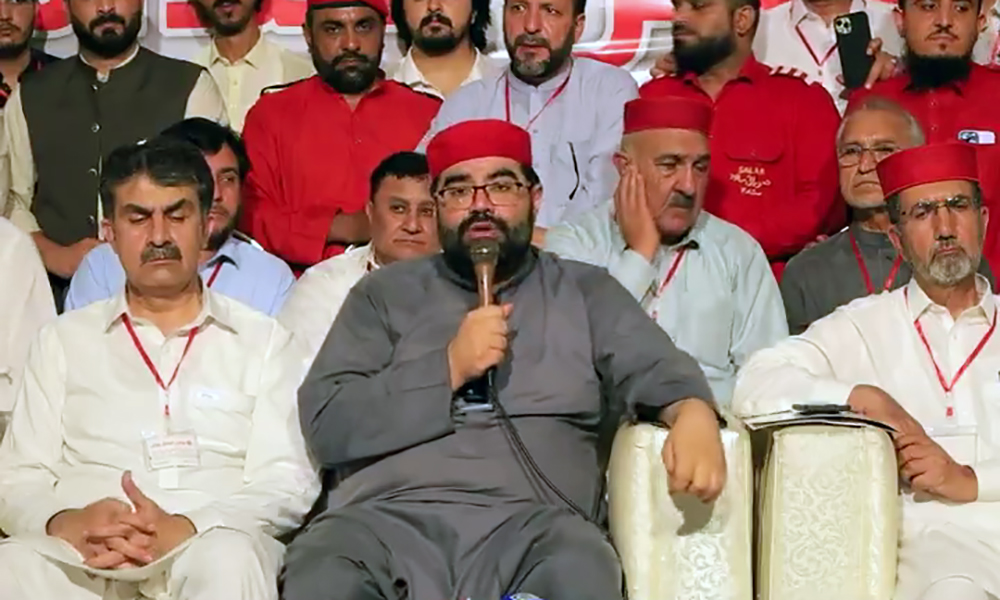
Aimal Wali Khan, the President of Awami National Party (ANP) in Khyber Pakhtunkhwa, has urged the Pakistani government to address tensions with neighboring countries, particularly Afghanistan, through serious diplomatic engagement.
Speaking to reporters in Islamabad on Thursday, Wali Khan said the ongoing tensions are causing the greatest harm to ordinary people, especially those in Khyber Pakhtunkhwa and Balochistan.
“War is not a permanent solution to any problem,” he stressed.
Wali Khan called on Islamabad to pursue a serious diplomatic approach to de-escalate tensions with Afghanistan and other neighboring countries.


Tawsia: Afghanistan’s efforts to boost production and exports disucssed

Kandahar exports 294,000 tons of fruit over past year

Case of 87 Afghan students reaches Islamabad High Court over visa delays

TAPI pipeline nears first gas sales in Afghanistan

Wali Khan urges Pakistan to resolve tensions with Afghanistan through diplomacy

Pakistan’s governance system has ‘collapsed’: Mohsin Naqvi

AFC confirms clubs for 2026/27 competitions; draw set for August 18

Only two days to go before Afghanistan and Ireland begin ODI series

Four mediators struggle to secure lasting Pakistan-Afghanistan ceasefire

Afghanistan invites Iranian investors to expand economic cooperation
Tawsia: Afghanistan’s efforts to boost production and exports disucssed

Tahawol: Fifth anniversary of America’s defeat in Afghanistan discussed

Saar: Ongoing expulsion of Afghans from Iran and Pakistan discussed

Tahawol: Calls for US engagement with the Islamic Emirate discussed

Saar: Call for dialogue to resolve issues with Afghanistan discussed
-
 Business4 days ago
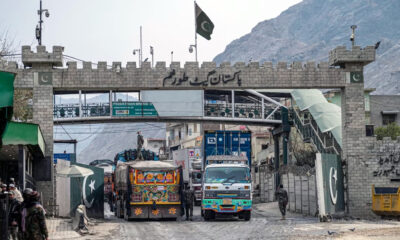
Afghanistan’s trade diversification challenges Pakistan
-
 Latest News4 days ago
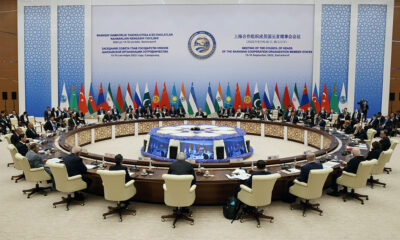
SCO summit to be held without confirmed Afghan invitation
-

 Sport4 days ago
Afghanistan squad announced for three-match T20I series against India
-

 Latest News4 days ago
Former US ambassador says Washington could eventually reopen embassy in Kabul
-
 Regional4 days ago
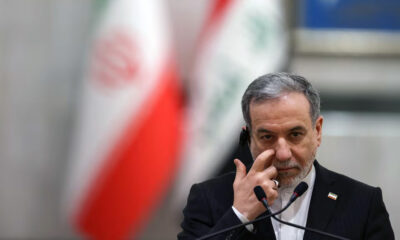
Iran says new sanctions threatened by ‘desperate’ US will fail
-
 Latest News4 days ago
Afghanistan’s polio cases rise to 19 in 2026, WHO says
-

 Latest News3 days ago
First deportation flight to Haiti arrives as US ends temporary protected status
-
 Latest News3 days ago
IEA announces new appointments in Badakhshan, Sar-e-Pul and Kandahar