
Latest News
EU says ‘failed state’ scenario has to be avoided in Afghanistan

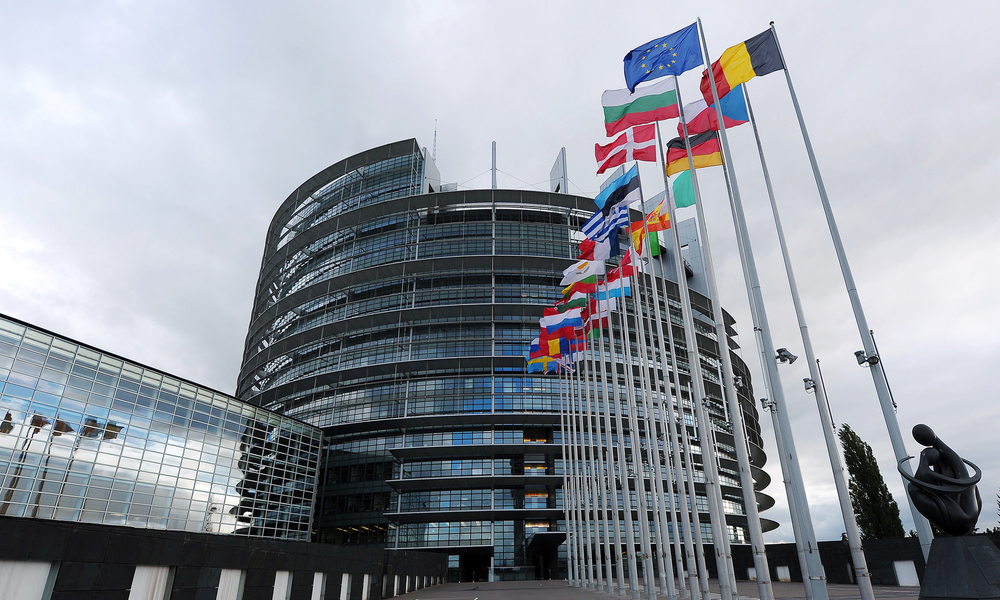
The European Union (EU) has emphasized the need to avoid a ‘failed state’ scenario in Afghanistan amid a surge in coordinated attacks by the Taliban against the Afghan forces across the country since the beginning of the withdrawal process of international forces.
In a statement on Thursday, the EU Parliament condemned in “the strongest terms” the alarming increase in violence in Afghanistan.
The organization called on the Taliban to immediately cease their attacks against “civilians and the national forces, and to fully respect international humanitarian law.”
In the resolution adopted on Thursday, Members of the EU Parliament (MEPs) point to “the confluence of the fragile domestic situation, a deteriorating security situation, intra-Afghan peace talks effectively at a stalemate and the decision to withdraw US and NATO troops by 11 September 2021.”
All this could intensify internal conflicts and create a vacuum that, in the worst-case scenario, will be filled by the Taliban, MEPs said.
“This would be very worrying for the country and for the sustainability of the socio-political achievements and progress of the last 20 years”, MEPs warned.
The MEPs also stressed that the progress made in the rights of women and girls, which is now under threat and must urgently be preserved and strengthened.
The resolution expressed concern about the fragility and instability of the Afghan Government and its lack of control over much of the country and stresses the need to avoid a ‘failed state’ scenario.
The Parliament, meanwhile, reiterated its commitment to an Afghan-led and Afghan-owned peace process and post-conflict reconstruction as the only credible path to inclusive, long-term peace, security, and development.
The organization also urged the Council, the European External Action Service (EEAS), and the Commission to “prepare and present to Parliament, as soon as possible, a comprehensive strategy for future cooperation with Afghanistan once NATO-allied troops have withdrawn and urge the EU and its member states, NATO and the US to remain engaged with this objective.”
The statement comes amid a surge in coordinated attacks by the Taliban against the Afghan forces across the country since the beginning of the withdrawal process of international forces.
So far, the group has captured over a dozen districts and dozens of military bases and outposts.
According to the reports, hundreds of members of the Afghan forces have been killed, wounded, or captured by the Taliban since the group launched offensives during the past month.
The peace talks in Doha must resume immediately to achieve a political settlement to the conflict and a permanent, nationwide negotiated ceasefire, EU Parliament members said.
According to them, only a political settlement offers hope for lasting peace, they underline. They recommend the parties should seek help from a third-party mediator, such as the United Nations, to help them agree on a political roadmap for a prosperous Afghanistan.
MEPs emphasized that European support will remain conditional on preserving and building upon the achievements of the past twenty years, on effectively enhancing inclusive and accountable governance, strengthening institutions, democratic pluralism, the rule of law, combating corruption, strengthening independent media, human rights, and fundamental freedoms for all Afghans.












Kazakhstan’s Foreign Minister Mukhtar Tileuberdi has called for pragmatic and coordinated international engagement with Afghanistan, saying the country’s long-term stability is closely linked to the security and sustainable development of Central Asia.
Speaking during the general debate of the 81st session of the United Nations General Assembly in New York on Friday, Tileuberdi said humanitarian assistance to Afghanistan remains essential but alone cannot break the cycle of poverty, displacement and dependency.
He said Kazakhstan supports a “pragmatic, coordinated and step-by-step” approach to international engagement with Afghanistan, with the United Nations playing a central role.
Tileuberdi also said Kazakhstan is working with the UN to operationalize the United Nations Regional Centre for the Sustainable Development Goals for Central Asia and Afghanistan in Almaty.
He said the success of the centre should be measured by the results and assistance it delivers to the region.


Abu Muslim Farah defeat Khurasan Faryab 2-0 in ACL season six

Saar: Concerns over Pakistan’s political crisis discussed

Afghanistan Champions League: Omar Zawak Herat beat Toofan Herat 1-0

Blast in Pakistan’s Dera Ismail Khan kills 11, injures 30

Ariana Afghan Airlines increases Kabul-Delhi cargo flights

Saudi energy group signs major Afghanistan deals covering gas exploration and pipeline plans

Trump floats idea of renaming Atlantic or Pacific Ocean

US hits Egyptian bank branches with Iran sanctions as war marks six months

Nepal flood rescue mission enters critical phase as thousands remain missing

Iranian clubs to face Gulf opponents at neutral venues in Asian Champions League Elite
Saar: Concerns over Pakistan’s political crisis discussed

Exclusive interview with Abdul Latif Mansoor, Minister of MRRD

Tawsia: Overview of Afghanistan’s iron mines

Tahawol: Discussion on fresh Pakistani airstrikes on Afghanistan

Saar: Calls for international support for Afghanistan discussed
-

 World5 days ago
CNN, MS NOW and Politico sue Trump, challenging White House ban
-

 Latest News3 days ago
Ariana Afghan Airlines ranks seventh among 45 Central Asian airlines
-

 Latest News5 days ago
UN reiterates call for respect for international law after Kunar airstrikes
-

 Regional4 days ago
US and Iran hold first talks since June after Trump’s ‘annihilation’ threat
-

 Latest News3 days ago
Silk Road highway in Wakhan corridor now reaches the China border
-

 Latest News5 days ago
Afghan Official: Pakistan’s airstrikes will not go unanswered
-

 Regional3 days ago
Iran airlines cancel flights as US sanctions hit
-

 Sport4 days ago
Afghan boxing referee heads to China for international festival