
Regional
Saudi foreign minister says Trump does not raise risk of Iran-Israel war
Saudi’s Prince Faisal also said the new Syrian government had inherited a broken country with no real institutions and needed international help to rebuild and start from scratch.

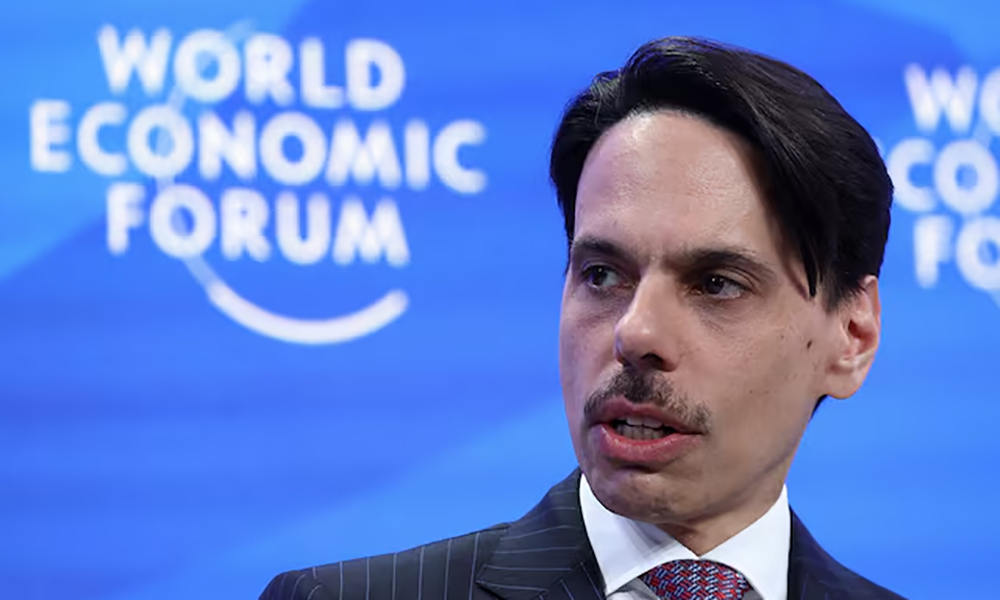
Saudi Arabia’s foreign minister said on Tuesday he did not see Donald Trump’s new administration increasing the risk of an Israel-Iran conflict, addressing an issue the region has feared since the start of Israel’s war in Gaza, Reuters reported.
Prince Faisal bin Farhan Al-Saud also said in Davos that he hoped President Trump’s approach to Iran would be met with a willingness by Tehran to positively engage with the U.S. administration and address the issue of its nuclear programme.
“Obviously a war between Iran and Israel, any war in our region is something we should try to avoid as much as possible,” Prince Faisal said during the World Economic Forum’s annual meeting in the Swiss mountain resort.
“I don’t see the incoming U.S. administration as contributory to the risk of war, on the contrary, President Trump has been quite clear he does not favor conflict.”
Fears of war between Israel and Iran increased after the Tehran-backed Palestinian Hamas group led a deadly cross-border raid on Israel on Oct. 7, 2023, triggering an Israeli military offensive that dragged Iran’s allies, including Lebanon’s Hezbollah and Yemen’s Houthis, into confrontation with Israel, read the report.
Israel unleashed a devastating war against Hamas in Gaza, and Hezbollah in Lebanon, decimating the military structure of both groups, shattering Iran’s network of influence in the Middle East and upending powerful alliances that led to the ousting of Syrian president Bashar al-Assad, another Iran ally.
Fifteen months after the October attacks, a ceasefire deal between Israel and Hamas was reached.
Prince Faisal was speaking at the World Economic Forum’s annual meeting in Switzerland on a panel along with Qatari Prime Minister Sheikh Mohammed bin Abdulrahman Al Thani, who helped broker the ceasefire agreement.
The Qatari premier said the decisive involvement of Trump’s Middle East envoy, Steve Witkoff, had made a profound difference and led to significant progress in reaching the deal.
He said he hoped the Palestinian Authority would return to play a governing role in Gaza once the war with Israel comes to an end, adding that Gazans — and not any other country — should decide how the enclave is to be governed.
How Gaza will be governed after the war was not directly addressed in the deal between Israel and Hamas.
Israel has rejected any governing role for Hamas, which ran Gaza before the war, but it has been almost equally opposed to rule by the Palestinian Authority, the body set up under the Oslo interim peace accords three decades ago that has limited governing power in the West Bank, Reuters reported.
Saudi’s Prince Faisal also said the new Syrian government had inherited a broken country with no real institutions and needed international help to rebuild and start from scratch.
“It is essential to engage, show patience, and extend effective support to the administration in Damascus by putting out a helping hand,” he said.
Lifting the burden of sanctions placed on Syria due to the actions of the previous Assad government would be a key step forward. Although the U.S. and Europe have granted some waivers, further action is necessary, the minister said.
“Syria is a shattered nation in desperate need of rebuilding. The earlier we engage and the more support we offer, the greater the chances of a successful and stable transition,” he said.
Qatar’s Sheikh Mohammed said Trump’s return to the White House presented significant opportunities for collaboration, emphasizing the potential to work together to transform the Middle East into a region of stability and security.
“President Trump’s whole notion of making America great again is something very important. We also want to see the Middle East great again.” he said.
Prince Faisal, whose country shunned Lebanon for years over the strong influence of Hezbollah on state affairs, also said he would visit Beirut later this week, marking the first such trip by a Saudi foreign minister in more than a decade, read the report.
He said the election of a Lebanese president after a lengthy power vacuum was positive, but that Riyadh needed to see real reforms in order to raise its engagement in the country.




Regional
▶️Pakistan deploys military to Peshawar after emergency rule declared
Thousands of supporters of Khan have been marching across Khyber Pakhtunkhwa, demanding his release and criticising the government over worsening economic conditions.
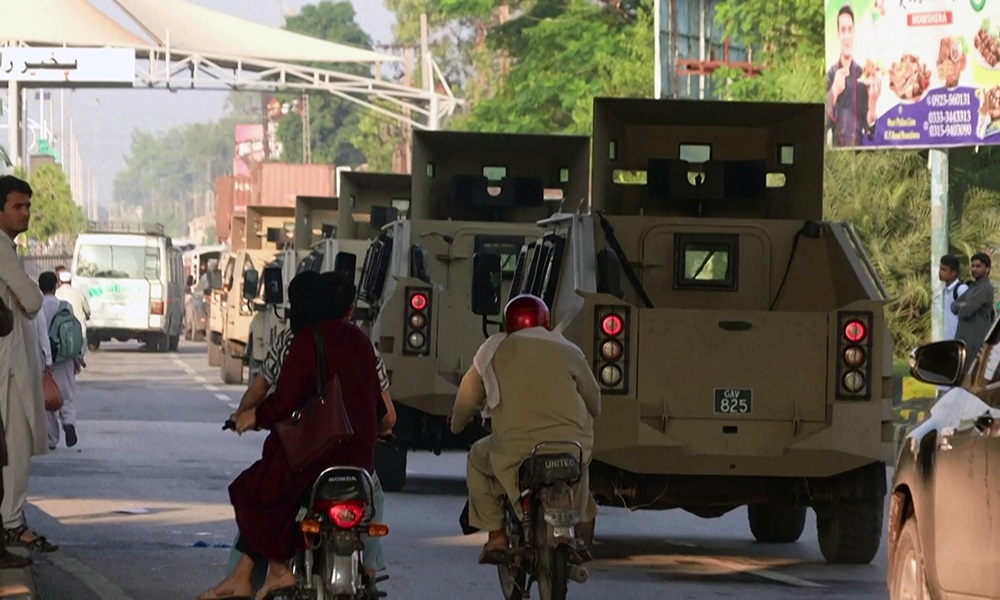
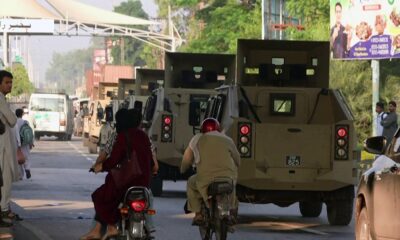
Pakistan deployed security personnel and military vehicles to Peshawar on Monday, a day after the government imposed emergency rule in the northwestern province of Khyber Pakhtunkhwa, a stronghold of jailed former prime minister Imran Khan.
The deployment follows Sunday’s emergency declaration, which came amid anti-government demonstrations by Khan’s supporters and increased militant violence in the region.
Thousands of supporters of Khan have been marching across Khyber Pakhtunkhwa, demanding his release and criticising the government over worsening economic conditions.
The emergency measures effectively sideline the provincial government led by Khan’s Pakistan Tehreek-e-Insaf (PTI) party. Authorities have cited deteriorating security and the failure of negotiations with the opposition.
The move has drawn condemnation from PTI leaders, who have described the emergency declaration as undemocratic and an infringement on the rights of the province’s residents.
Khan has been in prison since August 2023, facing numerous charges that he denies, describing them as politically motivated.
The deployment comes amid heightened political tensions and security concerns in northwestern Pakistan, where authorities have also reported increased militant activity.
Regional
Houthis warn airlines to avoid Saudi airports after deadly Riyadh attack
Saudi authorities said the 12 people killed in Saturday’s attack included four Saudi nationals, two Bangladeshi nationals and one citizen each from the US, Jordan, Palestine, Syria, Sudan and Egypt.
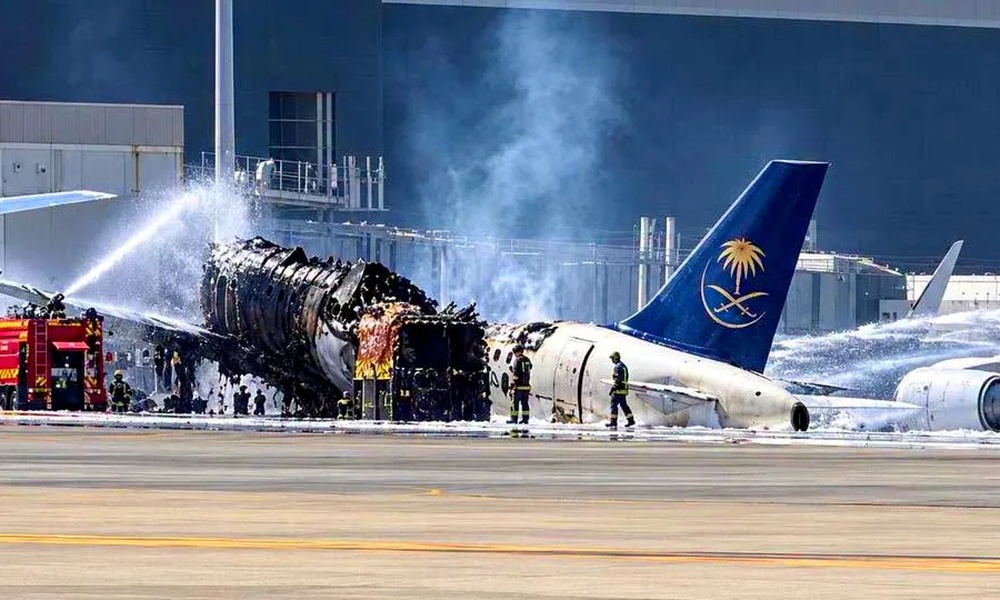
Yemen’s Houthi movement has warned airlines and passengers against using Saudi Arabia’s airports and airspace, declaring them potential targets following a deadly attack on Riyadh’s King Khalid International Airport that killed 12 people and injured more than 300.
In a statement issued on Sunday, Houthi military spokesman Yahya Saree reiterated the group’s warning to airline companies, saying Saudi airports and airspace could be targeted in further military operations.
The warning excluded the holy cities of Mecca and Medina. Saree urged airlines and passengers to take the threat seriously, while blaming Saudi Arabia for what he described as unsuccessful interception attempts.
The statement did not directly claim responsibility for Saturday’s attack. However, the Iran-backed group had previously said it was behind separate strikes on the same airport on Thursday, which killed three people and damaged an aircraft.
Saudi authorities said the 12 people killed in Saturday’s attack included four Saudi nationals, two Bangladeshi nationals and one citizen each from the United States, Jordan, Palestine, Syria, Sudan and Egypt.
The attack has raised serious concerns about the security of Saudi Arabia’s critical infrastructure and the potential for the widening regional conflict to disrupt international aviation.
Eyewitnesses described scenes of panic at the airport, with passengers fleeing as smoke rose above the terminal. Video footage showed smoke billowing over the facility following the strike.
The incident is being described as the deadliest single attack on a Gulf Arab state since the war involving Israel, the United States and Iran began in February.
The Houthis have intensified their attacks on Saudi targets in recent weeks, threatening infrastructure vital to the kingdom’s economy. Saudi Arabia has responded with air strikes against Houthi positions in Yemen.
US President Donald Trump said Washington was considering joining Saudi Arabia in further military action against the group.
Asked whether the United States would participate in strikes, Trump said a decision had not yet been made, adding that his administration had only recently learned of the latest attack.
US Secretary of State Marco Rubio condemned the attacks and confirmed that an American citizen had been killed.
Britain has also condemned the strike. Defence Secretary Wes Streeting said the United Kingdom was already providing Saudi Arabia with air-to-air refuelling support and indicated that further assistance could potentially be considered. However, he stressed that Britain was not currently planning offensive military operations.
Streeting said the attack on a civilian target could not be justified under any circumstances, adding that there was no military solution to the wider conflict.
United Nations Secretary-General António Guterres expressed shock at the attack, describing it as a violation of international law. European Commission President Ursula von der Leyen also condemned the incident as a dangerous escalation and expressed solidarity with Saudi Arabia.
Pakistan, Egypt and Qatar joined the international condemnation, warning that the attack threatened regional stability and civilian safety.
Despite the violence, a major energy conference scheduled to take place in Riyadh near the airport was expected to proceed, with organisers confirming that the World Petroleum Congress would run from October 11 to 15.
The latest escalation comes amid growing fears that the wider conflict involving Iran, Israel and the United States could intensify further. With the Houthis continuing to threaten Saudi infrastructure, concerns are mounting over the security of regional air travel, energy facilities and key economic centres.
Regional
Houthi attack on Saudi airport kills 12, over 300 wounded, authorities say
Hospitals were flooded with wounded brought by ambulance and helicopter, people briefed on the matter said. Some were in critical condition.
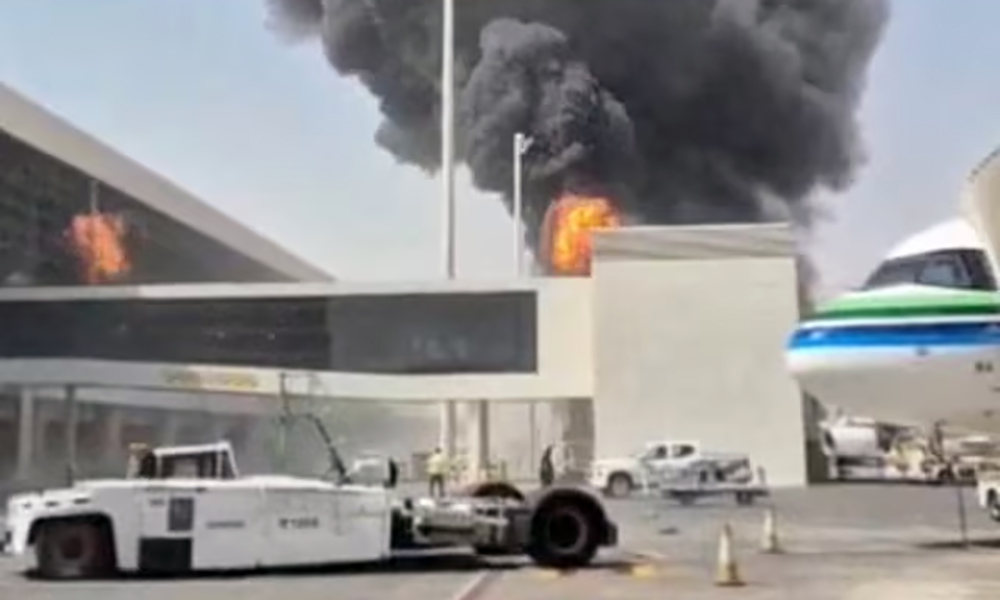
The third attack this week on Riyadh’s international airport on Saturday left at least 12 people dead and more than 300 wounded, Saudi authorities said, as Iran-backed Houthis escalated the campaign they launched this summer against the kingdom, Reuters reported.
The dead included four Saudis, two people from Bangladesh and one person each from the US, Jordan, Palestine, Syria, Sudan and Egypt, the Saudi civil aviation authority said. At the latest count, officials said, 309 were wounded.
Hospitals were flooded with wounded brought by ambulance and helicopter, people briefed on the matter said. Some were in critical condition.
Saturday’s attack, the deadliest in the kingdom in more than a decade, occurred without warning, with no alert issued by Saudi Arabia’s threat warning system. This week’s two previous attacks on King Khalid International Airport left four people dead and caused heavy damage to a Saudi commercial plane parked on the tarmac.
The deadly strikes exposed vulnerabilities in the kingdom’s defence capabilities as it wages an air campaign against the Houthis to support a ground war by the Yemeni government against the Iran-backed group.
Hospitals were flooded with wounded brought by ambulance and helicopter, people briefed on the matter said. Some were in critical condition.
Saturday’s attack, the deadliest in the kingdom in more than a decade, occurred without warning, with no alert issued by Saudi Arabia’s threat warning system. This week’s two previous attacks on King Khalid International Airport left four people dead and caused heavy damage to a Saudi commercial plane parked on the tarmac.
The deadly strikes exposed vulnerabilities in the kingdom’s defence capabilities as it wages an air campaign against the Houthis to support a ground war by the Yemeni government against the Iran-backed group.
US President Donald Trump, speaking to reporters outside the White House, was asked whether Washington planned to join Saudi strikes on the Houthis, read the report.
“We may. We’re going to look at it. We just found out about the recent attack, so we’ll make a decision. We move very quickly,” he said.
US Secretary of State Marco Rubio condemned the attacks, saying they “demonstrate a blatant disregard for innocent civilian life.”
One eyewitness at the airport on Saturday reported seeing an explosion and then multiple people lying injured on the ground inside. More than a dozen ambulances were seen rushing towards the facility. A video verified by Reuters showed ambulances at the airport.
An injured traveller told Reuters they saw something fly across the sky outside the airport before part of the ceiling near a departure gate collapsed.
The US embassy in Riyadh said it was “aware of attacks” and “strongly recommends all US citizens avoid this airport and surrounding areas.”
Saudi Arabia entered the Yemen war in 2015 at the head of an Arab coalition to try to force the Houthis out of the Yemeni capital Sanaa. The Houthis had stormed Sanaa the previous year, pushing out government forces, Reuters reported.
The war was fought to a bloody stalemate, with hundreds of thousands of Yemenis killed by fighting and famine. Saudi Arabia struck a 2022 deal with the Houthis, freezing the conflict.
That ceasefire unravelled over the summer, culminating in a lightning Houthi advance that took the Red Sea chokepoint of Bab el-Mandeb from Saudi-backed government forces.
The Saudi-backed Yemeni government began an offensive this week to try to retake that territory, which has so far made slow gains, even as the Houthis put the country’s third-largest city, Taiz, under siege.
Flight-tracking site flightradar24 showed all flights to Riyadh had either been diverted or cancelled, with only a helicopter hovering over the airport at one point.
Houthi attacks on Thursday and earlier in the week had already prompted a number of carriers to suspend or cancel services to the Saudi capital, shortly before Riyadh is due to host major energy and investment conferences.
Organizers of those conferences said ahead of the strikes on Saturday they would go ahead as planned.


IEA condemn attacks on Saudi airports amid rising regional tensions

EU pledges continued humanitarian aid for returning Afghans

Mujahid accuses Pakistani military circles of sabotaging talks with Afghanistan

▶️Pakistan deploys military to Peshawar after emergency rule declared

One dead in new attack on Saudi airport, a day after Houthi strike kills 13

EU and FAO launch €5m programme to strengthen Afghanistan’s agrifood sector

Cricket Bonanza: Afghanistan set for packed international schedule

Houthi advance in Yemen puts U.S. in a new bind

New warnings reignite debate over AI threat to humanity

UN warns of mounting humanitarian and human rights pressures in Afghanistan

Tahawol: EU appointing new envoy for Afghanistan

Saar: Pakistan’s political, security and economic crises

Saar: Ongoing expulsion of Afghan refugees from Iran and Pakistan discussed

Tahawol: CSTO meeting on Afghanistan reviewed

Saar: Guterres’s talks with Pakistani officials on Afghanistan discussed
-

 Regional3 days ago
Trump says US will not attack Iran before midterm elections in November
-

 Business4 days ago
Russia-Afghanistan trade surges 150% in first seven months of 2026
-
 World4 days ago
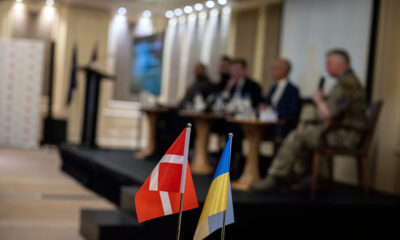
Denmark says Russia has conducted sabotage attacks against its defense firms
-
 World3 days ago
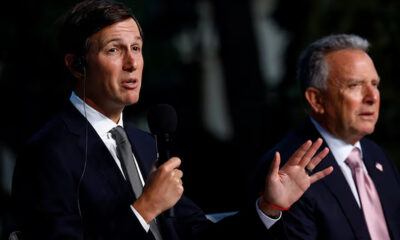
Witkoff, Kushner to meet Ukrainians for talks on the war, says US source
-
 Latest News2 days ago
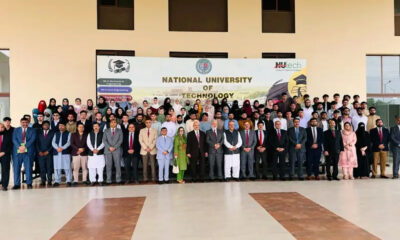
Pakistan issues new directives for Afghan medical students and doctors
-

 Sport4 days ago
Arman FC defeat Istiqlal Kabul 3-2 in thrilling comeback
-
 Latest News2 days ago
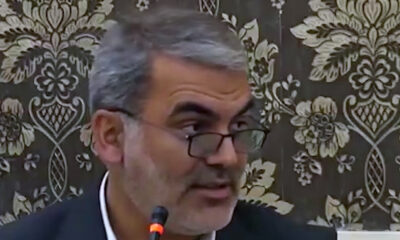
Iranian lawmaker praises Afghanistan’s support, accuses Pakistan of ‘hypocrisy’
-

 Business4 days ago
Afghan products attract Saudi buyers at major food expo in Jeddah