
Latest News
UN warns of ‘deeper humanitarian crisis’ as thousands return to Afghanistan
UNHCR spokesperson says the agency urgently needs $71 million to assist refugees returning to Afghanistan


The UN Refugee Agency (UNHCR) has warned that an even deeper humanitarian crisis is looming in Afghanistan as tens of thousands of Afghan refugees are being forced to return from neighbouring countries.
UNHCR spokesperson Babar Baloch said at a press conference in Geneva on Tuesday that the agency urgently needs $71 million to assist those arriving home. Baloch said these refugees face desperate conditions once in the country.
In April, more than 251,000 Afghans returned in adverse circumstances from Iran and Pakistan, including over 96,000 who were deported, Baloch said.
He said the UNHCR continues to advocate with the governments of Iran and Pakistan that returns to Afghanistan must be voluntary, safe and dignified. “Forcing or putting pressure on Afghans to return is unsustainable and could destabilize the region,” he said.
“While UNHCR recognizes the many challenges – including economic pressures – facing these countries that have hosted millions of Afghans for decades, we have also consistently shared our concerns that regardless of their legal status, people forced to return to Afghanistan may encounter serious protection risks,” Baloch said.
“This is especially true for Afghan women and girls who face increasing restrictions in terms of access to employment, education and freedom of movement in Afghanistan.
“Among other profiles, ethnic and religious minority groups, human rights activists, and journalists could also be at risk upon their return.
“These concerns are compounded by acute humanitarian needs inside Afghanistan, rising unemployment rates, as well as natural disasters and extreme weather incidents,” he said.
Since 2023, more than 3.4 million Afghans have returned or been deported from Iran and Pakistan, including over 1.5 million in 2024 alone.
The UNHCR said such mass returns have strained the capacity of many provinces in Afghanistan and exacerbated the risk of further internal displacement.
The organization also warned that there has also been new displacement into Iran and Pakistan, and heightened risks of onward movements towards Europe.
In 2024, Afghans became the largest group (41 percent) of irregular arrivals from the Asia-Pacific region into Europe.





Latest News
Muttaqi tells EU envoy global community has failed to support alternative livelihoods for farmers
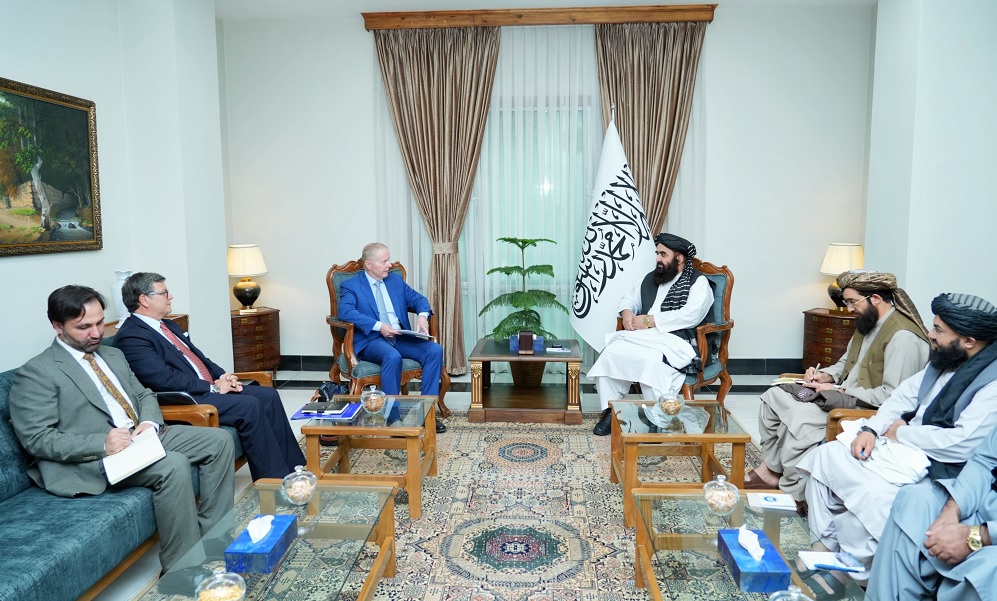
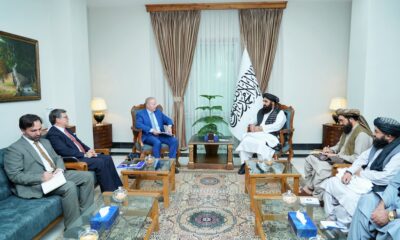
Amir Khan Muttaqi, foreign minister of the Islamic Emirate of Afghanistan (IEA), says the international community has failed to provide Afghan farmers with the necessary support for alternative livelihoods to sustain the country’s achievements in combating narcotics.
Afghanistan’s Ministry of Foreign Affairs said the issue was raised during Muttaqi’s meeting with Thomas Frellesen, the newly appointed European Union special envoy for Afghanistan.
According to a statement from the ministry, the two sides exchanged views on Afghanistan’s security situation, counter-narcotics efforts, and a range of humanitarian and political issues.
Frellesen acknowledged the IEA’s achievements in ensuring security and combating narcotics, saying that supporting security in Afghanistan and fighting drugs were part of the European Union’s official position.
He also assured Muttaqi that the EU would seek to expand cooperation with Afghanistan across various sectors.
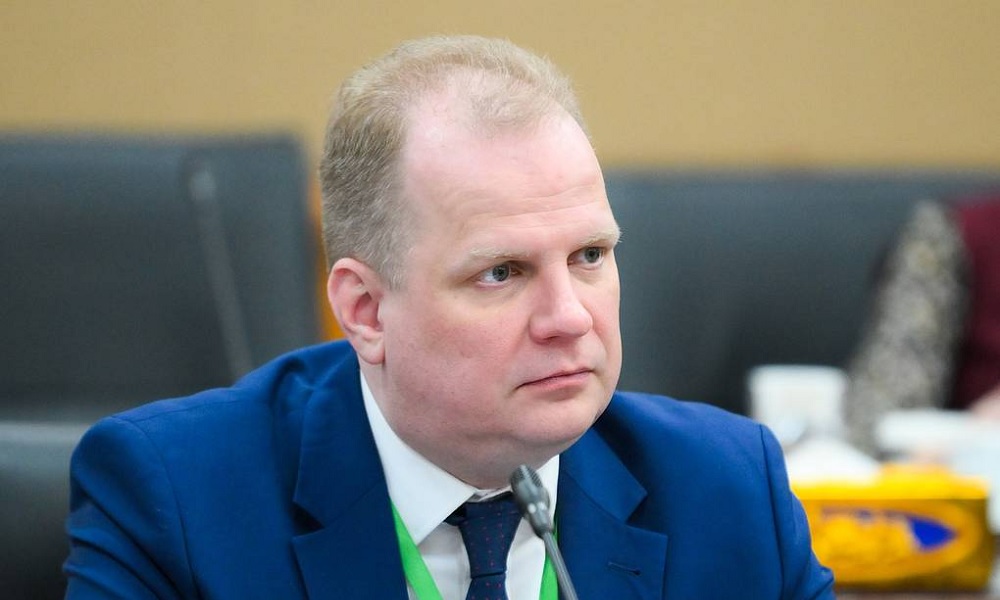
Russia has warned that the return of US military infrastructure to Afghanistan would pose a direct threat to all countries in the region, as Moscow continues to strengthen security and economic cooperation with Kabul.
Alexander Venediktov, deputy secretary of Russia’s Security Council, said the United States had made no secret of its plans to restore military infrastructure in Afghanistan.
“The emergence of such a foothold would pose a direct threat to all countries in the region,” Venediktov said, according to a statement from the Russian Security Council’s press service.
He said Russia’s security dialogue with Kabul also aimed to prevent the return of military infrastructure belonging to countries outside the region.
Venediktov described cooperation with Afghanistan as multifaceted and in line with Russia’s national interests, both in terms of security and efforts to establish a peaceful and stable Eurasian region.
He added that Russia was not alone in engaging with Afghanistan’s current leadership, noting that almost all countries in the region maintained direct contacts with Kabul.
Venediktov also said the Shanghai Cooperation Organisation (SCO) was discussing the restoration of cooperation with Afghanistan through a previously established contact group.
According to the Russian official, Moscow-Kabul relations were developing across several channels, including foreign ministries, government institutions and business communities.
He said the two sides had also established a bilateral working group on trade and economic cooperation, while efforts were underway to strengthen the legal framework governing their relations.
Venediktov added that economic cooperation with Kabul was important for advancing regional transport and energy projects.
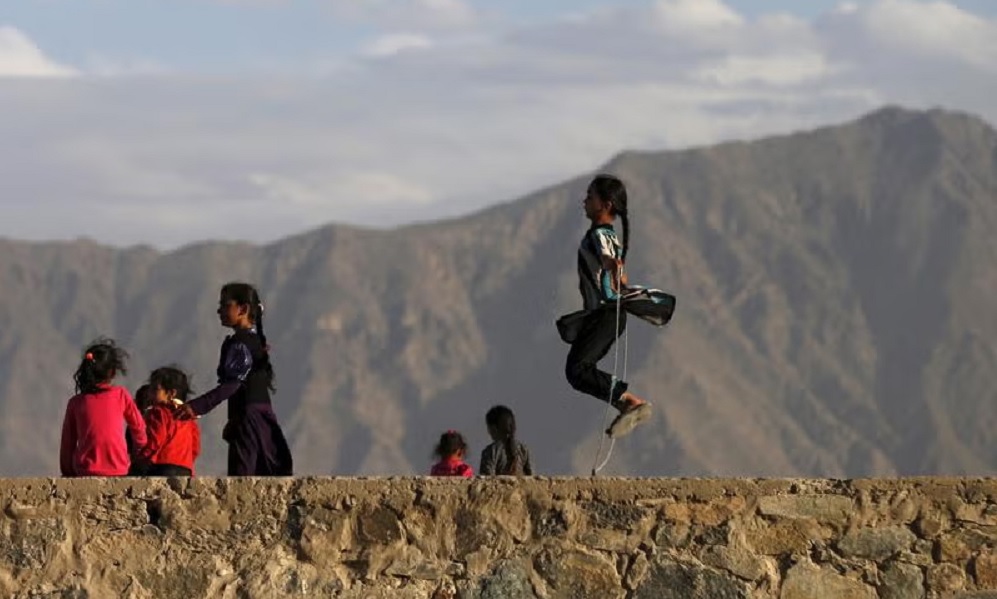
Afghanistan’s Ministry of Vice and Virtue says it has prevented several cases of forced and underage marriage in the past five months, as UNICEF calls for urgent action to protect girls and end child marriage.
Ministry spokesperson Saif-ul-Islam Khyber said the cases included attempts to prevent the marriages of two girls, aged six and eight, in Helmand and Nangarhar provinces. He attributed child marriage partly to a lack of awareness and harmful traditional practices, urging the public to report forced marriages to authorities.
In a statement marking the International Day of the Girl 2026, UNICEF Representative in Afghanistan Dr. Tajudeen Oyewale called for greater investment in girls’ education, healthcare and protection.
According to Afghanistan’s Multiple Indicator Cluster Survey 2022–23, 28.7% of women aged 20 to 24 were married before turning 18, with the proportion reaching one in two girls in some areas.
UNICEF warned that child marriage can disrupt education, limit future opportunities and expose girls to violence, early pregnancy and childbirth-related complications.
The agency urged the authorities to reopen schools to girls beyond Grade 6, describing continued access to education as one of the most effective ways to prevent child marriage. It also called for stronger protection services, support for vulnerable families and access to essential healthcare.
UN Secretary-General António Guterres has also called for an end to child marriage, warning that the practice threatens millions of girls’ education, health and safety.
UNICEF said coordinated action by families, communities, authorities and international partners is essential to ensure Afghan girls can learn, grow and shape their own futures.


Muttaqi tells EU envoy global community has failed to support alternative livelihoods for farmers

Hairatan railway port sees over 280 wagon arrivals daily from Central Asia

NASA’s Perseverance rover breaks record for off-planet driving on Mars

Russia warns against return of US military infrastructure to Afghanistan

Tahawol: Kabul’s criticism of Islamabad’s policy toward Afghanistan

EU and FAO launch €5m programme to strengthen Afghanistan’s agrifood sector

Cricket Bonanza: Afghanistan set for packed international schedule

New warnings reignite debate over AI threat to humanity

UN warns of mounting humanitarian and human rights pressures in Afghanistan

Afghanistan faces cancer treatment crisis
Tahawol: Kabul’s criticism of Islamabad’s policy toward Afghanistan

Saar: Pakistan deploying army in KP

Tahawol: EU appointing new envoy for Afghanistan

Saar: Pakistan’s political, security and economic crises

Saar: Ongoing expulsion of Afghan refugees from Iran and Pakistan discussed
-

 Regional4 days ago
Trump says US will not attack Iran before midterm elections in November
-
 Latest News3 days ago
Pakistan issues new directives for Afghan medical students and doctors
-
 Business5 days ago
Russia-Afghanistan trade surges 150% in first seven months of 2026
-
 World4 days ago
Witkoff, Kushner to meet Ukrainians for talks on the war, says US source
-

 Sport5 days ago
Arman FC defeat Istiqlal Kabul 3-2 in thrilling comeback
-
 Latest News3 days ago
Iranian lawmaker praises Afghanistan’s support, accuses Pakistan of ‘hypocrisy’
-

 Business5 days ago
Afghan products attract Saudi buyers at major food expo in Jeddah
-
 Latest News4 days ago
US senator cites Afghanistan visits in Pentagon ‘cover-up’ allegations over Iran war