
Latest News
FAO and UK launch £10 million project to boost Afghanistan’s rural resilience
Agriculture continues to form the backbone of Afghanistan’s economy and food system.

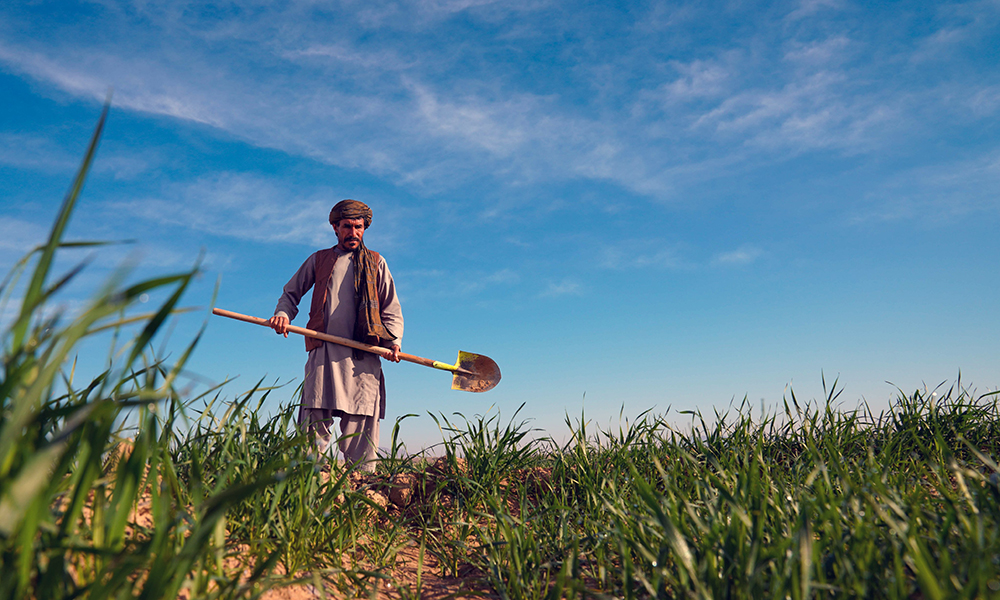
The Food and Agriculture Organization of the United Nations (FAO), in partnership with the government of the United Kingdom (UK), has launched a £10 million ($12.9 million) initiative aimed at strengthening food security, boosting rural livelihoods, and increasing the resilience of Afghan communities facing climate and economic challenges.
The new programme, known as the Resilient Agriculture Livelihoods (ReAL) project, is set to reach more than 151,000 people—representing over 21,500 households—across 15 provinces in Afghanistan over the next 10 months.
The project is part of the UK-funded “Promoting Resilient and Equitable Recovery of Agriculture and Livelihoods in Afghan Communities” (PREVALE) initiative.
According to FAO, the project will prioritize smallholder farmers, herders, and landless laborers, with a special focus on widows and women-headed households.
Key interventions will include improving wheat and dairy production, restoring community irrigation systems, distributing quality seeds, and delivering livestock vaccinations and health services.
Richard Trenchard, FAO Representative in Afghanistan, emphasized the importance of the UK’s support in strengthening local resilience. “Afghanistan’s farmers are extraordinarily resilient, but repeated climate and economic shocks are eroding this strength,” he said.
“This project lays down critical pathways to help rebuild that resilience—leading to better production, better nutrition, a better environment, and ultimately, a better life. In a country where agriculture sustains most lives, this is a short-term investment with long-term impact.”
Women are expected to play a central role in the ReAL project. FAO will provide targeted support for female-headed households through poultry starter kits, livestock training, and access to dairy markets, aiming to improve both nutrition and income generation for women and children.
Agriculture continues to form the backbone of Afghanistan’s economy and food system.
Between 2022 and 2024, FAO supported more than 30 million Afghans through a combination of emergency and resilience-building interventions. These efforts have significantly reduced the number of people facing acute food insecurity across the country.
The ReAL project builds on this progress by fostering climate-resilient farming, promoting sustainable land use, and helping communities reduce their dependence on emergency aid. It also aims to expand market access, encourage income-generating activities, and improve disaster risk management.
The initiative will run in parallel with a complementary PREVALE-funded project implemented by the Afghanistan Resilience Consortium (ARC), led by Afghanaid. Together, FAO and ARC aim to support climate-vulnerable communities, share best practices, and promote sustainable agricultural methods across Afghanistan.
FAO and its partners underscore that agriculture remains one of the most cost-effective means of addressing chronic food insecurity and malnutrition at scale. As Afghanistan continues to face overlapping environmental and economic pressures, long-term investment in rural livelihoods is seen as essential to safeguarding progress and enabling recovery.
The project reflects a growing shift toward building durable, community-led solutions that reduce humanitarian needs over time while restoring food sovereignty and economic stability in Afghanistan’s rural heartlands.




Latest News
Kabul’s Omid Sabz Township declared state-owned, occupants told to seek compensation from seller
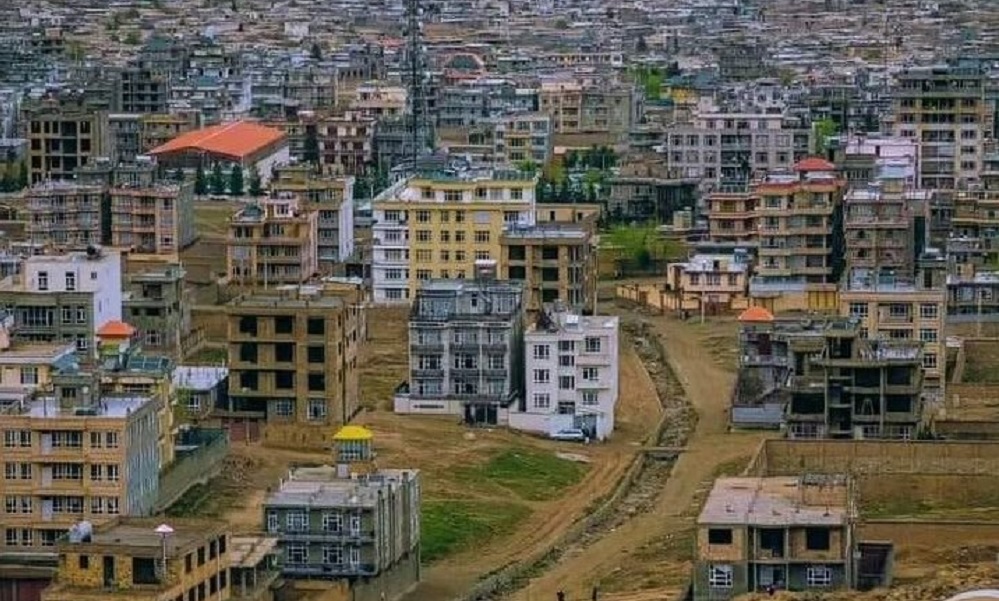
Afghanistan’s Ministry of Justice says that more than 1,500 jeribs of land known as Omid Sabz Township (Haji Nabi Township) in Kabul has been legally determined to be state-owned, and that current occupants should seek compensation from the party that sold them the land.
Barakatullah Rasouli, spokesperson for the Ministry of Justice, said the Special Court for State Land Grabbing Cases ruled that the land is officially registered and surveyed in the state’s name across five cadastral plots and has never been transferred to any individual or legal entity.
The court also ordered that the property be handed over to the Commission for the Prevention of Land Grabbing and the Restitution of Grabbed Land for implementation of the ruling.
The Ministry of Justice stressed that the commission is legally responsible for enforcing the Special Court’s rulings in cases involving state-owned land.
Latest News
Turkmenistan reviews TAPI pipeline progress at government energy meeting
TAPI’s gas supply will come from the Galkynysh field, one of the world’s largest natural gas deposits, with estimated reserves exceeding 27 trillion cubic metres.
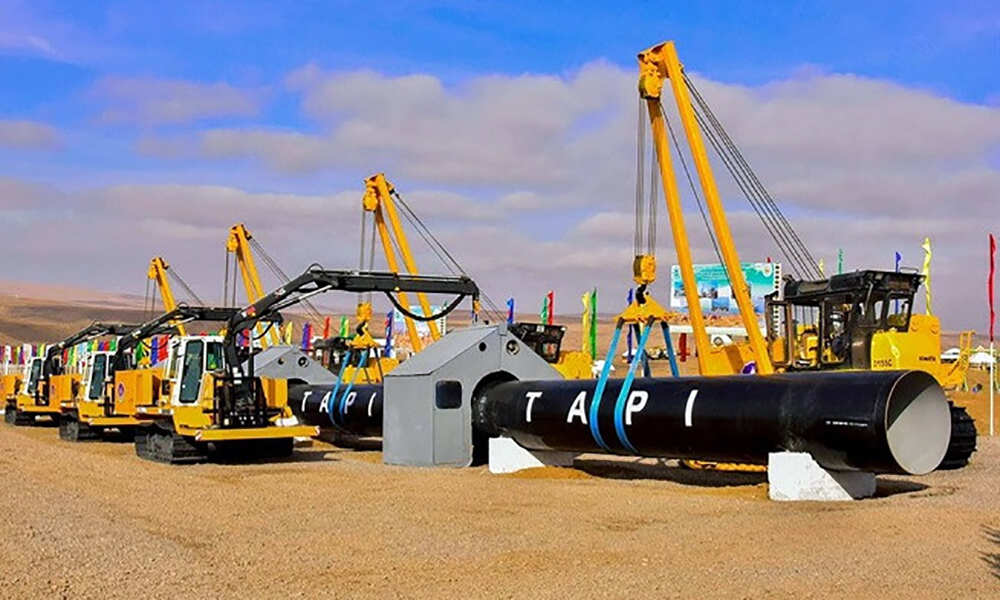
Turkmenistan has reviewed progress on the Turkmenistan-Afghanistan-Pakistan-India (TAPI) gas pipeline and reaffirmed its commitment to expanding hydrocarbon production during a government meeting of the country’s oil and gas sector.
According to a statement issued by state-owned Turkmennebit on Monday, the meeting assessed the performance of Turkmenistan’s oil and gas industry during the first seven months of 2026. Senior officials from Turkmennebit, Turkmengaz, Turkmengeology, TAPI Pipeline Company Ltd. and other energy enterprises presented reports on ongoing projects and sector developments.
The statement said particular attention was given to construction of the Serhetabat-Herat section of the TAPI pipeline, with officials emphasizing that work is being carried out in line with international standards.
Participants also discussed priorities for the sector’s future growth, including expanding geological exploration, increasing production drilling to identify new hydrocarbon reserves, boosting oil and natural gas output, and improving the quality of extracted resources.
The 1,800-kilometre TAPI pipeline is designed to transport up to 33 billion cubic metres of natural gas annually from Turkmenistan’s Galkynysh gas field to Afghanistan, Pakistan and India. The project is regarded by Ashgabat as a key route for diversifying its gas exports while strengthening regional energy cooperation and economic integration.
TAPI’s gas supply will come from the Galkynysh field, one of the world’s largest natural gas deposits, with estimated reserves exceeding 27 trillion cubic metres. In April 2026, Turkmengaz and China’s CNPC launched the fourth phase of the field’s development, a project expected to add up to 10 billion cubic metres of commercial gas production annually through new production facilities and additional wells.
The pipeline has also attracted renewed international attention. In June, the Belfer Center for Science and International Affairs at Harvard Kennedy School said TAPI is re-emerging as an important regional energy project, highlighting its potential to connect Turkmenistan’s vast gas resources with growing demand in South Asia.
Latest News
Mullah Baradar visits flood-hit Nuristan, pledges continued support for victims
A delegation of private sector representatives also accompanied Baradar during the visit and provided cash assistance to families affected by the floods.
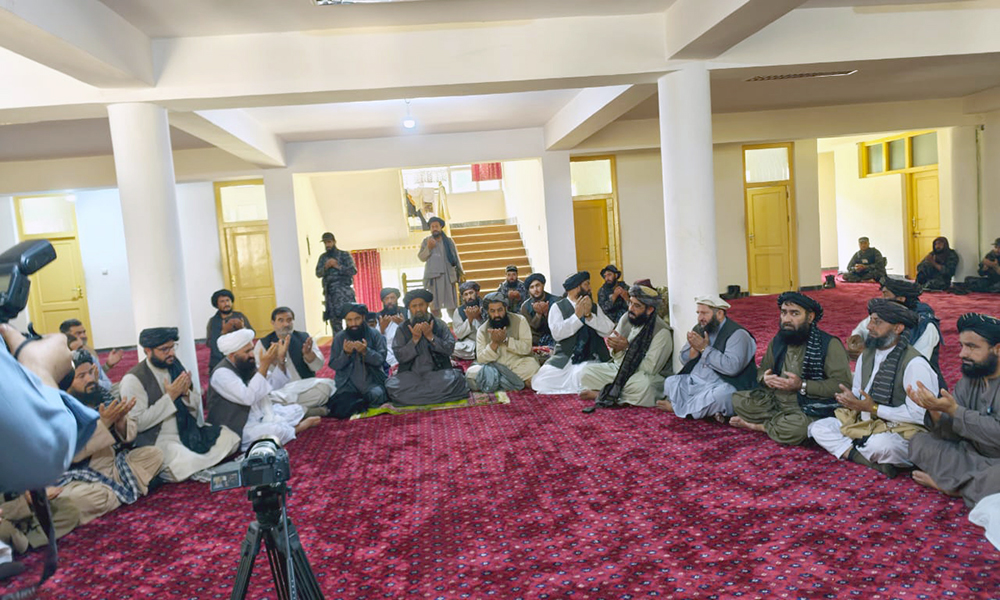
Deputy Prime Minister for Economic Affairs Mullah Abdul Ghani Baradar on Monday visited the eastern province of Nuristan to express solidarity with families affected by the recent deadly floods and reaffirm the Islamic Emirate’s commitment to supporting those impacted.
According to a statement from the Deputy Prime Minister’s Office, Baradar offered condolences to the families of those killed in the floods, praying for the victims to be granted paradise and wishing a swift recovery to those injured.
He said that immediately after the disaster, officials from the relevant government institutions were dispatched to the affected areas and used all available resources to carry out rescue operations and assist flood victims.
Baradar assured affected families that the Islamic Emirate would continue to provide assistance using all available means, emphasizing that government officials consider it their responsibility to respond to the needs of the people in a timely manner.
A delegation of private sector representatives also accompanied Baradar during the visit and provided cash assistance to families affected by the floods.
According to the statement, local religious scholars, tribal elders and flood-affected residents welcomed the delegation’s visit and expressed appreciation for the government’s support during a difficult time. They also shared their concerns and requests with the deputy prime minister.
Baradar pledged that the relevant authorities would take the necessary steps to address the issues raised by local residents.
The visit comes as Afghan authorities continue relief and recovery efforts in Nuristan following recent floods that caused fatalities, injuries and widespread damage to homes and infrastructure.


Kabul’s Omid Sabz Township declared state-owned, occupants told to seek compensation from seller

Turkmenistan reviews TAPI pipeline progress at government energy meeting

Mullah Baradar visits flood-hit Nuristan, pledges continued support for victims

KP chief minister says Islamabad has lost control of Khyber Pakhtunkhwa and Balochistan

Afghan agriculture delegation visits Moldova to boost scientific cooperation

Pakistan’s governance system has ‘collapsed’: Mohsin Naqvi

India offers 1,000 online scholarships for Afghan students for 2026-27 academic year

Cricket world pays tribute to Afghanistan fast bowler Shapoor Zadran

Turkey spent over $120 million to prepare airport for Qatar-donated U.S. presidential aircraft

Thousands pay final respects as Afghan cricketer Shapoor Zadran buried in Kabul

Tahawol: US cancelling strikes on Iran

Saar: Strained relations between Kabul and Islamabad

Saar: Trade shifts from Pakistan to Central Asia and Iran discussed

Tawsia: Efforts to increase Ghori cement production discussed

Tahawol: Germany’s deportation of non-criminal Afghan refugees
-
 Latest News3 days ago
Pakistan’s governance system has ‘collapsed’: Mohsin Naqvi
-

 Sport4 days ago
Qosh Tepa crowned champions of inaugural Afghanistan Wrestling Premier League
-

 Latest News3 days ago
World Bank: Afghanistan’s economic growth too weak to improve living standards
-

 Sport4 days ago
Afghanistan Wrestling Premier League crowns inaugural champion in tonight’s grand final
-
 Latest News2 days ago
Uzbek president calls for Central Asia-Afghanistan development space
-

 World2 days ago
US to make visa bond program permanent for people from dozens of countries
-

 Regional4 days ago
Seven police officers killed in fresh militant assault on Pakistan checkpoint
-
 Business4 days ago
Afghanistan invites Iranian investors to expand economic cooperation