
Latest News
UNICEF reports over 2 million migrants returned to Afghanistan so far this year
UNICEF also appealed to donor countries to increase funding for humanitarian programs supporting returnees, with a focus on women and children.

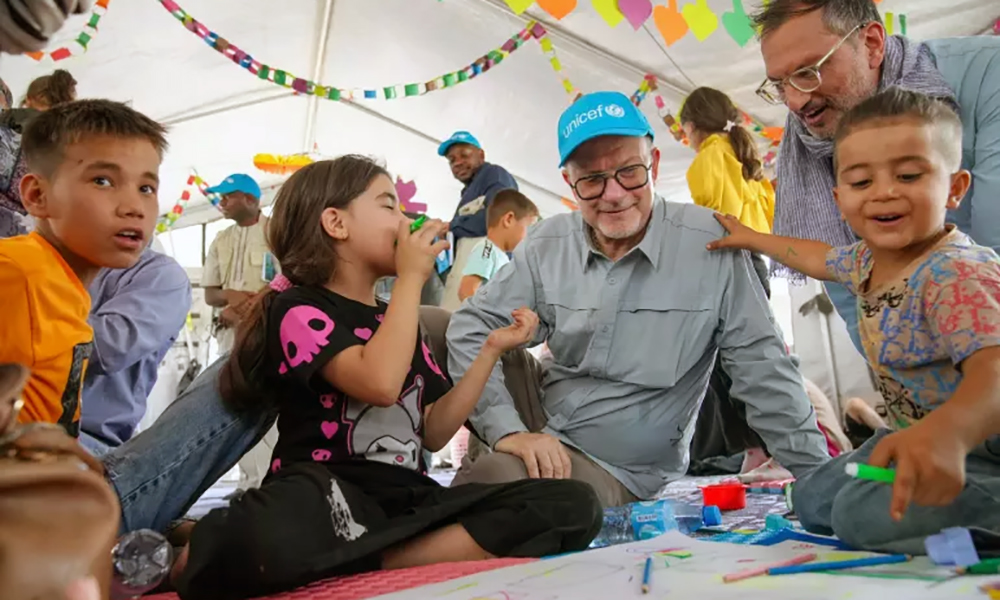
More than two million migrants, including approximately 500,000 children, have returned to Afghanistan from Iran, Pakistan, and several Central Asian countries so far this year, UNICEF announced following a visit by Ted Chaiban, Deputy Executive Director for Humanitarian Action and Supply Operations.
Chaiban, who recently completed his fourth visit to Afghanistan, highlighted the scale of returns, noting that on July 4 alone, over 50,000 individuals crossed into Afghanistan from Iran — the highest single-day figure recorded in 2025.
He warned that this mass influx has placed severe pressure on already fragile communities, where more than half of the population depends on humanitarian assistance.
During his visit, Chaiban toured key border reception centers including Islam Qala and Herat, meeting with returning families and witnessing firsthand the challenges they face.
While humanitarian and support services at these centers are being delivered in a coordinated effort by local authorities, UN agencies, NGOs, and partners, persistent shortages in education, healthcare, and economic opportunities are complicating reintegration.
Since the start of 2025, UNICEF has also identified and reunified over 6,000 unaccompanied or separated children with their families or relatives. The agency emphasized the urgent need to provide special protection to vulnerable groups, particularly women and children.
A critical concern raised by Chaiban was the ongoing ban on girls’ education beyond sixth grade. He cautioned that this restriction endangers not only the future of Afghan girls but also threatens the country’s broader development prospects. UNICEF called for the immediate lifting of these educational limitations.
In response to the return movements, UNICEF urged Iran, Pakistan, and Afghanistan to adopt a safe, dignified, voluntary, and phased approach to managing returns. The agency stressed the importance of regional dialogue to minimize the impact on host communities.
UNICEF also appealed to donor countries to increase funding for humanitarian programs supporting returnees, with a focus on women and children.
In addition to UNICEF’s warnings, the International Organization for Migration (IOM) reported that over the past two years, more than four million migrants have returned to Afghanistan from Iran and Pakistan. IOM described the ongoing return as one of the largest mass movements in the country’s recent history and called for urgent funding and enhanced regional cooperation to address the growing humanitarian crisis.






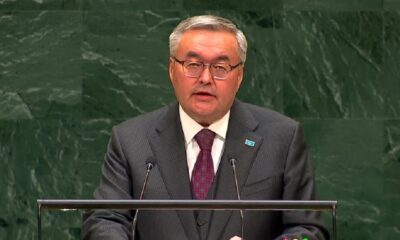




Kazakhstan’s Foreign Minister Mukhtar Tileuberdi has called for pragmatic and coordinated international engagement with Afghanistan, saying the country’s long-term stability is closely linked to the security and sustainable development of Central Asia.
Speaking during the general debate of the 81st session of the United Nations General Assembly in New York on Friday, Tileuberdi said humanitarian assistance to Afghanistan remains essential but alone cannot break the cycle of poverty, displacement and dependency.
He said Kazakhstan supports a “pragmatic, coordinated and step-by-step” approach to international engagement with Afghanistan, with the United Nations playing a central role.
Tileuberdi also said Kazakhstan is working with the UN to operationalize the United Nations Regional Centre for the Sustainable Development Goals for Central Asia and Afghanistan in Almaty.
He said the success of the centre should be measured by the results and assistance it delivers to the region.


Afghanistan Champions League: Omar Zawak Herat beat Toofan Herat 1-0

Blast in Pakistan’s Dera Ismail Khan kills 11, injures 30

Ariana Afghan Airlines increases Kabul-Delhi cargo flights

Khalilzad questions Pakistan’s commitment to Afghan welfare

India, UN envoy discuss Afghanistan’s humanitarian needs

Saudi energy group signs major Afghanistan deals covering gas exploration and pipeline plans

Trump floats idea of renaming Atlantic or Pacific Ocean

US hits Egyptian bank branches with Iran sanctions as war marks six months

Nepal flood rescue mission enters critical phase as thousands remain missing

Iranian clubs to face Gulf opponents at neutral venues in Asian Champions League Elite

Exclusive interview with Abdul Latif Mansoor, Minister of MRRD

Tawsia: Overview of Afghanistan’s iron mines

Tahawol: Discussion on fresh Pakistani airstrikes on Afghanistan

Saar: Calls for international support for Afghanistan discussed

Tahawol: Opening of the 81st UN General Assembly Session
-

 World4 days ago
CNN, MS NOW and Politico sue Trump, challenging White House ban
-

 Latest News3 days ago
Ariana Afghan Airlines ranks seventh among 45 Central Asian airlines
-

 Latest News4 days ago
UN reiterates call for respect for international law after Kunar airstrikes
-
 Latest News5 days ago
Khalilzad condemns Pakistan airstrikes, says current strategy is not working
-

 Regional3 days ago
US and Iran hold first talks since June after Trump’s ‘annihilation’ threat
-

 Latest News3 days ago
Silk Road highway in Wakhan corridor now reaches the China border
-

 Latest News4 days ago
Afghan Official: Pakistan’s airstrikes will not go unanswered
-

 Sport4 days ago
Afghan boxing referee heads to China for international festival