
World
‘No deal until there’s a deal’: Trump-Putin talks yield no breakthrough on Ukraine

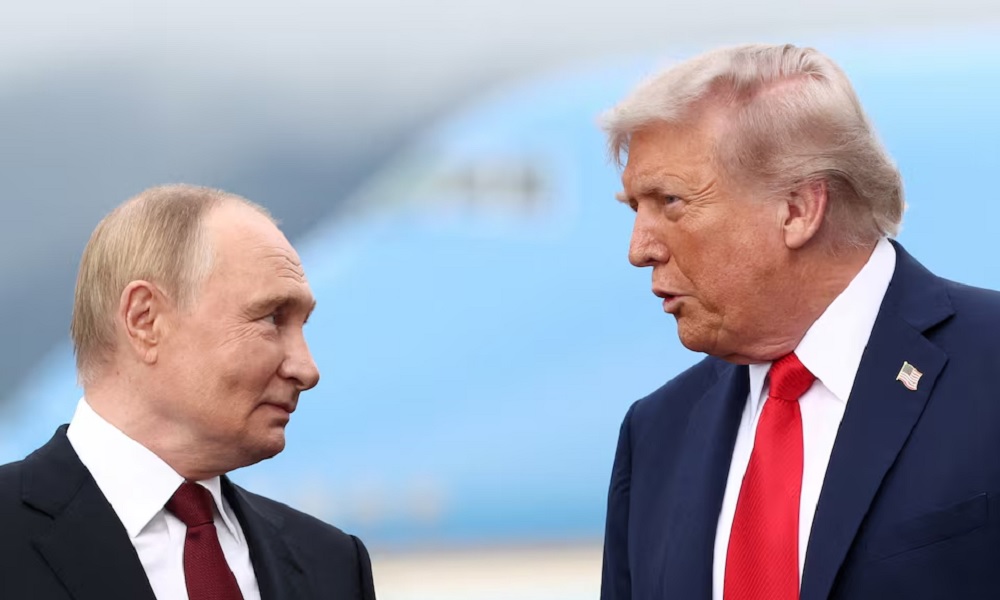
A highly anticipated summit between U.S. President Donald Trump and Russian President Vladimir Putin on Friday yielded no agreement to resolve or pause Moscow’s war in Ukraine, though both leaders described the talks as productive.
During a brief appearance before the media following the nearly three-hour meeting in Alaska, the two leaders said they had made progress on unspecified issues. But they offered no details and took no questions, with the normally loquacious Trump ignoring shouted questions from reporters, according to Reuters.
“We’ve made some headway,” Trump said, standing in front of a backdrop that read, “Pursuing Peace.”
“There’s no deal until there’s a deal,” he added.
The talks did not initially appear to have produced meaningful steps toward a ceasefire in the deadliest conflict in Europe in 80 years, a goal Trump had set ahead of the summit.
But simply sitting down face-to-face with the U.S. president represented a victory for Putin, who had been ostracized by Western leaders since Russia’s full-scale invasion of Ukraine in 2022.
Following the summit, Trump told Fox News’ Sean Hannity that he would hold off on imposing tariffs on China for buying Russian oil after making progress with Putin. He has targeted India, another major buyer of Russian crude, with an additional 25% tariff on U.S. imports.
“Because of what happened today, I think I don’t have to think about that now,” Trump said of Chinese tariffs. “I may have to think about it in two weeks or three weeks or something, but we don’t have to think about that right now.”
Trump has also threatened sanctions on Moscow but has thus far not followed through, even after Putin ignored a Trump-imposed ceasefire deadline earlier this month.
In the Fox News interview, Trump also suggested a meeting would now be set up between Putin and Ukrainian President Volodymyr Zelenskiy, which he might also attend. He gave no further details on who was organizing the meeting or when it might be.
Putin made no mention of meeting Zelenskiy when speaking to reporters earlier. He said he expected Ukraine and its European allies to accept the results of the U.S.-Russia negotiation constructively and not try to “disrupt the emerging progress.”
He also repeated Moscow’s long-held position that what Russia claims to be the “root causes” of the conflict must be eliminated to reach a long-term peace, a sign he remains resistant to a ceasefire.
There was no immediate reaction from Kyiv to the summit, the first meeting between Putin and a U.S. president since the war began.
When asked by Hannity what he would advise Zelenskiy, Trump said, “Gotta make a deal.”
“Look, Russia is a very big power, and they’re not,” Trump added. The war has killed or injured well over a million people from both sides, including thousands of mostly Ukrainian civilians, according to analysts.
ROLLING OUT THE RED CARPET
Zelenskiy has ruled out formally handing Moscow any territory and is also seeking a security guarantee backed by the United States. Trump said he would call Zelenskiy and NATO leaders to update them on the Alaska talks.
As the two leaders were talking, the war raged on, with most eastern Ukrainian regions under air raid alerts. Governors of Russia’s Rostov and Bryansk regions reported that some of their territories were under Ukrainian drone attacks.
Ukraine’s opposition lawmaker Oleksiy Honcharenko said on the Telegram messaging app, “It seems Putin has bought himself more time. No ceasefire or de-escalation has been agreed upon.”
The anticlimactic end to the closely watched summit was in stark contrast to the pomp and circumstance with which it began. When Putin arrived at an Air Force base in Alaska, a red carpet awaited him, where Trump greeted Putin warmly as U.S. military aircraft flew overhead.
Putin is wanted by the International Criminal Court, accused of the war crime of deporting hundreds of children from Ukraine. Russia denies the allegations, and the Kremlin has dismissed the ICC warrant as null and void. Russia and the United States are not members of the court.
The day before the summit, Putin held out the prospect of something Trump wants – a new nuclear arms control agreement to replace the last surviving one, which is due to expire in February. It was unclear if the issue was discussed on Friday.
‘COUNTING ON AMERICA’
Zelenskiy, who was not invited to Alaska, and his European allies had feared Trump might sell out Ukraine by essentially freezing the conflict and recognizing – if only informally – Russian control over one-fifth of Ukraine.
Trump had sought to assuage such concerns on Friday ahead of the talks, saying he would let Ukraine decide on any possible territorial concessions.
“I’m not here to negotiate for Ukraine, I’m here to get them at a table,” he said.
Asked what would make the meeting a success, he told reporters: “I want to see a ceasefire rapidly … I’m not going to be happy if it’s not today … I want the killing to stop.”
The meeting also included U.S. Secretary of State Marco Rubio; Trump’s special envoy to Russia, Steve Witkoff; Russian foreign policy aide Yury Ushakov; and Foreign Minister Sergei Lavrov.
Trump, who said during his presidential campaign that he would end the Ukraine war within 24 hours, conceded on Thursday it had proven a tougher task than he had expected. He had said if Friday’s talks went well, quickly arranging a second, three-way summit with Zelenskiy would be more important than his encounter with Putin.
Trump ended his remarks on Friday by telling Putin, “I’d like to thank you very much, and we’ll speak to you very soon and probably see you again very soon.”
“Next time in Moscow,” Putin responded. Trump said he might “get a little heat on that one” but that he could “possibly see it happening.”
Zelenskiy said ahead of Friday’s summit that the meeting should open the way for a “just peace” and three-way talks that included him, but added that Russia was continuing to wage war.
“It’s time to end the war, and the necessary steps must be taken by Russia. We are counting on America,” Zelenskiy wrote on Telegram.








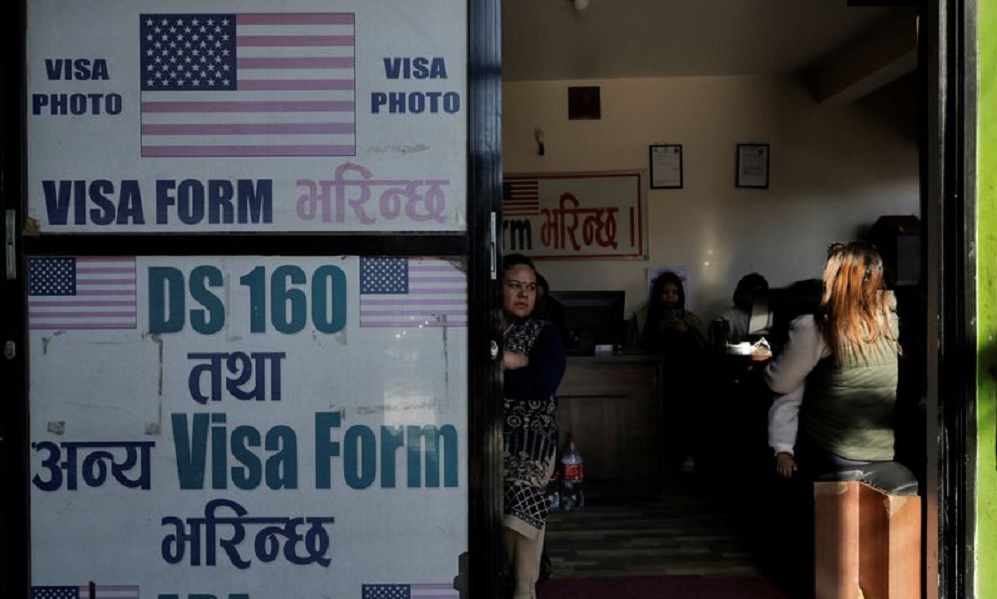
President Donald Trump’s administration has issued a pause on visa appointments for applicants around the world during an ongoing immigration crackdown by the U.S. government in the Republican leader’s second term in the White House.
A U.S. State Department spokesperson said on Tuesday that it launched a global training initiative at all U.S. embassies and consulates worldwide and that appointments for visa services will be adjusted to accommodate the training, Reuters reported.
Trump has pursued an aggressive deportation drive and immigration crackdown that includes revocations of visas and green cards and rejection of applications over a. range of reasons like political opinions and pro-Palestinian protests against U.S. ally Israel’s assault on Gaza.
He says the crackdown aims to improve domestic security.
The crackdown has faced some legal setbacks. A U.S. judge on Friday struck down a Trump administration policy suspending the issuance of immigrant visas to applicants from 75 countries, saying that the policy exceeded Secretary of State Marco Rubio’s statutory authority.
The State Department did not specify details on the training and its timeline, beyond saying the training aimed to help consular officers screen out applicants deemed likely to become dependent on U.S. public benefits and to ensure evaluation of visa applicants “comprehensively and consistently.”
The pause on visa appointments was reported earlier by the Financial Times, which said immigrant visa applicants with scheduled interviews at U.S. embassies and consulates have received emails that their appointments were being rescheduled and that they would receive future notice of a new date.
Trump’s immigration crackdown has been widely condemned by human rights groups as being discriminatory and in violation of free speech and due process rights. Rights groups also say the crackdown has created an unsafe environment in the U.S., especially for ethnic minorities who have raised concerns about racial profiling.
While Trump campaigned in 2024 on a platform of stopping illegal immigration, his administration has also made legal immigration more difficult – for example, by imposing new and expensive fees for applicants of certain work visas.

U.S. CIA Director John Ratcliffe traveled to Moscow on Tuesday for meetings with Russian officials, U.S. media outlets reported, citing unnamed sources.
The trip would be the first known visit to the Russian capital by a U.S. spy chief since Ratcliffe’s predecessor, William Burns, held talks with Vladimir Putin in November 2021. About three months after that meeting, the Russian president launched Moscow’s invasion of Ukraine, Reuters reported.
CBS News and Axios reported the visit by Ratcliffe, U.S. President Donald Trump’s CIA chief, who served as director of national intelligence in Trump’s first term. The outlets did not say whom he was meeting or what the talks are expected to cover.
The CIA declined to comment. Kremlin spokesman Dmitry Peskov neither confirmed nor denied the report, telling Reuters President Vladimir Putin did not plan to have a meeting with Ratcliffe.
The U.S. last week asked Ukraine not to launch air strikes around Moscow, St. Petersburg, and some northern territories of Russia on Monday, Tuesday and Wednesday of this week because a plane carrying a senior U.S. official would be flying to the Russian capital, said a source familiar with the matter.
The source declined to provide further information. The Financial Times first reported the U.S. message to Ukraine.
On Monday, the U.S. warned countries to cut business ties with Iran or face secondary sanctions, a move aimed at stepping up economic pressure on Tehran to settle the U.S.-Israeli war on Iran launched in February.
The U.S. has no ambassador to Russia, which maintains a close strategic partnership with Iran involving extensive military, economic and diplomatic ties.
Tehran supplied Moscow with drones for its war against Ukraine. In March, Ukrainian President Volodymyr Zelenskiy accused Russia of supplying its version of those drones to Iran.
A Ukrainian intelligence assessment reported by Reuters in April said that Russia has aided Iran with satellite imagery for use in targeting U.S. facilities in the Middle East.
Moscow denies providing such assistance and has said it is ready to help resolve the U.S.-Iran conflict.
World
Israel’s Netanyahu says Iran tried to kill one of his sons
It was not immediately clear which of his sons he was referring to. Netanyahu’s elder son, Yair, lives in Miami.
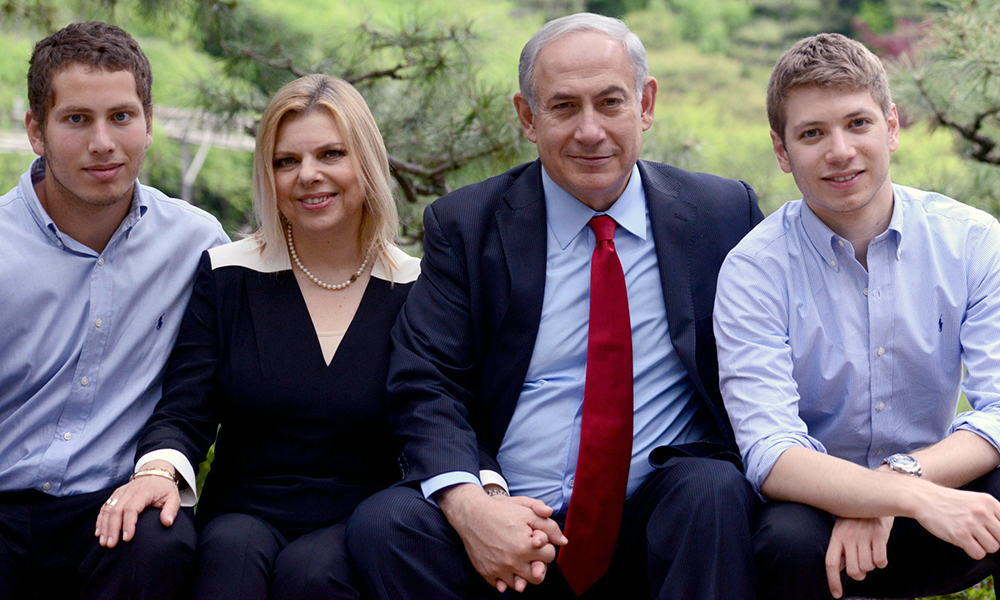
Israeli Prime Minister Benjamin Netanyahu said on Monday that Iran had tried to kill one of his sons, but gave no details about when the alleged plot took place, which son was targeted or how close it came to being carried out, Reuters reported.
Netanyahu’s allegation underscores the heightened tensions since the U.S.-Israeli war on Iran began in February, during which Supreme Leader Ayatollah Ali Khamenei and other senior Iranian leaders were killed.
Netanyahu, whose coalition is trailing in opinion polls two months before an October 27 general election, made the claim in a telephone interview with Israel’s Channel 14. He was responding to reports that one of Israel’s security agencies had refused to provide protection for a political rival ahead of the nationwide vote.
“As for my sons. Here, I think there is something quite unbelievable, yes. Iran targeted one of my sons. Iran tried to kill, to murder one of my sons,” Netanyahu told the conservative channel known for its favourable coverage of the government.
“Iran tried to murder one of my sons, and therefore this security protection is not a luxury,” he said, without providing any further details about the alleged plot or how close it came to being carried out.
It was not immediately clear which of his sons he was referring to. Netanyahu’s elder son, Yair, lives in Miami.
Iran’s mission at the United Nations in New York did not immediately respond to a request for comment on the accusation.
Netanyahu also said he had told the Shin Bet security agency chief David Zini that appropriate security should be provided for any prime ministerial candidate.
Israeli media had reported earlier that Zini declined to provide security for Gadi Eisenkot and told the country’s election authority there was no plot to harm him, read the report.
Eisenkot’s party is projected to win the largest number of seats in the election, although Israeli governments are usually formed through coalitions among multiple parties rather than by a single party winning a parliamentary majority outright.


Badakhshan police say Pakistan is sheltering Islamic Emirate opponents in Chitral

Tottenham face Charlton as ATN brings live EFL Cup action to Afghan fans

Trump administration issues pause on visa appointments for applicants worldwide

UNICEF warns one million Afghan children at risk of death from malnutrition

US spy chief visits Russia for meetings, media reports

Pakistan’s governance system has ‘collapsed’: Mohsin Naqvi

Afghanistan exports first stone shipment to US in $100,000 trade milestone

AFC confirms clubs for 2026/27 competitions; draw set for August 18

Only two days to go before Afghanistan and Ireland begin ODI series

Four mediators struggle to secure lasting Pakistan-Afghanistan ceasefire

Tahawol: Aisha Wahab’s emphasis on US ties with IEA

Saar: Guterres’s concern regarding global conflicts discussed

Saar: Afghanistan’s uncertain future in SCO

Tahawol: IEA seeking Afghanistan seat at UN

Saar: U.S. sanctions against Iran
-
 Latest News3 days ago
Four mediators struggle to secure lasting Pakistan-Afghanistan ceasefire
-

 Latest News4 days ago
Syria and Saudi Arabia condemn Kabul bombing, express solidarity with Afghanistan
-

 Latest News4 days ago
US judge strikes down Trump visa suspension for 75 countries, including Afghanistan
-
 Business2 days ago
Afghanistan’s trade diversification challenges Pakistan
-

 Sport4 days ago
Afghanistan-India T20I series could see major schedule change
-
 Latest News4 days ago
Achakzai urges Pakistan to end hostility towards Afghanistan
-
 Latest News3 days ago
AfghanEvac warns US court ruling does not reopen door for Afghans
-

 Sport5 days ago
Abaseen Defenders clinch Khan Hospital Kabul Premier League Season 4 title