
Latest News
A threat at Kabul’s southern gate: a security overview of Logar province

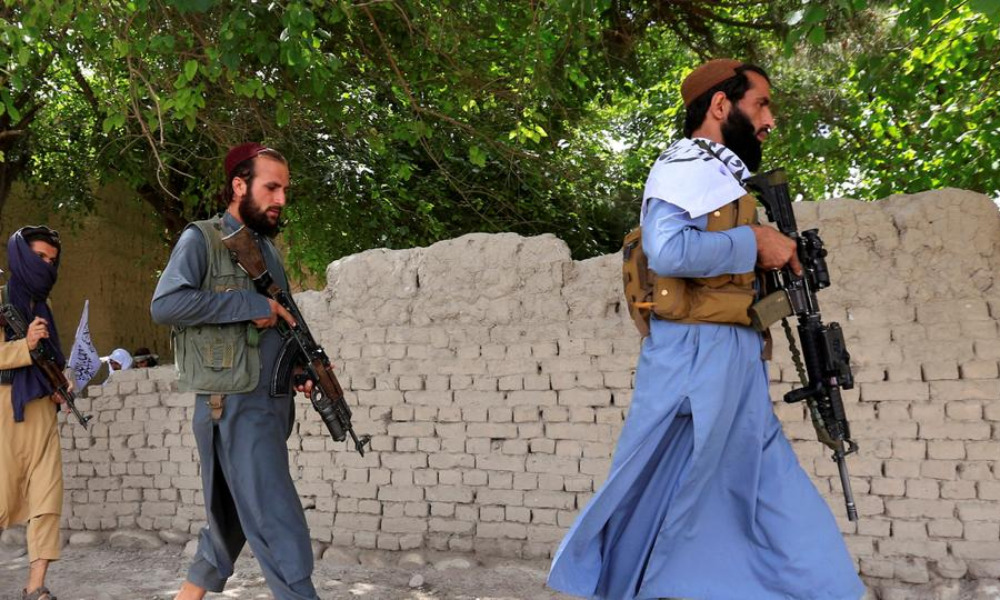
A Kabul-based security analyst and former high-ranking Afghan government official has said the increase in insurgent activity in “contested” Logar province might be part of an encirclement strategy of Kabul by the Taliban for when foreign troops withdraw.
In a new report by Afghanistan Analysts Network (AAN) the volatility of the strategic province, which is the southern gateway to Kabul, was highlighted earlier this month during a visit to Logar by President Ashraf Ghani.
During the president’s visit, the Taliban hit the provincial capital with eight mortar rounds during and after his speech.
In the days leading up to the president’s visit, the Taliban also carried out attacks on police checkpoints on the outskirts of the provincial capital.
According to AAN, the government only controls parts of three of Logar’s seven districts, which provides the Taliban with positions closer to Kabul than anywhere else.
In its report, AAN said between April and mid-July 2020 it had analyzed Logar’s trends of insecurity and found that residents blame the insurgent activity on poor government leadership. However, the government blames a lack of cooperation by the population on the situation.
AAN stated they also found significant popular sympathies for the Taliban – with the local perception being the group was the powerful entity in the war.
Logar, with its provincial capital Pul-e Alam located only about 60 kilometers to the south of the capital Kabul, is a strategically extremely important province.
The province’s second-largest town, Muhammad Agha, is situated only 23 kilometers beyond Kabul’s city limits.
Out of the six rural districts and the one surrounding Logar’s capital Pul-e Alam, the government officially claims to control three: the provincial capital, Khoshai and Muhammad Agha.
But AAN reports that security analysts and local sources give a different picture.
Local sources interviewed by AAN say the Taliban are present in many villages just four kilometers from Pul-e Alam. Villages there were targets of recent Afghan government forces’ clearing operations.
In the three southern districts – Baraki Barak, Charkh and Kharwar – the government only holds the district centers or small areas around them. Local residents said Khoshai was also contested, with half of the district controlled by the Taliban and half by the government. The situation in Azra is even more precarious, AAN reported.
This degree of control provides the Taliban with positions closer to the capital than in almost any other province.
Earlier this year, on 11 April 2020, residents of a number of districts, including residents of Pul-e Alam, gathered in Logar’s capital and called on the Taliban to cease their operations, stop attacking the Afghan army and get ready for peace talks with the Afghan government. The participants included tribal elders and pro-government people.
AAN reported that last year, Taliban activity particularly increased along the Logar part of the Kabul-Gardez highway. Pul-e Alam and Muhammad Agha districts combined accounted for many Taliban attacks in 2019.
This led to increased counter-operations by Afghan and international troops in autumn of 2019, including “unprecedented” levels of airstrikes and night raids along the highway, but also against Taliban logistic structures deeper in the province and particularly against insurgent networks operating from Logar into Kabul.
As a result, analysts registered the “highest level” of monthly conflict intensity on record in July 2019.
Although this had somewhat “diminished” Taleban operational capacities, there were still between over 40 and 60 Taliban attacks per month from May to September 2019.
On average, this was ten less than in 2018 when the season of significant fighting was longer, from April to October.
Local residents in Pul-e Alam and in the districts told AAN that since the beginning of the new Afghan year (April) and the start of the ‘spring fighting season’ in the country in late March, the Taliban have intensified attacks on government security posts throughout all districts of the province as well as on the outskirts of the provincial capital, and on a stronger scale than in any other year since the insurgency started in this province.
According to them, they have rarely experienced a day or two in which the Taliban have not carried out an attack.
A tribal elder in Charkh district told AAN that some years ago, he had invited the district governor and other officials to his home around 35 kilometers away from the district center, and the district governor had indeed come. But now, he said, the district governor could not come to his district center without a huge number of armed forces protecting him.
This trend has been confirmed by the Kabul based security analysts who said that the number of security incidents in March this year was three and a half times more in Logar province than in March 2019.
AAN also reported that the wave of assassinations of people working in the current political system continued over the entire period.
The most high-profile case was the kidnapping and shooting of former senator Abdul Wali Ahmadzai on June 9.
Ahmadzai had at the time been working for the Independent Directorate of Local Governance (IDLG).
A spokesman for the provincial governor accused the Taliban of the killing.
In March, a member of the Logar Provincial Council was assassinated in Kabul and in early June the Taliban shot dead two sisters, one of them reportedly the wife of an intelligence official at the Ministry of Interior, the other a visitor.
On 6 July, Nafisa Hejran, a female provincial council (PC) member, and her driver were wounded in a shooting in the provincial capital. Her colleague Nasir Ghairat, along with three guards, was killed in Kabul on 8 March.
Most residents of Logar that AAN spoke with, believe that the Taliban are behind the recent killings.
According to AAN, there are several reasons why many residents of Logar have a certain sympathy for the Taliban and why, according to some residents, they have contributed a large number of fighters to the Taliban.
A Logar resident told AAN that local Taliban ranks have been increased over recent years by former Afghan National Army and Afghan National Police members who did not extend their contracts.
“It is not clear, though, how much of this was voluntary or the result of coercion – the Taliban are able to pressure families when their sons return to their villages of origin – or whether this includes infiltration in order to obtain military training,” AAN reported.
A civil society activist said he thinks this is due to the “abnormal situation” of war.
He said people witness that when a government soldier is killed, he or his family are not taken care of by the government, but if a Taliban fighter is killed, the Taliban writes “poems praising him and his bravery is sung everywhere,” reported AAN.
According to the network, the activist said this contributes to pulling parts of the young generation toward the Taliban. He said under normal conditions everyone would prefer the presence of the government.
AAN also stated that at a higher level, the fact that the Taliban’s political office in Qatar includes two prominent representatives from Logar, Mullah Abas Stanakzai, and Mawlawi Shahabuddin Delawar, also contributes to a level of grassroots support, i.e. pride in being represented.
Almost all the respondents told AAN that the increasingly abusive behavior of government security forces – including the uprising forces and Afghan Local Police – have caused the people to be sympathetic to the Taliban, which in turn further enforced their presence in Logar.
In conclusion, AAN stated that for the Taliban, Logar’s strategic importance lies in its proximity to Kabul.
Together with consolidated positions in neighboring provinces such as Maidan Wardak, western Nangarhar and Surobi, the eastern-most district of Kabul (where fighting had increased recently), Logar is part of a belt that could cut off the capital from southern and eastern Afghanistan if the military situation escalates into an endgame scenario.
In Logar itself, they have been able to regularly attack the government forces in both the provincial capital and the districts.
To read the full report CLICK HERE https://www.afghanistan-






Latest News
Afghan officials join ICESCO meeting, discuss preservation of Islamic manuscripts
Participants underscored the importance of safeguarding these documents, noting that the focus on Mali reflects the manuscripts’ unique cultural and historical value.
Officials from the Ministry of Information and Culture participated in an online scientific meeting organised by the Islamic World Educational, Scientific and Cultural Organization (ICESCO), focused on the preservation of Islamic manuscripts.
Obaidullah Hanif, Director of the National Archive, and Mohammad Shafiq Ahmadzai, Head of Foreign Relations and Cultural Attachés at the ministry, joined the session held by ICESCO’s Centre for Calligraphy and Manuscripts under the theme “Islamic Manuscripts in the World.”
The meeting examined the condition of Islamic manuscripts in Mali and discussed strategies for their preservation and protection as part of global cultural heritage.
ICESCO representatives highlighted that Mali’s extensive collection of hundreds of thousands of historical manuscripts represents one of the most significant repositories of Islamic civilisation and intellectual history in West Africa.
Participants underscored the importance of safeguarding these documents, noting that the focus on Mali reflects the manuscripts’ unique cultural and historical value.
ICESCO is an intergovernmental organization specializing in the fields of education, science and culture.
Latest News
Afghanistan announces over 1,000 education ministry vacancies, prioritises returnees
Officials said the hiring will be conducted transparently, with candidates selected strictly on merit, qualifications, and professional competence.
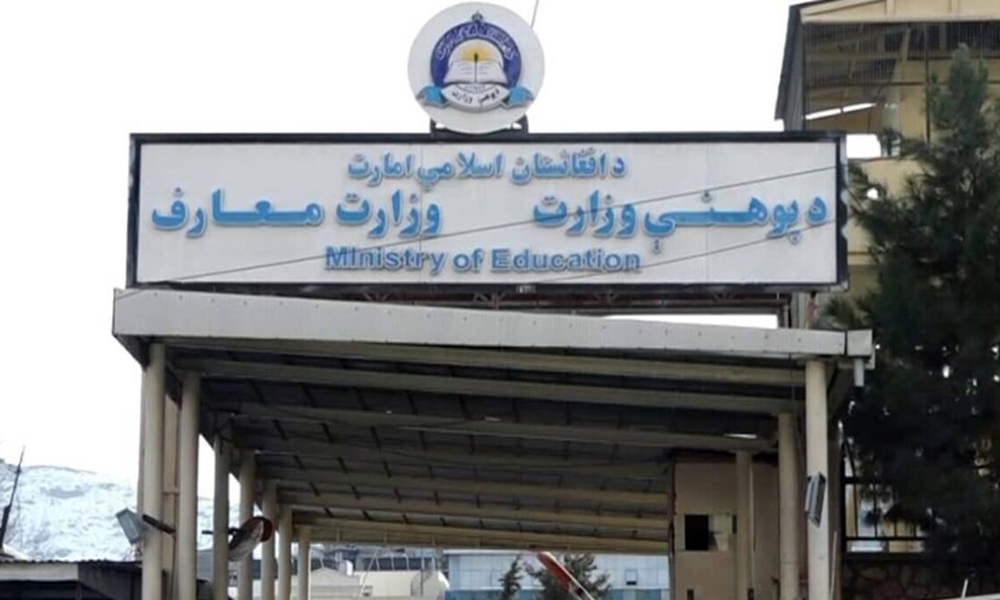
Afghanistan’s Ministry of Education has announced 1,060 vacant administrative posts across district education departments and regional education zones, to be filled through an open competitive recruitment process.
Officials said the hiring will be conducted transparently, with candidates selected strictly on merit, qualifications, and professional competence. They stressed that ethnic or regional considerations will not play any role in the selection process.
In a related development, Mohammad Zahid Ahmadzai, Deputy Minister of Labour and Social Affairs, said returning refugees will be given priority in employment opportunities. He added that the ministry is working with multiple institutions to broaden job creation across the country.
Education ministry officials noted that the newly advertised posts form part of a revised organisational structure designed to strengthen administrative capacity across 473 districts nationwide.
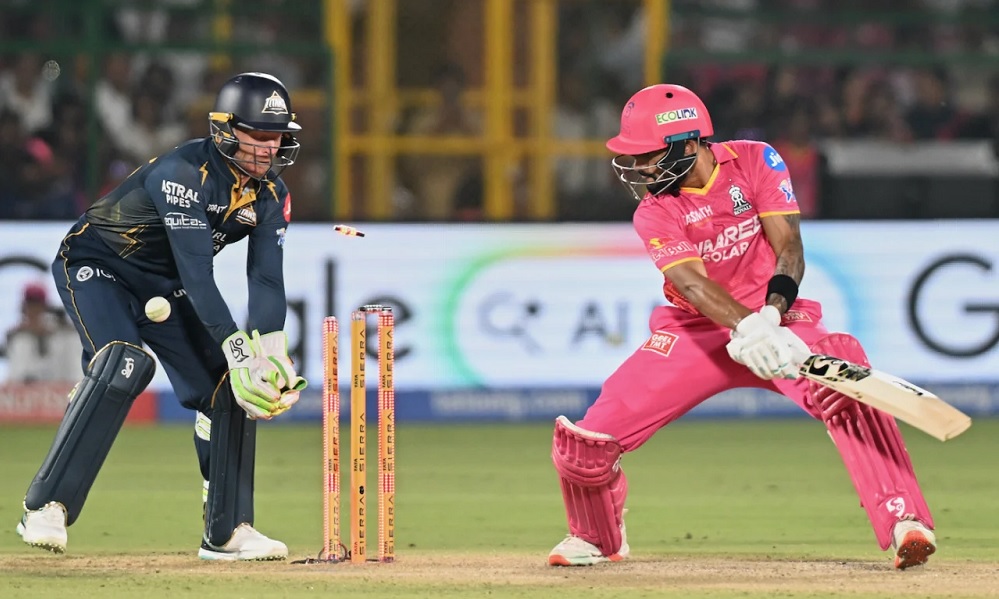
Rajasthan Royals (RR) bowling coach Shane Bond says his side’s bowlers must start “doing something different” after another disappointing defeat in IPL 2026 left the team slipping down the points table.
RR suffered a heavy loss to Gujarat Titans (GT) on Saturday after conceding more than 200 runs for the fourth straight match. The defeat pushed them down to fifth place with only three league games remaining.
The problems started early when fast bowler Jofra Archer struggled badly in the opening over, needing 11 balls to complete it after bowling a no-ball and several wides. The over cost RR 18 runs and set the tone for another difficult evening.
Former New Zealand pacer Mitchell McClenaghan said Archer appeared rusty after the team’s eight-day break and suggested Jaipur’s pitches are not helping RR’s pace attack.
Bond admitted RR’s bowling has not adapted well enough to the aggressive batting seen throughout this year’s IPL.
“You’ve got to be doing something different,” Bond said after the match. “Batsmen are developing new shots and putting bowlers under pressure, so bowlers also need to develop new skills and new plans.”
He added that bowlers must improve both their decision-making and execution, while using analysts more effectively to study opposition batting patterns.
Despite their recent slump, RR remain in contention for the playoffs, although their form has become a growing concern after a strong start to the season.
Meanwhile, IPL action continues on Sunday with Chennai Super Kings taking on Lucknow Super Giants in the afternoon match, while Royal Challengers Bengaluru face Mumbai Indians in a high-profile evening clash.
Chennai Super Kings will look to revive their inconsistent campaign against a Lucknow side still fighting for a playoff place, while Bengaluru and Mumbai meet in what could prove crucial in the race for the top four.
Both matches will be broadcast live across Afghanistan on Ariana Television Network.


Tahawol: Afghanistan and Uzbekistan’s growing economic ties discussed

Saar: Afghanistan’s relations with the world discussed

Afghan officials join ICESCO meeting, discuss preservation of Islamic manuscripts

Afghanistan announces over 1,000 education ministry vacancies, prioritises returnees

Afghanistan, Uzbekistan sign 13 trade MoUs worth over $100 million

Bayat Power extends gas supply deal with Afghan Gas

Afghanistan’s new cricket head coach Richard Pybus arrives in Kabul

New Afghanistan-China transport corridor launched via Turkmenistan

Afghanistan moves toward self-sufficiency in car battery production

Germany to launch online visa system for Afghan study and work applicants in Pakistan
Tahawol: Afghanistan and Uzbekistan’s growing economic ties discussed
Saar: Afghanistan’s relations with the world discussed

Tahawol: Discussion on unknown fate of Middle East crisis

Saar: Problems and challenges of Afghan refugees in the world discussed

Tawsia: Discussion on Afghanistan’s economic path and position
-
 Business3 days ago
New Afghanistan-China transport corridor launched via Turkmenistan
-
 Business4 days ago
Uzbekistan launches new cargo corridor linking China and Afghanistan
-

 Sport2 days ago
Canada to host opening ceremony for FIFA World Cup 2026 in Toronto
-
 Business4 days ago
Afghanistan presses Chinese contractor over delays in Mes Aynak copper project
-
 Regional4 days ago
US and Iran closing in on one-page memo to end war, Axios reports
-

 Science & Technology2 days ago
James Webb Telescope captures clearest-ever view of exoplanet’s surface
-
 Latest News2 days ago
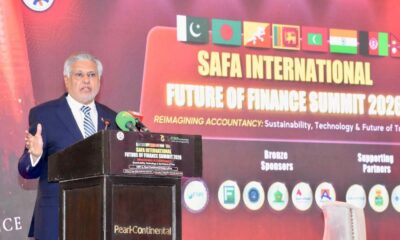
SAARC failure pushes Pakistan toward trilateral ties with Afghanistan, China, Bangladesh: Dar
-

 International Sports5 days ago
Ahmedabad to host IPL 2026 final; BCCI announces playoff schedule