
Latest News
Afghan spy chief warns world against overlooking militant bases in neighboring countries


Abdul Haq Wasiq, head of the Islamic Emirate of Afghanistan’s (IEA) intelligence agency, has warned that neglecting the training and safe havens of militant groups in neighboring countries could lead to grave consequences, imposing significant costs on both the region and the world.
In an interview with Al Jazeera, Wasiq rejected claims about the presence of such groups within Afghanistan and stressed, “Afghanistan itself is a victim of the subversive activities of groups that operate training and safe havens outside the country — in neighboring and regional countries.”
He further warned that if the international community continues to ignore these external centers or applies double standards in dealing with them, the repercussions could affect not only the region but the world at large. “We may all pay a heavy price for this negligence in the near future,” he stated.
Wasiq also emphasized that the Islamic Emirate has no formal cooperation or agreements with any party in fighting external threats, and asserted that Afghanistan’s intelligence agency remains free from foreign influence.
He claimed that Daesh strongholds in Afghanistan have been dismantled, and that their key leaders have either been captured, killed, or have fled to neighboring countries.
The intelligence chief called on other nations to play their part in the fight against Daesh. “Daesh fighters come from different nationalities, and when they reach Afghanistan, they pass through other countries. These countries must prevent their entry. If this happens, we are confident that eliminating this menace will not be difficult. The attacks Daesh currently carries out in Afghanistan or elsewhere in the region are planned outside the country,” he said.
These remarks come amid ongoing concerns from regional states over the presence and activity of militant groups inside Afghanistan.

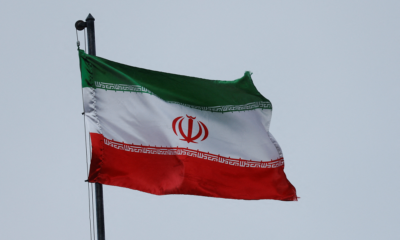
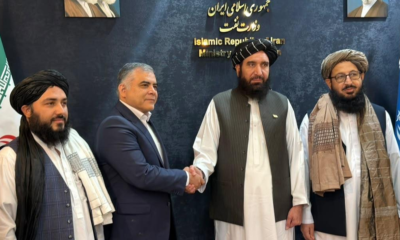


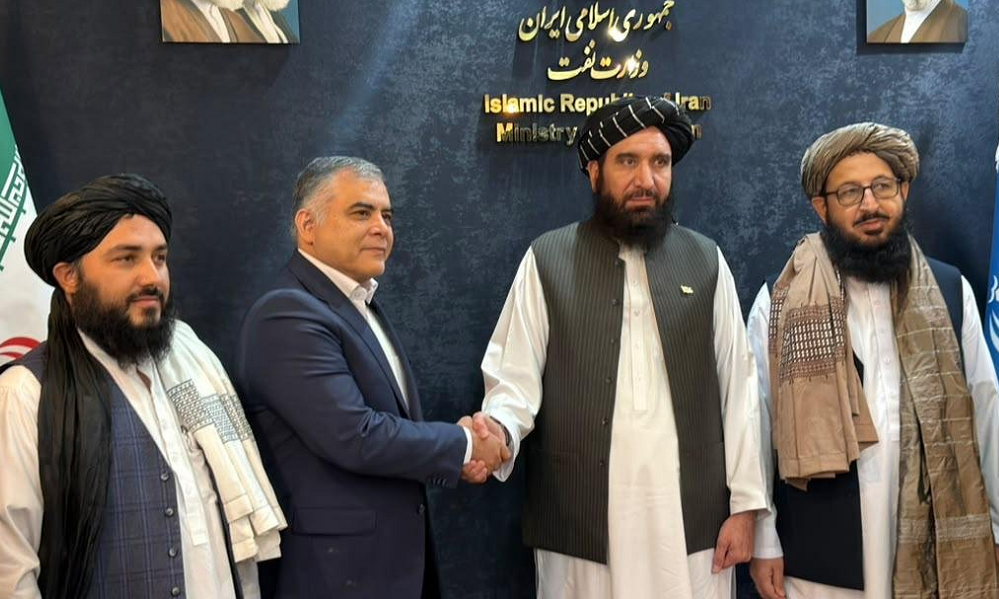
Ahmad Jan Bilal, General Director of State-Owned Corporations, met with Iran’s Oil Minister Mohsen Paknejad during a visit to Iran to discuss expanding cooperation in the oil and gas sector.
Bilal, accompanied by Mohammad Nasir Rahimi, chief executive of the Afghan state-owned Oil and Gas Corporation, held talks with the Iranian minister on supplying Afghanistan with its oil and gas needs, technical and vocational training, and joint cooperation in oil and gas exploration.
Bilal and his delegation also visited the Iranian Oil Ministry’s research center and oil refineries in Tehran, where they reviewed the facilities’ technical and professional activities and capabilities.
The Iranian side expressed readiness for comprehensive cooperation, necessary coordination and implementation of joint projects in the areas discussed.
At the end of the meeting, both sides introduced joint technical teams tasked with coordinating and following up on the necessary measures to implement the agreed areas of cooperation.
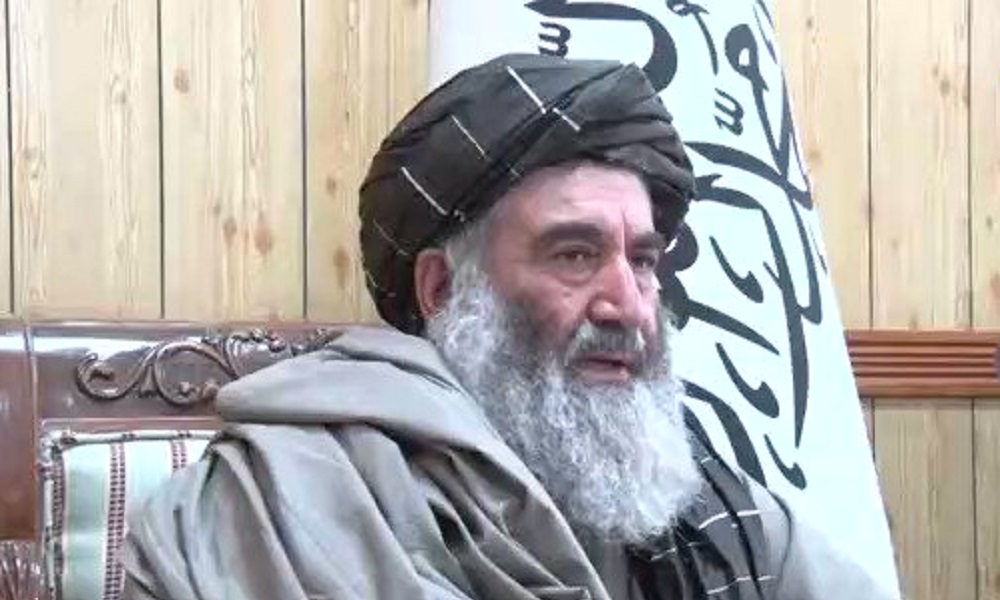
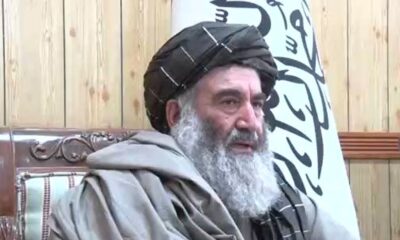
Kandahar Governor Mullah Mohammad Shirin Akhund has called on the World Bank to implement major and essential development projects in the southern Afghan province.
The remarks were made during a meeting with Faris Hadad-Zervos, World Bank Group country director for Afghanistan, and Richard Trenchard, representative of the UN Food and Agriculture Organization (FAO).
At the meeting, Hadad-Zervos briefed Kandahar officials on the World Bank’s activities and assistance across Afghanistan, as well as the work of the FAO, provincial governor’s office said in a statement.
He said the World Bank has continued its operations in Afghanistan since the Islamic Emirate came to power, while the FAO’s financial activities are also funded by the World Bank.
According to Hadad-Zervos, the organizations are working in areas including health, humanitarian assistance, education, clean water and agriculture.
He said the World Bank and local authorities had also begun joint efforts to implement projects aimed at strengthening the private sector and creating employment opportunities.
Kandahar Governor Mullah Mohammad Shirin Akhund welcomed the visiting officials and praised the assistance and cooperation provided by the World Bank and FAO.
He called on the World Bank to implement major projects in Kandahar, including raising the height of the Dahla Dam, continued support for Mirwais Regional Hospital, construction of cold-storage facilities and check dams, expanding markets for fresh and dried fruits, and supporting alternative crops to replace narcotics cultivation.
The Kandahar governor said Afghans had endured years of hardship and should therefore be provided with essential and quality public services.
Latest News
Afghanistan condemns mosque attack in Khyber Pakhtunkhwa
At least 16 people were killed and 57 others injured in the blast in Kohat on Friday.
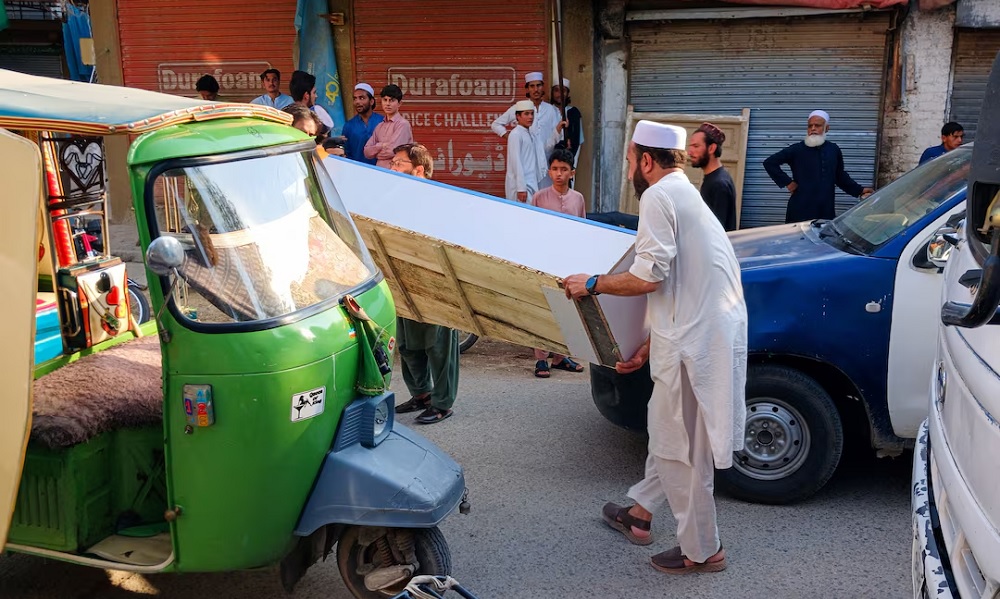
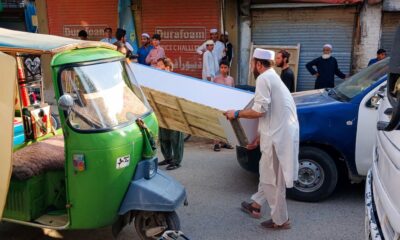
Afghanistan’s Ministry of Foreign Affairs has strongly condemned an attack on a mosque in Kohat city in Khyber Pakhtunkhwa province during Friday prayers.
In a statement issued on Saturday, the ministry’s spokesman described attacks on places of worship as “unjustifiable and condemnable.”
The ministry also expressed sympathy with the families of those killed and injured in the incident.
At least 16 people were killed and 57 others injured in the blast in Kohat on Friday.
No individual or group has so far claimed responsibility for the attack.


Iran executes man convicted of spying for Israel’s Mossad, judiciary says

Afghan official meets Iranian oil minister to discuss energy cooperation

Kandahar governor calls on World Bank to implement key development projects

Afghanistan condemns mosque attack in Khyber Pakhtunkhwa

Baradar lays foundation stone for industrial township in Balkh

Four mediators struggle to secure lasting Pakistan-Afghanistan ceasefire

Syria and Saudi Arabia condemn Kabul bombing, express solidarity with Afghanistan

Afghanistan’s trade diversification challenges Pakistan

Saudi energy group signs major Afghanistan deals covering gas exploration and pipeline plans

ATN secures exclusive rights to broadcast T20I series in India across Afghanistan

Debate on Afghanistan and New Investment Opportunities

Tahawol: Reasons behind Qatari, Turkish security officials’ Kabul visit discussed

Saar: Outcome of UN Security Council meeting on Afghanistan discussed

Tahawol: Afghanistan’s readiness for US relations discussed

Saar: UN Security Council meeting on Afghanistan discussed
-
 Latest News3 days ago
UN warns of mounting humanitarian and human rights pressures in Afghanistan
-
 Sport5 days ago
ACL: Abu Muslim Farah 4-0 Istiqlal Kabul; Omar Zawak 3-1 Sarsabz Yashlar
-
 Latest News5 days ago
Mujahid: Afghanistan’s reconstruction must rely on domestic investment
-
 Latest News5 days ago
Afghan doctors barred from Peshawar hospital over visa issues
-

 Science & Technology5 days ago
New warnings reignite debate over AI threat to humanity
-
 Regional5 days ago
Gulf states call off meeting with Iran, Houthis launch new attack on Saudi
-

 Regional3 days ago
Saudi Arabia calls alleged Mecca attack a ‘red line’ as Houthis deny involvement
-
 Latest News4 days ago
UNICEF expands aid to millions of Afghan children after flash floods