
Latest News
Afghanistan second-largest refugee group after Syria

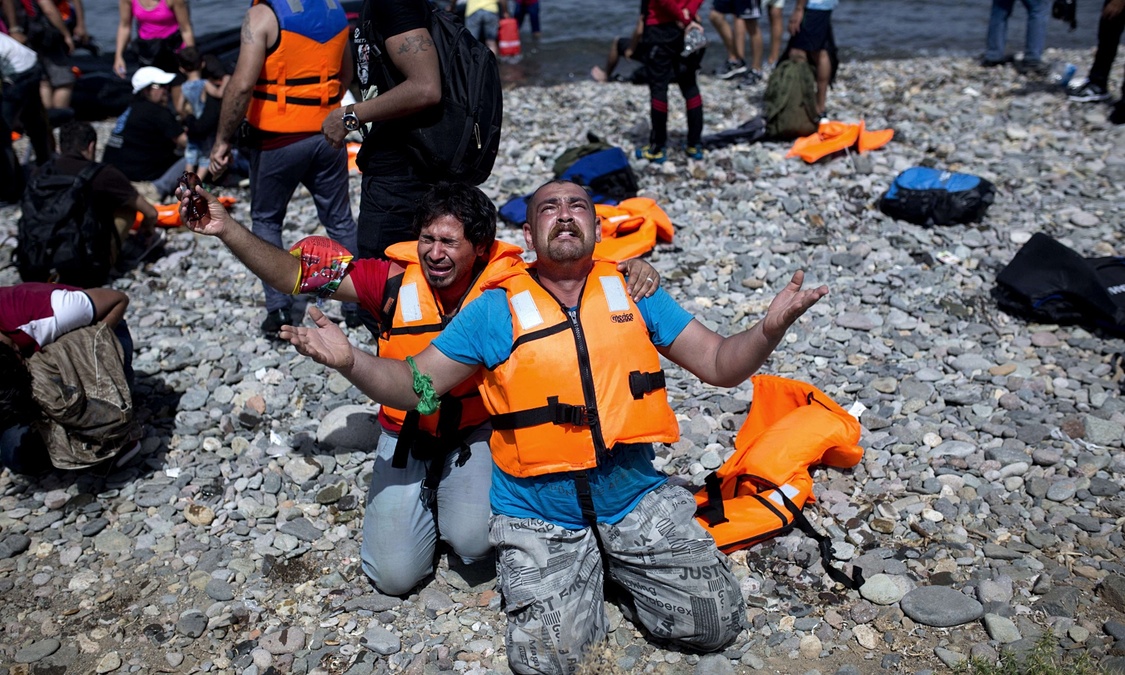

Until last year, Afghans were the largest global refugee population at 2.6 million people – almost 10 percent of the country’s entire population.
Today, estimated at 12 percent, they Afghans ranked as the second largest group after Syrians to have reached European shores and borders.
According to the United Nations’ refugee agency, UNHCR, more than 40,000 Afghans have sought asylum in Europe from January until August this year.
Today an estimated 2.6 million Afghan remain in exile- mainly hosted by Pakistan and the Islamic Republic of Iran.
Pakistan is the second largest refugee-hosting country in the world, hosting around 1.5 million Afghan refugees, a figure that accounts for 10.5 per cent of the total global refugee population. Iran hosts around 950,000 Afghan refugees.

Although tragedies that have befallen Afghan refugees for decades have not made the headlines in Western media, many have died dreadful deaths or have endured untold hardships.
Many families are still waiting to hear news of loved ones that have simply vanished en route to a better life.
While the dire security situation prompts many Afghans to risk everything, others flee because of the country’s economic stagnation and staggering unemployment rates.
“Migrations do not occur arbitrary, due to lots of pressure, escaping from investment, work and brain drain are the main reason,” Sayed Masoud, Afghan economic analyst said.
Unemployment has reached record heights. Domestic and foreign investments have halted, and the flight of capital is becoming a critical issue. Projects attached to international aid – one of the largest sources of employment in the past decade – have, for the most part, shut down or been placed in hibernation.

Meanwhile, a number of Wolesi Jirga members accept problems of Afghan youths in the country but urged all of them that instead of escaping the country they should use the power of their initiative.
Germany and other Western states may show generosity in accepting refugees, but unless the world revamps the Afghan economy and seriously engages in the restoration of security, the brain drain will gravely reverse the trillion-dollar global effort in rehabilitating and stabilising Afghanistan.
Deteriorating security and growing fears for the future contributed to an increasing number of Afghans fleeing their homes for other countries, or choosing not to return home from overseas.
The number of Afghans seeking safety outside the country also grew, with some making dangerous journeys from Afghanistan through the mountains into Iran toward Europe or by boat to Australia. The number of refugees returning to Afghanistan from neighboring countries has fallen in recent years.

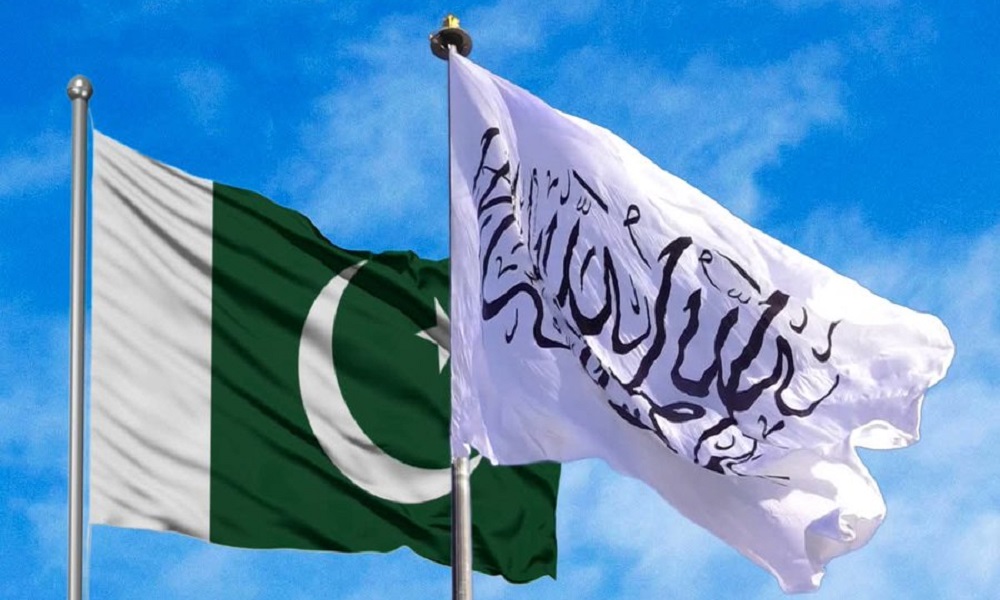
Officials from Afghanistan and Pakistan have concluded a new round of talks in China, with both sides describing the discussions as constructive and agreeing to work toward a comprehensive resolution of their disputes.
The talks were held in the city of Urumqi under the mediation of China, which has increasingly taken on a diplomatic role in facilitating dialogue between the two neighbours.
Abdul Qahar Balkhi, spokesperson for the Islamic Emirate’s Ministry of Foreign Affairs, said the talks covered a wide range of issues, including bilateral relations, security concerns, and broader regional stability.
According to Balkhi, the discussions were held in a “constructive atmosphere,” with both sides engaging in comprehensive exchanges. He added that Afghan officials expressed appreciation for China’s hospitality and efforts in hosting the talks, and voiced hope that the process would lead to stronger confidence-building, improved mutual understanding, and more effective cooperation.
In a separate statement, China’s Foreign Ministry confirmed that both Afghanistan and Pakistan had agreed to seek a “comprehensive solution” to their ongoing disputes. It said the talks were conducted in a “constructive, practical and sincere” environment, with in-depth discussions on key areas of concern.
The statement further noted that both sides committed to avoiding actions that could escalate tensions or worsen the situation, instead emphasizing dialogue and mutual understanding as the primary path forward.
China highlighted its role as an active mediator, noting its close relations with both countries and its continued commitment to supporting stability in the region. Beijing said it would maintain its efforts to promote confidence-building measures and encourage continued engagement between Kabul and Islamabad.
The talks come amid ongoing tensions between Afghanistan and Pakistan, with security issues and cross-Durand Line attacks remaining key challenges. Observers say China’s involvement reflects its growing interest in regional stability and its willingness to play a more prominent diplomatic role in South and Central Asia.
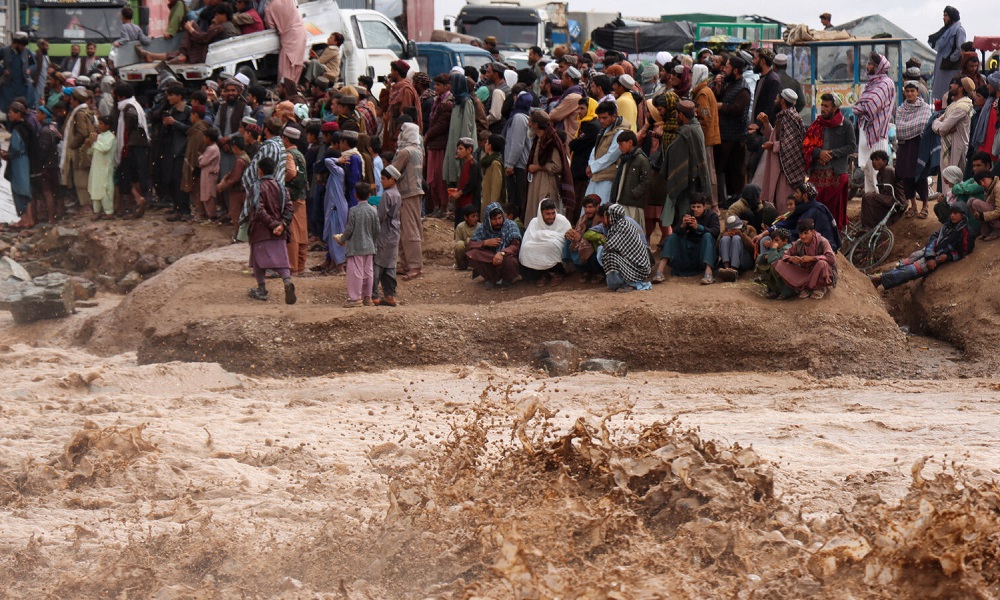
The National Disaster Management Authority (NDMA) of Afghanistan, in cooperation with international partners, has stepped up emergency response efforts following recent heavy rains, floods and other natural disasters that have caused widespread loss of life, injury and property damage across the country.
In Kandahar province, the NDMA, under a memorandum of understanding with Save the Children, distributed food and non‑food assistance to 109 families whose homes were damaged by recent floods and heavy rain.
With financial and technical support from IOM, WFP, CHA, UNHCR, UNFPA and Save the Children, aid packages were provided following detailed surveys. Items delivered included mattresses, food packages, health and hygiene kits and tents.
The Kandahar NDMA stated that supporting disaster‑affected families remains a core responsibility and expressed gratitude for ongoing humanitarian cooperation.
Afghanistan has been hit by intense rainfall and extreme weather over the past week, triggering flash floods, landslides and damage in multiple provinces. According to the NDMA, more than 110 people have died, at least 160 were injured, and seven others were reported missing due to these conditions over the past 11 days.
The flooding has caused extensive destruction, including the complete loss of nearly 1,000 homes, partial damage to over 4,000 houses, and flooding of more than 15,000 acres of farmland.
Roads, irrigation systems and critical infrastructure have also been damaged, disrupting travel and access to essential services.
In Nangarhar province, heavy rains caused the collapse of mud‑brick house roofs, killing at least five people and injuring others, underscoring the vulnerability of rural housing in Afghanistan’s remote areas.
Nationwide impact and weather risks
The NDMA released video updates explaining casualty figures and showing the scale of damage from recent natural disasters nationwide, including impacts from extreme weather over the past 24 hours. The authority continues to monitor conditions and coordinate response efforts.
Meteorological and agriculture agencies have noted that ongoing rainfall could benefit spring crops but also heightens the risk of further flooding in vulnerable regions. The FAO has warned that while increased moisture supports agriculture, heavy precipitation raises flood risks, particularly in urban and rural flood‑prone areas.
Other Natural Disasters
In addition to flooding, a 5.8‑magnitude earthquake struck the Hindu Kush region on April 3, killing at least 8–12 people and injuring several more. Homes were damaged in multiple provinces, demonstrating Afghanistan’s exposure to seismic hazards.
The NDMA continues to issue warnings and advisories to residents across several provinces to stay away from rivers and flood‑prone zones as unstable weather persists. Emergency teams, together with national and international partners, are conducting ongoing assessments to guide further relief efforts and damage mitigation.
Latest News
Former Australian soldier to remain in custody over Afghan war crimes charges
Roberts-Smith was denied bail by police and taken to Silverwater Correctional Complex in western Sydney, where he spent the night.
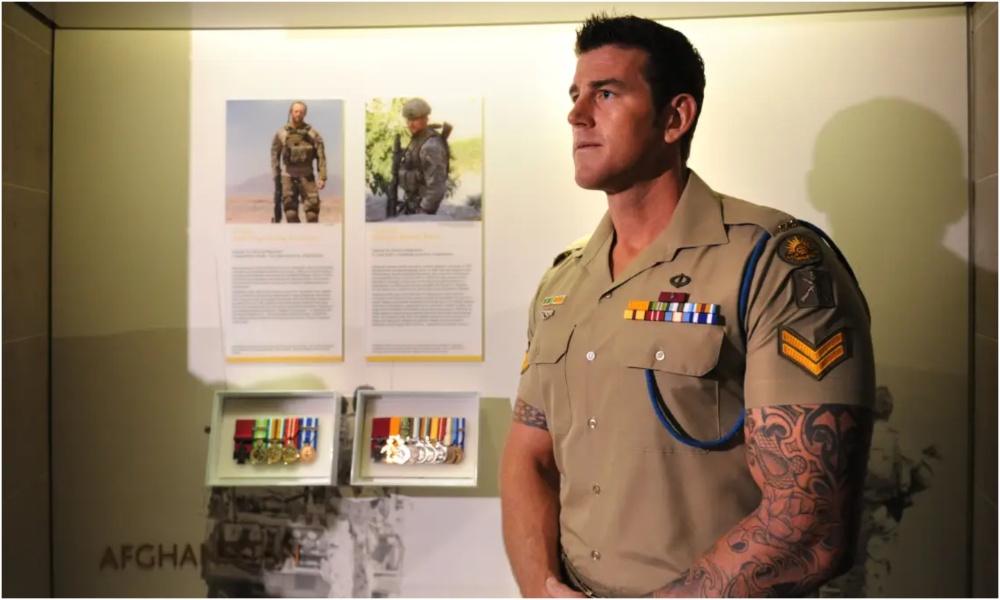
Ben Roberts-Smith, Australia’s most decorated living soldier, will remain in custody following his arrest on multiple alleged war crimes in Afghanistan, local media reported Wednesday.
The 47-year-old former member of the elite Special Air Services Regiment was arrested on Tuesday and charged with five counts of war crimes, relating to the deaths of five civilians between 2009 and 2012. Each charge carries a maximum penalty of life imprisonment.
Roberts-Smith was denied bail by police and taken to Silverwater Correctional Complex in western Sydney, where he spent the night. He did not participate via video link in a bail hearing on Wednesday morning.
His lawyer, Jordan Portokalli, told the court he would not be seeking bail and requested an in-person hearing later in the day. A formal bail review hearing has been scheduled for April 17 in a Sydney courthouse.
Roberts-Smith, a six-tour veteran of Afghanistan from 2006 to 2012, was celebrated as a national hero and awarded several top military honours, including the Victoria Cross, the highest military decoration for members of the armed forces in Britain and the Commonwealth.
The Australian Federal Police allege that the victims were unarmed civilians, detained and under Australian control at the time of their deaths, and were either shot by Roberts-Smith or by his subordinates acting under his orders and presence.
These charges follow a joint investigation launched in 2021 by the AFP and the Office of the Special Investigator, established to examine alleged criminal conduct by Australian defence personnel.
Roberts-Smith has consistently denied any wrongdoing.
Allegations first surfaced in 2018 through a series of articles by Nine Entertainment newspapers. He later contested the claims in what became Australia’s most expensive defamation trial, in which he was found, on the balance of probabilities, to have been involved in the killing of four Afghan civilians.


Tahawol: Two‑week truce agreement between Iran-US reviewed

Afghanistan, Pakistan hold ‘constructive’ China-mediated talks

Saar: US–Iran two-week ceasefire agreement discussed

Snooker fever grows as Kabul prepares for Ariana Championship

Aid distributed to flood-affected families as severe weather causes widespread damage

IEA Supreme Leader issues Eid-ul-Fitr message urging unity and support for Islamic system

14 Pakistani soldiers killed after military post falls along Durand line: MoD

IEA supreme leader orders replacement of foreign terminology in official documents

Afghan airstrikes target Pakistani military sites in retaliation for air attacks

Turkmenistan, Afghanistan discuss steps to speed up land acquisition for TAPI pipeline
Tahawol: Two‑week truce agreement between Iran-US reviewed
Saar: US–Iran two-week ceasefire agreement discussed

Tahawol: Ongoing negotiations between Kabul-Islamabad discussed

Saar: Afghanistan in spotlight of SCO discussed

Tahawol: Continuation of Middle East crisis discussed
-
 Latest News3 days ago
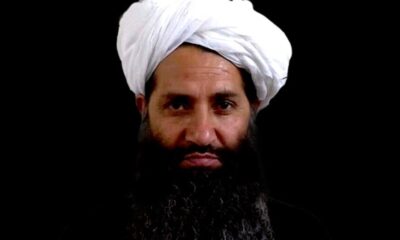
IEA supreme leader orders replacement of foreign terminology in official documents
-
 Latest News3 days ago
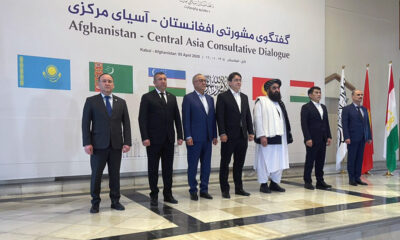
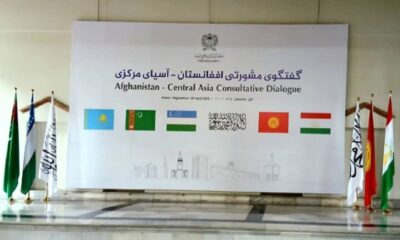
Afghanistan hosts inaugural Afghanistan–Central Asia Consultative Dialogue to strengthen regional cooperation
-

 Business4 days ago
Kazakhstan eyes rare metals mining projects in Afghanistan and Rwanda
-
 Latest News4 days ago
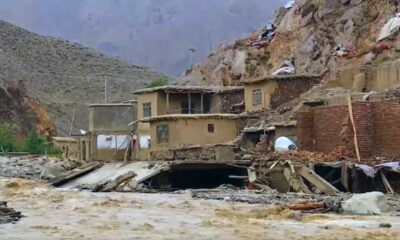
Severe rainfall and natural disasters cause heavy casualties across Afghanistan
-
 Latest News5 days ago
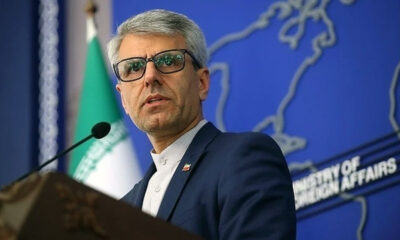
Afghan citizens reported among casualties in US, Israeli attacks, Iran says
-
 Latest News4 days ago
Kabul to host ‘Afghanistan–Central Asia Consultative Dialogue’ tomorrow
-
 Latest News4 days ago
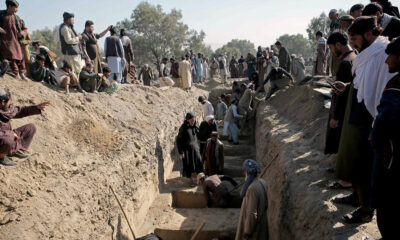
IEA accuses Pakistan of war crimes amid heavy civilian losses
-
 Saar4 days ago
Saar: Ongoing Kabul-Islamabad talks in China discussed