
Business
Afghanistan, Turkmenistan sign MoUs, seal private sector contracts

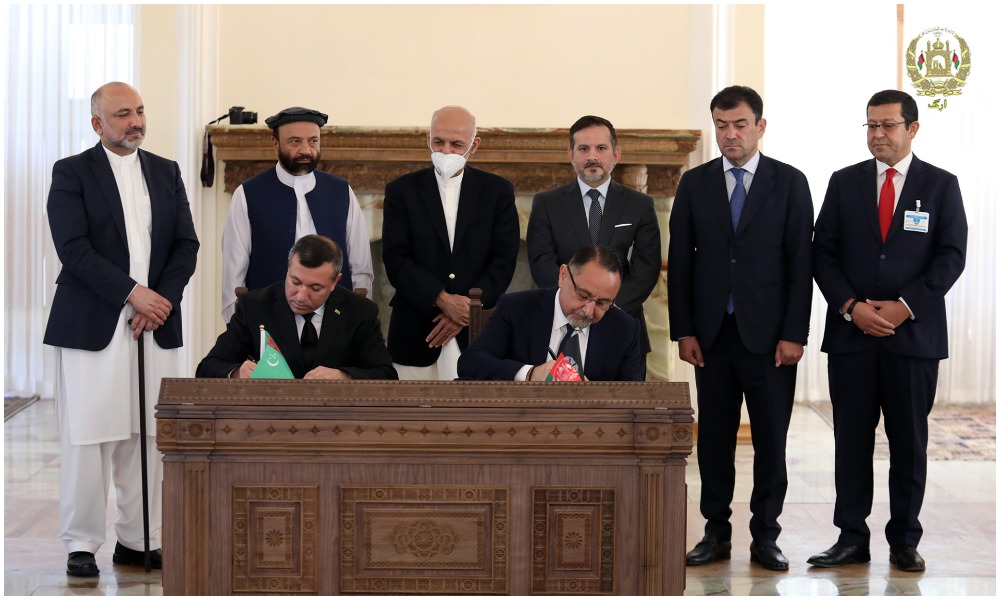
Afghanistan and Turkmenistan signed three memoranda of understanding (MoUs) and an economic cooperation agreement in Kabul on Wednesday for electricity and fiber optics.
In a statement issued by the Presidential Palace (ARG), two companies will be responsible for transferring 500 MW of electricity from Turkmenistan to Afghanistan and for connecting a fiber optics network. The companies are Afghanistan’s Bayat Group and Turkmenistan’s Chalak Company.
During the official signing ceremony, Afghan President Ashraf Ghani thanked the two companies for their cooperation and said Turkmenistan and Afghanistan are proving to be good neighbors amid efforts to strengthen diplomatic and economic ties.
“Thanks to the presence of Bayat Group and Chalak Private Company, it shows that Afghan and international private companies have joined hands to provide electricity,” Ghani was quoted in the statement as having said.
“Fiber optics is the infrastructure of the 21st century and this infrastructure gives hope to our youth. Innovative work in the 21st century is impossible without a comprehensive understanding of fiber optic networks, connectivity and modern technology,” he stated.
Representing Turkmenistan at the event was Turkmen Ambassador to Afghanistan Ovezov Hoja Sapargeldievich.
The ambassador said talks between the presidents of Turkmenistan and Afghanistan had always been about bilateral cooperation and partnership. He said his country supports all efforts and initiatives for peace and stability in Afghanistan and hoped that Afghanistan would achieve peace as soon as possible.
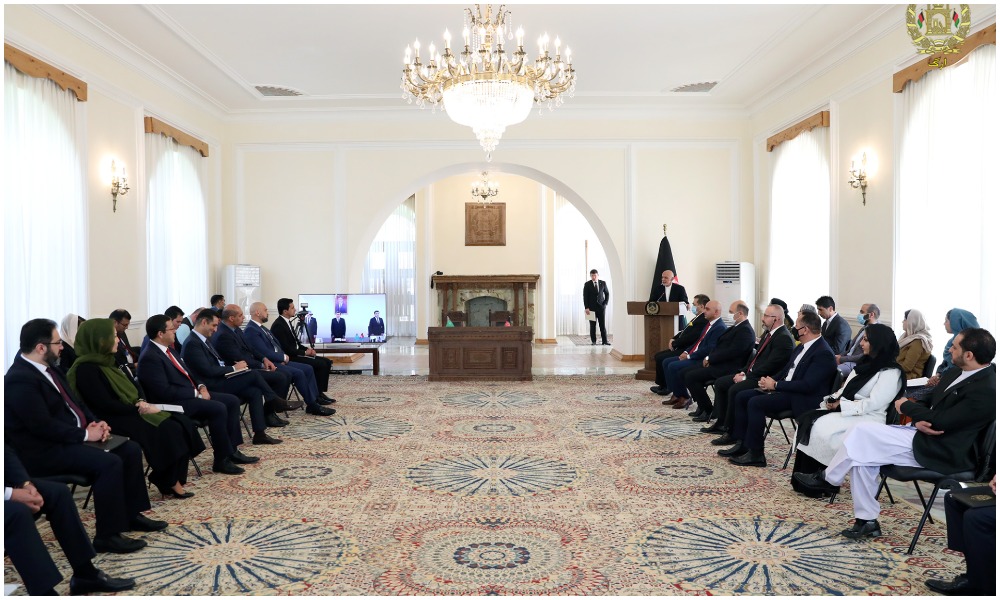
Ghani in turn thanked the ambassador and the President of Turkmenistan Gurbanguly Berdimuhamedow and said that with ongoing efforts to strengthen ties new avenues, including the lapus lazuli and silk road routes, were projects that will be delivered on.
He said the countries were today able to revisit history and make up for the time lost in recent years.
Ghani also said the TAPI pipeline project would benefit both countries and the people of Afghanistan.
“Turkmenistan is a good neighbor not only to Afghanistan, but to all of us, and we are going back to our ancient roots,” he said.


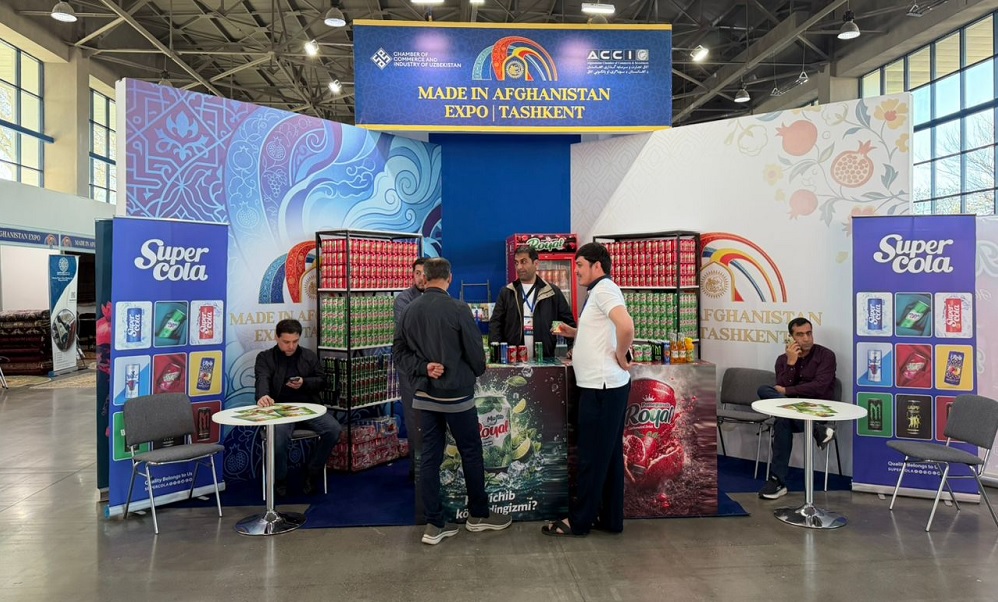
The Afghanistan Chamber of Commerce and Investment has announced that a major exhibition of Afghan products titled “Made in Afghanistan” is opening today (Wednesday) in Uzbekistan’s capital Tashkent.
According to the chamber, the expo—supported financially by the United Nations Development Programme—will run until Friday and aims to showcase Afghanistan’s production and export potential.
More than 60 booths have been set up by Afghan traders, featuring a wide range of products including carpets, dried and fresh fruits, saffron, pine nuts, cotton, precious and semi-precious stones, as well as beverages.
Officials from the chamber expressed hope that the expo will help expand trade relations between Afghanistan and countries in the region, particularly Uzbekistan.
Business
Afghani strengthens nearly 10% against US dollar amid banking sector reforms
The bank said it has expanded oversight of financial institutions and private lenders, improving transparency and promoting more consistent standards across the sector.

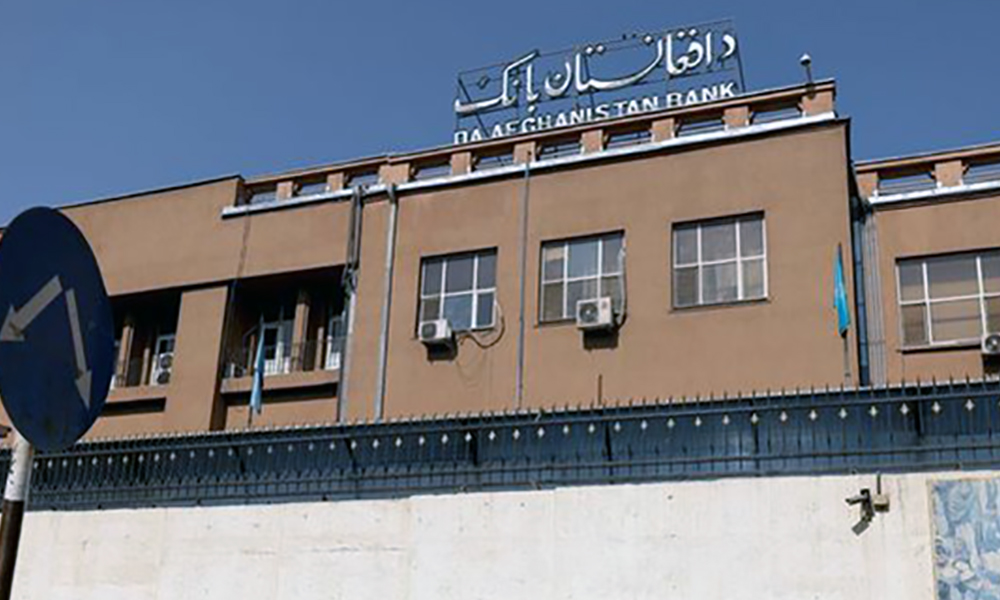
Afghanistan’s central bank, Da Afghanistan Bank, says the national currency has appreciated by 9.93% against the US dollar during the year 1404, citing steady progress in the country’s financial and banking systems.
Officials attributed the gains to cautious monetary policies that have helped stabilise the Afghani against major global currencies while also boosting its value against the dollar.
The bank said it has expanded oversight of financial institutions and private lenders, improving transparency and promoting more consistent standards across the sector.
As part of efforts to better manage liquidity, authorities also collected and destroyed worn-out banknotes in circulation. At the same time, officials reported growth in electronic banking, with digital payment usage rising in recent months.
Central bank spokesperson Haseebullah Noori said initiatives are underway to broaden access to banking services nationwide, including the wider rollout of Islamic banking options.
Analysts welcomed the stabilisation efforts but stressed the need to address ongoing challenges facing domestic banks, including the impact of international financial sanctions on Afghanistan.
They added that expanding Islamic banking could help draw more savings into the formal financial system, noting that a significant share of personal wealth remains outside banks. Bringing those funds into the sector, they said, could inject billions of Afghanis into the economy and further support financial stability.
Business
Uzbekistan delivers over 290 tons of aid to Afghanistan
The assistance, provided ahead of Eid al-Fitr, is intended to support vulnerable communities while reinforcing ties between the neighboring countries.
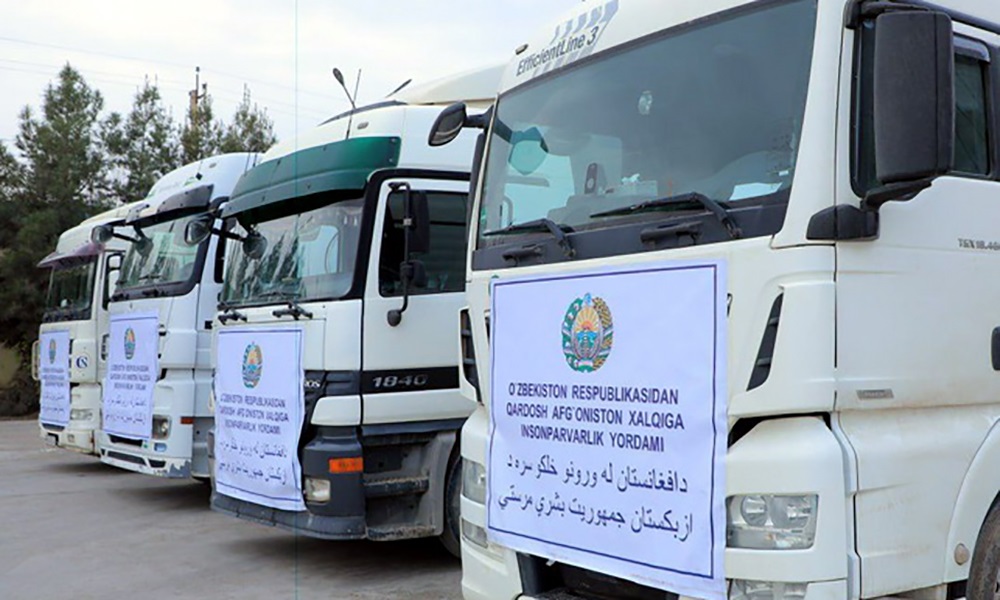
Uzbekistan has delivered more than 290 tons of humanitarian aid to Afghanistan, according to the country’s Ministry of Foreign Affairs.
The assistance, provided ahead of Eid al-Fitr, is intended to support vulnerable communities while reinforcing ties between the neighboring countries.
The shipment includes essential food supplies such as flour, rice, wheat, vegetable oil, instant meals, pasta, and confectionery. An official handover ceremony was held in the border town of Hairatan.
Local officials, including Balkh province representatives and authorities from Hairatan, expressed appreciation for the continued support, acknowledging Uzbekistan’s efforts to assist the Afghan people.
Among those present at the ceremony were Uzbekistan’s Ambassador to Afghanistan, Oybek Usmanov, and Surkhandarya regional governor Ulugbek Kosimov.
The aid delivery underscores Uzbekistan’s ongoing humanitarian engagement and its broader efforts to promote regional cooperation and stability.


High-level Uzbek delegation arrives in Kabul to boost bilateral trade

Herat Chamber of Commerce donates 15 million AFN to the people of Iran

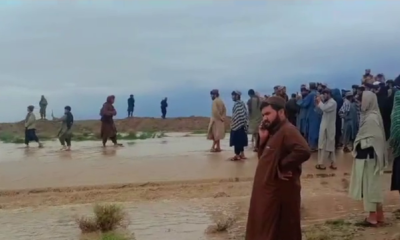
Severe floods in Badghis leave five dead

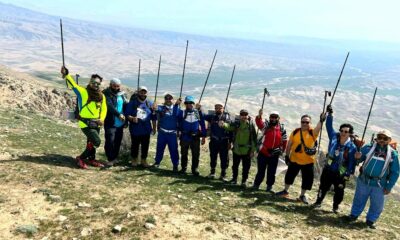
13 mountaineers in Balkh summit Alborz at 1,650 meters

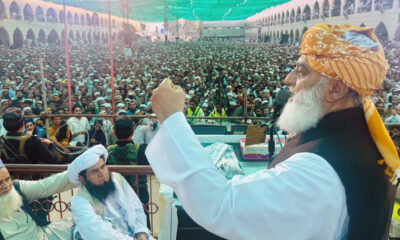
Fazlur Rehman urges policy review on Afghanistan, warns of Pakistan’s regional isolation

Pakistani military jet downed in Afghanistan’s Jalalabad, pilot captured alive

Afghan Air Force conducts airstrikes in Islamabad, other cities

Prominent Muslim scholar issues fatwa calling for Afghanistan-Pakistan ceasefire

Afghan air force strikes key Pakistani military installations in retaliatory operation

IEA: Special circle in Pakistan has launched mission to destabilize region

Exclusive interview with Indrika Ratwatte, Deputy UN Special Representative for Afghanistan

Tawsia: Efforts to boost Afghanistan’s domestic production and economic diplomacy

Tahawol: Discussion on day 27 of Iran–US war

Saar: Islamic Emirate confident of Durand Line control

Tahawol: Efforts to release Mohammad Rahim from Guantanamo Bay Detention Camp
-
 Latest News2 days ago
Tajikistan shifts stance on Afghanistan amid rising border tensions
-

 Latest News4 days ago
Around 2.3 million tourists visited Afghanistan’s recreational areas during Eid: Ghufran
-

 Sport4 days ago
Afghanistan squad hit by withdrawals ahead of AFC Asian Cup Qualifiers
-
 Latest News4 days ago
Islamic Emirate releases American prisoner Dennis Coyle
-
 Latest News3 days ago
Two civilians killed, eight injured in fresh shelling by Pakistan in Kunar
-
 Regional4 days ago
US allies in Middle East ‘edging closer’ to joining conflict
-
 Regional4 days ago
Tehran rejects Trump’s claims of talks, accuses US of spreading ‘fake news’
-

 Sport3 days ago
IPL 2026: RCB sold for $1.78 billion in landmark deal