
Latest News
AFJC calls on UN Security Council to step up efforts to protect Afghan journalists

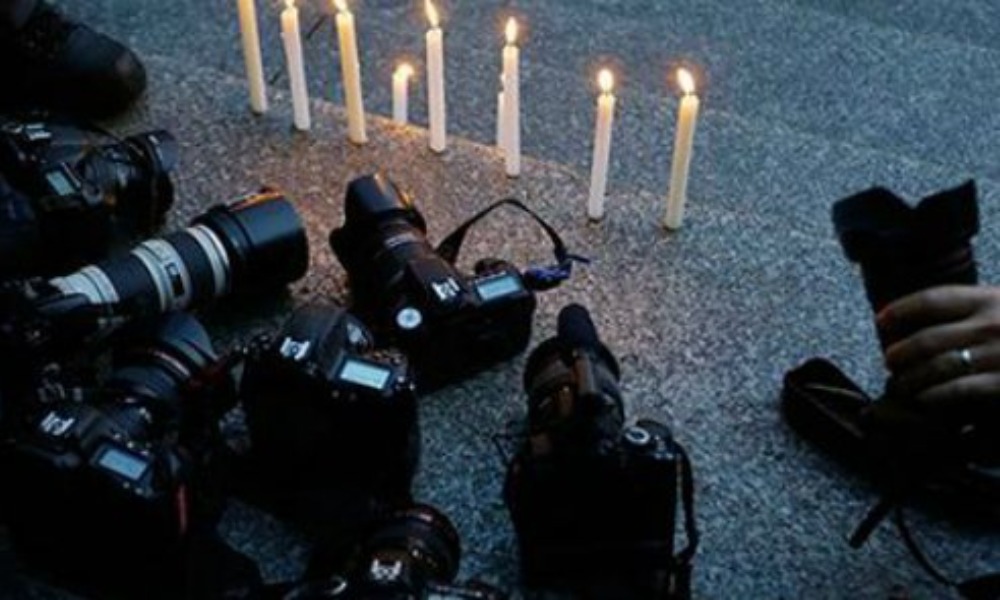
The Afghanistan Journalists Center (AFJC) and 40 other civil society organizations from around the world have called on the UN Security Council and UNAMA to support the media community by calling on all parties to stop violence against journalists in accordance with United Nations Security Council Resolution 2222 (2015).
This comes amid a wave of targeted killings against media workers in the country.
The AFJC said in a letter to the UN, and to the United Nations Assistance Mission in Afghanistan (UNAMA) head Deborah Lyons, that the council and all parties to the letter “are deeply concerned by the torrent of targeted killings of journalists in Afghanistan since early 2020.
“These attacks have had a devastating impact on Afghanistan’s vulnerable civic space, press freedom, and related democratic rights, and we write to urge you to take immediate action.”
According to AFJC’s press freedom tracker, 11 journalists and media workers have been killed in Afghanistan since the February 2020 signing of the US-Taliban agreement in Doha.
“Most of these journalists were deliberately targeted for their work, which underscores the lack of effective human rights protections in the country.
“Among the eleven journalists are TV presenter Malala Maiwand, who was killed on Human Rights Day on December 10, 2020 with her driver, freelance photojournalist Rahmatullah Nikzad, who was killed in Ghazni province on December 21, 2020, and Besmillah Adel Aimaq, a radio journalist who was killed in Central Ghor province on January 1, 2021.”
Media freedom and freedom of expression are human rights recognized under international legal conventions that Afghanistan is a party to, as well as domestic law, the letter read adding that the enforcement of Afghan Media Laws – ensuring the security of journalists and media outlets – is a fundamental responsibility of the Afghan government.
“Although some efforts have been made by the government to protect and uphold these rights, they have not been sufficient to prevent violations, and prosecute the perpetrators of violence against journalists,” the letter stated.
“The Afghan government has made repeated pledges to ensure the security of Afghan civilians, yet there remains a culture of impunity for those responsible for carrying out targeted killings of journalists.”
The AFJC stated: “We believe that strong and concerted political action from the United Nations Security Council and increased support from the UN Assistance Mission in Afghanistan are now essential, given their interest in a peaceful transition and the role that a free press plays in this endeavour.
“Targeting journalists creates a societal ripple effect of fear and censorship and deprives the public of crucial information about the peace process. Therefore, we request that the UN Security Council stand against the ongoing impunity for attacks against journalists in Afghanistan.”
The AFJC called on the UN to use all diplomatic powers at their disposal to ensure the protection of press freedom and the safety of journalists and media workers in Afghanistan, especially in the event of a peace deal resulting in a new political settlement.
They also urged the UN to intensify efforts to protect journalists in Afghanistan by working with the government to take serious action to end impunity; to scrutinize and reconsider international financial support to the Afghan government, so as to ensure meaningful commitments to protect media freedom and the rule of law’ and to encourage the international community to offer and strengthen practical and accessible support to threatened journalists and media workers, such as safe passage, refuge, and medical assistance where necessary.
Among the organizations to endorse the letter was the Committee to Protect Journalists (CPJ) and journalist and human rights associations from the US through to Asia and Africa.












Kazakhstan’s Foreign Minister Mukhtar Tileuberdi has called for pragmatic and coordinated international engagement with Afghanistan, saying the country’s long-term stability is closely linked to the security and sustainable development of Central Asia.
Speaking during the general debate of the 81st session of the United Nations General Assembly in New York on Friday, Tileuberdi said humanitarian assistance to Afghanistan remains essential but alone cannot break the cycle of poverty, displacement and dependency.
He said Kazakhstan supports a “pragmatic, coordinated and step-by-step” approach to international engagement with Afghanistan, with the United Nations playing a central role.
Tileuberdi also said Kazakhstan is working with the UN to operationalize the United Nations Regional Centre for the Sustainable Development Goals for Central Asia and Afghanistan in Almaty.
He said the success of the centre should be measured by the results and assistance it delivers to the region.


Abu Muslim Farah defeat Khurasan Faryab 2-0 in ACL season six

Saar: Concerns over Pakistan’s political crisis discussed

Afghanistan Champions League: Omar Zawak Herat beat Toofan Herat 1-0

Blast in Pakistan’s Dera Ismail Khan kills 11, injures 30

Ariana Afghan Airlines increases Kabul-Delhi cargo flights

Saudi energy group signs major Afghanistan deals covering gas exploration and pipeline plans

Trump floats idea of renaming Atlantic or Pacific Ocean

US hits Egyptian bank branches with Iran sanctions as war marks six months

Nepal flood rescue mission enters critical phase as thousands remain missing

Iranian clubs to face Gulf opponents at neutral venues in Asian Champions League Elite
Saar: Concerns over Pakistan’s political crisis discussed

Exclusive interview with Abdul Latif Mansoor, Minister of MRRD

Tawsia: Overview of Afghanistan’s iron mines

Tahawol: Discussion on fresh Pakistani airstrikes on Afghanistan

Saar: Calls for international support for Afghanistan discussed
-

 World5 days ago
CNN, MS NOW and Politico sue Trump, challenging White House ban
-

 Latest News3 days ago
Ariana Afghan Airlines ranks seventh among 45 Central Asian airlines
-

 Latest News5 days ago
UN reiterates call for respect for international law after Kunar airstrikes
-

 Regional4 days ago
US and Iran hold first talks since June after Trump’s ‘annihilation’ threat
-

 Latest News4 days ago
Silk Road highway in Wakhan corridor now reaches the China border
-

 Latest News5 days ago
Afghan Official: Pakistan’s airstrikes will not go unanswered
-

 Regional3 days ago
Iran airlines cancel flights as US sanctions hit
-

 Sport5 days ago
Afghan boxing referee heads to China for international festival