
Business
Agricultural laboratory put to operation in Kandahar

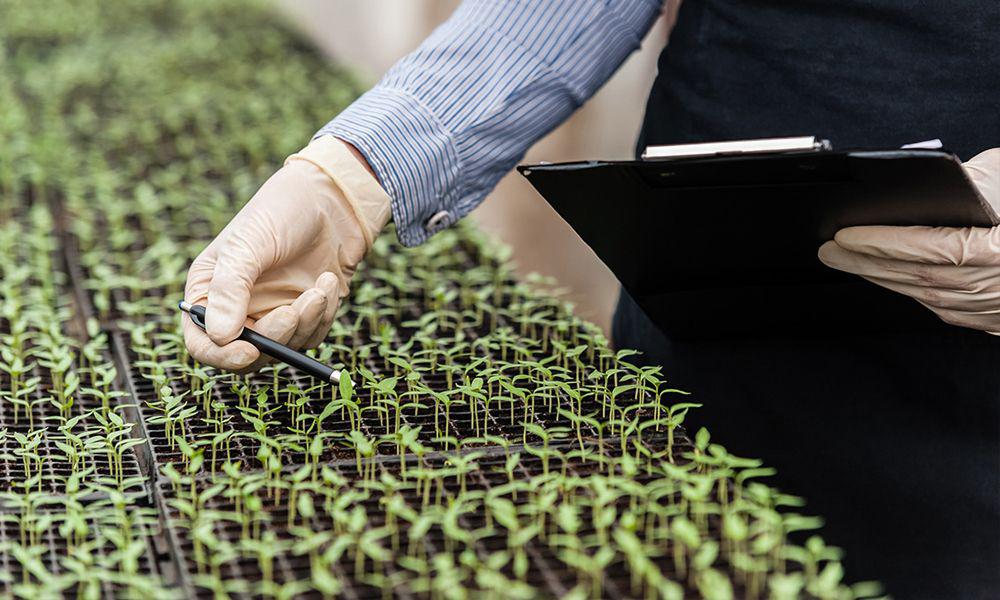
A laboratory for the diagnosis and treatment of agricultural and horticultural products was put to operation in Kandahar province.
Officials at the Kandahar Department of Agriculture say the lab was funded personally by an agricultural specialist and was inaugurated on Monday, June 8th.
They add that the lab is set to diagnose and cure agricultural and horticultural crops.
Officials also added that all of the lab’s gears were imported from the United States, Canada, China, and India, which have the capacity to diagnose a variety of vegetation diseases.
Agha Lalai Dastgiri, Kandahar’s deputy governor for social affairs, says that most of the people in the province are farmers and that installing such laboratories could help increase agricultural production.
Gardeners and farmers in Kandahar also see the creation of such laboratories beneficial for the development of their crops.
They say that their crops are declining every year due to various diseases, but they hope that with the operation of this laboratory, the problem will be resolved to some extent.
Officials in Kandahar province also confirm that the construction of laboratories and refrigeration systems will increase farmers’ products and that the government is working to provide more facilities for the farmers.



Business
Uzbekistan, Kazakhstan target Afghanistan in push to expand regional trade
According to Uzbek media, the initiative was discussed during the Uzbek-Kazakh Business Forum in Tashkent.
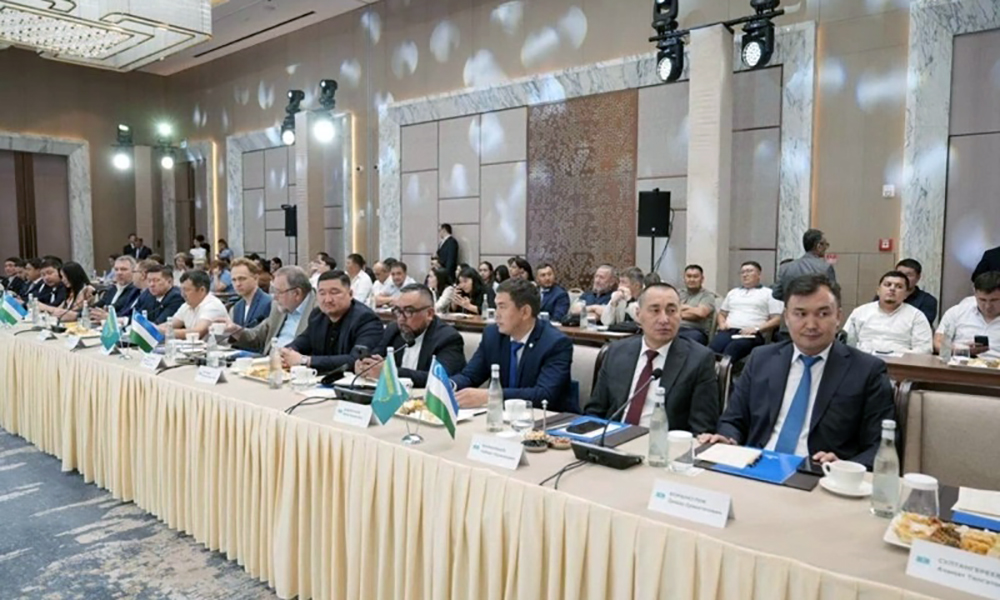
Uzbekistan and Kazakhstan are seeking to deepen economic cooperation and jointly expand into new regional markets, including Afghanistan, as part of broader efforts to strengthen trade and investment across Central Asia and the Middle East.
According to Uzbek media, the initiative was discussed during the Uzbek-Kazakh Business Forum in Tashkent, where business leaders and trade associations from both countries explored opportunities to promote their products in third-country markets, particularly Afghanistan, Syria and Iraq.
Afghanistan featured prominently in the discussions, with participants noting that Kazakhstan’s exports to Afghanistan reached nearly $500 million during the first seven months of 2025—almost matching the country’s total exports to Afghanistan for all of 2024. Officials said the long-term goal is to increase exports to $3 billion.
The forum also highlighted growing imports of mineral raw materials from Afghanistan. Participants discussed a proposed agreement to supply Afghan zinc ore to the Almalyk Mining and Metallurgical Complex in Uzbekistan.
Beyond Afghanistan, delegates examined emerging business opportunities in Syria and Iraq, where reconstruction efforts are expected to drive demand for food products, construction materials and industrial goods.
The forum also focused on improving regional logistics. Officials discussed using available capacity on Turkish freight trucks transiting Uzbekistan, a move expected to reduce transport costs and improve access to regional markets.
At the conclusion of the forum, both sides agreed to organise joint business missions to third-country markets, including Aleppo, Syria, in late September and Erbil, Iraq, in early October, with the aim of strengthening commercial partnerships and identifying new investment opportunities.
The discussions reflect growing economic cooperation between Uzbekistan and Kazakhstan as both countries seek to expand regional connectivity, diversify exports and strengthen trade links with neighbouring markets, including Afghanistan.
Business
Uzbekistan’s Fergana region strengthens economic ties with Afghanistan
The meeting followed a Fergana delegation’s visit to Afghanistan on July 26-27, during which officials and business representatives held talks in Kabul and Mazar-i-Sharif.
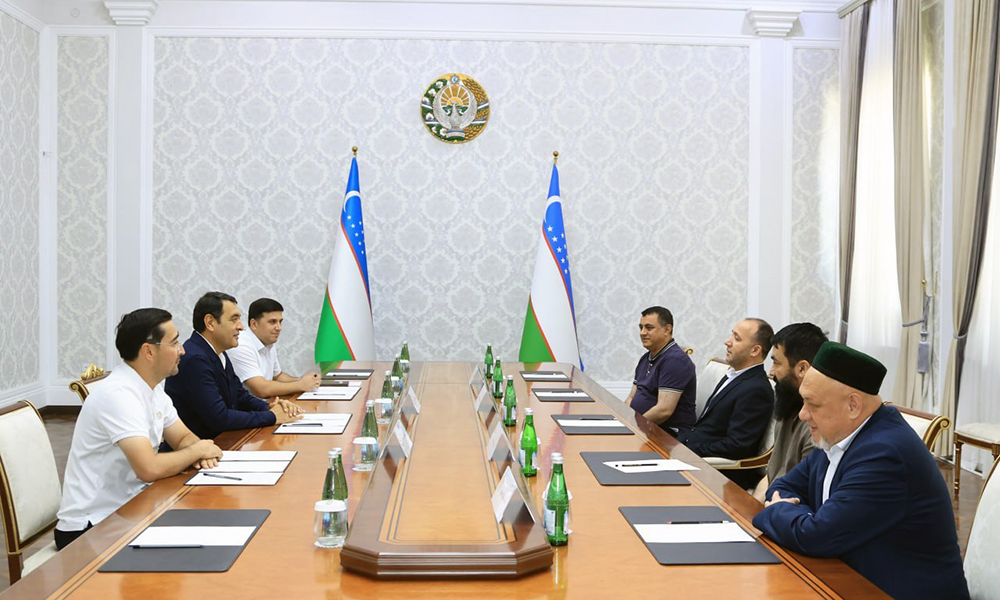
Uzbekistan’s Fergana region is moving to deepen economic cooperation with Afghanistan after officials and business leaders agreed to fast-track joint investment projects and expand bilateral trade.
According to a statement from the Fergana Regional Administration, Governor Khayrullo Bozorov met with leading Afghan business figures, including Emerald Diamond Trading Director Abdul Hamid Anyuri, Kam Air Director Atilla Azimi, Tojmahal Petroleum Director Abdul Latif Nawruzi, and their regional partners to discuss practical measures for strengthening economic ties.
The meeting followed a Fergana delegation’s visit to Afghanistan on July 26-27, during which officials and business representatives held talks in Kabul and Mazar-i-Sharif. The delegation also inaugurated Fergana Trade Houses in both cities to promote trade and commercial cooperation.
“The parties agreed to accelerate the implementation of joint investment projects, increase bilateral trade and elevate cooperation to a new level,” the regional administration said.
Discussions focused on turning agreements reached during the Afghanistan visit into practical projects, identifying new investment opportunities, and expanding trade between the two sides. Afghan business representatives expressed interest in working with Fergana companies in key sectors including trade, agriculture, aviation, energy and logistics, while presenting several new investment initiatives.
Bozorov reaffirmed Fergana’s commitment to strengthening economic relations with Afghanistan, saying the regional administration stands ready to support joint projects and create favourable conditions for closer business cooperation.
The regional administration said the meeting reflects growing momentum in economic engagement between Uzbekistan and Afghanistan, with both sides seeking to expand cross-border trade, attract investment and develop new commercial partnerships as part of broader efforts to strengthen regional economic connectivity.
Business
Afghanistan invites Iranian investors to expand economic cooperation
Discussions focused on expanding private-sector cooperation, increasing joint investment, and boosting bilateral trade between the two countries.
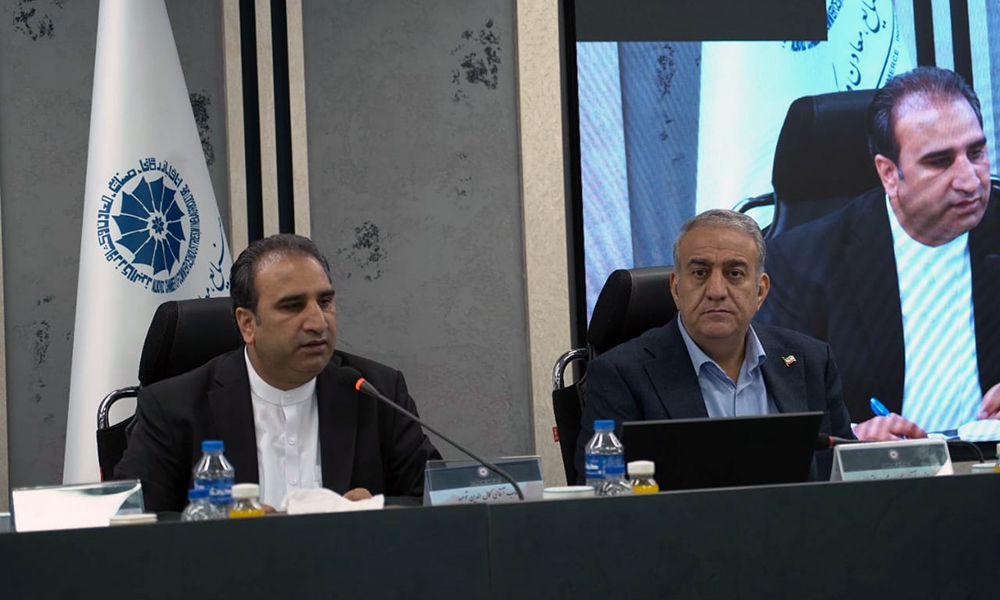
Afghanistan has invited Iranian investors to explore business opportunities and participate in joint economic projects as the country seeks to strengthen investment and trade ties with its western neighbor.
Kamaluddin Tawhidi, head of the Afghanistan-Iran Joint Chamber of Commerce, made the appeal during a visit to Iran, where he attended the “Economic Cooperation Opportunities with Afghanistan” conference in Alborz Province, according to Iran’s state broadcaster.
Speaking at the event, Tawhidi highlighted Afghanistan’s investment potential and encouraged Iranian businesses to take advantage of opportunities across a range of economic sectors.
Discussions focused on expanding private-sector cooperation, increasing joint investment, and boosting bilateral trade between the two countries.
Tawhidi said stronger economic partnerships could create new business opportunities and support broader regional economic growth.
The meeting comes as Afghanistan continues efforts to attract foreign investment and deepen economic cooperation with neighboring countries.


US State Department: Afghanistan fails to meet minimum fiscal transparency standards

FAO warns water shortages and heat put Afghanistan’s agriculture under pressure

US military operations killed 153 civilians in 2025, Pentagon assessment shows

Hana raises concerns over Afghan women and children amid Iran’s expulsion policy

Afghanistan face Ireland with series win in sight

Pakistan’s governance system has ‘collapsed’: Mohsin Naqvi

Spain sweep FIFA World Cup player awards after historic triumph

Iran, Afghanistan and Tajikistan discuss expanding regional transit cooperation

Afghanistan temporarily eases fuel import standards to help curb rising prices

Afghan health minister, Gavi discuss expanding routine immunization

Tahawol: Hamid Karzai’s call for Afghan reconciliation discussed

Saar: Preparations for IEA’s fifth anniversary discussed

Tahawol: Iran’s acknowledgment of Afghanistan’s cooperation discussed

Saar: Five years of Islamic Emirate rule in Afghanistan reviewed

Tahawol: Afghanistan: An Alternative to the Strait of Hormuz?
-

 Sport3 days ago
Afghanistan secure direct qualification for 2027 Men’s ODI World Cup
-
 Regional4 days ago
Goods transporters to go on strike from Saturday after talks with Pakistan govt fail
-
 Latest News3 days ago
Pakistan-backed armed groups in Balochistan using former Afghan government forces: report
-

 Sport4 days ago
Rashid Khan takes six as Afghanistan thrash Ireland by 92 runs
-
 World4 days ago
US Senate passes Russia sanctions championed by Graham; US House next
-

 Sport2 days ago
Abasin Defenders stun Kabul Zalmi in Kabul Premier League
-

 Latest News4 days ago
Moldova president criticizes visa approval for IEA delegation
-
 Regional3 days ago
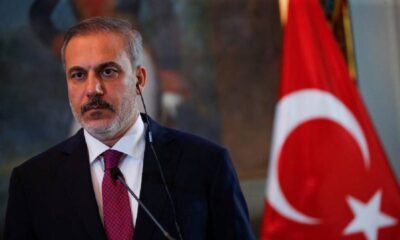
Turkey, Pakistan, Saudi Arabia defence pact technically same as NATO’s Article 5, Turkish minister says