
Latest News
Baluchistan High Court admits petition against Afghan repatriation drive
The petition further argued that Afghans married to Pakistani citizens qualify for nationality under the Pakistan Citizenship Act of 1951, and that mass expulsions violate several constitutional protections, including the rights to life, equality, and education.


The Baluchistan High Court on Monday admitted a constitutional petition challenging the government’s ongoing repatriation of Afghan refugees and summoned federal and provincial authorities to respond.
A two-judge bench, led by Chief Justice Rozi Khan Bareach and Justice Sardar Ahmed Halimi, heard the plea filed by Advocate Syed Nazir Agha. He requested the court to suspend the repatriation campaign for six months, arguing that it was causing severe hardships for Afghan families living in Pakistan.
Agha told the court that thousands of Afghan children are currently studying in schools and colleges across Baluchistan and are only months away from their annual examinations. Forcing them to leave now, he said, would disrupt their education.
He also warned that many Afghan families risk losing property and livelihoods built over decades in the province.
The petition further argued that Afghans married to Pakistani citizens qualify for nationality under the Pakistan Citizenship Act of 1951, and that mass expulsions violate several constitutional protections, including the rights to life, equality, and education.
The court, after initial arguments, declared the petition admissible and issued notices to the respondents, which include the federal interior secretary, the Ministry of States and Frontier Regions, the Baluchistan chief secretary, and senior security officials.
The petition comes against the backdrop of Pakistan’s nationwide repatriation campaign, launched in late 2023, which has seen hundreds of thousands of Afghans—both documented and undocumented—return across the border. Authorities say the policy is aimed at addressing security concerns, but rights groups have criticized it as hasty and harmful to vulnerable communities, particularly women and children.
The case will be taken up again at the next scheduled hearing once the government submits its written replies.




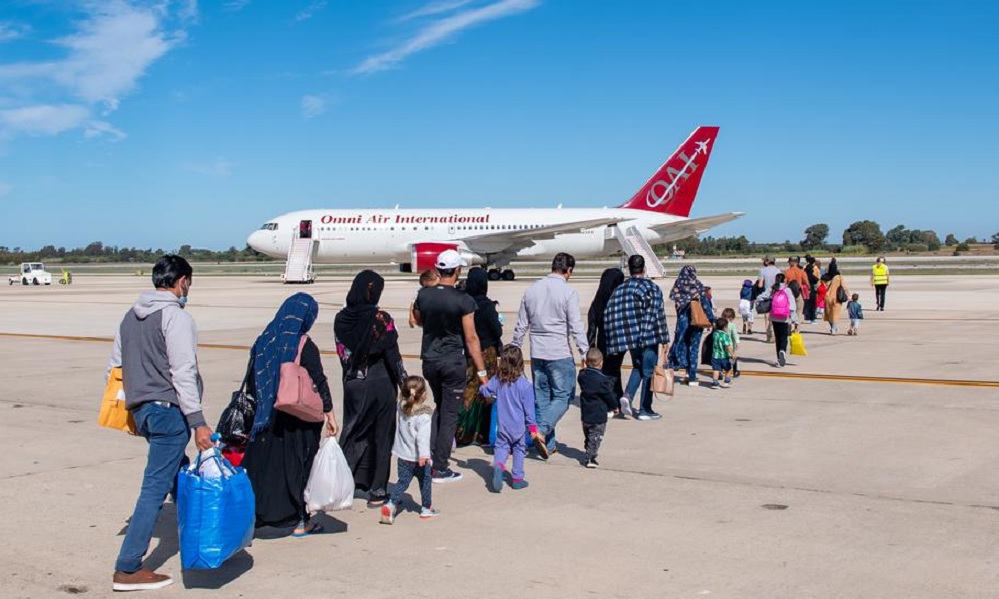
A U.S. federal court has ordered the State Department to process travel documents for the spouses and children of several Afghan asylees, ruling that the Trump administration’s travel restrictions cannot be used to prevent them from reuniting with their families in the United States.
U.S. District Judge Anthony Trenga directed the State Department to issue travel documents within 15 days for the families of five Afghan plaintiffs whose relatives had already received approval to enter the United States. The court also ordered the department to reassess the eligibility of other family members without applying the travel ban and to provide regular updates until the reunifications are completed.
The lawsuit, filed in Virginia, was brought by a group of Afghan refugees who had supported U.S. forces during the war in Afghanistan. They argued that the administration’s travel restrictions unlawfully blocked their spouses and children from joining them, despite existing legal protections for asylees and refugees.
The ruling comes amid ongoing legal challenges to U.S. travel restrictions affecting Afghan nationals. The State Department had not indicated by Monday whether it would appeal the decision.
Advocates for the plaintiffs welcomed the decision, saying many Afghan families have spent years separated after fleeing Afghanistan and that some relatives remain stranded in third countries or have been forced to return to Afghanistan while awaiting permission to travel.
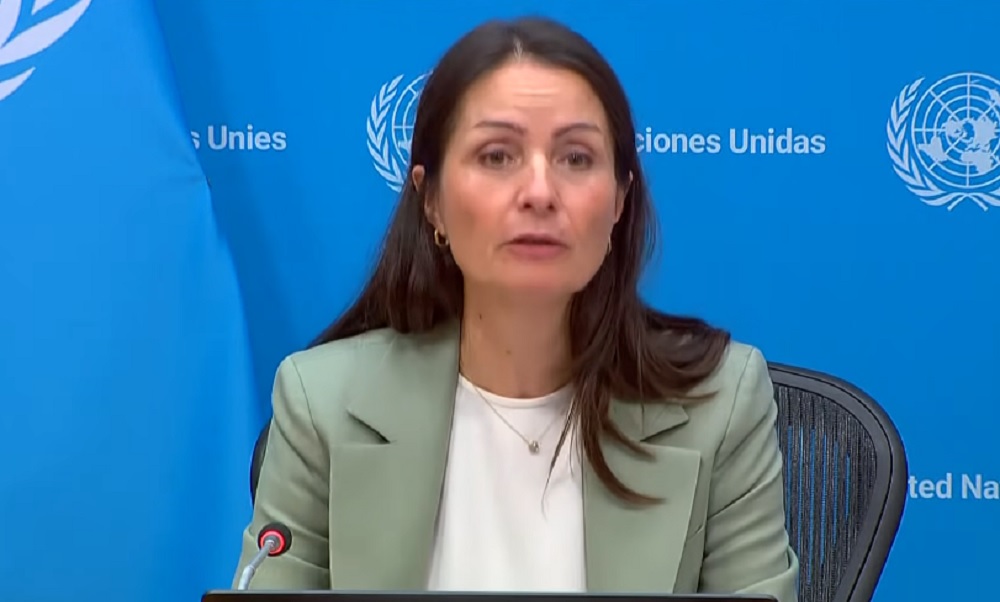
Christina Markus Lassen, Denmark’s Permanent Representative to the United Nations and the Security Council president for August, said on Monday that this month marks five years since the Islamic Emirate’s takeover of Afghanistan and that the UNSC presidency will seek to highlight the consequences of this event.
Speaking at a briefing, she described the anniversary as a “rather grim” milestone and said the Council presidency wants to draw attention to the consequences of the IEA’s takeover over the past five years.
Lassen noted that the Security Council’s focus will be on the impact the IEA’s rule has had on the Afghan population, particularly on women and girls.
The Islamic Emirate returned to power in Afghanistan on August 15, 2021.
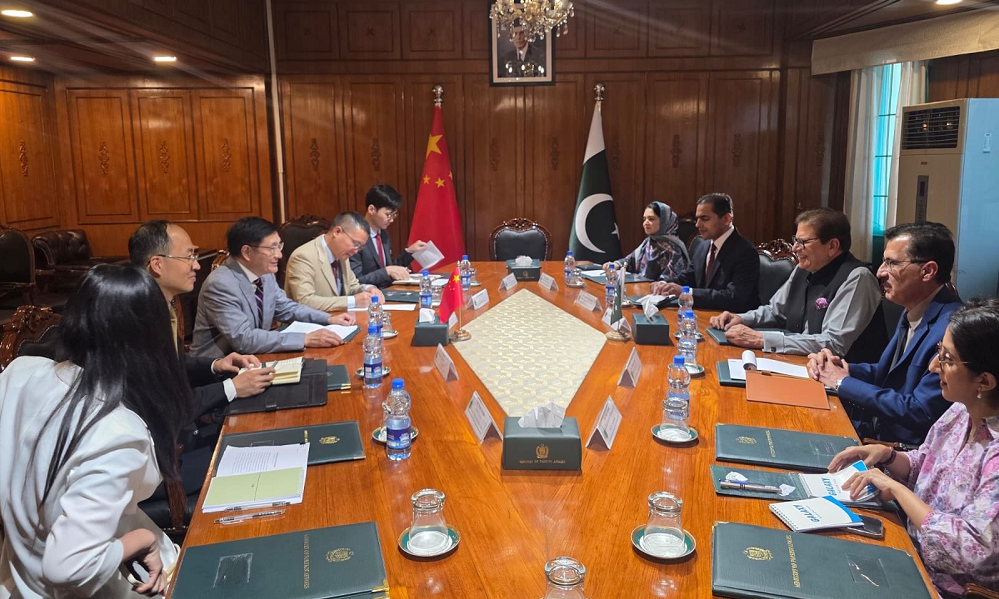
Pakistan’s Special Envoy for Afghanistan, Mohammad Sadiq, says he held talks with China’s Special Representative for Afghanistan, Yue Xiaoyong, on regional security and the latest developments related to Afghanistan.
In a post on X on Monday, Sadiq said he welcomed the Chinese envoy and his delegation to Islamabad for what he described as “productive discussions” on regional security issues.
According to Sadiq, the two sides exchanged views on the threats posed by the Tehreek-e-Taliban Pakistan (TTP) and the East Turkestan Islamic Movement (ETIM), which he claimed are operating from Afghan territory.
He added that Pakistan and China agreed to strengthen bilateral coordination and deepen cooperation to counter terrorist threats and promote regional peace, security, and stability.
The meeting comes amid continued concerns by Islamabad and Beijing over militant groups they say are using Afghan soil, an allegation that the Afghan authorities have repeatedly denied, insisting they do not allow Afghanistan’s territory to be used against any other country.


Final touches being made to Ayubi Cricket Stadium ahead of Kabul Premier League

Status of US-Iran talks uncertain as ship struck in Hormuz

US court rules in favor of Afghan families seeking travel documents

UNSC presidency to highlight consequences of IEA’s return to power

Pakistan, China envoys discuss Afghanistan, pledge closer counterterrorism cooperation

Pakistan’s governance system has ‘collapsed’: Mohsin Naqvi

India offers 1,000 online scholarships for Afghan students for 2026-27 academic year

Cricket world pays tribute to Afghanistan fast bowler Shapoor Zadran

Turkey spent over $120 million to prepare airport for Qatar-donated U.S. presidential aircraft

Thousands pay final respects as Afghan cricketer Shapoor Zadran buried in Kabul

Tahawol: Worsening security crisis in Khyber Pakhtunkhwa

Saar: Trump’s claim over Iran talks

Tahawol: US cancelling strikes on Iran

Saar: Strained relations between Kabul and Islamabad

Saar: Trade shifts from Pakistan to Central Asia and Iran discussed
-
 Latest News4 days ago
Pakistan’s governance system has ‘collapsed’: Mohsin Naqvi
-

 Sport5 days ago
Qosh Tepa crowned champions of inaugural Afghanistan Wrestling Premier League
-

 Latest News4 days ago
World Bank: Afghanistan’s economic growth too weak to improve living standards
-
 Latest News3 days ago
Uzbek president calls for Central Asia-Afghanistan development space
-

 World3 days ago
US to make visa bond program permanent for people from dozens of countries
-
 Business5 days ago
Afghanistan invites Iranian investors to expand economic cooperation
-
 World4 days ago
Spain says migrant surge into Ceuta has eased as thousands return to Morocco
-
 Latest News4 days ago
Israel and US consider Iran land blockade