
Latest News
Bayat Foundation steps in to help feed Herat earthquake victims

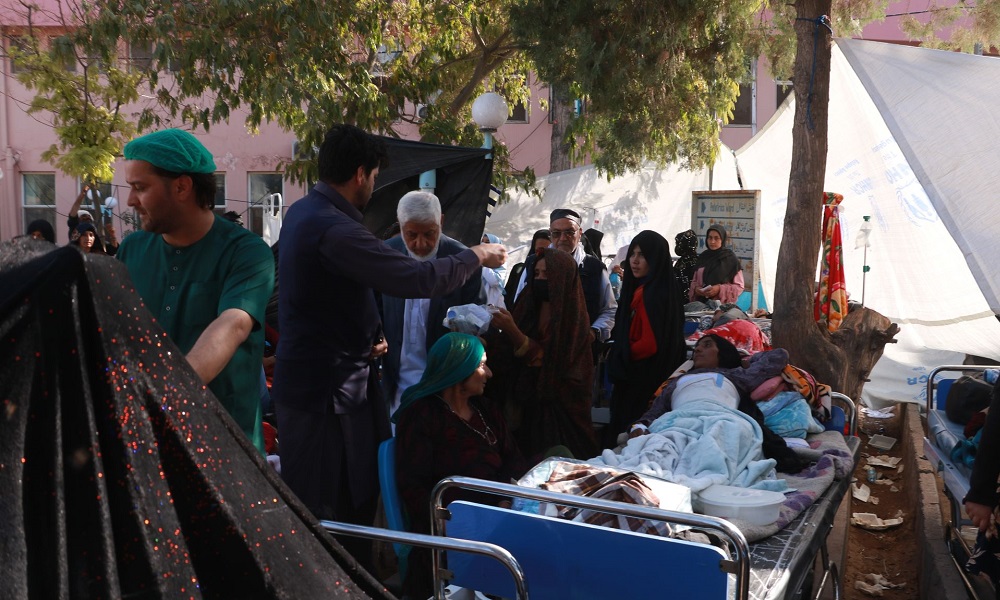
Bayat Foundation has distributed thousands of food packages and cash aid to desperate earthquake victims in the western province of Herat in Afghanistan over the past three days.
Foundation officials said they will continue distributing critically needed food parcels to the victims of Saturday’s 6.3 magnitude earthquake which destroyed at least 20 villages in Zinda Jan district alone.
Thousands of people have been left homeless, most of whom also lost all their belongings. Coupled with this is the loss of lives. So far over 2,400 people are confirmed dead while another 2,000 were injured.
On Wednesday, officials from Bayat Foundation also donated cash to victims being treated at the Herat Provincial Hospital.
This came after another 6.3 magnitude earthquake hit the same area early Wednesday. A further 140 people were injured in this quake. All of them are now being treated at the Herat Provincial Hospital.
Haji Mohammad Ismail, the vice chairman of Bayat Foundation, also visited the stricken-area and the hospital on Wednesday to help distribute aid. He said the devastation is extensive and that the people are in desperate need of as much assistance as possible.
He said Bayat Foundation teams responded quickly to the disaster and arrived in the area with aid three days ago.
“We came here. Unfortunately, the situation is very bad. People are very worried. Human casualties are high. Destruction is huge. Bayat Foundation always reaches [disaster scenes] quickly. Fortunately, we have been distributing food to 1,500 people for two or three days. More aid will arrive soon,” he said.
Survivors who were given aid expressed their gratitude and said the food handed out daily was an enormous help as they had no way to cook their own food, given that their homes have been destroyed.
Taj Mir, a victim of the earthquake, said: “Food is arriving. It is a lot. There is no shortage.”
Shah Mir, another victim, said: “People are helping us a lot. They help us in every way, from bread to water and tea, etc.”
In addition to delivering life saving aid, another division of the Bayat Group, Afghan Wireless Communication Company (AWCC) has also stepped in to help.
On Wednesday the company installed a telecommunications tower in the Zinda Jan district in order for emergency teams and aid organizations to have access to communications.
Ismail said: “Fortunately, the officials of AWCC and the officials of Herat today installed a tower here to solve the problems of the people.”
Nisar Ahmad Rahimi, zonal head of AWCC in Herat, said: “There was no telecommunication company in this area before. AWCC is now the first telecommunication company that brought its equipment here quickly and installed a tower for the people of these villages which belong to Zinda Jan district.”
Since 2006, the Bayat Foundation has helped rebuild Afghanistan as well as deliver hope and support to the neediest and most at-risk Afghans.
By providing food and clothing; maternity care for women before and during childbirth and to newborn babies; orphan care and education; competitive sports to challenge the youth; and entrepreneurship programs for widows, women and youth, the Foundation’s goal is to rekindle a healthy and hopeful base so that all Afghans have the opportunity to prosper.
The Bayat Foundation has also, for years, been at the forefront of responders to natural disasters and emergencies, by providing aid to the victims in the form of shelter, clothing, food and cash.
The Foundation’s mobile clinic is also often one of the first responders to flood- or earthquake-stricken areas – providing lifesaving emergency medical care.












Kazakhstan’s Foreign Minister Mukhtar Tileuberdi has called for pragmatic and coordinated international engagement with Afghanistan, saying the country’s long-term stability is closely linked to the security and sustainable development of Central Asia.
Speaking during the general debate of the 81st session of the United Nations General Assembly in New York on Friday, Tileuberdi said humanitarian assistance to Afghanistan remains essential but alone cannot break the cycle of poverty, displacement and dependency.
He said Kazakhstan supports a “pragmatic, coordinated and step-by-step” approach to international engagement with Afghanistan, with the United Nations playing a central role.
Tileuberdi also said Kazakhstan is working with the UN to operationalize the United Nations Regional Centre for the Sustainable Development Goals for Central Asia and Afghanistan in Almaty.
He said the success of the centre should be measured by the results and assistance it delivers to the region.


Abu Muslim Farah defeat Khurasan Faryab 2-0 in ACL season six

Saar: Concerns over Pakistan’s political crisis discussed

Afghanistan Champions League: Omar Zawak Herat beat Toofan Herat 1-0

Blast in Pakistan’s Dera Ismail Khan kills 11, injures 30

Ariana Afghan Airlines increases Kabul-Delhi cargo flights

Saudi energy group signs major Afghanistan deals covering gas exploration and pipeline plans

Trump floats idea of renaming Atlantic or Pacific Ocean

US hits Egyptian bank branches with Iran sanctions as war marks six months

Nepal flood rescue mission enters critical phase as thousands remain missing

Iranian clubs to face Gulf opponents at neutral venues in Asian Champions League Elite
Saar: Concerns over Pakistan’s political crisis discussed

Exclusive interview with Abdul Latif Mansoor, Minister of MRRD

Tawsia: Overview of Afghanistan’s iron mines

Tahawol: Discussion on fresh Pakistani airstrikes on Afghanistan

Saar: Calls for international support for Afghanistan discussed
-

 World5 days ago
CNN, MS NOW and Politico sue Trump, challenging White House ban
-

 Latest News3 days ago
Ariana Afghan Airlines ranks seventh among 45 Central Asian airlines
-

 Latest News5 days ago
UN reiterates call for respect for international law after Kunar airstrikes
-

 Regional4 days ago
US and Iran hold first talks since June after Trump’s ‘annihilation’ threat
-

 Latest News4 days ago
Silk Road highway in Wakhan corridor now reaches the China border
-

 Regional3 days ago
Iran airlines cancel flights as US sanctions hit
-

 Latest News5 days ago
Afghan Official: Pakistan’s airstrikes will not go unanswered
-

 Sport5 days ago
Afghan boxing referee heads to China for international festival