
Latest News
Beijing confirms Pakistan and Afghanistan to upgrade diplomatic ties

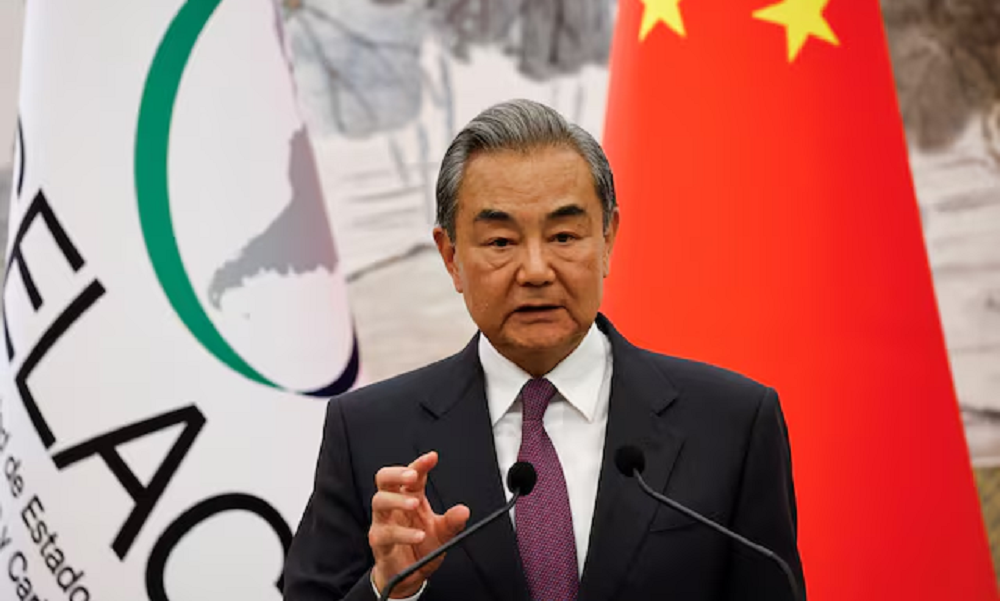
Pakistan and Afghanistan plan to upgrade their diplomatic ties, China said on Wednesday after hosting an informal meeting between Afghanistan’s Acting Foreign Minister Amir Khan Muttaqi and Pakistan’s Foreign Minister Ishaq Dar.
Muttaqi and Dar agreed in principle to send ambassadors to each other’s country as soon as possible, Chinese Foreign Minister Wang Yi said after the meeting.
According to a statement issued by China’s foreign ministry, Wang said the two countries “clearly expressed” willingness to upgrade the level of their diplomatic relations.
“China welcomes this and is willing to continue providing assistance for the improvement of Afghanistan-Pakistan relations,” he said.
In a statement on Wednesday, Pakistan’s foreign office said it “welcomed positive momentum in bilateral ties, including enhanced diplomatic engagement, trade, and transit facilitation.”
Afghanistan’s acting foreign minister “emphasized the importance of political and economic relations with both countries and expressed hope for further progress in these areas in the future.”
Tensions appeared to ease after a rare meeting between Muttaqi and Dar in Kabul last month where the Islamic Emirate’s acting foreign minister expressed concern over the deportation of tens of thousands of Afghans from Pakistan, Reuters reported.
Wednesday’s meeting in Beijing signalled a further thaw, with all agreeing to a trilateral foreign ministers’ dialogue in Kabul as soon as possible.
Pakistan and Afghanistan have embassies in each other’s capitals but they are led by charge d’affaires, not ambassadors.
China was the first country to accept an ambassador from the Islamic Emirate-run administration in Kabul though it does not formally recognise the government.
Wang and Muttaqi also met separately on Wednesday to discuss their bilateral relations.






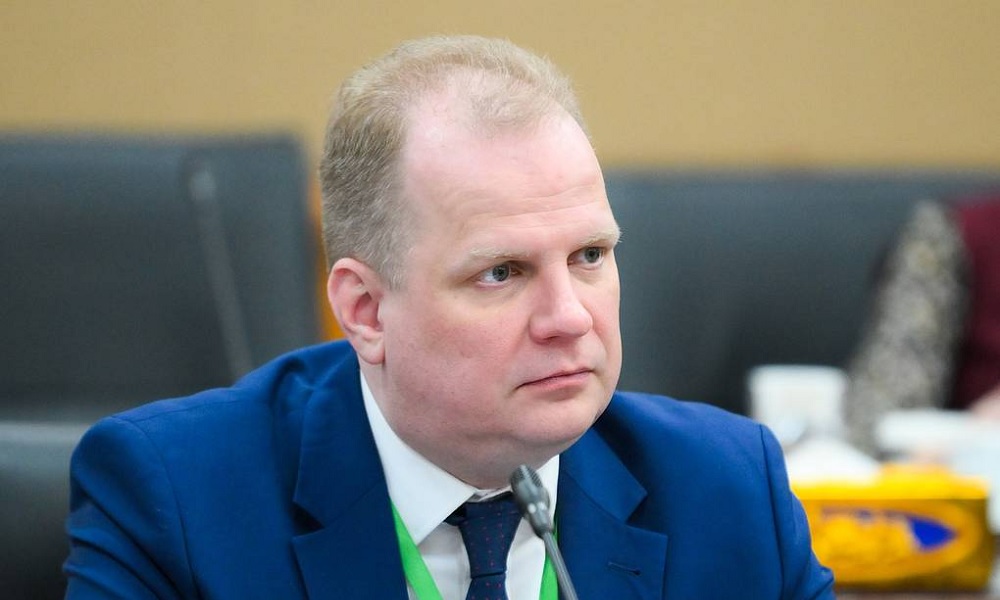
Russia has warned that the return of US military infrastructure to Afghanistan would pose a direct threat to all countries in the region, as Moscow continues to strengthen security and economic cooperation with Kabul.
Alexander Venediktov, deputy secretary of Russia’s Security Council, said the United States had made no secret of its plans to restore military infrastructure in Afghanistan.
“The emergence of such a foothold would pose a direct threat to all countries in the region,” Venediktov said, according to a statement from the Russian Security Council’s press service.
He said Russia’s security dialogue with Kabul also aimed to prevent the return of military infrastructure belonging to countries outside the region.
Venediktov described cooperation with Afghanistan as multifaceted and in line with Russia’s national interests, both in terms of security and efforts to establish a peaceful and stable Eurasian region.
He added that Russia was not alone in engaging with Afghanistan’s current leadership, noting that almost all countries in the region maintained direct contacts with Kabul.
Venediktov also said the Shanghai Cooperation Organisation (SCO) was discussing the restoration of cooperation with Afghanistan through a previously established contact group.
According to the Russian official, Moscow-Kabul relations were developing across several channels, including foreign ministries, government institutions and business communities.
He said the two sides had also established a bilateral working group on trade and economic cooperation, while efforts were underway to strengthen the legal framework governing their relations.
Venediktov added that economic cooperation with Kabul was important for advancing regional transport and energy projects.
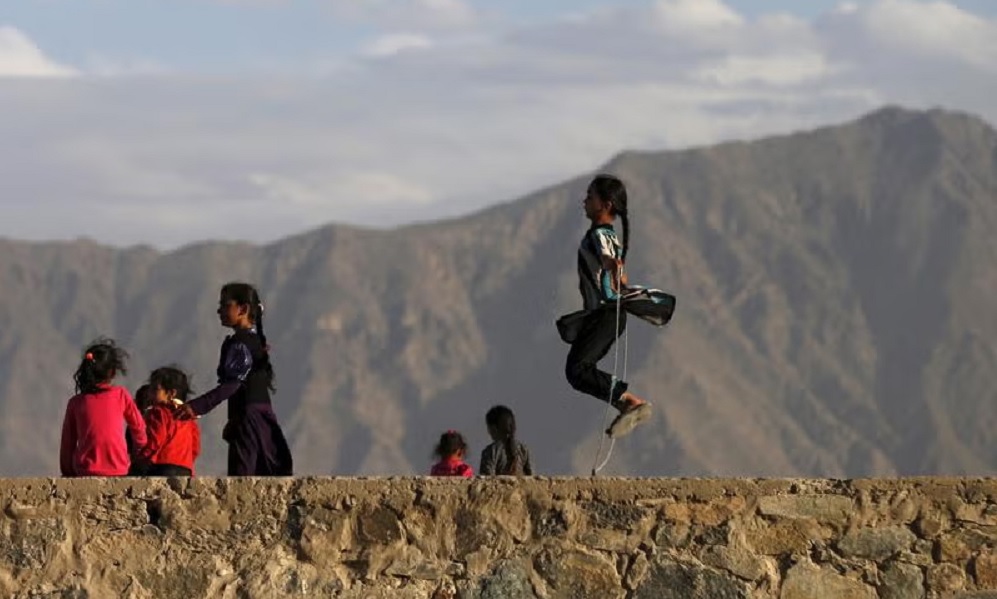
Afghanistan’s Ministry of Vice and Virtue says it has prevented several cases of forced and underage marriage in the past five months, as UNICEF calls for urgent action to protect girls and end child marriage.
Ministry spokesperson Saif-ul-Islam Khyber said the cases included attempts to prevent the marriages of two girls, aged six and eight, in Helmand and Nangarhar provinces. He attributed child marriage partly to a lack of awareness and harmful traditional practices, urging the public to report forced marriages to authorities.
In a statement marking the International Day of the Girl 2026, UNICEF Representative in Afghanistan Dr. Tajudeen Oyewale called for greater investment in girls’ education, healthcare and protection.
According to Afghanistan’s Multiple Indicator Cluster Survey 2022–23, 28.7% of women aged 20 to 24 were married before turning 18, with the proportion reaching one in two girls in some areas.
UNICEF warned that child marriage can disrupt education, limit future opportunities and expose girls to violence, early pregnancy and childbirth-related complications.
The agency urged the authorities to reopen schools to girls beyond Grade 6, describing continued access to education as one of the most effective ways to prevent child marriage. It also called for stronger protection services, support for vulnerable families and access to essential healthcare.
UN Secretary-General António Guterres has also called for an end to child marriage, warning that the practice threatens millions of girls’ education, health and safety.
UNICEF said coordinated action by families, communities, authorities and international partners is essential to ensure Afghan girls can learn, grow and shape their own futures.
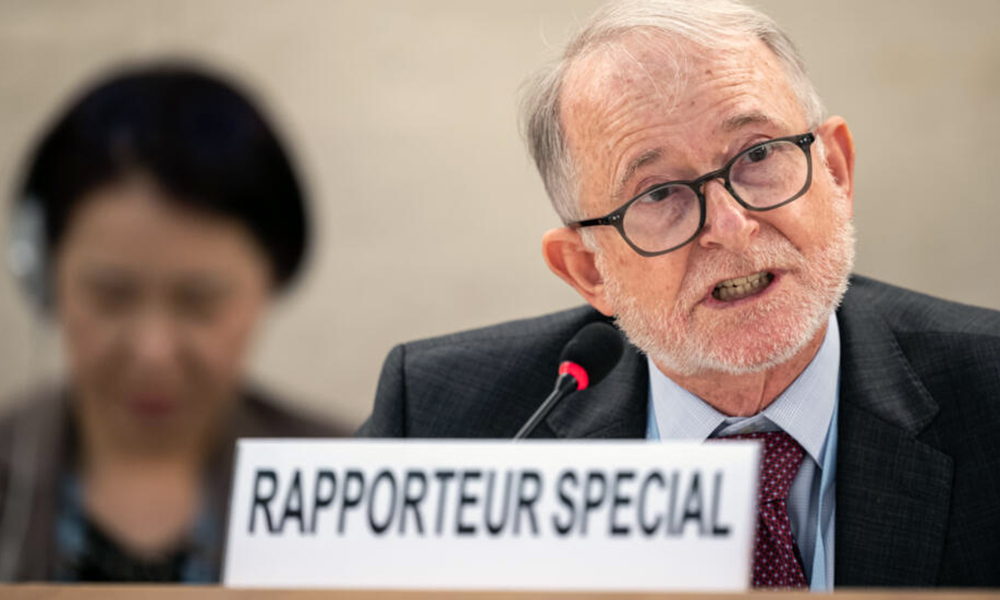
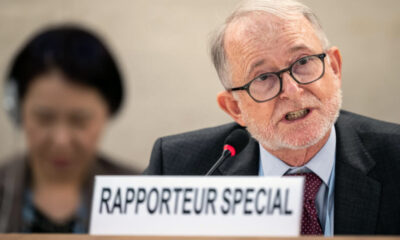
UN special rapporteur Richard Bennett says Pakistani airstrikes that kill Afghan civilians may constitute war crimes, calling for independent investigations and accountability.
In an interview with the BBC, Bennett said the United Nations Assistance Mission in Afghanistan (UNAMA) had documented civilian casualties in the cross-Durand Line violence between Afghanistan and Pakistan, with women and children among those killed.
Bennett said this is a very serious issue, noting that the consequences of the conflict disproportionately affect society’s most marginalized and disadvantaged people.
He also cited a March airstrike on a drug rehabilitation hospital in Kabul, saying that, according to figures attributed to UNAMA, 269 people were killed. The victims were men undergoing treatment and rehabilitation for drug addiction, he added.
Bennett called for full and independent investigations into the incidents, saying victims and their families deserved justice and accountability.
He said he had raised the issue with the UN Human Rights Council, which has yet to establish a dedicated mechanism to investigate the attacks. However, he pointed to an independent investigative mechanism established a year earlier that could potentially examine the incidents.
Bennett also called on the ICC to consider investigating the alleged attacks, noting that the court already has an ongoing investigation into the situation in Afghanistan. While the decision rests with the court, he said he hoped it would examine the incidents closely.
His remarks come amid mounting concerns over cross-Durand Line violence and its toll on Afghan civilians.
In early October, UN Secretary-General’s spokesperson Stéphane Dujarric said the UN mission had documented more than 1,100 civilian casualties in Afghanistan resulting from cross-Durand Line violence in 2026.
The United Nations has called for de-escalation and respect for international law, stressing that civilians must be protected from the effects of armed conflict.


NASA’s Perseverance rover breaks record for off-planet driving on Mars

Russia warns against return of US military infrastructure to Afghanistan

Tahawol: Kabul’s criticism of Islamabad’s policy toward Afghanistan

Saar: Pakistan deploying army in KP

Afghanistan face daunting 479-run chase against Bangladesh in Abu Dhabi Test

EU and FAO launch €5m programme to strengthen Afghanistan’s agrifood sector

Cricket Bonanza: Afghanistan set for packed international schedule

New warnings reignite debate over AI threat to humanity

UN warns of mounting humanitarian and human rights pressures in Afghanistan

Afghanistan faces cancer treatment crisis
Tahawol: Kabul’s criticism of Islamabad’s policy toward Afghanistan
Saar: Pakistan deploying army in KP

Tahawol: EU appointing new envoy for Afghanistan

Saar: Pakistan’s political, security and economic crises

Saar: Ongoing expulsion of Afghan refugees from Iran and Pakistan discussed
-

 Regional4 days ago
Trump says US will not attack Iran before midterm elections in November
-
 Latest News3 days ago
Pakistan issues new directives for Afghan medical students and doctors
-
 Business5 days ago
Russia-Afghanistan trade surges 150% in first seven months of 2026
-
 World4 days ago
Witkoff, Kushner to meet Ukrainians for talks on the war, says US source
-

 Sport5 days ago
Arman FC defeat Istiqlal Kabul 3-2 in thrilling comeback
-
 Latest News3 days ago
Iranian lawmaker praises Afghanistan’s support, accuses Pakistan of ‘hypocrisy’
-
 Regional5 days ago
Syria weighs military aid for Saudi Arabia amid Yemen war: Reuters
-

 Business5 days ago
Afghan products attract Saudi buyers at major food expo in Jeddah