
Business
Countries should still help Afghanistan on corruption: Ghani


David Cameron strikes a deal with Nigerian president just days after embarrassing ‘fantastically corrupt’ gaffe as Buhari is one of just FIVE leaders to sign up to Britain’s ‘gold standard’ on anti-corruption
- PM announced a string of new measures on foreign companies buying property in London to stop ‘corrupt individuals’ hiding illicit funds
- Afghan president Ashraf Ghani pointed to the impact of the heroin trade as he attended the summit in London
- Prime Minister was filmed earlier this week boasting about the ‘fantastically corrupt’ countries who are coming
- Nigerian president has said he wants ‘action’ by Britain to hand back stolen assets hidden in London rather than an apology
David Cameron today promised to crack down on corruption in Britain as he urged international leaders to make major reforms.
The Prime Minister welcomed Nigerian president Muhammadu Buhari to a major summit at Lancaster House in London just days after described the country as ‘fantastically corrupt’.
Nigeria was one of six nations – including Britain – to sign up to Mr Cameron’s ‘gold standard’ of public registers of company ownership despite the row over the PM’s embarrassing gaffe.
Australia is considering joining the leading group but Mr Cameron admitted he had more work to do to persuade the US – despite Secretary of State John Kerry acknowledging corruption was as dangerous as terrorism.
Mr Cameron’s hosting of the summit risked being overshadowed by the Electoral Commission asking the High Court to force the Conservative Party to disclose papers linked to an electoral fraud probe.
David Cameron greeted Nigerian president Muhammadu Buhari to the stage at his anti-corruption summit just days after he was caught on camera claiming the country was ‘fantastically corrupt’
Mr Buhari also met with Archbishop of Canterbury Justin Welby, left, and Prince Charles, centre, at Clarence House today, pictured
The summit concluded today with 11 nations joining a now 29-strong group that will draw up registers of ownership accessible to governments but not public.
The group includes the Cayman Islands, Jersey and the Isle of Man.
The Prime Minister used his opening speech to warn foreign companies that own around 100,000 properties in England and Wales that they will be required to disclose their ownership.
And speaking at the Lancaster House venue, Mr Cameron called corruption ‘the cancer at the heart of so many of the problems we need to tackle in our world’ – noting that illicit flows alone cost the world 1.26 trillion US dollars.
Mr Cameron promised a number of measures would be pursued in the UK, with London seen as one of the prime international centers for people wishing to launder illicit assets.
The Prime Minister said: ‘We will expose corruption, so there is nowhere to hide. If you don’t know who owns what, you can’t stop people stealing from poor countries and hiding that stolen wealth in rich ones.
‘Here in the UK we want to clean up our property market and show there is no home for the corrupt in Britain, and all foreign companies with properties in the UK will have to register publicly who really owns them, who really controls them.
‘No foreign company will be able to buy UK property, or bid for central government contracts, without joining the register.
‘We have also had a very frank discussion today about changing cultures in sport. The world knows that sport can be riddled with corruption, so only when we deal with corruption in sport will people feel we are really dealing with corruption more broadly.
‘We are building a global movement against corruption. What we are talking about is stopping the corrupt hiding their loot from the authorities.’
Mr Cameron said tax-dodging destroys jobs, holds back growth, traps people in poverty and can undermine security by making citizens more susceptible to the ‘poisonous ideology of extremists’.
The PM – who was embarrassed to be overhead calling Nigeria and Afghanistan ‘fantastically corrupt’ in a conversation with the Queen days before the summit – stressed that it was ‘a challenge all countries need to address’ including the UK and US.
Mr Buhari appealed for the conference to agree measures that would see assets ‘stolen’ from the country and hidden in Western capitals and other places to be returned.
John Kerry and Mr Cameron led discussions in the first section of today’s summit, which was called against the backdrop of the leak of damning papers from Panama that revealed tax avoidance
Mr Kerry looked bored with the summit at different points of the proceedings today, which are expected to conclude this afternoon with the publication of a communique
Under the new rules, overseas firms will have to sign up to a new public register if they own or buy property or if they want to bid for central government contracts.
Mr Kerry said he had been shocked at the extent of corruption in the world since taking on his role in the Obama administration.
Mr Kerry said: ‘We are fighting a battle, all of us. Corruption, writ large, is as much of an enemy, because it destroys nation states, as some of the extremists we are fighting or the other challenges we face.
‘There are sceptics as to whether this is a passing fancy … or whether this is a beginning, a serious commitment.
‘I hope and I believe that something different is happening.’
Mr Kerry warned that some states would seek to step in and fill the demand for secrecy if others were persuaded to open up – saying it was vital to show a zero-tolerance approach.
The summit today was attended by scores of nations and bodies – but excluded key players such as the governments of Panama and the British Virgin Islands and organisations such as Fifa.
The Lancaster House summit was greeted by protesters, pictured, who demanded Mr Cameron shut down British-owned tax havens
Earlier, Mr Cameron has been told the West’s ‘drug habit’ is to blame for corruption in Afghanistan after his embarrassing on-camera gaffe.
Afghan president Ashraf Ghani pointed to the impact of the heroin trade as he prepared to attend a summit in London.
The Prime Minister risked derailing the gathering earlier this week when he was filmed boasting to the Queen and the Archbishop of Canterbury that he had some ‘fantastically corrupt’ countries attending.
He singled out Nigeria and Afghanistan during the unguarded conversation at Buckingham Palace.
In response, Nigerian president Muhammadu Buhari yesterday said that instead of an apology he would be demanding Britain return billions of pounds stolen by crooked officials and laundered in this country.
Afghan president Ashraf Ghani arrives for the London summit at Lancaster House today, where he was greeted by Foreign Office minister Hugo Swire
Mr Ghani played down Mr Cameron’s remaks in an interview with BBC Radio 4’s Today programme this morning.
He insisted the countries were ‘partners’ and pointed out that he had been elected on a platform of tackling corruption within Afghanistan.
But he added: ‘It is the drug habt of the West. The most significant driver of corruption is the narcotics cartel and that narcotic cartel is driving both terrorism, extremism and corruption.’
Banks and multinationals could be made criminally responsible for employees who embezzle funds, launder money and evade tax, under plans being announced at the summit by Mr Cameron.
A shake-up of the rules on corporate liability would see big companies hit with huge fines if they fail to stop employees committing financial crimes.
It is believed the Prime Minister will reveal Britain is devising criminal offences for businesses that fail to stop their workers engaging in fraud.
Authorities in Britain could be given similar powers to those in the US, where a bank was recently given a $500million (£350million) fine over the Libor fixing scandal.
Until now, UK prosecutors have been impeded by a legal requirement to identify the ‘controlling mind’ in a company then link that individual directly to criminality.
The planned moved emerged as Mr Cameron greeted world leaders – including U.S. Secretary of State John Kerry and the presidents of Afghanistan, Nigeria and Clombia – this morning in his bid to crack down on corruption.
David Cameron used the summit today to set out new anti-corruption plans. He was fully backed by several nations while others signed up to interim measures
The summit aims to produce a global declaration against corruption and break what Mr Cameron has called the ‘taboo about tackling this issue head-on.’
Banks, civil-society organizations and the International Monetary Fund will also be present at the gathering.
But critics say the PM’s mission has been undermined by Britain’s tolerance for tax havens and his description of some attending nations as ‘fantastically corrupt.’
It emerged in leaked papers from Panamanian law firm Mossack Fonseca last month that Mr Cameron had a stake in an offshore firm established by his late father, although he sold his shares in 2010, before he became prime minister.
He ruffled feathers before the summit when a television microphone caught him saying ‘leaders of some fantastically corrupt countries’ were coming. Speaking at a Buckingham Palace reception with Queen Elizabeth II, he referred to Nigeria and Afghanistan as ‘possibly two of the most corrupt countries in the world.’
Nigerian President Muhammadu Buhari and Afghan President Ashraf Ghani – elected in 2015 and 2014, respectively – have promised to curb corruption in their countries.
Mr Buhari said he wasn’t seeking an apology from Cameron, but wanted something ‘tangible’ – the return of plundered Nigerian assets held in British banks.
‘Corruption is a hydra-headed monster and a canker that undermines the fabric of all societies,’ Mr Buhari said Wednesday at a pre-summit meeting. ‘It does not differentiate between developed and developing countries.’
written by Reuters//Daily mail

Business
Afghanistan, Uzbekistan sign $400 million trade deals in push to deepen ties
The agreements span multiple sectors, including textiles, raw materials, pharmaceuticals and other key industries.
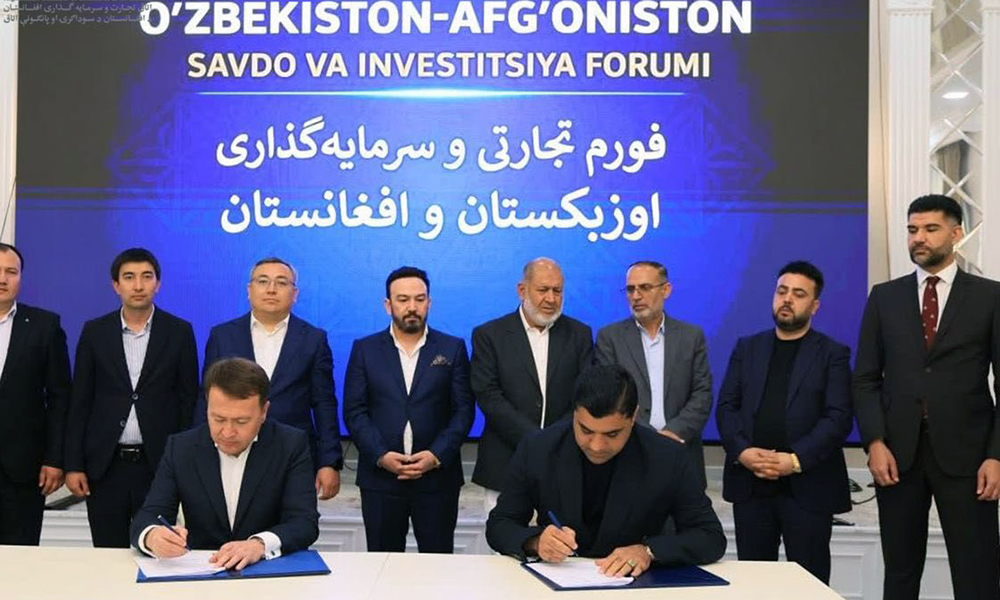
Afghanistan and Uzbekistan have signed 20 commercial agreements worth more than $400 million, marking a significant step toward expanding economic cooperation between the two neighboring countries.
The deals were finalized during a high-level business meeting in Uzbekistan’s Fergana Province, where Afghan and Uzbek private sector representatives gathered as part of an official Afghan trade delegation visit.
The agreements span multiple sectors, including textiles, raw materials, pharmaceuticals and other key industries.
The Afghan delegation was led by Zalgai Azimi, deputy for investment at the Afghan Chamber of Commerce, and included senior business figures such as Abdullah Rahimi, Syed Ahmad Noorzad, Ubaidullah Hotak, and Deputy Chief Executive Mirzaman Popal. Participants from both sides highlighted the importance of strengthening cross-border trade and building long-term commercial partnerships.
As part of the visit, Afghan delegates toured major industrial facilities in Fergana Valley to assess Uzbekistan’s manufacturing capacity and explore opportunities for future collaboration.
The agreements come as Afghanistan seeks to boost regional connectivity and revive its economy following years of conflict, isolation and economic disruption.
Trade with Central Asian neighbors—particularly Uzbekistan—has become increasingly important, with both sides investing in transport links, energy cooperation and cross-border markets.
Uzbekistan has positioned itself as a key economic partner for Afghanistan in recent years, supporting infrastructure projects and promoting trade corridors that connect South and Central Asia.
Analysts say deals of this scale could help generate jobs, increase exports and gradually integrate Afghanistan more deeply into regional supply chains.
The latest agreements signal growing momentum in bilateral relations, as both countries look to translate geographic proximity into stronger economic interdependence.
Business
Afghanistan, Kyrgyzstan aim to boost trade to $1 billion
Both sides welcomed the steady growth in trade between the two countries in recent years and agreed on the strategic goal of increasing bilateral trade to reach $1 billion.
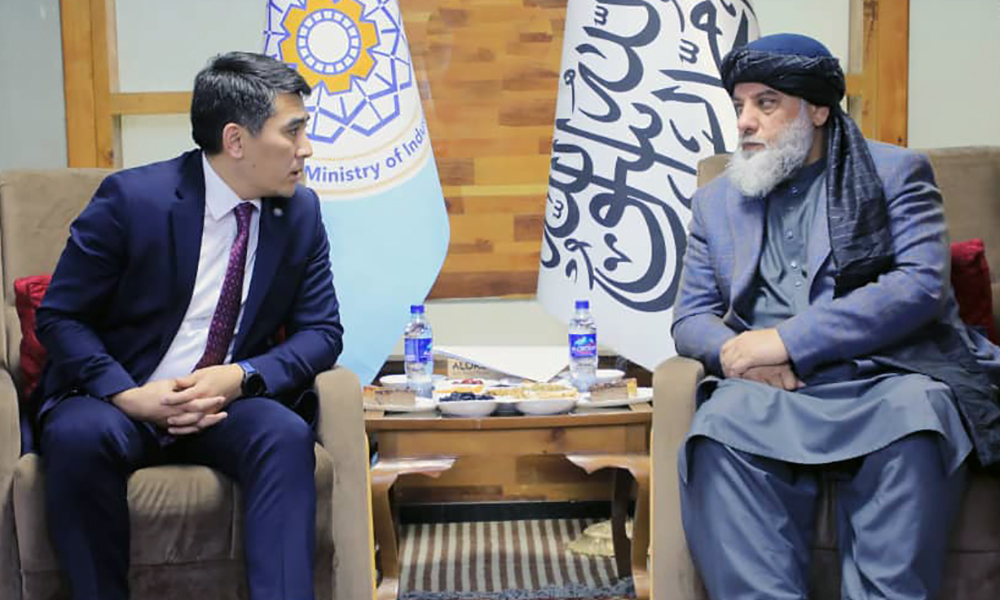
Afghanistan’s Minister of Industry and Commerce, Nooruddin Azizi, met with Kairat Tursunkulov, Deputy Foreign Minister of Kyrgyzstan, in Kabul this week to discuss ways to strengthen economic and trade ties between the two countries.
The meeting was also attended by Turdakun Sadykov, Kyrgyzstan’s ambassador to Afghanistan.
Azizi expressed appreciation for Kyrgyzstan’s participation in the recent Afghanistan–Central Asia consultative meeting and underlined the importance of expanding bilateral trade and economic cooperation.
Tursunkulov described Afghanistan and Kyrgyzstan as “brotherly nations” with strong cultural connections. He extended an invitation for Azizi to visit Kyrgyzstan to further enhance collaboration.
Both sides welcomed the steady growth in trade between the two countries in recent years and agreed on the strategic goal of increasing bilateral trade to reach $1 billion.
In addition, Azizi highlighted ongoing construction projects in Kyrgyzstan and suggested that Afghan construction companies and skilled workers could contribute their expertise to support development efforts in the country.
Business
Kazakhstan eyes rare metals mining projects in Afghanistan and Rwanda
As Kazakhstan looks to expand its global mining footprint, the exploration of rare metals in Afghanistan and Rwanda marks a significant step towards diversifying its mining interests.
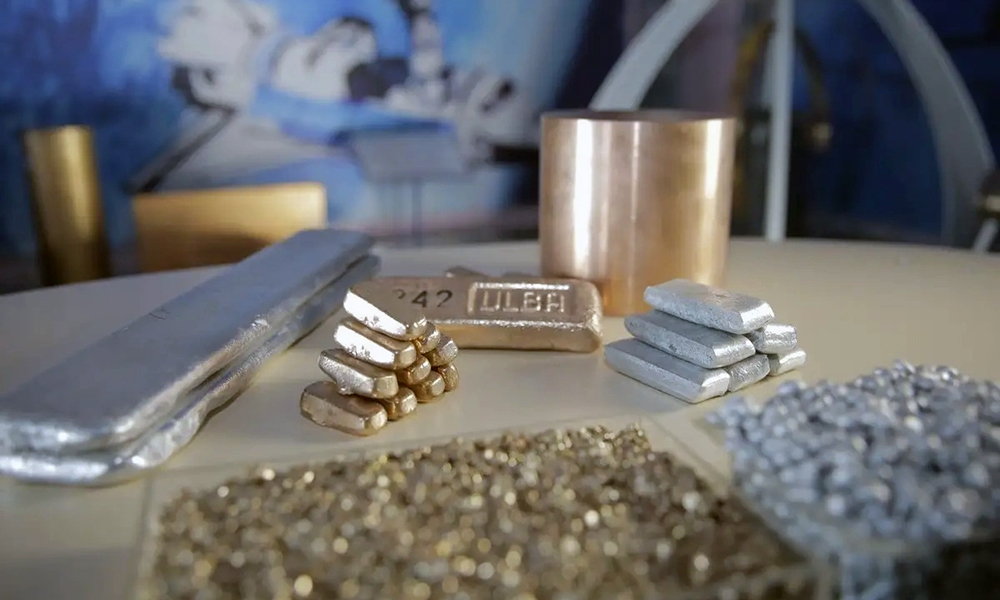
Kazakhstan is actively exploring mining opportunities in Afghanistan and Rwanda, focusing on rare metals, as part of a broader strategy to expand its resource development portfolio. According to a report by Kazinform, Tau-Ken Samruk, Kazakhstan’s national mining company, is conducting laboratory studies on mineral samples obtained from both countries.
The announcement was made by Iran Sharkhan, Kazakhstan’s Vice Minister of Industry and Construction, during the Geoscience & Exploration Central Asia 2026 event. Sharkhan emphasized the substantial resource potential in Afghanistan and Rwanda, noting that current efforts are directed towards evaluating the legal and regulatory frameworks in these countries, as well as verifying the geological prospects before proceeding with potential mining operations.
The laboratory testing, which is taking place at Tau-Ken Samruk’s facilities and additional labs in Kazakhstan’s Karaganda region, involves comprehensive analysis of base metals, rare metals, and rare earth elements from the two countries. These tests will determine the viability of large-scale mining operations in the future.
Sharkhan further indicated that if the laboratory results confirm promising geological findings, more detailed plans for mining projects will be disclosed in the coming months.
The report also highlighted that Kazakhstan’s major mining companies have already invested nearly 150 billion tenge into scientific research in the country’s mining sector, reinforcing the nation’s commitment to advancing its mining industry on both the local and international stages.
As Kazakhstan looks to expand its global mining footprint, the exploration of rare metals in Afghanistan and Rwanda marks a significant step towards diversifying its mining interests.


Tahawol: Two‑week truce agreement between Iran-US reviewed

Afghanistan, Pakistan hold ‘constructive’ China-mediated talks

Saar: US–Iran two-week ceasefire agreement discussed

Snooker fever grows as Kabul prepares for Ariana Championship

Aid distributed to flood-affected families as severe weather causes widespread damage

IEA Supreme Leader issues Eid-ul-Fitr message urging unity and support for Islamic system

14 Pakistani soldiers killed after military post falls along Durand line: MoD

IEA supreme leader orders replacement of foreign terminology in official documents

Afghan airstrikes target Pakistani military sites in retaliation for air attacks

Turkmenistan, Afghanistan discuss steps to speed up land acquisition for TAPI pipeline
Tahawol: Two‑week truce agreement between Iran-US reviewed
Saar: US–Iran two-week ceasefire agreement discussed

Tahawol: Ongoing negotiations between Kabul-Islamabad discussed

Saar: Afghanistan in spotlight of SCO discussed

Tahawol: Continuation of Middle East crisis discussed
-
 Latest News4 days ago
IEA supreme leader orders replacement of foreign terminology in official documents
-
 Latest News4 days ago
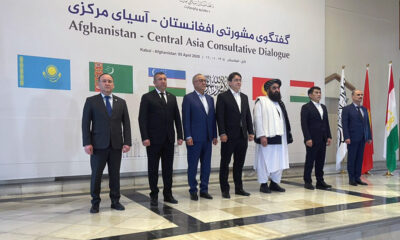
Afghanistan hosts inaugural Afghanistan–Central Asia Consultative Dialogue to strengthen regional cooperation
-

 Business5 days ago
Kazakhstan eyes rare metals mining projects in Afghanistan and Rwanda
-
 Latest News5 days ago
Severe rainfall and natural disasters cause heavy casualties across Afghanistan
-
 Latest News5 days ago
Afghan citizens reported among casualties in US, Israeli attacks, Iran says
-
 Latest News4 days ago
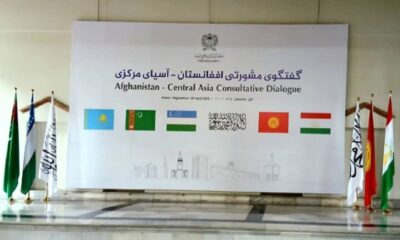
Kabul to host ‘Afghanistan–Central Asia Consultative Dialogue’ tomorrow
-
 Latest News4 days ago
IEA accuses Pakistan of war crimes amid heavy civilian losses
-
 World4 days ago
US rescues 2nd F-15 pilot hit above Iran: Trump