
Latest News
Deputy minister of interior in Herat with special forces to repel Taliban

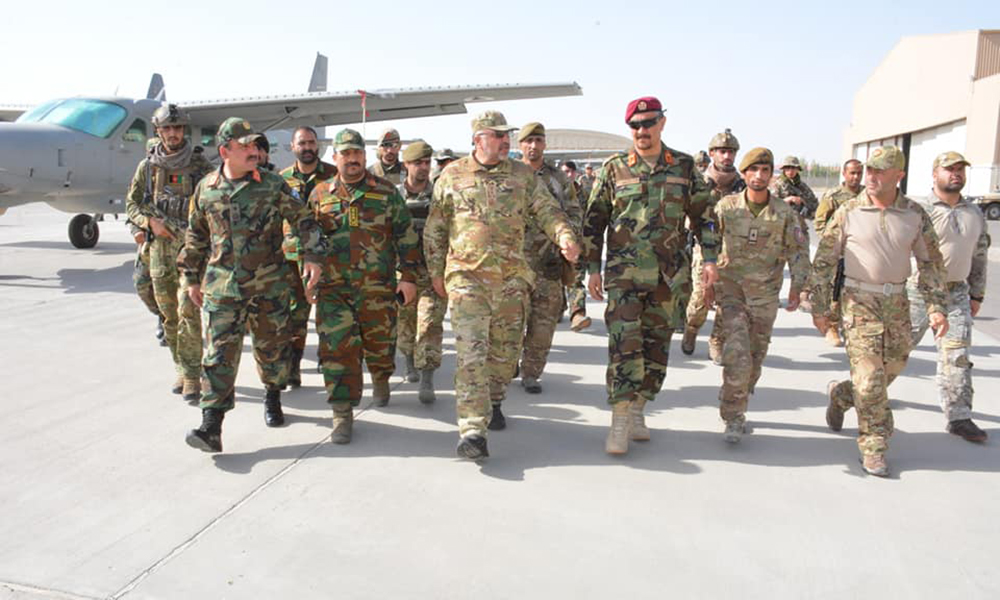
Abdul Rahman Rahman, Senior Deputy Minister of Interior, on Sunday arrived in Herat province with hundreds of special police forces to repel attacks and suppress the Taliban.
Afghan ministry of defense says that during his visit to Herat, the Deputy Minister of Interior is scheduled to launch and lead several operations against the Taliban in the province.
“We assure all the people of Herat that we will act decisively in clearing the criminals who have disturbed the peace of the people of Herat,” Rahman said in a message.
Rahman said he would meet with locals and security officials, including the public uprising forces, to resolve the series of problems that have arisen in the province.
The comments come after an emergency meeting was held on Saturday night at the house of parliament speaker Mir Rahman Rahmani to review the ongoing security situation, especially in Herat province.
Habibul Rahman Pedram, an MP and a participant in the meeting, said a number of participants recommended that Jihadi leader Amir Ismail Khan be appointed governor and chairman of the military council and establish a management unit under his command, with Gulbuddin Alokozai as commander of the Army Corps, Seyed Nasir Alavi as security director and Shir Agha Alokozai as the provincial police chief.
“Participants also asked for equipment and funding for the popular mobilization front with more ammunition to eliminate the shortcomings of the security forces as soon as possible. Increase in air operations and equip Herat Air Force with more aircraft including A29s, MD 530s and Black Hawks,” Pedram wrote on his Facebook page.
At the meeting were Mir Rahman Rahmani, parliament speaker, Abdullah Abdullah, Chairman of the High Reconciliation Council, Hamdullah Mohib, National Security Advisor to the President, Mohammad Younes Qanuni, former Vice President Khalid Noor, peace negotiation team members and a number of elders and members of parliament.
Earlier provincial and military officials said that the Taliban’s plan to attack Herat province failed.
The Taliban on Friday launched attacks on Guzara district and tried to enter Herat city from the east and west of Guzara district, local officials said.
According to the officials the Taliban suffered heavy casualties as a result of fighting and airstrikes.
About 200 Taliban were killed and wounded, the governor’s media office said.
Taliban acknowledged they carried out attacks and said the Afghan security forces sustained heavy casualties.





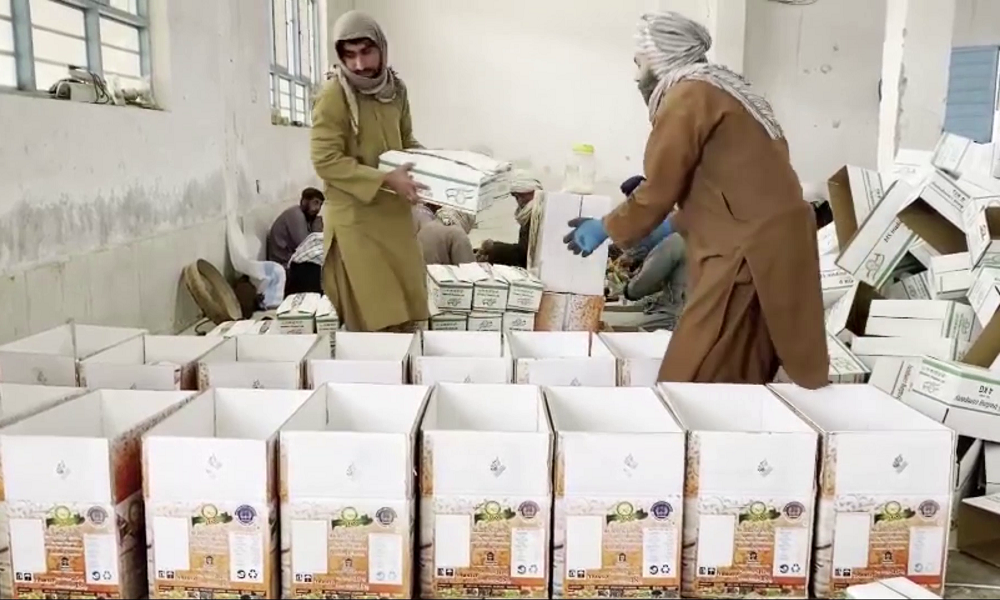
Officials from the Kandahar Chamber of Commerce and Investment say that 294,000 tons of fresh and dried fruit have been exported from the province to foreign countries over the past year.
According to them, the total value of these exports amounts to $519 million.
Abdulbaqi Bina, Deputy Head of the Kandahar Chamber of Commerce and Investment, says the products were exported to India, Pakistan, the United Arab Emirates, the United States, Canada and several other countries.
Meanwhile, fresh and dried fruit traders are calling on the government to provide alternative transit routes, new markets, and greater facilitation for obtaining visas and transportation for the export of these products.
This comes as nearly 59,000 tons of fresh and dried fruit were exported from Kandahar to foreign countries
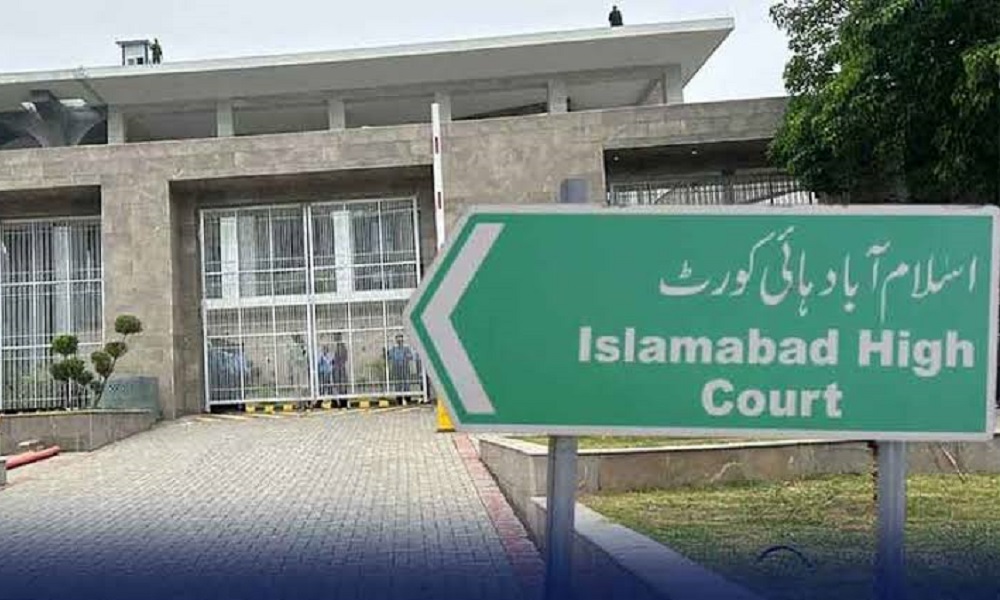
The case of 87 Afghan students seeking extensions of their study visas has reached the Islamabad High Court, with the students also asking for protection from arrest, detention and deportation, Pakistan’s Dawn newspaper reported.
According to Pakistani journalist Tahir Khan, the students have petitioned the court to order the government to extend their visas and prevent law-enforcement agencies from harassing, arresting, detaining or deporting them solely because their previous study visas have expired.
During Friday’s hearing, lawyer Aimal Khan Mandokhel told the court that Pakistan’s Interior Ministry had issued study visas to the Afghan students about a year ago. However, the students say authorities have since stopped extending existing visas and issuing new ones.
The Afghan Students Union at the International Islamic University Islamabad has also said Pakistani authorities have suspended study visa extensions for Afghan students for an extended period. It added that several students have allegedly been arrested and deported in recent months.
The hearing was adjourned following an exchange between Justice Khadim Hussain Soomro and lawyer Aimal Khan Mandokhel.
The case is expected to be heard again later this month.
Latest News
Wali Khan urges Pakistan to resolve tensions with Afghanistan through diplomacy
Wali Khan called on Islamabad to pursue a serious diplomatic approach to de-escalate tensions with Afghanistan and other neighboring countries.
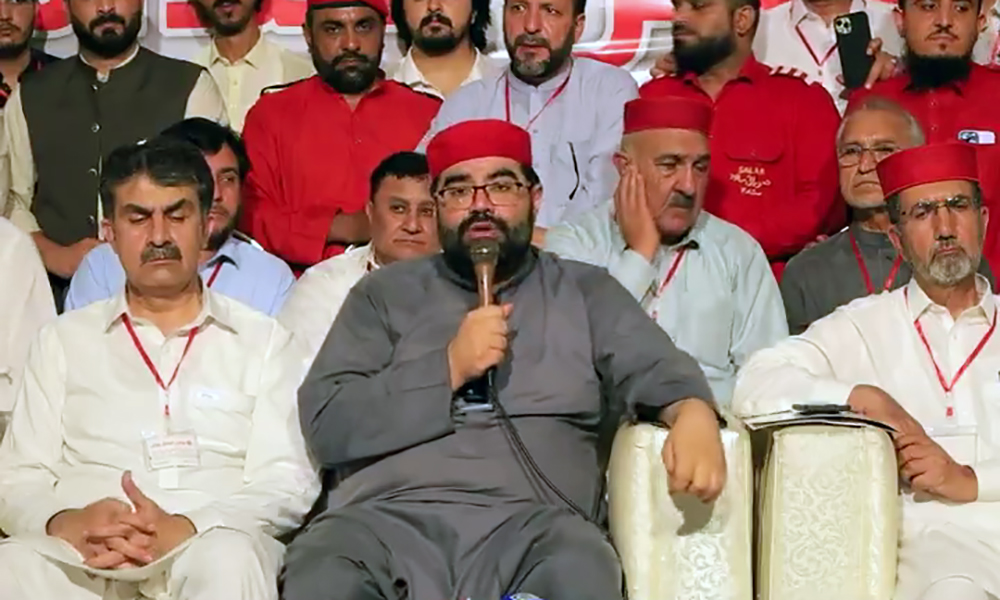
Aimal Wali Khan, the President of Awami National Party (ANP) in Khyber Pakhtunkhwa, has urged the Pakistani government to address tensions with neighboring countries, particularly Afghanistan, through serious diplomatic engagement.
Speaking to reporters in Islamabad on Thursday, Wali Khan said the ongoing tensions are causing the greatest harm to ordinary people, especially those in Khyber Pakhtunkhwa and Balochistan.
“War is not a permanent solution to any problem,” he stressed.
Wali Khan called on Islamabad to pursue a serious diplomatic approach to de-escalate tensions with Afghanistan and other neighboring countries.


Tawsia: Afghanistan’s efforts to boost production and exports disucssed

Kandahar exports 294,000 tons of fruit over past year

Case of 87 Afghan students reaches Islamabad High Court over visa delays

TAPI pipeline nears first gas sales in Afghanistan

Wali Khan urges Pakistan to resolve tensions with Afghanistan through diplomacy

Pakistan’s governance system has ‘collapsed’: Mohsin Naqvi

AFC confirms clubs for 2026/27 competitions; draw set for August 18

Only two days to go before Afghanistan and Ireland begin ODI series

Four mediators struggle to secure lasting Pakistan-Afghanistan ceasefire

Afghanistan invites Iranian investors to expand economic cooperation
Tawsia: Afghanistan’s efforts to boost production and exports disucssed

Tahawol: Fifth anniversary of America’s defeat in Afghanistan discussed

Saar: Ongoing expulsion of Afghans from Iran and Pakistan discussed

Tahawol: Calls for US engagement with the Islamic Emirate discussed

Saar: Call for dialogue to resolve issues with Afghanistan discussed
-
 Business5 days ago
Afghanistan’s trade diversification challenges Pakistan
-
 Latest News5 days ago
SCO summit to be held without confirmed Afghan invitation
-

 Sport5 days ago
Afghanistan squad announced for three-match T20I series against India
-

 Latest News5 days ago
Former US ambassador says Washington could eventually reopen embassy in Kabul
-
 Regional5 days ago
Iran says new sanctions threatened by ‘desperate’ US will fail
-
 Latest News5 days ago
Afghanistan’s polio cases rise to 19 in 2026, WHO says
-

 Latest News4 days ago
First deportation flight to Haiti arrives as US ends temporary protected status
-
 Latest News2 days ago
Pakistan open to state-to-state dialogue with Afghanistan on terrorism