
Latest News
Quake death toll rises to over 2,000 as magnitude of tragedy sets in

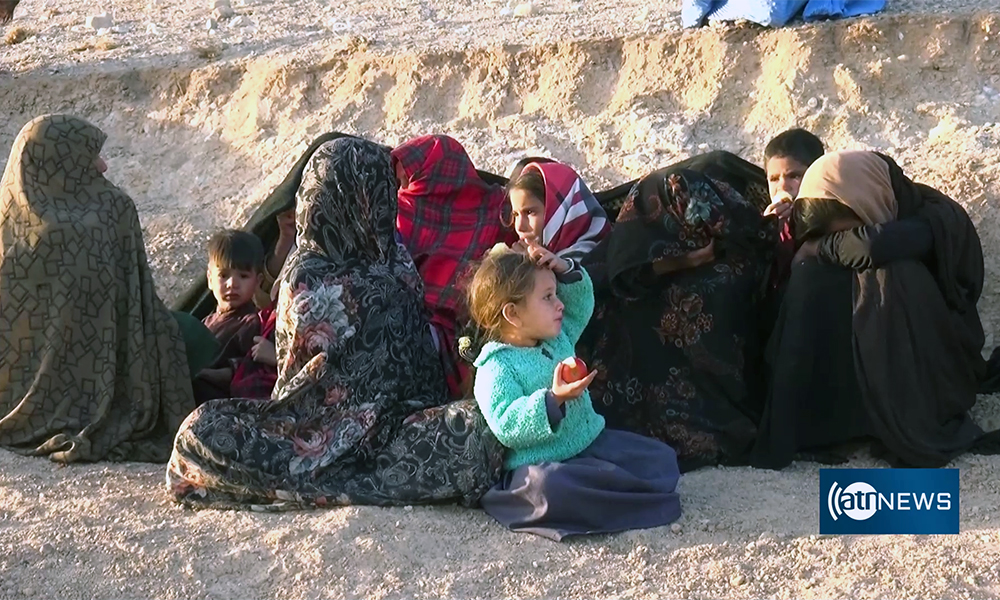
Mohammad Janan Saiq, the spokesperson for Afghanistan’s Ministry of Disaster Affairs said Sunday at around midday that so far 2,053 people have been confirmed dead in 13 villages in western Herat province after the 6.3 magnitude earthquake that hit on Saturday.
A further 1,240 people were injured, at least 1,320 houses were completely destroyed in Zinda Jan and Ghorian districts and 10 rescue teams have been sent to the worst hit areas.
Drinking water, food, medicine, clothing, and other necessary items are being sent to the victims, Saiq said.
Other official sources have however said as many as 10,000 people were injured.
Rescue teams along with local men are working to pull out the dead and injured trapped under the rubble.
“Three villages in Herat province were completely destroyed, and hundreds of people are still trapped under the debris,” Saiq said.
According to the US Geological Survey (USGS), strong earthquakes of magnitude 5.5, 5.9, and 6.2 and 6.3 jolted the western Afghanistan. Afghan provinces. The epicenter was 40 kilometers northwest of Herat city in Zinda Jan district.
On Sunday, people were using their bare hands to dig out the dead and injured. One video, shared online, shows people freeing a baby from a collapsed building. A hand is seen cradling the baby’s torso as rescuers ease the child out of the ground. Rescuers said it was the baby’s mother.
Abdul Wahid Rayan, a spokesman at the Ministry of Information and Culture, said Sunday the death toll is higher than originally reported. Villages have been destroyed, and hundreds of civilians are buried under the debris, he said while calling for urgent help.
“Besides the 2,060 dead, 1,240 people are injured and 1,320 houses are completely destroyed,” said Rayan. At least a dozen teams have been scrambled to help with rescue efforts, including from the military and nonprofit organizations like the Red Crescent.
The United Nations migration agency has deployed four ambulances with doctors and psychosocial support counselors to the regional hospital. At least three mobile health teams are on their way to the Zenda Jan district, which is one of the worst affected areas.
Doctors Without Borders set up five medical tents at Herat Regional Hospital to accommodate up to 80 patients. Authorities have treated more than 300 patients, according to the agency.
Irfanullah Sharafzai, a spokesman for the Afghan Red Crescent Society, said seven teams are busy with rescue efforts while other teams are arriving from eight nearby provinces.
“A temporary camp has been set up for people who have lost their houses and need shelter for now,” Sharafzai said. “Whatever is in our capacity we will do for our poor and needy people at this difficult time.”
Neighboring Pakistan said it was deeply saddened by the earthquake. “We are in contact with the Afghan authorities to get a first-hand assessment of the urgent needs of those affected by the earthquake,” said the Foreign Affairs Ministry. “Pakistan will extend all possible support to the recovery effort.”

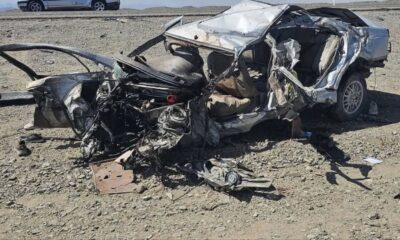


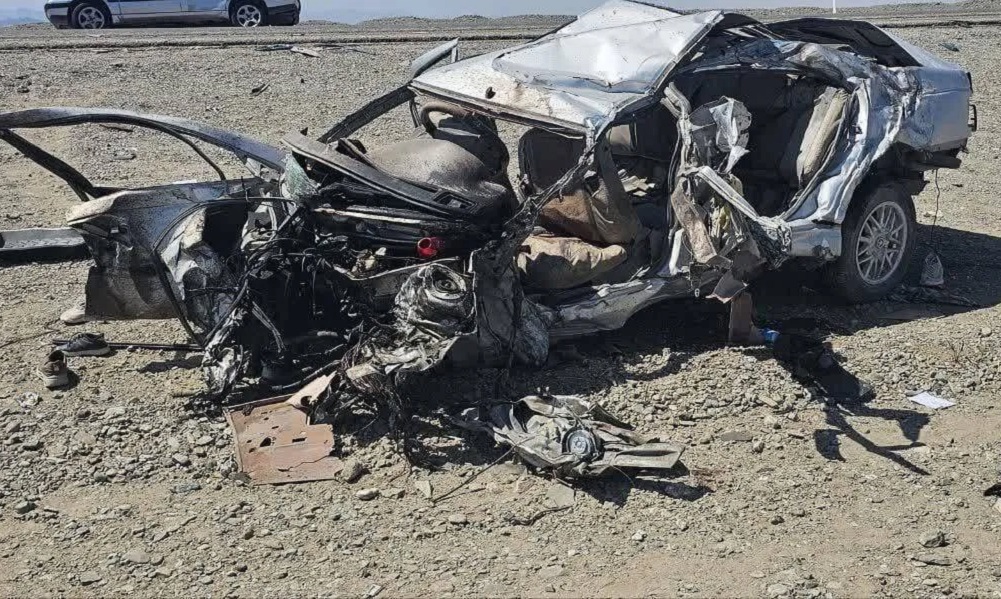
Seven Afghan migrants have been killed after a vehicle carrying Afghan migrants collided with a fuel-carrying vehicle in Iran’s Sistan and Baluchestan province.
According to the human rights organization HalVash, the accident occurred on Friday in the Sarbaz area of Sistan and Baluchestan.
Siyavash Mohbi, the head of Iran’s traffic police in Sistan and Baluchestan, said the Afghan nationals had entered Iran illegally.
He added that nine other people were injured in the incident.
Mohbi attributed the accident to the negligence of the driver of the vehicle carrying the migrants.
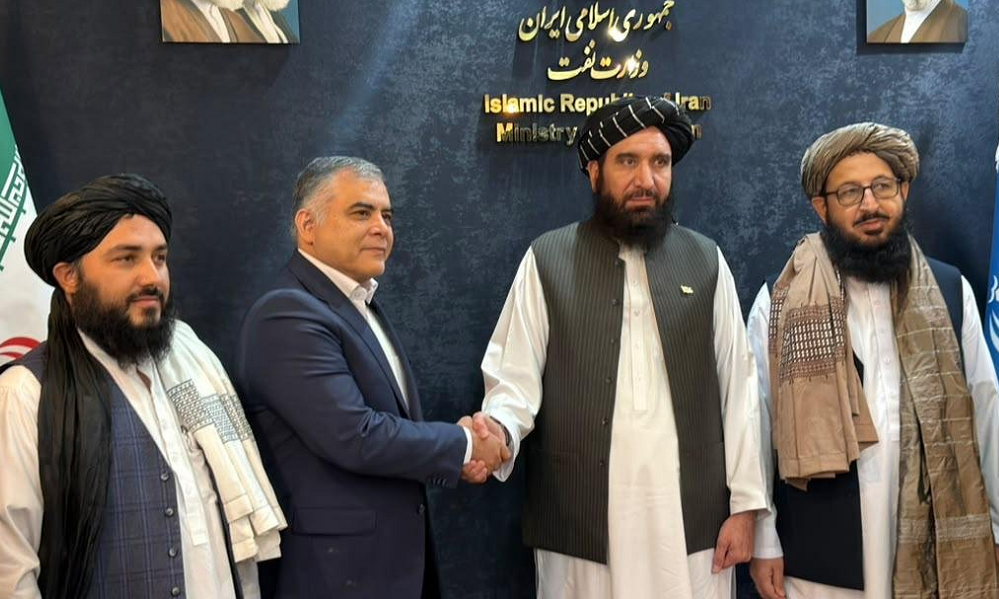
Ahmad Jan Bilal, General Director of State-Owned Corporations, met with Iran’s Oil Minister Mohsen Paknejad during a visit to Iran to discuss expanding cooperation in the oil and gas sector.
Bilal, accompanied by Mohammad Nasir Rahimi, chief executive of the Afghan state-owned Oil and Gas Corporation, held talks with the Iranian minister on supplying Afghanistan with its oil and gas needs, technical and vocational training, and joint cooperation in oil and gas exploration.
Bilal and his delegation also visited the Iranian Oil Ministry’s research center and oil refineries in Tehran, where they reviewed the facilities’ technical and professional activities and capabilities.
The Iranian side expressed readiness for comprehensive cooperation, necessary coordination and implementation of joint projects in the areas discussed.
At the end of the meeting, both sides introduced joint technical teams tasked with coordinating and following up on the necessary measures to implement the agreed areas of cooperation.


Asian Games open in Japan as Afghanistan sends 34 athletes

Seven Afghan migrants killed in traffic accident in Iran’s Sistan and Baluchestan

OIC to hold Afghanistan Contact Group meeting on sidelines of UN General Assembly

Flames, smoke seen near Riyadh airport; Houthis claim attacks on Saudi capital

Tahawol: Kabul’s warning over any threat from Pakistan discussed

Four mediators struggle to secure lasting Pakistan-Afghanistan ceasefire

Syria and Saudi Arabia condemn Kabul bombing, express solidarity with Afghanistan

Afghanistan’s trade diversification challenges Pakistan

Saudi energy group signs major Afghanistan deals covering gas exploration and pipeline plans

ATN secures exclusive rights to broadcast T20I series in India across Afghanistan
Tahawol: Kabul’s warning over any threat from Pakistan discussed

Debate on Afghanistan and New Investment Opportunities

Tahawol: Reasons behind Qatari, Turkish security officials’ Kabul visit discussed

Saar: Outcome of UN Security Council meeting on Afghanistan discussed

Tahawol: Afghanistan’s readiness for US relations discussed
-
 Latest News4 days ago
UN warns of mounting humanitarian and human rights pressures in Afghanistan
-

 Regional4 days ago
Saudi Arabia calls alleged Mecca attack a ‘red line’ as Houthis deny involvement
-
 Latest News5 days ago
Petition filed in Islamabad High Court against PMDC directive affecting Afghan students
-
 Latest News4 days ago
Five Years On: IEA touts economic growth despite international isolation
-

 Sport4 days ago
India take 2-0 lead in 3-match series against Afghanistan
-
 Sport5 days ago
Nabi reaches 2,500 T20I runs
-
 Latest News5 days ago
At least 17 Afghan migrants reportedly die of thirst near Iran border
-

 Latest News3 days ago
Five years out of school: Amnesty raises alarm over Afghan girls’ education