
Latest News
Former UNAMA chief gives frank opinion on current crisis

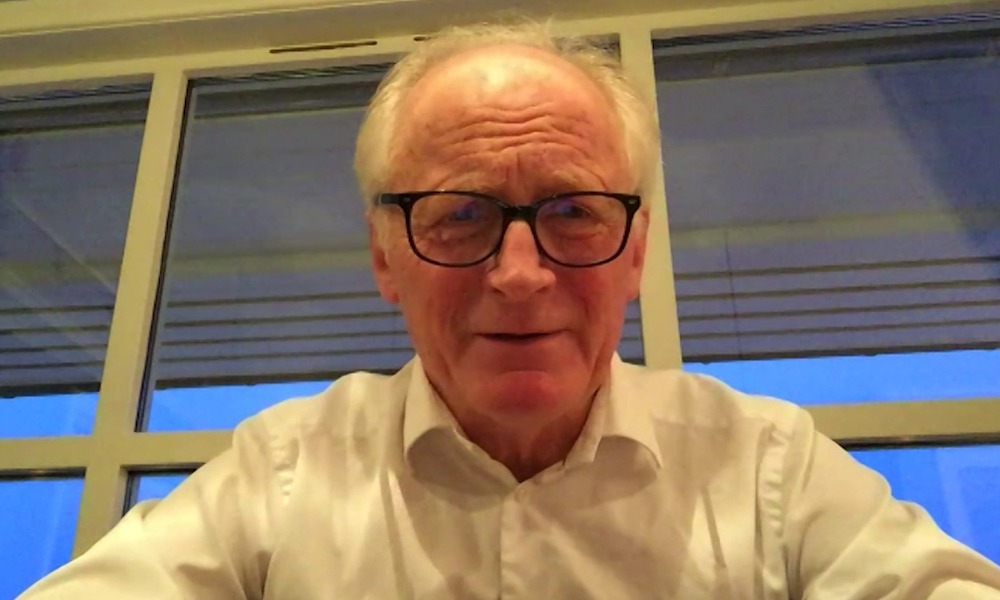
Kai Eide, former head of UNAMA has pointed a finger at Afghanistan’s leaders and said there is little unity among them and that hostile statements made could undermine the peace process.
Referring specifically to the first vice president, Eide said: “I see Amrullah Saleh, the vice president, constantly (making) what I would call rather poisonous statements.
“Yes we need a reduction in the level of violence, but we also need a reduction in the level of polemics that are being thrown out there,” he said adding that this affects “the atmosphere in a bad way”.
In an exclusive interview with Ariana News, Eide said he was shocked at the lack of preparation for peace talks on the part of the Afghan government.
He said discussions had been held for months, ahead of the launch of negotiations in Doha, but that government had been wholly underprepared for the talks.
One example he cited was that members of the High Council for National Reconciliation were only appointed in the lead up to the start of the peace talks. He said the lack of preparedness was “shocking” to him.
He also blasted government and said there was no unity among its leaders and that consensus is needed among Afghan politicians adding that
He said the insufficient preparations for peace talks was “shocking” to him even though officials have had a long time to get the structure right.
He questioned the reason for this and asked if this was “foot dragging or what is the behind this. Certainly there is controversy among the government leaders.”
He also questioned why a technical team for the peace talks had only recently been established and pointed out that modalities and procedures are difficult topics to discuss and decide on and said these can not be discussed just days before negotiations resume.
Clearly frustrated over the speed at which things have been done he said: “Get a structure in place!.”
Regarding the second round of talks, he said he is “worried” that the republic’s team is not ready but also stated that he is not sure if the Taliban team really knows what they want from this round of negotiations.
He said to date the Taliban has really only focused on discussions of a military nature opposed to talks which are centered on civilian and political-related topics.
Asked about the Taliban and who they are, Eide said he thinks they have changed but whether they have changed enough, only time will tell.
However, he said he did not think they can rule Afghanistan again? “No I don’t think so”. Do they want a different relationship with the international community? “Yes I think so,” he said.
“Do they know how to get there? I am very unsure.”
“Their experience is from negotiating military matters now over the last two years and their experience negotiating civilian issues, political issues is very minimal.”
He said he often asks himself whether the Taliban knows themselves where they are heading and what their red lines are.
“Sometimes I hear very combative statements from them regarding issues of key importance.”
On incoming US president Joe-Biden he said he does not think the incoming president will reverse outgoing President Donald Trump’s decision to withdraw troops
But he said he had expected spoilers to come out after the US and Taliban signed their agreement in February last year.
However, what was of serious concern to him was the high levels of violence.
Blunt and to the point he implied that circles within Kabul who do not want the peace talks to progress could be using the high levels of violence as an excuse “to say look the Taliban again. They don’t want to admit. They hiding their face. They really don’t want peace.”
“But I am also worried about the level of violence,” he said implying that if the Taliban, as they claim, are not behind the targeted killings, they “could have reassured the government and the international community” that they would reduce violence “and do it in a way that is visible.
He said violence “is highly counterproductive” and “I wish that would stop immediately”
He also said a ceasefire, although necessary, is “unrealistic at this stage” but what is realistic is that there needs to be a significant reduction of violence – as seen in other conflicts in the past.
Eide stated there is a lack of unity within the Kabul government – which is “frustrating”, especially in light of two “so-called presidents” having taken oath last year which was bad for the Afghanistan democracy.
This was in reference to last year’s election standoff between Ghani and his then CEO Abdullah Abdullah, who is now the Chairman of the High Council for National Reconciliation (HCNR).
He said this was testimony to Afghan leaders not being united – specially after having two election candidates each declare themselves winners and hold their own inauguration ceremonies..
According to Eide, this fiasco not only caused a lot of time to be lost but it also sent out a disappointing message around the world – with the international community asking why could the country’s leaders not unite.
“What I am afraid of is that disagreement is still underlying and hampers the efficiency of the government.
“When you have claims all the time that the agreement is not respected etc; you see Dr Abdullah doing his thing, saying his thing; you see president Ghani saying sometimes other things, and vice president Saleh certainly on a more hostile note whenever he expresses his view.”
“If you want to succeed then you have to be united. And you have to demonstrate a united front,” he said.
Anything else makes you be seen as weak and you cannot afford to be weak in times like this, he said.
On US agreement with the Taliban, Eide said Trump’s plan “to end the endless wars” including the Afghan conflict was not well thought out and that the decision to withdraw troops was based on his election campaign promises to end wars the US is involved in.
“I think the question of withdrawal of American forces and international forces was only a matter of time. It would not have lasted much longer under the circumstances.
But he stressed that there was sometimes “no compromise” even though Afghanistan was a democracy.
Eide said it was not possible to have half a democracy and the system as it is needed to be accepted.
In line with this he said the discussions on what type of political system will be established will “be a great challenge” . He also pointed out that another question was around the rights and freedoms of the individual Afghan, including Afghan women and girls.
He said specifically with rights, for women and children and the media, it was critical that this was at 100 percent. He said one can’t go with 50 percent of rights – and that there was no compromise on this.
He said he did not see how a democratic system and peoples’ rights could be negotiated and that it was clear cut – you either “accept them or you don’t accept them”.
But going back to violence, he said it was critical to get the levels of violence down so as to create a calmer atmosphere so negotiators can sit and discuss issues without being distracted.
He also pointed out that the recent calls by officials and Ghani to hold the talks in Afghanistan was not necessary. He stated that it was normal for peace talks to be held in a third country.
He said by raising these types of issues only distracts from the “central issues that are confronting you at the moment.
On the comments by Saleh, the vice president’s office told Ariana News that the first VP has constantly emphasized the need for a reduction in violence and “Saleh has put all of his efforts for maintaining peace in the country.”





The Ministry of Foreign Affairs of the Islamic Emirate of Afghanistan announced on Tuesday the release of American citizen Dennis Coyle from prison.
According to the ministry, Coyle’s mother had written to the leader of the Islamic Emirate demanding amnesty and the release of her son on the occasion of Eid. The Supreme Court considered time served sufficient and decided to release him.
The Ministry of Foreign Affairs stated that this action was carried out on the basis of humanitarianism and good faith, and it believes that such measures can strengthen trust between countries. The ministry also expressed hope that both countries, in the future, can find solutions to remaining issues through mutual understanding and constructive dialogue.
The Islamic Emirate also expressed appreciation for the cooperation of the United Arab Emirates in this matter.
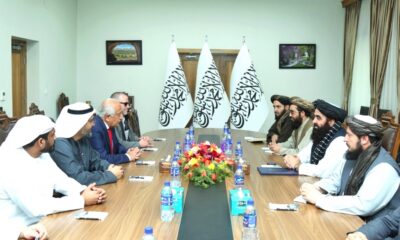
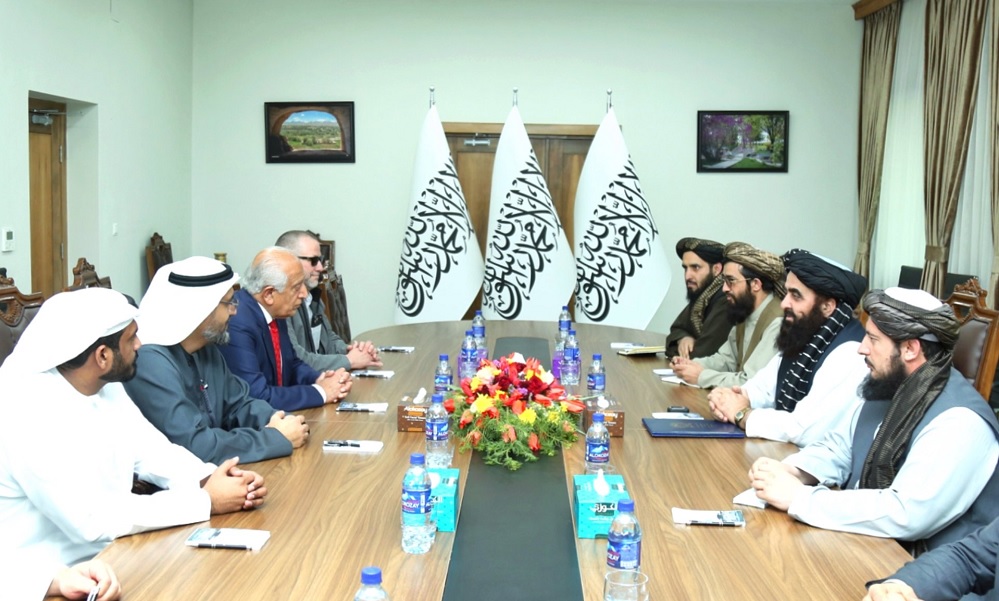
Separately, for Coyle’s release, an American delegation, including Zalmay Khalilzad, former U.S. Special Representative for Afghanistan, met on Tuesday with Amir Khan Muttaqi, the Foreign Minister of the Islamic Emirate.
The meeting was also attended by Saif Mohammed Al-Ketbi, Ambassador of the UAE in Kabul, and a member of the prisoner’s family.
According to the Ministry of Foreign Affairs, Muttaqi stated that the Islamic Emirate has not detained any citizen of any country to achieve political objectives; rather, detentions were the result of legal violations, and individuals were released after completing judicial procedures.
At the meeting, Khalilzad praised the action of the Islamic Emirate and emphasized the importance of continuing discussions on all issues between the two countries, expressing hope for further progress in the future.
Muttaqi also stressed that Kabul and the UAE should provide standard consular services to their citizens, and that the Afghan government is fully prepared in this regard.
He thanked Sheikh Mohamed bin Zayed Al Nahyan, President of the UAE, for their constructive role in facilitating the release of the prisoner and referred to the UAE as a close friend of Afghanistan.
Earlier, Muttaqi had also praised the role of the State of Qatar in facilitating information exchange between the Islamic Emirate and the prisoner’s family.
Additionally, the UAE ambassador expressed his country’s readiness to play a role in humanitarian institutions and called such developments beneficial for everyone.

The United Kingdom has announced an additional £3 million (AFN 257 million) in humanitarian assistance to Afghanistan, aimed at supporting people affected by natural disasters and other shocks.
Richard Lindsay, in a post on X, said the funding will be used to provide essential nutrition supplies and related support to vulnerable populations.
The new allocation brings the UK’s total bilateral assistance to Afghanistan for the current financial year to £154 million (AFN 13.18 billion).


Tahawol: Escalating threats between Iran-US discussed

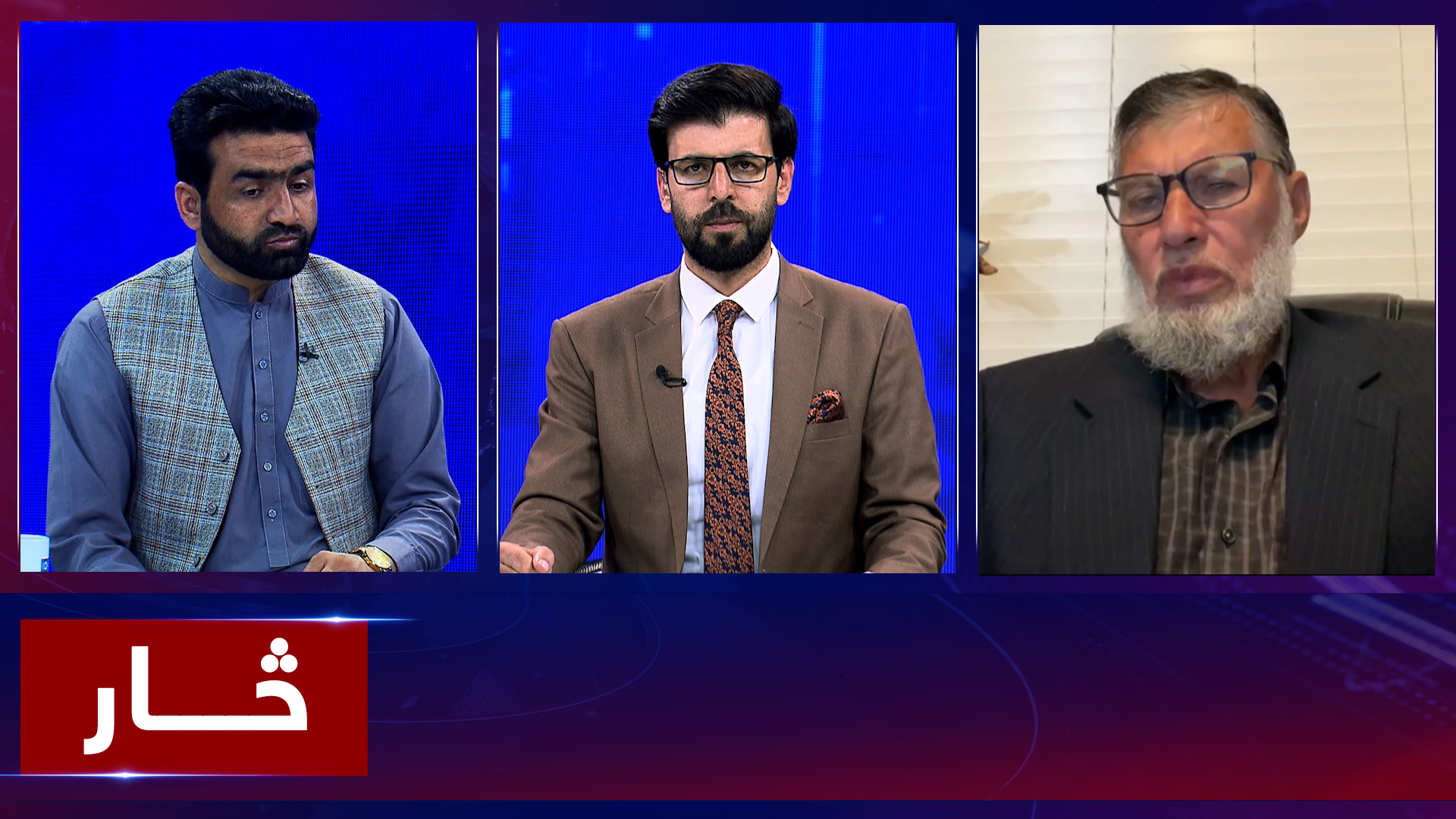
Saar: Discussion on criticism of Pakistan’s policies

Islamic Emirate releases American prisoner Dennis Coyle

UK announces additional £3 million in aid for vulnerable people in Afghanistan

Around 2.3 million tourists visited Afghanistan’s recreational areas during Eid: Ghufran

Pakistani military jet downed in Afghanistan’s Jalalabad, pilot captured alive

Afghan Air Force conducts airstrikes in Islamabad, other cities

Prominent Muslim scholar issues fatwa calling for Afghanistan-Pakistan ceasefire

Afghan air force strikes key Pakistani military installations in retaliatory operation

IEA: Special circle in Pakistan has launched mission to destabilize region
Tahawol: Escalating threats between Iran-US discussed

Tahawol: Possibility of US ground forces entering Iran war discussed

Saar: Using US prisoners as political pressure

Tahawol: Pakistan’s efforts to destabilise Afghanistan

Saar: Decline in international assistance to Afghanistan
-
 Sport4 days ago
Afghanistan national buzkashi falls short in Kokpar World Championship semifinals
-
 Sport3 days ago
Ireland to host Afghanistan for ODI series in August
-
 Latest News2 days ago
Deadly violence likely without dialogue between Afghanistan and Pakistan: ICG
-
 Latest News4 days ago
Mojtaba Khamenei calls for improved Afghanistan–Pakistan relations, offers help
-
 Sport5 days ago
FIFA sanctions Israeli Football Association over discrimination violations
-
 Latest News4 days ago
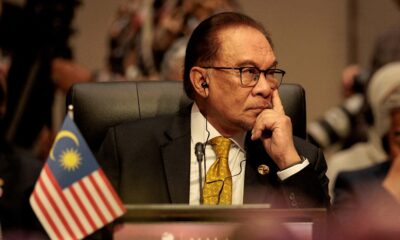
Malaysian PM welcomes temporary Afghanistan–Pakistan truce, urges lasting peace
-
 Latest News1 day ago
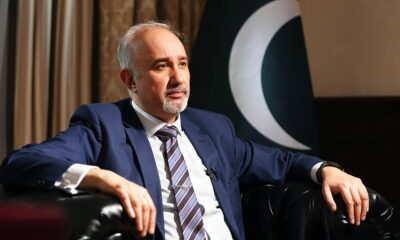
Pakistan seeks Russian mediation to resolve Afghanistan tensions
-
 Latest News5 days ago
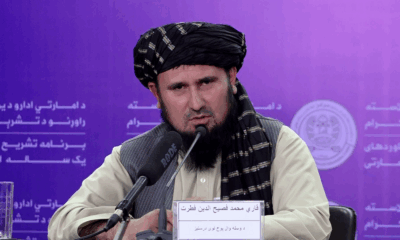
IEA defense ministry accuses Pakistan of ceasefire violations