
Latest News
French envoy says Taliban will ‘never have total control of the people’

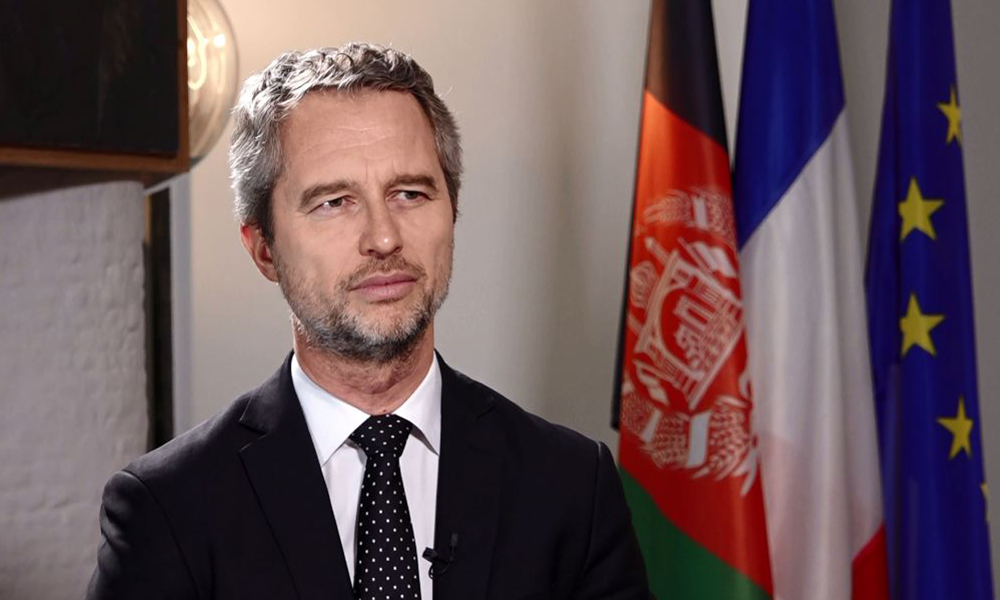
David Martinon, the French Ambassador to Kabul said this week that France is very disappointed in the slow progress around the peace talks but that the Afghan Republic has made huge concessions while the Taliban has not done the same.
In an exclusive interview with Ariana News, he said: “We felt a very strong willingness from the republican side to try and find common ground. We have seen that the republic has made huge concessions, we are still expecting the concessions from the Talib side. The Republic agreed on the demand of the US to release 50,000 prisoners; we also made sacrifices at the time,” he said adding that some of the prisoners released were “murderers of French citizens”.
“It gives us the impression that the Taliban are just in a way faking the negotiations and buying time and that they favor of [their] military action; we were disappointed by that,” he said.
“We called the Taliban to stop their military offensives and to stop their violations of human rights, especially women’s rights; whatever they believe that they can achieve but force, they will never have a total control of the Afghan people like that,” he said adding that this is why France believes there is a need for a political settlement.
He said everything that the Taliban has been doing over the past three months points to the group wanting to seize power by force.
On this point, he said “we call the Taliban to stop their military offensive,” to stop everything they are doing in the areas they control, “the looting, the killing of civilians, the repression of women’s rights; everything we get reports on is incredibly concerning,” he said.
Martinon noted that the Taliban should “think twice about what they are trying to achieve in Afghanistan” and that they should start to consider what would be good for their country and for the people.
He questioned whether the looting, destroying critical infrastructure like power lines and power grids, telecommunications networks, and roads and bridges was really in the interests of the Afghan people.
“I have my doubts and I guess everyone in the country has doubts about that,” he said.
Martinon pointed out that the Afghan people have spent the past 20 years rebuilding the country and that “if the Taliban believe that the population in Afghanistan is not attached to them (the achievements made in this time) they will be heavily surprised.”
He said “should the Taliban decide to try and destroy this heritage this legacy, this democratic legacy, should they keep on taking their distance with the values of the republic, again, the right to vote, democratic gains, freedom of expression, freedom of the press, equality for all and especially equality between men and women, well then why would we keep on supporting the country.”
He said the French leaders would not support a regime that does not respect human rights.
“I’m talking about a scenario that we should prevent, this is not the future we want for Afghanistan, we want the preservation and the strengthening of the Islamic Republic of Afghanistan.
However, France’s top envoy to Afghanistan spoke about the horrors that are being committed by the Taliban around the country.
Clearly disturbed by images and videos sent to him, he said: “I have never been I have never seen more disturbing images than the ones I keep on receiving.”
“I see videos of beheadings, you know, Afghan citizens being beheaded like goats. I saw images of a young man being stoned to death. I see images of a young man whose hand is being cut.
“I mean is that what they want for the future of their country? Really do they believe that they will be, they will gain international legitimacy by doing so?”
“This is unbearable; these are atrocities; these are videos you can’t even watch,” he said.
He pointed out however that Afghanistan should not always blame their neighboring countries for their “intrusions and interferences” and that in the event of strong national unity within Afghanistan “no neighboring country would dare to intrude into domestic policies in Afghanistan
But he said that given the current situation, all the neighboring countries have interests in common “and this is why they should step up; they should get together and try to express to the two parties that these interests need to meet some responses from them”.
He said that it is obvious that China, Iran, Tajikistan, Uzbekistan, Turkmenistan are extremely concerned about the frontier they have
with Afghanistan for several reasons.
We have to listen to what their leaders say, he said adding “they are concerned of the terrorist threats; they are concerned about migrations; there are concerns about narco-trafficking; all these concerns should in a way lead them to have a more constructive dialogue with them and to try to engage in probably in a stronger way with the two parties in conflict in Afghanistan, and probably with mostly with the Taliban,” he said.
He also stated that Afghanistan and Pakistan need each other and that their historical ties are very strong and one example is that strong trade links between the two countries.
“But if you want to establish stability and to build prosperity in the region it is obvious that both countries have to understand what can be the long-term economic interest and obviously they should work even more together.”
He said however that he did not think there was any country in the region that “welcome the establishment of a Taliban regime in Afghanistan”.
“The Taliban have to understand that any form of the long-lasting disorder plus violations of human rights and no respect for democracy, the democratic legacy of the republic, can only have devastating consequences on the neighbors and the neighbors won’t accept that because they won’t be able to handle you know waves of Afghan migrants trying to escape that strange regime (Taliban) from another century,” he said.
Martinon said that everything the Taliban is doing is being scrutinized by the neighboring countries and even by Iran, and by China – who is also concerned about their frontier.




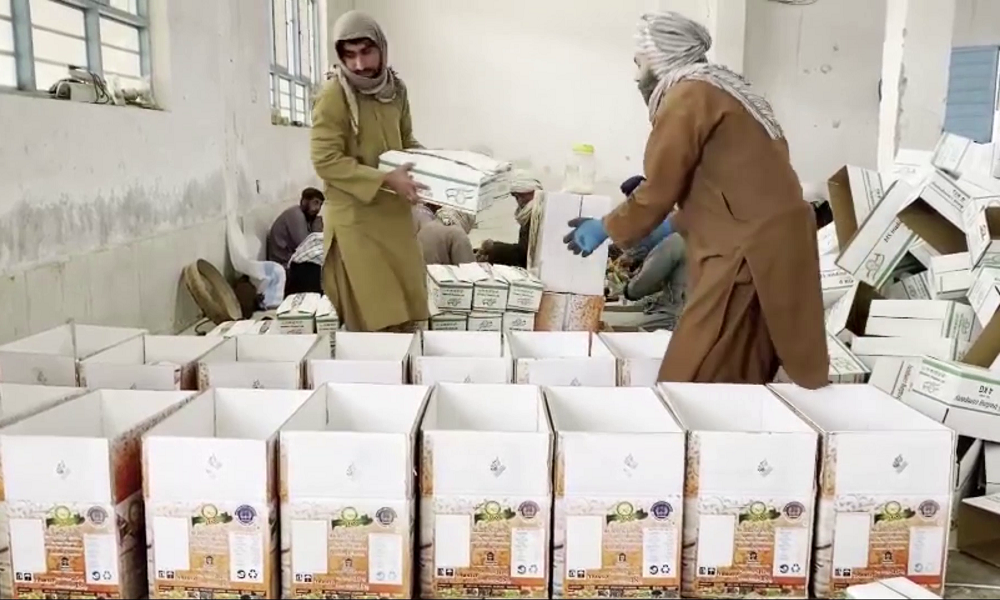
Officials from the Kandahar Chamber of Commerce and Investment say that 294,000 tons of fresh and dried fruit have been exported from the province to foreign countries over the past year.
According to them, the total value of these exports amounts to $519 million.
Abdulbaqi Bina, Deputy Head of the Kandahar Chamber of Commerce and Investment, says the products were exported to India, Pakistan, the United Arab Emirates, the United States, Canada and several other countries.
Meanwhile, fresh and dried fruit traders are calling on the government to provide alternative transit routes, new markets, and greater facilitation for obtaining visas and transportation for the export of these products.
This comes as nearly 59,000 tons of fresh and dried fruit were exported from Kandahar to foreign countries
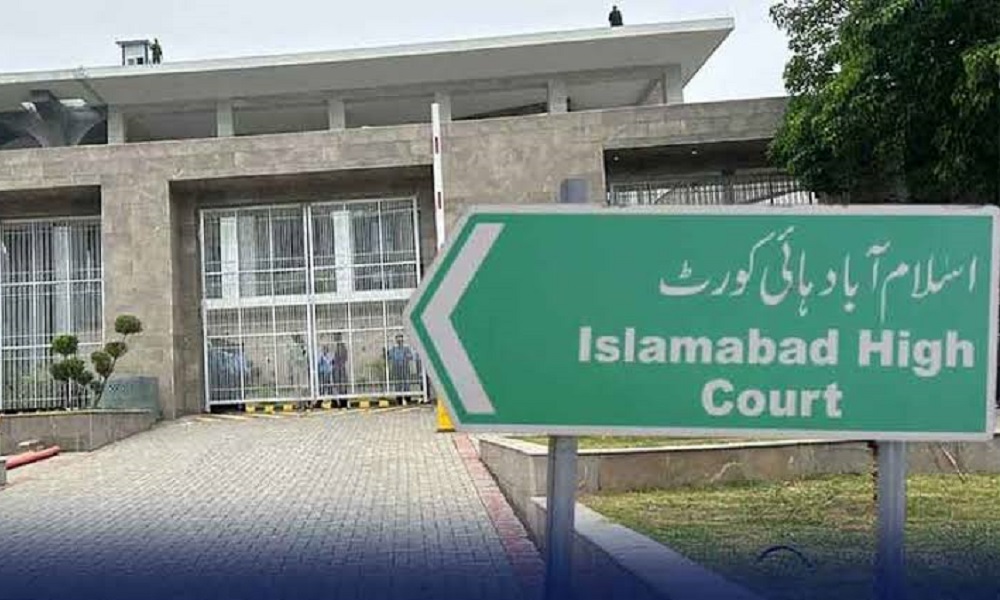
The case of 87 Afghan students seeking extensions of their study visas has reached the Islamabad High Court, with the students also asking for protection from arrest, detention and deportation, Pakistan’s Dawn newspaper reported.
According to Pakistani journalist Tahir Khan, the students have petitioned the court to order the government to extend their visas and prevent law-enforcement agencies from harassing, arresting, detaining or deporting them solely because their previous study visas have expired.
During Friday’s hearing, lawyer Aimal Khan Mandokhel told the court that Pakistan’s Interior Ministry had issued study visas to the Afghan students about a year ago. However, the students say authorities have since stopped extending existing visas and issuing new ones.
The Afghan Students Union at the International Islamic University Islamabad has also said Pakistani authorities have suspended study visa extensions for Afghan students for an extended period. It added that several students have allegedly been arrested and deported in recent months.
The hearing was adjourned following an exchange between Justice Khadim Hussain Soomro and lawyer Aimal Khan Mandokhel.
The case is expected to be heard again later this month.
Latest News
Wali Khan urges Pakistan to resolve tensions with Afghanistan through diplomacy
Wali Khan called on Islamabad to pursue a serious diplomatic approach to de-escalate tensions with Afghanistan and other neighboring countries.
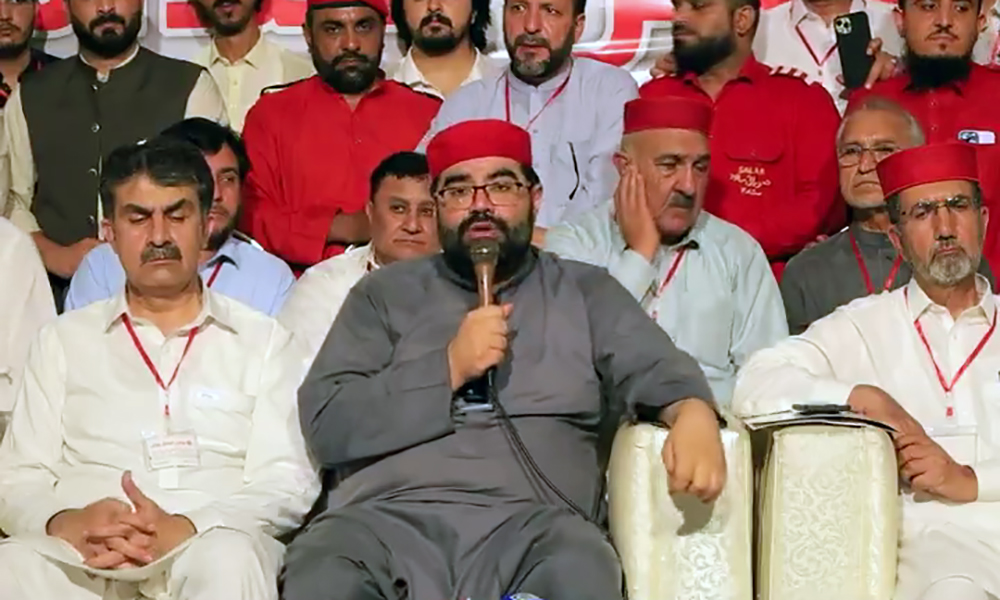
Aimal Wali Khan, the President of Awami National Party (ANP) in Khyber Pakhtunkhwa, has urged the Pakistani government to address tensions with neighboring countries, particularly Afghanistan, through serious diplomatic engagement.
Speaking to reporters in Islamabad on Thursday, Wali Khan said the ongoing tensions are causing the greatest harm to ordinary people, especially those in Khyber Pakhtunkhwa and Balochistan.
“War is not a permanent solution to any problem,” he stressed.
Wali Khan called on Islamabad to pursue a serious diplomatic approach to de-escalate tensions with Afghanistan and other neighboring countries.


Tawsia: Afghanistan’s efforts to boost production and exports disucssed

Kandahar exports 294,000 tons of fruit over past year

Case of 87 Afghan students reaches Islamabad High Court over visa delays

TAPI pipeline nears first gas sales in Afghanistan

Wali Khan urges Pakistan to resolve tensions with Afghanistan through diplomacy

Pakistan’s governance system has ‘collapsed’: Mohsin Naqvi

AFC confirms clubs for 2026/27 competitions; draw set for August 18

Only two days to go before Afghanistan and Ireland begin ODI series

Four mediators struggle to secure lasting Pakistan-Afghanistan ceasefire

Afghanistan invites Iranian investors to expand economic cooperation
Tawsia: Afghanistan’s efforts to boost production and exports disucssed

Tahawol: Fifth anniversary of America’s defeat in Afghanistan discussed

Saar: Ongoing expulsion of Afghans from Iran and Pakistan discussed

Tahawol: Calls for US engagement with the Islamic Emirate discussed

Saar: Call for dialogue to resolve issues with Afghanistan discussed
-
 Business5 days ago
Afghanistan’s trade diversification challenges Pakistan
-
 Latest News4 days ago
SCO summit to be held without confirmed Afghan invitation
-

 Sport4 days ago
Afghanistan squad announced for three-match T20I series against India
-

 Latest News5 days ago
Former US ambassador says Washington could eventually reopen embassy in Kabul
-
 Regional5 days ago
Iran says new sanctions threatened by ‘desperate’ US will fail
-
 Latest News5 days ago
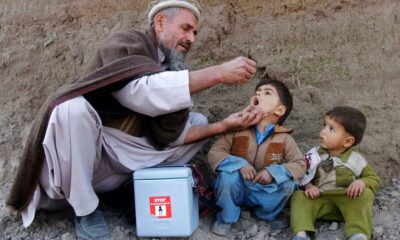
Afghanistan’s polio cases rise to 19 in 2026, WHO says
-

 Latest News4 days ago
First deportation flight to Haiti arrives as US ends temporary protected status
-
 Latest News2 days ago
Pakistan open to state-to-state dialogue with Afghanistan on terrorism