
Regional
French plan to recognise Palestinian state draws fire from Israel, US

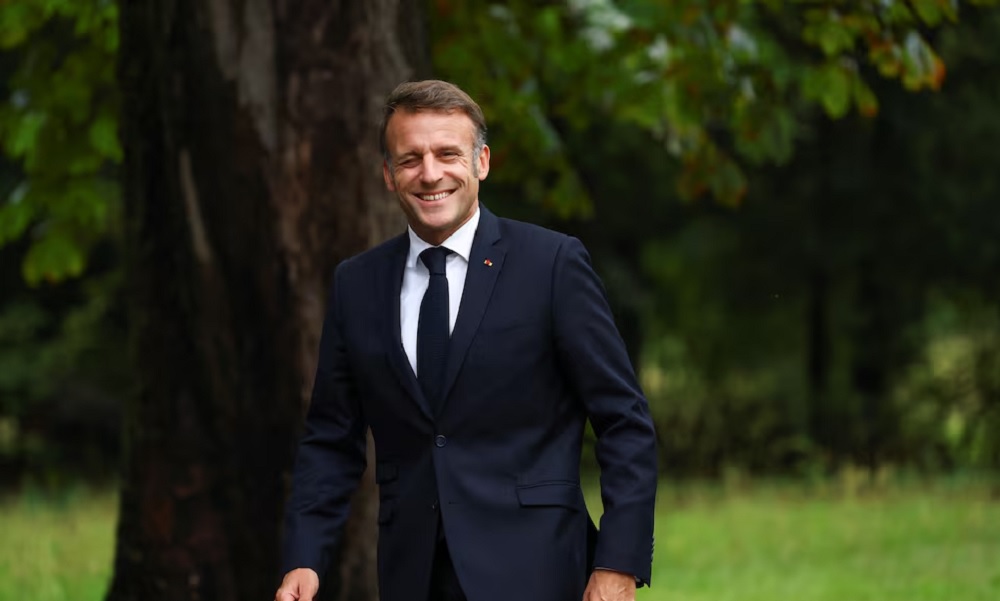
France intends to recognise a Palestinian state in September at the United Nations General Assembly, President Emmanuel Macron said on Thursday in hopes of bringing peace to the region, but the plan drew angry rebukes from Israel and the United States.
Macron, who unveiled the decision on X, published a letter sent to Palestinian Authority President Mahmoud Abbas confirming France’s intention to press ahead with Palestinian recognition and work to convincing other partners to follow suit, Reuters reported.
“True to its historic commitment to a just and lasting peace in the Middle East, I have decided that France will recognise the state of Palestine,” Macron said.
“I will make this solemn announcement at the United Nations General Assembly next September.”
Home to Europe’s largest Jewish and Muslim communities, France will become the first major Western country to recognise a Palestinian state, potentially fuelling a movement so far dominated by smaller nations generally more critical of Israel.
The news sparked anger in Israel and Washington.
Israeli Prime Minister Benjamin Netanyahu condemned the decision by one of Israel’s closest allies and a G7 member, saying such a move “rewards terror and risks creating another Iranian proxy.”
In a post on X, he added, “A Palestinian state in these conditions would be a launch pad to annihilate Israel — not to live in peace beside it.
“Let’s be clear: the Palestinians do not seek a state alongside Israel; they seek a state instead of Israel.”
Israeli Defence Minister Israel Katz described the move as “a disgrace and a surrender to terrorism,” adding that Israel would not allow the establishment of a “Palestinian entity that would harm our security, endanger our existence.”
In response, U.S. Secretary of State Marco Rubio said the United States “strongly rejects (Macron’s) plan to recognize a Palestinian state at the UN general assembly.”
In a post on X, he said, “This reckless decision only serves Hamas propaganda and sets back peace. It is a slap in the face to the victims of October 7th.”
Earlier, Canada also pressed Israel to seek peace, with Prime Minister Mark Carney condemning its “failure to prevent the rapidly deteriorating humanitarian disaster in Gaza” and reiterating support for a two-state solution.
Carney also accused Israel of violating international law over the blocking of Canadian-funded aid to civilians in the war-torn Palestinian enclave.
“Canada calls on all sides to negotiate an immediate ceasefire in good faith,” he added.
“We reiterate our calls for Hamas to immediately release all the hostages, and for the Israeli government to respect the territorial integrity of the West Bank and Gaza.”
In a diplomatic cable in June, the United States said it opposed steps to unilaterally recognise a Palestinian state, even saying it could go against U.S. foreign policy interests and draw consequences.
In June, Washington’s ambassador to Israel, Mike Huckabee, said he did not think an independent Palestinian state remained a U.S. foreign policy goal.
President Donald Trump has himself expressed doubts about a two-state solution, proposing a U.S. takeover of Gaza in February, that was condemned by rights groups, Arab states, Palestinians and the U.N. as a proposal of “ethnic cleansing”.
Macron had been leaning towards recognising a Palestinian state for months as part of a bid to keep the idea of a two-state solution alive, despite the pressure not to do so.
French officials initially weighed up the move ahead of a United Nations conference, which France and Saudi Arabia had planned to co-host in June to lay out parameters for a roadmap to a Palestinian state, while ensuring Israel’s security.
The conference was postponed under U.S. pressure and after the 12-day Israel-Iran air war began, during which the closure of regional airspace made it hard for representatives of some Arab states to attend.
It was rescheduled and downgraded to a ministerial event on July 28 and July 29, with a second event taking place with heads of state and government on the sidelines of the United Nations General Assembly in September.
CREATING MOMENTUM
The decision to make the announcement ahead of next week’s conference aimed to give the French team at the United Nations a framework to work with other countries that are also considering recognising a Palestinian state or have misgivings in doing so.
Diplomats say Macron has faced resistance from allies such as Britain and Canada over his push for the recognition of a Palestinian state. About 40 foreign ministers will be in New York next week.
Israeli officials have spent months lobbying to prevent what some have called “a nuclear bomb” for bilateral ties.
Sources familiar with the matter say Israel’s warnings to France have ranged from scaling back intelligence sharing to complicating Paris’ regional initiatives – even hinting at possible annexation of parts of the West Bank.
Israel has been waging a devastating war in Gaza since the Palestinian militant group Hamas’ deadly attack on Israel in October 2023 and says recognising a Palestinian state now would be equivalent to rewarding Hamas.
Thanking France, the Palestinian Authority’s Vice President Hussein Al Sheikh said on X that Macron’s decision reflected “France’s commitment to international law and its support for the Palestinian people’s rights to self-determination and the establishment of our independent state.”





Regional
US strikes Iran in response to attack on cargo ship in Strait of Hormuz
The U.S. did not immediately respond to Iran’s report of striking American targets, a tactic that has sought to undermine U.S. allies in the region during the conflict.
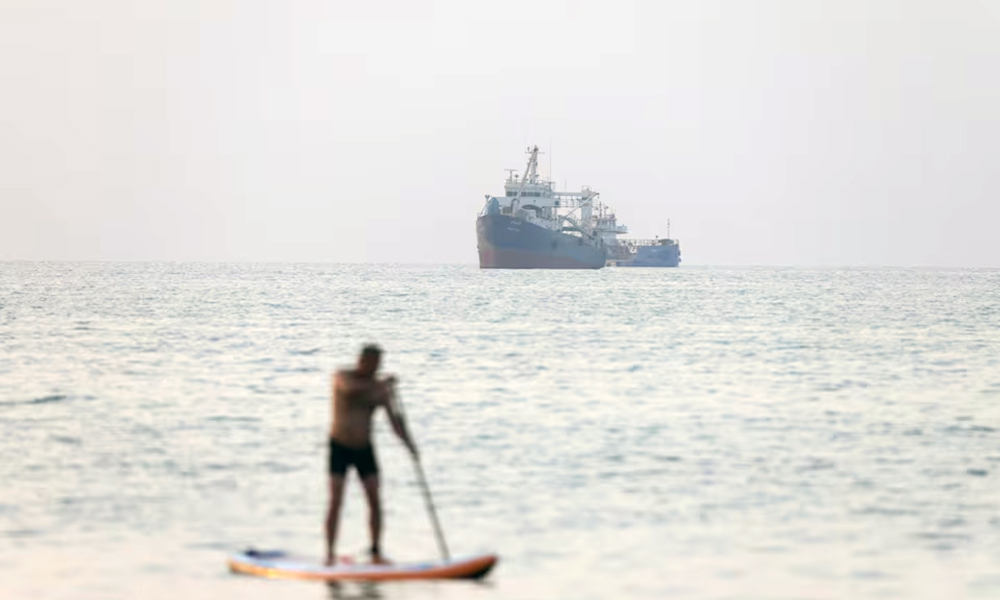
The U.S. military attacked Iran on Friday in response to an Iranian drone strike on a cargo ship in the Strait of Hormuz, with each country accusing the other of violating terms of a ceasefire agreed on last week, Reuters reported.
U.S. Central Command said aircraft struck missile and drone storage locations and coastal radar sites, later publishing a grainy black-and-white video of an explosion labeled “unclassified.” A U.S. official reported the operation had concluded.
Iran said a projectile struck the area around a pier in Sirik in southern Iran, and that Iranian naval forces responded by striking U.S. military targets in the region. Tehran did not provide details about what may have been hit.
Elsewhere, however, there were signs of progress in ending the four-month-old conflict, as Israel and Lebanon signed an agreement to end the fighting between Israel and Iran-backed Hezbollah. Both sides framed the deal as an initial step that calls for Hezbollah to disarm and Israel to withdraw troops from Lebanon, but it was not clear how it would be enforced. Hezbollah said it would not cooperate.
Tehran has said it would control the Strait of Hormuz and warned Gulf states not to side with Washington after Thursday’s attack on a cargo ship traveling near Oman’s coast. President Donald Trump blamed the attack on Iran and said it violated last week’s interim agreement.
“The unwarranted aggression against commercial shipping by Iranian forces clearly violated the ceasefire,” U.S. Central Command said in its statement announcing strikes, which it called “a powerful response to yesterday’s attack on a commercial ship that was transiting the Strait of Hormuz.”
The U.S. military said it would continue to provide “safe passage coordination and support” to commercial vessels transiting the strait.
Vice President JD Vance, once seen as a skeptic on U.S. intervention in Iran but now a Trump administration point person on the conflict, said the Americans have honored the ceasefire deal, also known as a memorandum of understanding.
“Iran signed a ceasefire agreement. We have honored it. If they have disagreements about how the MOU is being applied, they can pick up the phone. But violence will be met with violence,” Vance said on X.
Iranian state media, citing an unnamed military source, reported the strike at the port of Sirik after an explosion was heard there. The source said several warning shots had been fired from Sirik toward vessels that violated Strait of Hormuz regulations about five hours earlier, adding two warning missiles had also been launched from the nearby Karpan area toward the strategic waterway, read the report.
On Saturday, Iran’s Mehr news agency cited the head of ports at eastern Hormozgan as saying that there was no damage to the port of Sirik after the attack by the U.S. The official said the port was operating normally with no damage reported to facilities and equipment.
Iran’s Revolutionary Guards said that in response its navy “struck the locations where the terrorist U.S. military is stationed in the region” and warned that any further U.S. attacks would be met with a broader response, according to the statement carried on state media.
The ceasefire agreement gives Iran control over ship traffic in the strait, the Guards said.
“However, the United States, by provoking various fronts, sought to violate this commitment, and the necessary response was given and will continue to be given. If the aggression is repeated, our response will be broader than this,” the Revolutionary Guards said.
The U.S. did not immediately respond to Iran’s report of striking American targets, a tactic that has sought to undermine U.S. allies in the region during the conflict.
Ebrahim Azizi, the head of the Iranian parliament’s national security committee, said in response to the latest strikes that Trump has failed to show a commitment to the principles of negotiation or ceasefire.
“This reckless violation of the ceasefire will, as always, lead to retreat and regret on their part,” Azizi posted on X.
Before the renewed outbreak of violence, oil prices fell about 3% on Friday, on course for steep weekly losses, in response to oil tankers exiting the Strait of Hormuz, the conduit for one-fifth of global oil and LNG supplies before the U.S. and Israel launched the war on February 28, Reuters reported.
Saudi Aramco resumed crude loadings at its Ras Tanura terminal in the Gulf, the world’s biggest oil port, after a nearly four-month halt, shipping data showed.
Fertilizer shipments through the strait have also picked up, helping to assuage concerns about a spike in global food prices.
U.S. Secretary of State Marco Rubio — wrapping up a tour of the Gulf to reassure regional allies about the interim pact — issued a joint statement with the Gulf Cooperation Council calling for “free, unconditional, and unrestricted navigation” in the strait without tolls or “attempts to assert control.”
Iran’s foreign ministry said the strait should be governed by Iran and Oman, while Ali Akbar Velayati, top adviser to Iran’s supreme leader, warned Washington’s Gulf allies their survival depended on Tehran’s tolerance.
Regional
Iran’s Pezeshkian says without missiles his country would be ‘just like Gaza’
The Iranian president stressed that Tehran’s defensive capabilities are not open to negotiation.
Regional
US and Iran conclude high-level talks in Switzerland, mediators say
The parties agreed to a mechanism to end the fighting in Lebanon and opened a communications line to help ensure safe passages for commercial ships through the contested strait, the statement said.

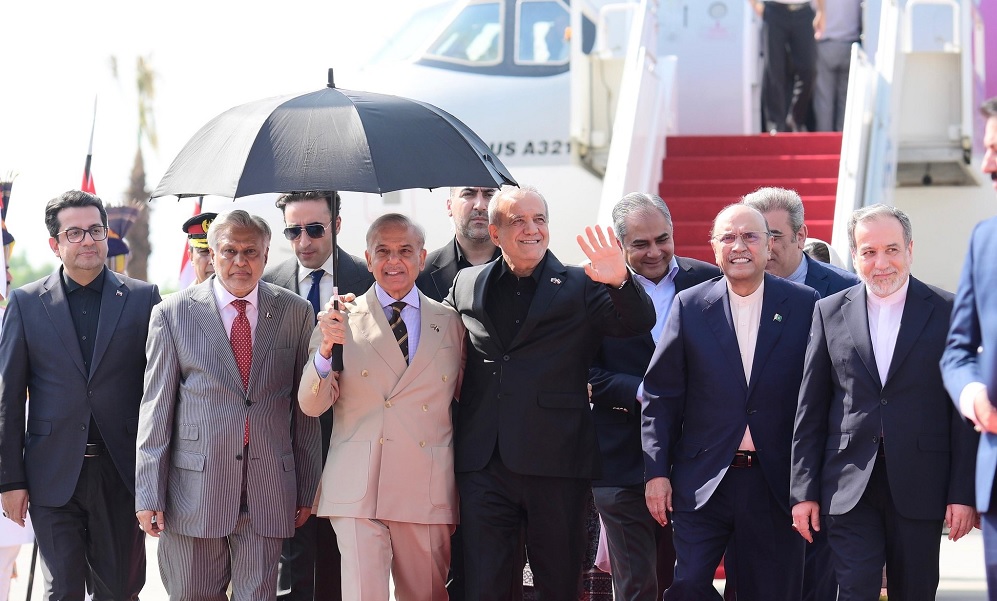
The first round of talks between high-ranking U.S. and Iranian officials in Switzerland ended Monday, mediators said, after a tense opening marked by Tehran’s announcement it had again closed the Strait of Hormuz and U.S. President Donald Trump repeating his threats to resume attacks on Iran.
A joint statement from mediating nations Qatar and Pakistan said the U.S. and Iran agreed to a roadmap toward a final deal within 60 days. Technical talks will continue for the rest of the week in the Qatari-owned Swiss mountain resort of Buergenstock, according to the statement, which was released by the Qatari foreign ministry, Reuters reported.
The parties agreed to a mechanism to end the fighting in Lebanon and opened a communications line to help ensure safe passages for commercial ships through the contested strait, the statement said.
U.S. Vice President JD Vance had opened talks with Iranian officials on Sunday under the terms of a memorandum of understanding reached last week to extend a tenuous ceasefire from April for at least another 60 days. The discussions continued until the early hours of Monday.
In a post on social media, Iranian Foreign Minister Abbas Araqchi said his country had secured waivers for oil and petrochemical exports, the release of some frozen assets and the launch of a reconstruction and development plan for Iran.
The White House had no immediate comment when asked if talks had wrapped for now.
Just before talks officially began on Sunday, Fox News reported that Trump said he told Iranian officials “you won’t have a country” if they tried to close the strait again. Trump also reiterated an earlier threat that the U.S. would take over the waterway and possibly charge a toll of its own, Fox News said.
U.S. and Iranian sources provided separate accounts of the discussions in Switzerland.
Iran’s semi-official Tasnim news agency, citing an informed source, said that after Trump’s threats became public, the Iranian delegation refused to return to the room where talks were held, though messages were still being traded via Pakistani and Qatari mediators.
According to Tasnim’s source, Iranians said that the start of negotiations on nuclear matters required the delivery of other parts of the MOU, including the release of frozen assets and U.S. waivers authorizing Iranian oil exports.
“The Iranians never left and are still here meeting and negotiating deep into the night,” a U.S. diplomat involved in the talks told Reuters. “We’ve talked about the Strait, Lebanon, nuclear issues, and details of implementing the MOU, among other topics.”
High-level discussions are expected to wrap up on Monday, with technical staff remaining to conduct further talks, according to a U.S. official.
The agreement called for reopening the Strait of Hormuz, a choke point for global energy shipments, and ending all hostilities, including in Lebanon, where Israel has continued to launch deadly strikes as Iranian ally Hezbollah fires at Israeli targets.
Iran, arguing that the U.S. had failed to meet its commitment to halt fighting in Lebanon, said on the weekend that it had again stopped maritime traffic through the strait and that Sunday’s talks would not cover substantive issues such as Iran’s nuclear programme.
At the talks in Switzerland, where U.S. and Iranian officials met in the presence of Qatari mediators, Vance played down the impact of violence in Lebanon, saying progress had been made towards ending hostilities there.
“These things are always a little bit messy,” he said.
Back in the United States, Trump threatened to resume attacks on Iran if it did not rein in its allies.
“Iran must immediately stop their highly paid PROXIES in Lebanon from causing trouble,” Trump wrote on social media, apparently referring to Hezbollah. “If they don’t, we’ll hit Iran very hard again, just like we did last week, only harder!!!”
Even as Trump was threatening Iran, Vance told reporters the U.S. president had “asked us to turn over a new leaf to transform our relationship with the people of Iran.”
A U.S. diplomat late Sunday said discussions included “clarifying some of the confusing messaging from Iran on the Strait and building deconfliction mechanisms to ensure the Strait will remain fully open.”
IRAN CITES LEBANON AS REASON TO CLOSE STRAIT
Despite the announcement of a new ceasefire in Lebanon on Friday, there has been scant sign of an end to fighting there. Iran said on Saturday that as a result, it had again shut the strait, whose closure for nearly four months caused the biggest disruption of global energy supplies in history.
U.S. officials disputed that the strait was closed, but commercially available shipping data showed an immediate impact.
Five vessels passed the strait on Sunday, a sharp drop from the 26 ships spotted a day earlier, data from analytics firm Kpler showed. The data may exclude vessels that switch off their transponders while travelling in the Gulf.
Iran’s Fars news agency cited a military source as saying on Sunday that no new permits were being issued for ships to cross until further notice.
Trump said he agreed to last week’s memorandum of understanding to avert a global economic depression from high oil prices caused by the strait’s closure. Oil prices had tumbled over the past week to levels unseen since the war started on February 28 with U.S.-Israeli attacks on Iran.
Brent crude futures rose more than $1 to $81.66 a barrel in early Monday trading, following the rocky start to the peace talks.
Sunday appeared to be the quietest day in Lebanon for some time, with no reports of major violence by nightfall, after two days of heavy Israeli strikes and fire from Hezbollah fighters on Israeli positions.
More than 1 million people have fled their homes in Lebanon since Israel invaded in March to pursue Hezbollah fighters who fired across the border in support of Tehran.
Reuters journalists in southern Lebanon on Sunday saw some of the heaviest traffic since the memorandum was signed, with residents returning to their homes. Some stood beside cars backed up on the highway and waved Hezbollah flags.


Saar: Concerns over Afghan deportations from Europe discussed

6.1-magnitude earthquake hits Afghanistan, epicenter in Badakhshan

Delawar says Afghanistan has achieved security and unity after 47 years

EU announces major funding to support Afghan small businesses

Afghan women’s situation highlighted at SCO Forum amid ongoing global debate

Norway’s Viking-inspired World Cup team photo goes viral

TAPI project advances in Afghanistan as 84kms of pipeline laid

Afghanistan’s trade with Central Asia records sharp growth

Afghanistan to play in Diamond Jubilee Tournament opener against Maldives

Gaikwad set to replace injured Kohli for Afghanistan ODI Series
Saar: Concerns over Afghan deportations from Europe discussed

Exclusive interview with Polleak Ok Serei, UNODC Representative for Afghanistan

Tahawol: Germany’s defense of engagement with IEA discussed

Saar: Rejection of security threats from Afghan soil discussed

Tahawol: Efforts to eliminate drugs across Afghanistan discussed
-

 International Sports3 days ago
Knockout picture begins to take shape at FIFA World Cup 2026
-
 Latest News4 days ago
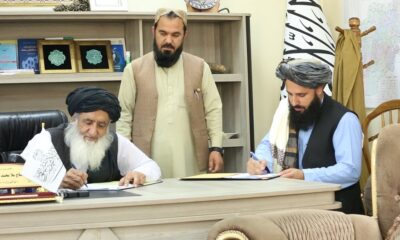
Contract signed for reconstruction of 15km section of Salang Highway
-
 Business5 days ago
Kazakhstan signs $18.8 million zinc ore supply agreement with Afghan company
-
 Latest News1 day ago
TAPI project sees rapid progress in Afghanistan
-
 Latest News3 days ago
Afghanistan’s SCO participation blocked over one member’s objection, Kabulov says
-

 Latest News5 days ago
Qatar embassy holds roundtable on Afghanistan’s relations with international community
-

 International Sports4 days ago
Messi breaks World Cup scoring record as Argentina reach knockout stage
-
 Latest News3 days ago
EU allocates 20 million euros to support returnees in Afghanistan