
Latest News
Funding cuts hamper Afghanistan’s earthquake response
Humanitarian officials warned Monday that dozens of health clinics have been forced to shut down and critical UN air support was suspended, leaving rescuers struggling to reach remote mountain villages.

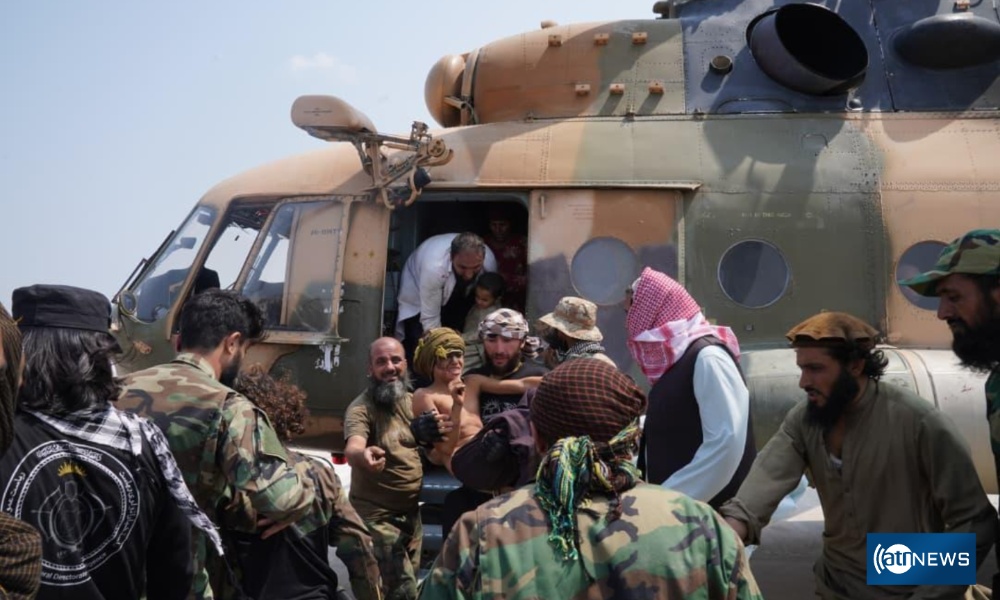
Severe funding shortfalls are obstructing relief efforts in eastern Afghanistan, where a powerful earthquake has killed at least 800 people and injured more than 2,800.
Humanitarian officials warned Monday that dozens of health clinics have been forced to shut down and critical UN air support was suspended, leaving rescuers struggling to reach remote mountain villages.
The 6.0-magnitude quake struck shortly before midnight on Sunday in Kunar province, flattening entire communities and overwhelming a fragile health system already weakened by years of conflict, poverty, and natural disasters.
Since the Islamic Emirate took power in 2021, Afghanistan has endured three major deadly earthquakes alongside droughts, floods, and mass deportations of Afghan migrants from neighboring countries.
“The actual delivery of response has been badly hit by the funding cuts this year,” Kate Carey, deputy head of the U.N. Office for the Coordination of Humanitarian Affairs in Afghanistan told Reuters. “The number of people we have on the ground is much less than we would have had six months ago.”
Humanitarian aid to Afghanistan has plummeted, falling to $767 million this year from $3.8 billion in 2022, according to U.N. data. The decline stems from multiple factors: shifting donor priorities amid crises in Ukraine, Gaza, and Sudan; frustration over Islamic Emirate restrictions on women; and U.S. aid cuts to USAID programs, initiated in January under President Donald Trump’s administration.
The impact has been stark. Forty-four health clinics serving more than 360,000 people in Nangarhar and Kunar provinces have closed this year due to funding shortfalls, according to the World Health Organization.
The World Food Programme’s humanitarian air service, which once provided helicopters to ferry medical teams and supplies into inaccessible areas, was grounded earlier this year because of budget cuts.
The Islamic Emirate meanwhile has appealed for emergency support. So far a few countries including India, Switzerland and the UAE have pledged emergency aid. The UAE also confirmed it would send rescue teams.
Aid groups meanwhile say Afghanistan’s humanitarian crisis is being compounded by international isolation. Sanctions on IEA leaders have crippled banking channels, and billions of US dollars in Afghan central bank reserves remain frozen.
Sherine Ibrahim, Afghanistan Director of the International Rescue Committee, told Reuters that the cuts threaten to paralyze relief operations. “Although we have been able to act fast, we are profoundly fearful for the additional strain that this disaster will have on the overall humanitarian response in Afghanistan,” she said.












Kazakhstan’s Foreign Minister Mukhtar Tileuberdi has called for pragmatic and coordinated international engagement with Afghanistan, saying the country’s long-term stability is closely linked to the security and sustainable development of Central Asia.
Speaking during the general debate of the 81st session of the United Nations General Assembly in New York on Friday, Tileuberdi said humanitarian assistance to Afghanistan remains essential but alone cannot break the cycle of poverty, displacement and dependency.
He said Kazakhstan supports a “pragmatic, coordinated and step-by-step” approach to international engagement with Afghanistan, with the United Nations playing a central role.
Tileuberdi also said Kazakhstan is working with the UN to operationalize the United Nations Regional Centre for the Sustainable Development Goals for Central Asia and Afghanistan in Almaty.
He said the success of the centre should be measured by the results and assistance it delivers to the region.


Abu Muslim Farah defeat Khurasan Faryab 2-0 in ACL season six

Saar: Concerns over Pakistan’s political crisis discussed

Afghanistan Champions League: Omar Zawak Herat beat Toofan Herat 1-0

Blast in Pakistan’s Dera Ismail Khan kills 11, injures 30

Ariana Afghan Airlines increases Kabul-Delhi cargo flights

Saudi energy group signs major Afghanistan deals covering gas exploration and pipeline plans

Trump floats idea of renaming Atlantic or Pacific Ocean

US hits Egyptian bank branches with Iran sanctions as war marks six months

Nepal flood rescue mission enters critical phase as thousands remain missing

Iranian clubs to face Gulf opponents at neutral venues in Asian Champions League Elite
Saar: Concerns over Pakistan’s political crisis discussed

Exclusive interview with Abdul Latif Mansoor, Minister of MRRD

Tawsia: Overview of Afghanistan’s iron mines

Tahawol: Discussion on fresh Pakistani airstrikes on Afghanistan

Saar: Calls for international support for Afghanistan discussed
-

 World5 days ago
CNN, MS NOW and Politico sue Trump, challenging White House ban
-

 Latest News3 days ago
Ariana Afghan Airlines ranks seventh among 45 Central Asian airlines
-

 Latest News4 days ago
UN reiterates call for respect for international law after Kunar airstrikes
-

 Regional3 days ago
US and Iran hold first talks since June after Trump’s ‘annihilation’ threat
-

 Latest News3 days ago
Silk Road highway in Wakhan corridor now reaches the China border
-

 Latest News4 days ago
Afghan Official: Pakistan’s airstrikes will not go unanswered
-

 Sport4 days ago
Afghan boxing referee heads to China for international festival
-
 Regional5 days ago
G7 foreign ministers call on Iran to stop arming Houthis