
Latest News
Hundreds of billions of US dollars “wasted” in Afghanistan

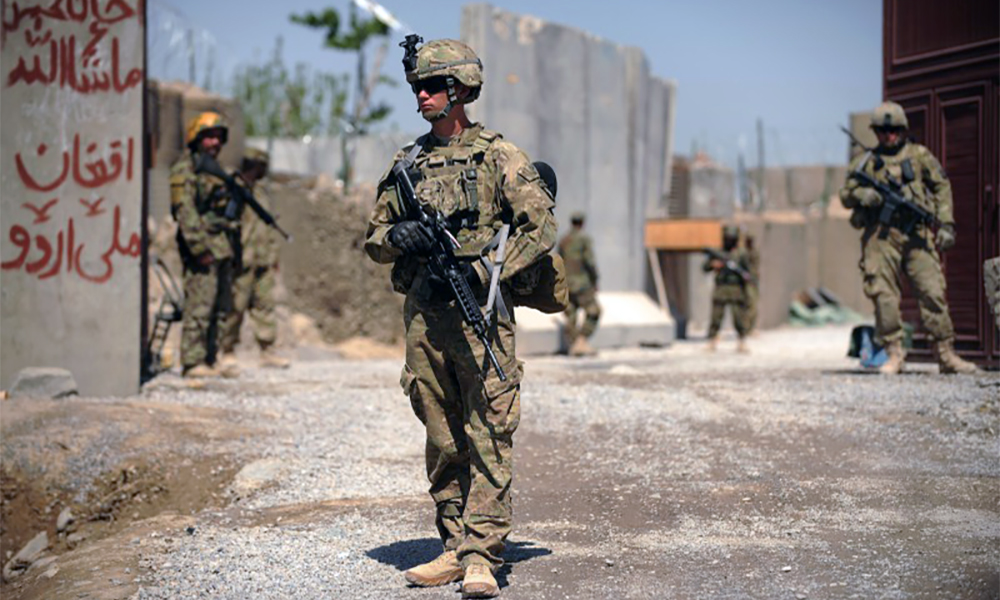
A catalog of “waste, fraud and abuse” reports made against the United States’ reconstruction efforts in Afghanistan have been “temporarily” removed from the Special Inspector General for Afghanistan Reconstruction’s (SIGAR) website.
In an expose by CNN, a US State Department spokesperson told CNN they had asked SIGAR to “temporarily” remove the reports, owing “to safety and security concerns regarding our ongoing evacuation efforts.” The spokesperson added SIGAR had the authority to restore them “when it deems appropriate.”
These reports, published for years on a quarterly basis, gave insight into the abuse and wastage of funds provided by the US government over 20 years.
The in-depth audits detailing these findings have, for the most part, been taken offline, despite having been widely promoted on social media platforms almost weekly for the past few years.
The total cost of the war, according to the Pentagon, was $825 billion, a low-end estimate: even President Joe Biden has cited an estimate that put the amount at over double that — more than $2 trillion, a figure that factors in long-term costs such as veterans’ care. The interest on the debt runs into hundreds of billions already, CNN reported.
However, the $145 billion reconstruction effort lacked oversight, leading Congress to set up SIGAR in 2008.
In their expose, CNN detailed 10 notable cases, stripped of identifying details on SIGAR’s website. The reports had however been collated by CNN over the years.
The cases are as follows:
1) The Tarakhil power plant project that was commissioned in 2007 as a backup generator for the capital, in case electricity supply from Uzbekistan was compromised.
A vast, modern structure, it ran on diesel-fueled turbines, supplied by a brand-name engineering giant. There was one catch: Afghanistan had scant diesel supply of its own and had to ship the fuel in by truck — making the plant too expensive to run, CNN reported.
The facility itself cost $335 million to build, and had an estimated annual fuel cost of $245 million. The most recent SIGAR assessment said at best it was used at just 2.2% capacity, as the Afghan government could not afford the fuel. USAID declined to comment.
2) A half-billion-dollar fleet of cargo planes that flew for a year ended up being sold as scrap.
In 2008, Afghanistan’s fledgling air force needed cargo planes and the Pentagon chose the G222 — an Italian-designed aircraft designed to take off and land on rough runways.
That first year, according to a speech made by SIGAR’s chief John Sopko, citing a USAF officer, the planes were very busy.
But they would not be sustainable. The aircraft were only noticed by SIGAR when Sopko noticed them parked at Kabul airport and asked what they were doing there.
Six years after the procurement was launched, the 16 aircraft delivered to Afghanistan were sold for scrap for $40,257. The cost of the project totaled $549 million.
3) A $36 million Marines HQ in the desert was neither wanted nor used, Sopko said in a speech, but this 64,000-square foot control center in Helmand cost $36 million to build in 2010 and was never used. Sopko recalled the base commander and two other marine generals said it was not needed as it would not be completed fast enough but said the thought of returning the funds to Congress “was so abhorrent to the contracting command, it was built anyway. The facility was never occupied, Camp Leatherneck was turned over to the Afghans, who abandoned it.”
4) In 2007, $28 million was spent on a new camouflage pattern for army uniforms for the Afghans. A total of 1.3 million sets were ordered costing $43 to $80 each, as opposed to $25 to $30 originally estimated for replacement uniforms.
The uniforms were never tested or evaluated in the field, and Sopko said it cost taxpayers an extra $28 million to buy the uniforms with a patented pattern.
SIGAR projected in 2017 a different choice of pattern could have saved a potential $72 million over the next decade.
5) The US spent $1.5 million a day on counter-narcotics programs (from 2002 to 2018). Opium production was, according to the last SIGAR report, up in 2020 by 37% compared to the year before. This was the third-highest yield since records began in 1994.
In 2017, production was four times what it was in 2002. A State department spokesperson noted “the Taliban (IEA) have been the primary factor contributing to poppy’s persistence in recent years” and “that the Taliban (IEA) have committed to banning narcotics.”
6) An extensive ring road around Afghanistan was funded by multiple grants and donors, totaling billions during the course of the war. Towards the end of the project, a 233-kilometer section in the North, between the towns of Qeysar and Laman, led to $249 million being handed out to contractors, but only 15% of the road was being built, a SIGAR audit reported.
Between March 2014 and September 2017, there was no construction on this section, and what had been built deteriorated, the report concluded. USAID declined to comment.
7) An extensive hotel and apartment complex was commissioned next to the US Embassy in Kabul, for which the US government provided $85 million in loans.
In 2016, SIGAR concluded “the $85 million in loans is gone, the buildings were never completed and are uninhabitable, and the U.S. Embassy was forced to provide security for the site at additional cost to U.S. taxpayers.”
The audit concluded the contractor made unrealistic promises to secure the loans, and that the branch of the US government who oversaw the project never visited the site, and neither did the company they later hired to oversee the project. A State department spokesperson said they did not manage the construction and it was “a private endeavor.”
8) The Pentagon created the Task Force for Business and Stability Operations (TFBSO) expanded from Iraq to include Afghanistan in 2009, for whose operations in Afghanistan Congress set aside $823 million.
Over half the money actually spent by TFBSO — $359 million of $675 million — was “spent on indirect and support costs, not directly on projects in Afghanistan,” SIGAR concluded in an audit.
They reviewed 89 of the contracts TFBSO made, and found “seven contracts worth $35.1 million were awarded to firms employing former TFBSO staff as senior executives.”
An audit also concluded that the fund spent about $6 million on supporting the cashmere industry, $43 million on a compressed natural gas station, and $150 million on high-end villas for its staff.
9) A 2015 report into USAID’s funding of healthcare facilities in Afghanistan said that over a third of the 510 projects they had been given coordinates for, did not exist in those locations. Thirteen were “not located in Afghanistan, with one located in the Mediterranean Sea.” Thirty “were located in a province different from the one USAID reported.”
And “189 showed no physical structure within 400 feet of the reported coordinates. Just under half of these locations showed no physical structure within a half mile of the reported coordinates.”
The audit said that USAID and the Afghan ministry of Public Health could only provide “oversight of these facilities [if they] know where they are.” USAID declined to comment.
10) At least $19 billion lost to “waste, fraud, abuse”
An October 2020 report presented a startling total for the war. Congress at the time had appropriated $134 billion since 2002 for reconstruction in Afghanistan.
SIGAR was able to review $63 billion of it — nearly half. They concluded $19 billion of that — almost a third — was “lost to waste, fraud, and abuse.”
DoD spokesman Lodewick told CNN they and “several other U.S. Government departments and agencies are already on record as having challenged some of these reports as inaccurate and misleading” and that their conclusions “appeared to overlook the difference between reconstruction efforts that may have been mismanaged willfully/negligently and those efforts that, at the time of the report, simply had fallen short of strategic goals.”




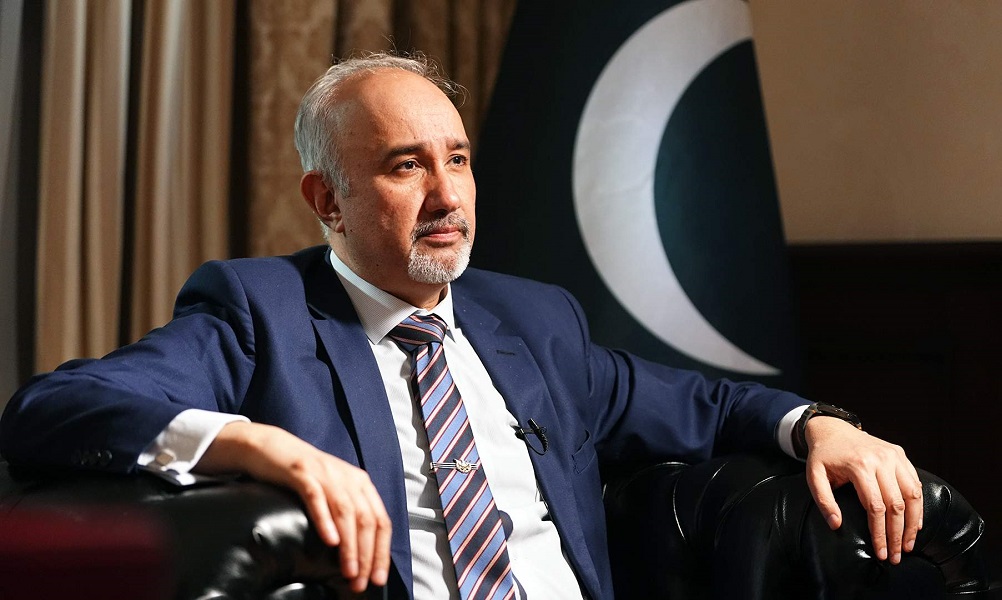
Pakistan’s ambassador to Russia, Faisal Niaz Tirmizi, has confirmed that Islamabad has asked Moscow to mediate in the ongoing conflict with Afghanistan.
In an interview with Russian daily Izvestia, Tirmizi said Pakistan is engaging with Russia and appreciates the “wonderful offer” to help resolve tensions. He noted that proposals from Russia, China, Qatar, Turkey, and Saudi Arabia led to an agreement on a temporary ceasefire.
“We tell all our interlocutors: please tell the Taliban (IEA) not to use this opportunity simply to regroup, recuperate, rearm, and re-attack,” Tirmizi said. “Because such large states as Russia or Pakistan cannot be destabilized by terrorist acts.”
The ambassador emphasized that decades of war in Afghanistan have affected not only Kabul and Islamabad but also neighboring countries, including Iran, Tajikistan, Turkmenistan, Uzbekistan, and even Russia. “Therefore, we must all trade with each other, develop education, art, and culture. Terrorism is the wrong way to go,” he added.
The appeal for mediation comes amid rising cross-Durand Line tensions and violence that have killed hundreds and displaced thousands in recent weeks.
Pakistani officials have repeatedly claimed that militant attacks in the country are organized in Afghanistan.
The IEA however denies the claim saying that Afghanistan is not responsible for Pakistan’s “security failure.”
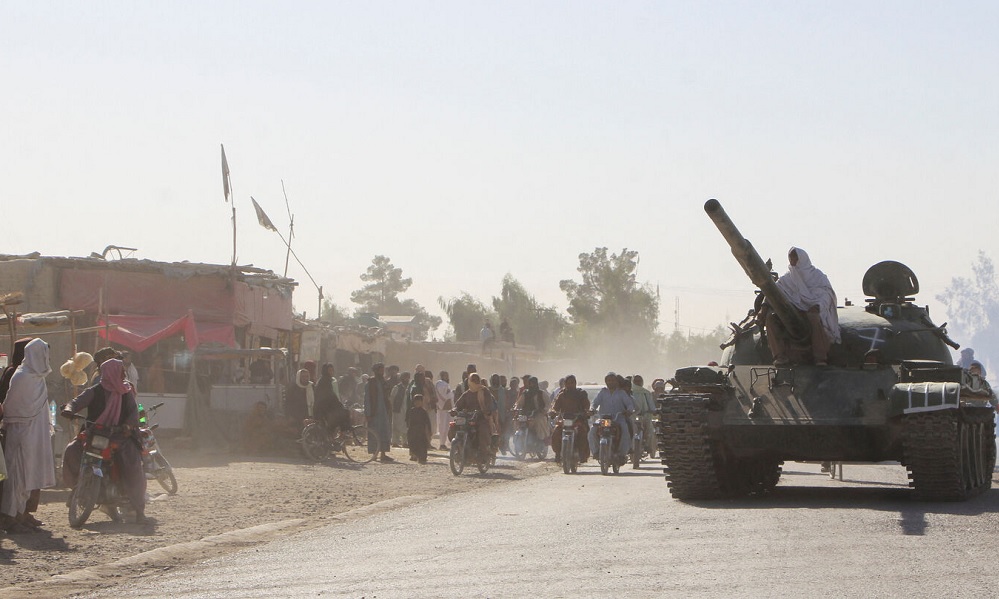
In an opinion article published on Sunday, Financial Times warned that rising tensions between Afghanistan and Pakistan risk spiraling into a wider conflict, and urged the international community to urgently re-engage with the troubled region.
The publication noted that nearly five years after the Islamic Emirate’s return to power, global attention has largely faded, despite growing instability. It highlighted restrictions on women’s rights and the worsening relationship between Kabul and Islamabad, once close allies.
According to the article, Pakistan’s ties with the IEA have sharply deteriorated since 2021. Islamabad accuses Afghan authorities of harboring militant groups responsible for attacks inside Pakistan—an allegation the IEA denies.
Recent weeks have seen a surge in violence, including cross-Durand Line airstrikes and clashes that have reportedly killed over 1,000 people and displaced more than 100,000. One of the deadliest incidents involved an airstrike on a drug rehabilitation center in Kabul, which Afghan officials say killed hundreds.
The newspaper warned that continued escalation could destabilize South and Central Asia and risk turning Afghanistan into a hub for militant activity once again.
It criticized Pakistan’s military approach, saying airstrikes alone cannot end insurgencies, and called for sustained ceasefire efforts following a temporary truce during Eid al-Fitr.
The editorial urged major powers, including the United States and China, to play a more active diplomatic role. It also pointed to China’s strategic interests in the region and suggested Beijing could step forward as a mediator.
Despite past failed attempts at peace, the Financial Times stressed that the risks are too high for the world to remain disengaged.


Iran says coastal attack will lead to full Gulf closure and mine-laying

Afghanistan expresses condolences after deadly helicopter crash in Qatar

IPL 2026: Ishan Kishan named Sunrisers’ interim captain ahead of opening clash

Pakistan seeks Russian mediation to resolve Afghanistan tensions

World must re-engage to prevent all-out Afghanistan-Pakistan war: Financial Times

Pakistani military jet downed in Afghanistan’s Jalalabad, pilot captured alive

Afghan Air Force conducts airstrikes in Islamabad, other cities

Prominent Muslim scholar issues fatwa calling for Afghanistan-Pakistan ceasefire

Afghan air force strikes key Pakistani military installations in retaliatory operation

IEA: Special circle in Pakistan has launched mission to destabilize region

Tahawol: Possibility of US ground forces entering Iran war discussed

Saar: Using US prisoners as political pressure

Tahawol: Pakistan’s efforts to destabilise Afghanistan

Saar: Decline in international assistance to Afghanistan

Tawsia: Assessment of Afghanistan’s economic activities in 1404
-
 Latest News5 days ago
IEA announces temporary pause in defensive operations against Pakistan for Eid
-
 Latest News4 days ago
Pakistani shelling hits Kunar districts despite ‘pause in hostility’ over Eid
-
 Sport3 days ago
Afghanistan national buzkashi falls short in Kokpar World Championship semifinals
-

 Regional4 days ago
Pakistan among top nuclear threats to America, US intelligence chief tells senate
-

 Latest News5 days ago
UNAMA puts death toll from Pakistan’s attack on Kabul’s Omid Hospital at 143
-
 Latest News4 days ago
Peshawar High Court grants bail to 68 detained Afghan nationals, including minors
-

 Sport2 days ago
Ireland to host Afghanistan for ODI series in August
-
 World4 days ago
US weighs troop deployment as Iran war enters new phase