
Latest News
IEA digs up Mullah Omar’s car, buried to escape US troops


Islamic Emirate of Afghanistan (IEA) members have dug up a white Toyota used by their founding leader, Mullah Mohammad Omar Mujahid, to escape invading US troops twenty years ago.
Photographs posted to Twitter on Tuesday show a group of men digging up what appears to be a white Toyota station wagon that was covered in a sheet of plastic.
An IEA member, Muhammad Jalal, who posted the images to Twitter said: “This Toyota wagon was used by the late Amir to travel from Kandahar to Zabul province during the start of US-led invasion.”
“It is in good condition,” he said.
Senior IEA officials have called for the vehicle to be put on display at the national museum in Kabul, which already houses cars and coaches of former kings and prime ministers.
Another senior IEA member, Anas Haqqani tweeted: “A man travelled in this car who took part in the most amazing events in history.”
“He relied on God Almighty, he commanded in an unequal war against dozens of invading countries, and won. This memorial … should be kept in the country’s national museum.”
An IEA source meanwhile told the Guardian that Defence Minister Mullah Muhammad Yaqoub – Mullah Omar’s son – ordered officials to uncover the car, which had been buried for around 20 years.
The Guardian also reported that according to Bette Dam, the author of a biography of the late leader, Looking for the Enemy, Omar was known to have left his Kandahar base in a white Toyota at the end of 2001 after US-backed forces toppled the government in Kabul.
In her book she stated Omar would spend the rest of his life within walking distance of US bases despite a $10 million bounty on his head. US forces once searched a house where he was hiding, an aide told Dam, but did not find the entrance to a secret room that hid him.
Mullah Omar died in 2013, but the IEA only announced his death two years later.




Latest News
Afghans in Iran face growing uncertainty as war enters second month
The organization said that since the start of the war, more than 35,000 Afghans have returned to Afghanistan.
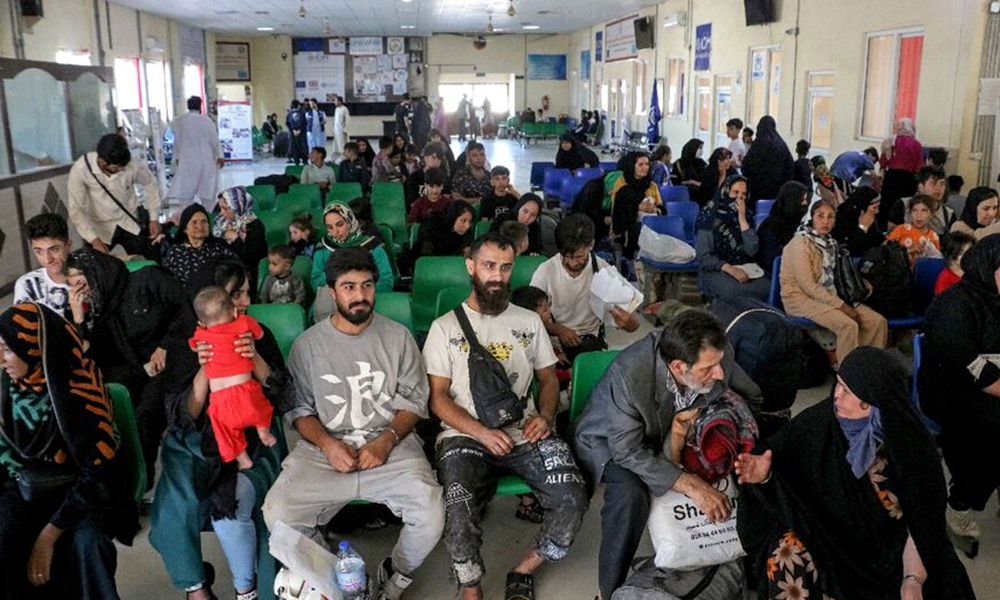
Millions of Afghans living in Iran are facing increasing uncertainty and hardship as the war in the country enters its second month, according to the Norwegian Refugee Council (NRC).
In a statement, NRC Secretary General Jan Egeland warned that more than four million Afghans residing in Iran are among the most vulnerable groups affected by the ongoing conflict. Many Afghan families have lost their only sources of income as informal work has collapsed amid continuous airstrikes and economic disruption.
According to the NRC, a large number of Afghans live in major cities that have come under heavy attacks. Many are unable to flee to safer areas because they have nowhere to go or lack legal permission to travel.
The organization said that since the start of the war, more than 35,000 Afghans have returned to Afghanistan, while over one million Afghan migrants in Iran remain at risk of deportation to a country already struggling with humanitarian challenges.
Egeland noted that after a month of sustained Israeli and U.S. bombardment across Iran, the civilian population is exhausted and deeply traumatized. Millions of people have already fled their homes in search of safety, while others remain trapped in dangerous conditions.
Reports indicate that thousands of homes, hospitals, and schools have been damaged or destroyed across Iran. NRC staff in Tehran say many neighborhoods have suffered significant destruction, while families are taping their windows to prevent injuries from shattered glass caused by nearby explosions.
The war has also severely disrupted daily life, with internet outages and major disruptions to banking services making it increasingly difficult for residents to access basic needs.
According to available data, about 2,700 people have been killed across the Middle East in attacks involving the United States, Israel, and Iran, with more than half of the casualties reported inside Iran. Iran’s Health Ministry says that between February 28 and March 25, at least 1,500 people were killed and over 18,000 injured in the country.
Humanitarian organizations warn that funding for life-saving assistance in both Iran and Afghanistan remains critically low. Aid agencies say they lack sufficient resources to prevent hunger and provide emergency shelter for displaced families.
Egeland warned that if the war continues, the region could face a far larger humanitarian crisis, with millions potentially forced to flee across borders and placing further pressure on already fragile neighboring countries.
He called on all parties involved in the conflict to respect international humanitarian law, stop attacks on civilians and civilian infrastructure, and work toward a diplomatic solution to end the crisis.
Latest News
Russia deems US military presence in Afghanistan unacceptable
Kabulov’s remarks came in response to growing concerns regarding the U.S. military’s presence in the Middle East, particularly amid rising tensions with Iran.
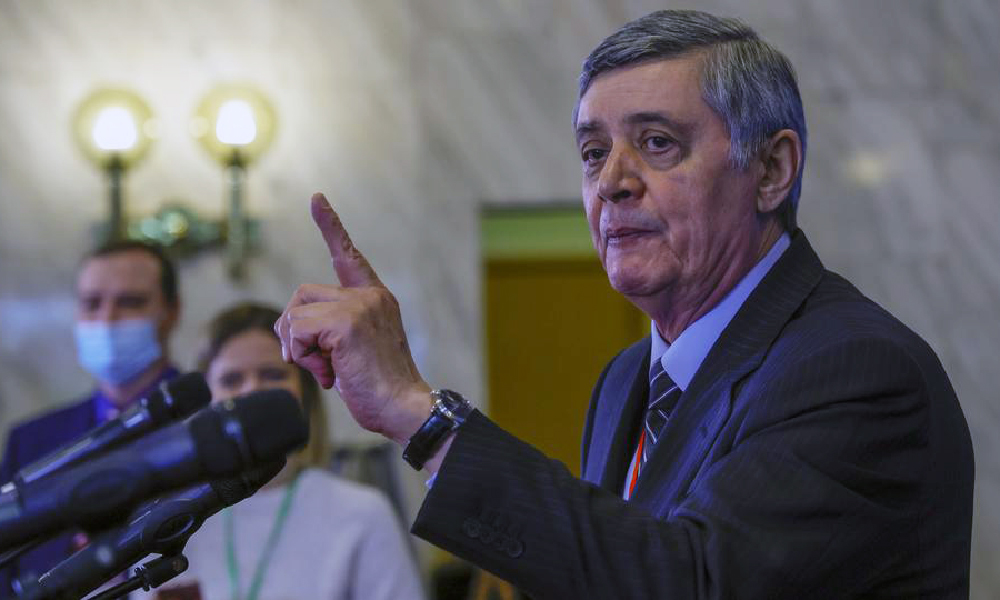
Russia has strongly condemned any potential return of U.S. military forces to Afghanistan, specifically the possibility of reopening Bagram Air Base, calling such moves “categorically unacceptable.” The statement was made by Zamir Kabulov, the Russian President’s special representative for Afghanistan and senior adviser to the Russian Foreign Ministry, in an interview with RIA Novosti.
Kabulov emphasized that Moscow opposes the establishment of any U.S. or NATO military infrastructure on Afghan soil or in neighboring regions, under any pretext. He also expressed hope that the Taliban-led government in Afghanistan, known as the Islamic Emirate of Afghanistan, would share Russia’s stance on the issue.
Kabulov’s remarks came in response to growing concerns regarding the U.S. military’s presence in the Middle East, particularly amid rising tensions with Iran. There have been reports suggesting that the U.S. might seek access to Bagram Air Base again as part of a strategic pivot in the region.
Recalling the previous administration under former U.S. President Donald Trump, Kabulov noted that the U.S. had persistently sought to regain control of Bagram Air Base following its chaotic withdrawal from Afghanistan in August 2021. “There is nothing new in these demands,” Kabulov stated, referring to the ongoing push by the U.S. to re-establish a military foothold in the region.
Russia’s firm stance reflects its broader geopolitical concerns regarding the influence of the U.S. and NATO near its borders, particularly in Central Asia and Afghanistan.
Latest News
Over 2.13 million Afghan refugees repatriated from Pakistan
Officials say over 150,000 individuals were returned from Punjab alone, where enforcement efforts are being led by the Punjab Home Department’s Foreign National Security Cell.

More than 2.13 million Afghan nationals have been repatriated from Pakistan to Afghanistan as part of an ongoing campaign targeting undocumented foreign residents, according to Pakistani authorities cited by local media.
Officials say over 150,000 individuals were returned from Punjab alone, where enforcement efforts are being led by the Punjab Home Department’s Foreign National Security Cell. The campaign includes inspections of thousands of residential areas and hundreds of markets, resulting in numerous detentions and legal cases against Afghan nationals found without valid documentation.
The repatriation process comes amid heightened tensions along key border crossings between the two countries. Hundreds of migrants have recently been sent back via the Chaman crossing, particularly during disruptions at other transit points.
The Torkham crossing—a major gateway for cross-border movement—has faced repeated closures. Although it briefly reopened, local officials in Nangarhar Province report that it was shut again after only a few hours. Authorities in Pakistan have not provided a clear explanation for the latest closure.
According to Sediqullah Quraishi, head of Nangarhar’s Information Department, the crossing was opened temporarily on Thursday before being closed again without official clarification.
Meanwhile, hundreds of Afghan migrants remain in temporary holding centers across Punjab, where they are undergoing registration and processing ahead of their return to Afghanistan. The large-scale repatriation effort continues to raise humanitarian and logistical concerns, particularly as border access remains unpredictable.


Afghans in Iran face growing uncertainty as war enters second month

Russia deems US military presence in Afghanistan unacceptable

Over 2.13 million Afghan refugees repatriated from Pakistan

Human Rights Watch calls Pakistani airstrike on Kabul rehab center ‘unlawful’

Torkham crossing closes again hours after brief reopening

Pakistani military jet downed in Afghanistan’s Jalalabad, pilot captured alive

Afghan Air Force conducts airstrikes in Islamabad, other cities

Prominent Muslim scholar issues fatwa calling for Afghanistan-Pakistan ceasefire

Afghan air force strikes key Pakistani military installations in retaliatory operation

IEA: Special circle in Pakistan has launched mission to destabilize region

Tahawol: Discussion on day 27 of Iran–US war

Saar: Islamic Emirate confident of Durand Line control

Tahawol: Efforts to release Mohammad Rahim from Guantanamo Bay Detention Camp

Saar: End of ceasefire between Afghanistan-Pakistan reviewed

Tahawol: Escalating threats between Iran-US discussed
-
 Latest News4 days ago
Pakistan seeks Russian mediation to resolve Afghanistan tensions
-
 Business5 days ago
Afghani strengthens nearly 10% against US dollar amid banking sector reforms
-
 Latest News4 days ago
World must re-engage to prevent all-out Afghanistan-Pakistan war: Financial Times
-
 Latest News3 days ago
Around 2.3 million tourists visited Afghanistan’s recreational areas during Eid: Ghufran
-

 Sport3 days ago
Afghanistan squad hit by withdrawals ahead of AFC Asian Cup Qualifiers
-
 Latest News3 days ago
Islamic Emirate releases American prisoner Dennis Coyle
-
 Latest News1 day ago
Tajikistan shifts stance on Afghanistan amid rising border tensions
-
 Latest News4 days ago
Airstrike on Kabul drug rehabilitation centre sparks legal concerns