
Latest News
IEA refutes claims by Tajik president of terrorist camps in north-eastern Afghanistan

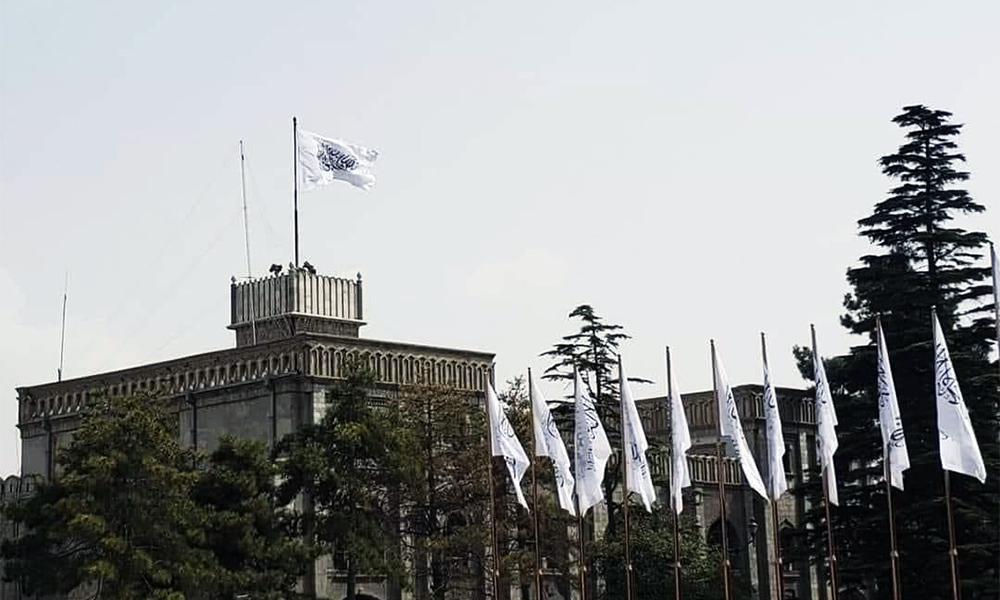
Islamic Emirate of Afghanistan (IEA) officials on Tuesday rejected claims by the Tajik president that thousands of militants are grouping in north-eastern Afghanistan, close to the southern border of Tajikistan.
Bilal Karimi, the deputy IEA spokesman, told Ariana News that there is no truth in these claims and that there are no threats to neighboring countries that emanate from Afghanistan.
Tajik President Emomali Rahmon said on Monday during a virtual Collective Security Treaty Organization (CSTO) summit that over 6,000 militants have grouped at over 40 camps near their southern border.
“In general, according to the intelligence services of Tajikistan, the number of camps and training centers for terrorists bordering the southern borders of the CSTO in the north-eastern provinces of Afghanistan totals over 40, and their numerical strength reaches more than 6,000 militants,” said Rahmon during an emergency summit of the organization on the situation in Kazakhstan.
Russia’s TASS news agency reported that according to Rahmon, the situation on the Tajik-Afghan border is becoming more complicated every day, and that fighting between the IEA is ongoing along the border.
“Therefore, we need to create a security belt around Afghanistan,” Rahmon suggested.
He stressed that the increased activity of international terrorist groups in Afghanistan directly affects the CSTO collective security zone. “You and I know very well that since the second half of August 2021, thousands of members of ISIS (Daesh), al-Qaeda, Ansarullah, Hizb ut-Tahrir have been released from prisons in Afghanistan.”
He said that Daesh militants are strengthening their positions in Afghanistan.
Rahmon also said that the events taking place in Kazakhstan confirm the need to strengthen the joint fight against terrorism, TASS reported.
“The tragic events in Kazakhstan reaffirm the need to strengthen our joint comprehensive work to counter terrorism and extremism, religious radicalism and transnational organized crime, including drug trafficking,” he said.
Rahmon also said that a number of groups banned in Tajikistan are showing “particularly aggressive activity,” and many of their followers make up the backbone of the Islamic State (ISIS/Daesh).
“We in Tajikistan are strenuously fighting the agitation and subversive work of emissaries of banned organizations,” he stressed.
But the IEA’s Karimi was adamant that no threats emanate from Afghanistan.
“We totally reject this. The threats that they are concerned about do not exist in our country. Islamic Emirate is committed to its policy that no country would be threatened from our country.
“No group or gang engaged in destructive activities are operating in Afghanistan that could threaten other countries,” he said.
“We assure them, and we want good relations with all countries including our neighbors. Let me tell you something that spoilers who fled the country are conveying false information to [foreign countries],” he said.

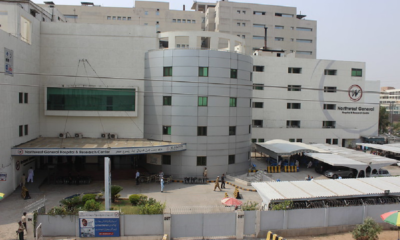


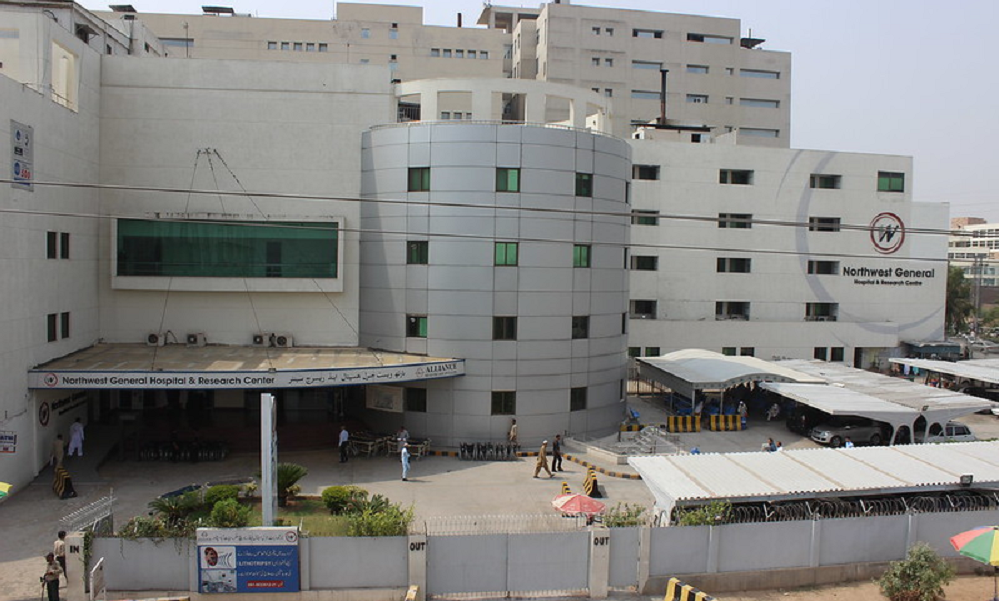
Several Afghan doctors and medical staff have been stopped from working at Northwest General Hospital and Research Centre (NWGH) in Peshawar due to visa-related issues, according to Pakistani freelance journalist Tahir Khan.
Khan reported on Monday that the affected Afghan medical workers had applied for visa extensions, but their applications have yet to be approved.
A September 2 circular issued by the Human Resource Department of Alliance Healthcare (Pvt.) Ltd. directed Afghan nationals without valid visas to discontinue their duties with immediate effect.
According to the circular, the employees can resume work after submitting valid visa documentation and completing the required verification process.
An NWGH doctor told Khan that several Afghan doctors and other medical staff had previously been working at the hospital with valid visas but have now been suspended while their visa-extension applications remain pending.
The development comes a week after the Lahore High Court suspended the operation of directives issued by the Pakistan Medical and Dental Council ordering Afghan medical students to return to Afghanistan.
The reported suspension of Afghan medical staff at the Peshawar hospital has raised concerns among affected doctors, who say they remain unable to work while awaiting decisions on their visa applications.
Latest News
Mujahid: Afghanistan’s reconstruction must rely on domestic investment
Mujahid added that Afghanistan’s long-term development should ultimately be driven by the efforts, capital and resources of Afghans themselves.
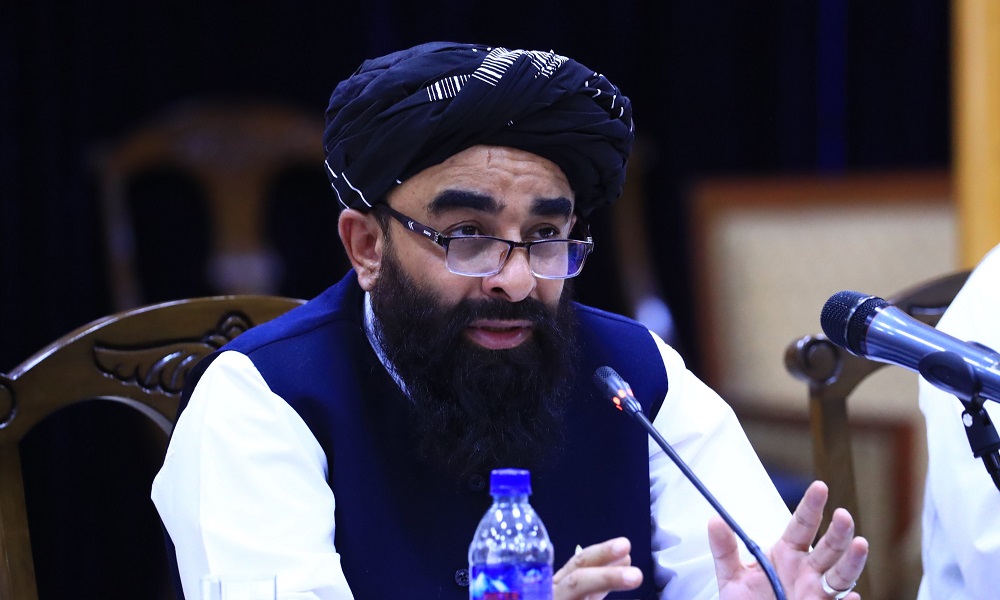
Islamic Emirate spokesman Zabihullah Mujahid says Afghanistan’s reconstruction should be driven by the country’s own resources, domestic investment and Afghan businesses rather than dependence on foreign aid and projects.
Mujahid said several countries, including the former Soviet Union and the United States, had implemented reconstruction and development projects in Afghanistan over the past decades while pursuing their own objectives and interests.
He said although some projects were completed, they were not sufficient to meet Afghanistan’s needs, while the country also suffered significant losses during periods of foreign involvement.
Mujahid stressed that Afghan traders and investors should play a central role in rebuilding the country and advancing economic growth.
According to him, the Islamic Emirate is working to encourage Afghan businesspeople to invest inside Afghanistan and contribute to reconstruction and development.
He said domestic investment is essential for strengthening Afghanistan’s economy and achieving greater self-reliance.
Mujahid added that Afghanistan’s long-term development should ultimately be driven by the efforts, capital and resources of Afghans themselves.
Latest News
Muttaqi defends Afghanistan’s policies, calls for stronger international ties
Muttaqi argued that the situation in Afghanistan is now better than during the decades of conflict, including the 20 years of the US and NATO-led war.
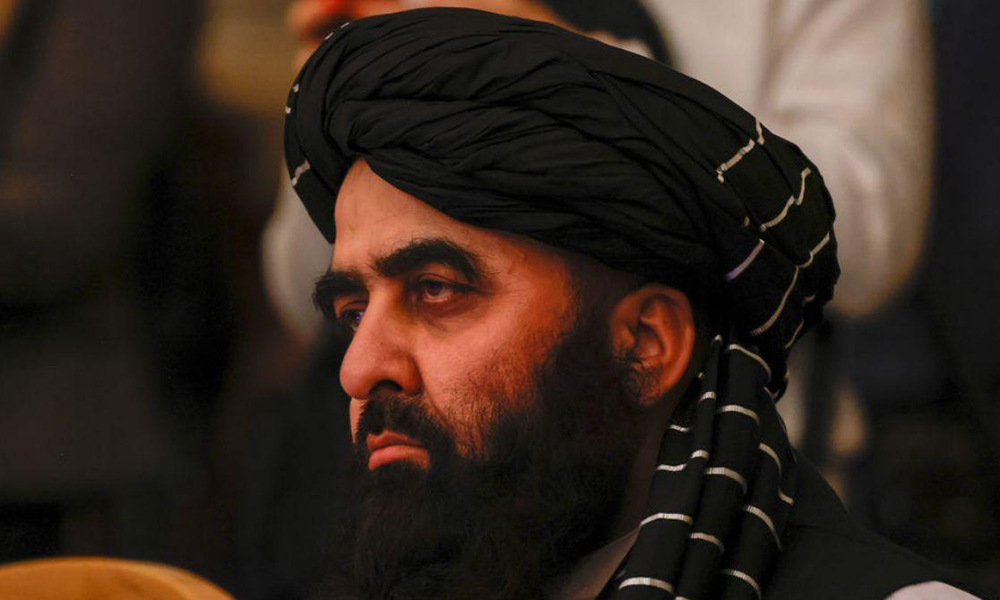
Afghanistan’s Foreign Minister Amir Khan Muttaqi has defended the Islamic Emirate’s policies on women and girls, sanctions and security, while calling for stronger relations with the United States and other countries.
In a BBC interview this week, Muttaqi was asked why Afghan women and girls face restrictions on education, work and public life. He rejected criticism of Afghanistan’s human rights situation and said sanctions against the country were politically motivated.
“This is an injustice to Afghans. It’s an excuse. There are no sensible reasons for sanctions being imposed on Afghanistan,” he said.
Muttaqi argued that the situation in Afghanistan is now better than during the decades of conflict, including the 20 years of the US and NATO-led war.
He said Afghanistan had endured around 40 years of war and that the Islamic Emirate was now seeking to strengthen relations with countries in both the East and West.
“Our relationships have developed a lot with regional and eastern countries, in terms of economy, politics, relationships and investments,” he said, adding that there had also been developments with European countries.
On recent “technical talks” in Belgium on the issue of Afghan migrants, he described the development as positive and said the Islamic Emirate hoped for a good future.
Muttaqi acknowledged that formal international recognition is important, but described Russia’s recognition of the Islamic Emirate as a positive development.
Asked about restrictions on women, he said Afghanistan’s policies should be viewed through Afghan cultural and social values rather than Western standards.
“The conduct with women shouldn’t be looked at through the glasses of Western culture and tradition. Afghan values should be considered,” he said.
Muttaqi claimed that more than three million girls are currently studying in schools and madrassas, and said female students at religious schools also study modern subjects.
He said more than three million girls below Grade 6 are attending school, with female teachers involved in their education.
However, he acknowledged concerns raised by foreign diplomats and organisations that the continued exclusion of girls from secondary education could eventually create shortages of female teachers and doctors.
“This really is a problem. And it will be considered,” he said, while adding that Afghanistan does not currently face such shortages and that the authorities would seek to prevent them in the future.
Muttaqi also rejected claims that al-Qaeda or other foreign militant groups are operating in Afghanistan.
He said the Islamic Emirate would not allow groups to use Afghan territory to plan attacks against other countries, arguing that allegations about the presence of foreign militants were part of propaganda.
“So far no one has presented any proof,” he said.
Muttaqi also pointed to the elimination of poppy cultivation and improvements in security as developments he said should be recognised.
Seeking normal ties with Washington
On relations with the United States, Muttaqi said the Islamic Emirate wants positive and normal relations with Washington but would not accept the presence of foreign military forces in Afghanistan.
He said Afghanistan is a developing country with investment opportunities in many sectors, although the Islamic Emirate does not know how much interest US investors currently have in the country.
He said the return of around six million Afghans had placed pressure on the country, but claimed that returnees had been taken back to their home areas. He added that many were skilled workers who were already contributing to Afghanistan’s development.
Despite continuing international concerns over women’s rights, humanitarian needs and Afghanistan’s economic situation, Muttaqi said the Islamic Emirate wants to deepen diplomatic and economic engagement with the international community.


New warnings reignite debate over AI threat to humanity

Gulf states call off meeting with Iran, Houthis launch new attack on Saudi

Afghan doctors barred from Peshawar hospital over visa issues

Mujahid: Afghanistan’s reconstruction must rely on domestic investment

Farooq Khan Ahmadzai makes international umpiring debut

Four mediators struggle to secure lasting Pakistan-Afghanistan ceasefire

Juma Khan Fateh surrenders to IEA forces in Badakhshan

Afghanistan’s trade diversification challenges Pakistan

Syria and Saudi Arabia condemn Kabul bombing, express solidarity with Afghanistan

Afghanistan crowned champions of five-match ODI series against Ireland

Tahawol: Calls for U.S. engagement with Afghanistan

Saar: End of Chinese ambassador’s mission in Kabul

Tahawol: Norwegian delegation’s call for engagement with Afghanistan discussed

Saar: Pakistan’s dual policy towards Afghanistan reviewed

Exclusive interview with ACB CEO Naseeb Khan
-
 Latest News5 days ago
Muttaqi and Bangladeshi delegation discuss expansion of bilateral ties
-
 Sport4 days ago
Afghanistan Champions League Season 6 kicks off today: Abu Muslim Farah face Sarsabz Yashlar
-

 Sport3 days ago
Omar Zawak, Toofan Herat secure victories in Afghanistan Champions League
-
 Regional4 days ago
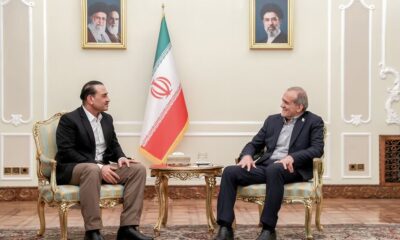
Pakistan warns Iran to rein in Houthis as Riyadh strikes back
-
 Latest News1 day ago
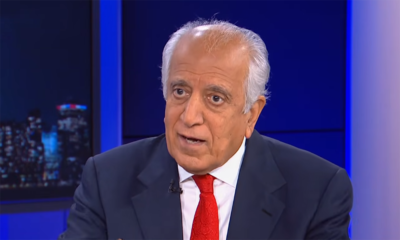
Khalilzad warns US risks losing influence in Afghanistan to China and Russia
-

 Regional2 days ago
Saudis shut down oil pipeline as Houthis tighten grip on Red Sea shipping
-

 Latest News3 days ago
Kabul to host tripartite meeting on Afghan migrants’ problems
-

 Latest News3 days ago
Pakistan court blocks expulsion of Afghan medical students