
Business
IEA’s Ministry of Finance: The recent report of SIGAR is far from the truth

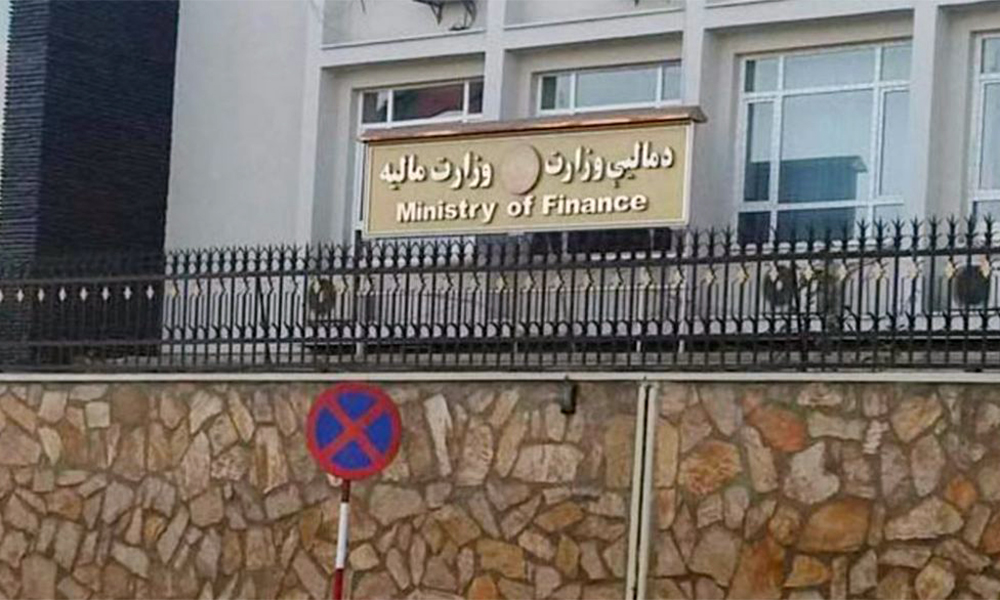
The Ministry of Finance of the Islamic Emirate of Afghanistan (IEA) considered the recent report of “SIGAR” about companies and institutions in Afghanistan to be far from the truth and rejected it.
In the announcement that was published by this ministry on Sunday (5th January), it is stated: “The Office of the Special Inspector General of the United States of America for Afghanistan “SIGAR” has claimed in its quarterly report to the US Congress that the Islamic Emirate of Afghanistan, receives money from those organizations and institutions that work in the field of humanitarian aid; under the license fee, tax and administrative fees, which provide a large part of Afghanistan’s revenue The Ministry of Finance of the Islamic Emirate of Afghanistan considers the said report to be far from the truth and rejects it separately.”
“The Ministry of Finance has exempted those organizations and institutions that are active in the field of humanitarian aid, No money is received from them, and no administrative expenses are imposed on them.” Read the ministry statement.
The Ministry of Finance has also added that in all the country’s customs, the customs tariff of the goods imported by these organizations and institutions has reached zero, and the goods of the mentioned institutions enter the country without tax.
According to this ministry, only license fee is taken from foreign organizations and institutions, which is a small amount and has a legal framework and is balanced with other countries and has no effect on Afghanistan’s national income.
The Ministry of Finance has assured that the organs of the Islamic Emirate, including the Ministry of Finance, provide administrative, financial and security facilities for the organizations and institutions that operate in the field of humanitarian aid and are committed to all their promises in this field and in the distribution and sending of humanitarian aid they are partners with them.






Business
Uzbekistan delivers over 290 tons of aid to Afghanistan
The assistance, provided ahead of Eid al-Fitr, is intended to support vulnerable communities while reinforcing ties between the neighboring countries.
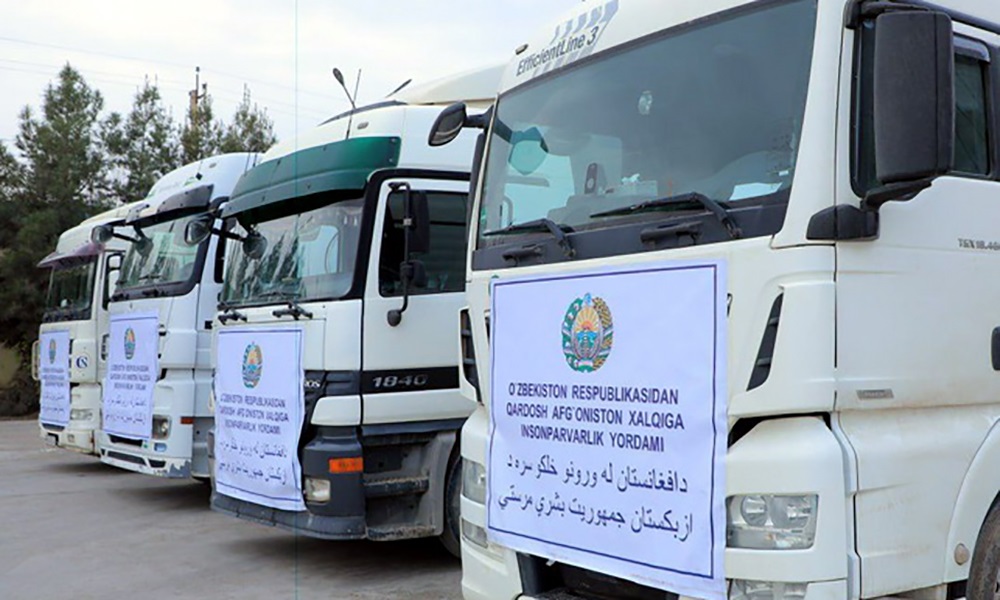
Uzbekistan has delivered more than 290 tons of humanitarian aid to Afghanistan, according to the country’s Ministry of Foreign Affairs.
The assistance, provided ahead of Eid al-Fitr, is intended to support vulnerable communities while reinforcing ties between the neighboring countries.
The shipment includes essential food supplies such as flour, rice, wheat, vegetable oil, instant meals, pasta, and confectionery. An official handover ceremony was held in the border town of Hairatan.
Local officials, including Balkh province representatives and authorities from Hairatan, expressed appreciation for the continued support, acknowledging Uzbekistan’s efforts to assist the Afghan people.
Among those present at the ceremony were Uzbekistan’s Ambassador to Afghanistan, Oybek Usmanov, and Surkhandarya regional governor Ulugbek Kosimov.
The aid delivery underscores Uzbekistan’s ongoing humanitarian engagement and its broader efforts to promote regional cooperation and stability.
Business
Turkmenistan, Afghanistan discuss steps to speed up land acquisition for TAPI pipeline
By the end of the year, the vessels are expected to deliver about 11,700 pipes as part of preparations for construction of the TAPI pipeline.

Officials from Turkmenistan and Afghanistan have held talks aimed at accelerating land acquisition for the long-planned Turkmenistan-Afghanistan-Pakistan-India (TAPI) pipeline, according to Afghanistan’s Ministry of Agriculture, Irrigation, and Livestock.
The issue was discussed during a meeting between TAPI project head Murad Amanov, Afghanistan’s acting Minister of Agriculture, Irrigation, and Livestock Mullah Attaullah Omari, and Turkmenistan’s ambassador to Afghanistan Hoja Ovezov.
Amanov briefed Afghan officials on recent progress and emphasized the need to accelerate procedures related to land acquisition and the determination of land prices in line with the framework agreement signed by the four participating countries.
Meanwhile, vessels operated by the Azerbaijan Caspian Shipping Company (ASCO), part of AZCON Holding, have begun transporting pipes for the project. The shipments are being carried from the Port of Baku to the Turkmenbashi International Seaport.
By the end of the year, the vessels are expected to deliver about 11,700 pipes as part of preparations for construction of the TAPI pipeline.
Business
Afghanistan expands exports through Lapis Lazuli Corridor
A transport company is scheduled to move the shipments on Sunday, March 15, along the route that links Afghanistan with Turkmenistan, Azerbaijan, and Georgia before reaching Turkey.

Afghanistan’s Ministry of Transport and Civil Aviation has announced the dispatch of eight export shipments through Torghundi port via the Lapis Lazuli Corridor to international markets.
In a statement, the ministry said the move is part of ongoing efforts to facilitate transit and strengthen the country’s export sector. Officials confirmed that coordination has been completed for eight commercial consignments to be transported along the corridor.
According to the ministry, a transport company is scheduled to move the shipments on Sunday, March 15, along the route that links Afghanistan with Turkmenistan, Azerbaijan, and Georgia before reaching Turkey.
The consignments include dried fruits, jam, pressure cookers and energy drinks. After arriving in Turkey, the goods are expected to be re-exported to markets in Saudi Arabia, the United States, Australia and the Netherlands.
The Lapis Lazuli Corridor is a regional trade and transit route launched in 2018 to connect Afghanistan with European markets through the Caucasus and Turkey, providing an alternative pathway for Afghan exports beyond traditional routes.
The Ministry of Transport and Civil Aviation said expanding transit corridors, supporting export and import growth, and facilitating international transport operations remain among its key priorities.
Officials added that practical steps are being taken to strengthen Afghanistan’s role in regional trade and connectivity.


Pakistan PM’s adviser: No intention to impose war on Afghanistan

Trump says US considering ‘winding down’ Iran war

Afghanistan again ranked last in global happiness index

Ireland to host Afghanistan for ODI series in August

Malaysian PM welcomes temporary Afghanistan–Pakistan truce, urges lasting peace

Pakistani military jet downed in Afghanistan’s Jalalabad, pilot captured alive

Afghan Air Force conducts airstrikes in Islamabad, other cities

Prominent Muslim scholar issues fatwa calling for Afghanistan-Pakistan ceasefire

Afghan air force strikes key Pakistani military installations in retaliatory operation

IEA: Special circle in Pakistan has launched mission to destabilize region

Tawsia: Assessment of Afghanistan’s economic activities in 1404

Tahawol: Temporary ceasefire draws broad support

Saar: Emphasis on resolving conflicts through diplomacy

Tahawol: Global reactions to Pakistan’s recent attacks discussed

Saar: Consequences of Pakistani airstrikes on Afghans discussed
-

 Latest News4 days ago
Pakistan opposes normal Afghanistan–India relations: Shaheen
-
 Latest News3 days ago
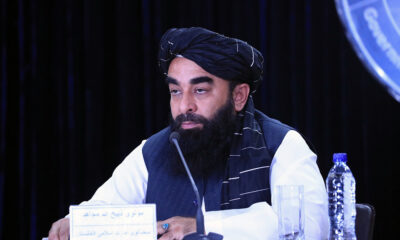
IEA announces temporary pause in defensive operations against Pakistan for Eid
-
 Sport4 days ago
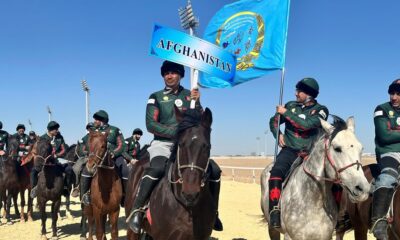
Afghanistan national buzkashi team defeats Hungary 14–0
-
 Latest News5 days ago
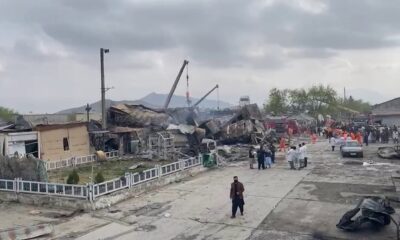
Afghanistan warns Pakistan of ‘teeth-breaking’ response after deadly Kabul bombing
-
 Latest News4 days ago
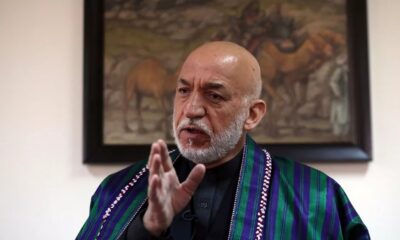
Karzai accuses Pakistan of seeking to destabilise Afghanistan after Kabul strike
-
 Latest News4 days ago
WHO Chief urges Kabul and Islamabad to prioritize peace
-

 Latest News2 days ago
Pakistani shelling hits Kunar districts despite ‘pause in hostility’ over Eid
-
 Regional4 days ago
Israel’s Katz says Iran’s security chief killed, Tehran strikes Gulf neighbours