
Latest News
IEC official takes right decision on Election: Lawyers

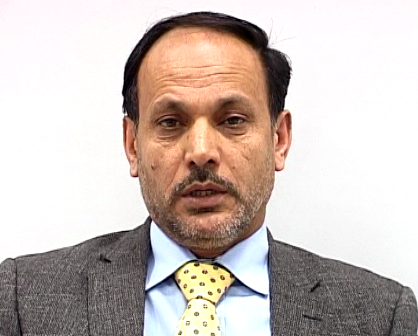

A number of Afghan lawyers have praised the Independent Election commission head decision on determining the date for parliamentary Election in Afghanistan.
Meanwhile dozens of lawyers have demanded the officials in IEC to be introduced to justice and judicial departments for the wrong act.
Officials in IEC have determined the date for holding the parliamentary and district council Elections on 15, October,2016.
Professor Nasratullah stanikzai said,” IEC officials have taken the right decision for holding the parliamentary Election according to IEC calendar, if there is a problem the following commission has the authority to bring changes.”
Chief executive of FEFA Yosuf Rashed said, “The following commission is legal but they should have coordinated the information with official within the Government of Afghanistan, this will cause that Nation to lose their trusts.”
“The following commission is illegal, they have failed and lied to Nation,I demand the Government, to review their performances and introduce to justice system head of the lawyers union Ghaur Ghaur said.”
Earlier officials in National Unity Government has talked about bringing reformation in the Election system, the Government became one year old no changes has been made on the system.”
Reported by Nabila Hafizi

International Sports
IPL 2026: Lucknow hold nerve in final over to defeat Sunrisers
The match went down to the wire, with Sunriser’s bowlers applying pressure in the death overs through tight lines and clever variations.
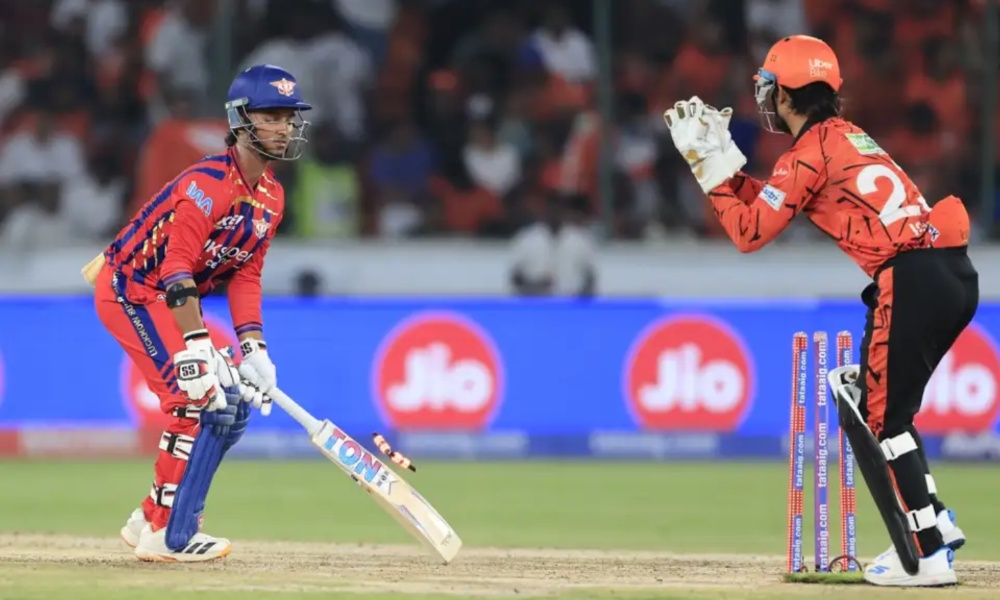
Lucknow Super Giants edged out Sunrisers Hyderabad in a thrilling Indian Premier League (IPL) encounter on Sunday, completing a tense run chase in the final over to register a crucial early-season win.
Batting first, Sunrisers posted a competitive total built around a fluent innings from Heinrich Klaasen, who once again demonstrated his ability to accelerate in the middle overs. He found support from the top order, helping the hosts set what looked like a defendable target on a surface offering some assistance to bowlers.
In response, Lucknow’s chase was steady rather than explosive. Early wickets threatened to derail their innings, but captain Rishabh Pant played a composed and calculated knock, anchoring the innings while rotating strike effectively.
Nicholas Pooran provided a late surge with some aggressive hitting, shifting momentum back in Lucknow’s favour.
The match went down to the wire, with Sunriser’s bowlers applying pressure in the death overs through tight lines and clever variations. However, Lucknow kept their composure, finding the boundaries when needed to cross the line with just one delivery remaining.
The win gives Lucknow Super Giants valuable momentum in the opening phase of the tournament, while Sunrisers Hyderabad will take positives from their batting performance but look to tighten their execution at the death.
Focus now moves to Monday’s fixture which sees Kolkata Knight Riders face Punjab Kings in what is expected to be a high-tempo contest.
Kolkata’s strength lies in their all-round depth, with power hitters and a varied bowling attack capable of adapting to different conditions. Punjab Kings, on the other hand, will be banking on their explosive top order and improved bowling unit to deliver a more complete performance.
Both teams are still shaping their combinations, making this an important match for building rhythm and consistency as the league stage progresses.
Fans across Afghanistan can follow every moment of the IPL live on Ariana Television Network, which holds exclusive broadcast rights for the tournament.
Viewers are also encouraged to stay connected via the social media platforms of Ariana Television and Ariana News for updated match schedules, live coverage details, highlights, and breaking IPL news throughout the season.
Latest News
Afghanistan hosts inaugural Afghanistan–Central Asia Consultative Dialogue to strengthen regional cooperation
On the issue of Pakistan, Muttaqi reiterated Afghanistan’s commitment to resolving bilateral issues through dialogue and diplomacy, while safeguarding its sovereignty.
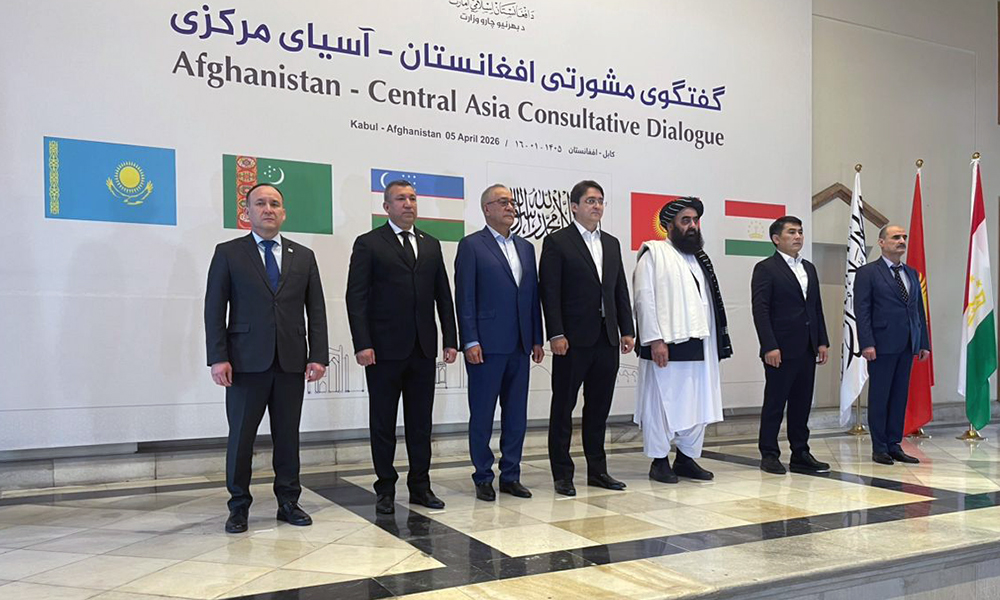
In a significant step towards regional cooperation, Afghanistan hosted the first-ever Afghanistan–Central Asia Consultative Dialogue on Sunday. The high-level event took place in Kabul, bringing together key representatives from five Central Asian nations—Uzbekistan, Kyrgyzstan, Turkmenistan, Tajikistan, and Kazakhstan. The dialogue, initiated by the Ministry of Foreign Affairs of the Islamic Emirate of Afghanistan, aims to establish a multilateral political mechanism to foster diplomatic coordination, enhance economic cooperation, and promote connectivity across the region.
Key Themes of the Dialogue
The meeting, which marked an important milestone in regional diplomacy, was inaugurated by Amir Khan Muttaqi, the Foreign Minister of Afghanistan. In his address, he expressed his satisfaction at hosting such a crucial gathering, emphasizing the platform’s role in advancing mutual trust, stability, and regional collaboration.
“The dialogue aims to enhance political dialogue, promote economic integration, and strengthen diplomatic coordination between Afghanistan and Central Asia,” said Muttaqi. “It will also focus on exploring opportunities for cooperation in key areas such as trade, transit, and regional connectivity.”
Historical Ties and Shared Challenges
Muttaqi took the opportunity to highlight the deep historical, cultural, and geographical bonds between Afghanistan and the Central Asian nations. He referenced the region’s rich intellectual and cultural history, pointing to influential figures such as Imam Abu Hanifa, Imam Bukhari, and other notable scholars and thinkers from the region who have contributed to a shared heritage.
He underscored that the current narrative between Afghanistan and Central Asia is one of opportunity and cooperation, rather than confrontation. “Our collective aim is to address regional challenges in a coordinated manner to achieve prosperity, stability, and development,” he said.
Regional Context and Afghanistan’s Role
The foreign minister also highlighted Afghanistan’s role in a rapidly changing global context, where geopolitical shifts and regional challenges are reshaping the international landscape. He stressed the need for Afghanistan and Central Asia to navigate these challenges together, particularly in relation to the ongoing security dynamics in West Asia.
On the issue of Pakistan, Muttaqi reiterated Afghanistan’s commitment to resolving bilateral issues through dialogue and diplomacy, while safeguarding its sovereignty. “Afghanistan seeks peaceful resolutions based on mutual respect and dialogue, but we also retain the right to protect our territorial integrity,” he added.
Afghanistan’s Foreign Policy and Achievements
Outlining the key principles of Afghanistan’s foreign policy, Muttaqi emphasized the importance of balance, economic cooperation, and good neighborly relations. He noted that Afghanistan’s foreign policy framework has been centered on strengthening ties with its neighbors, particularly Central Asia, to foster regional stability and development.
Among Afghanistan’s notable achievements in recent years, he pointed to the establishment of a stable Islamic governance system, the elimination of widespread corruption, and the near-complete eradication of narcotics cultivation. He also highlighted the country’s economic policy, which aims to attract foreign investment and foster economic growth, particularly through trade with Central Asia.
Economic and Trade Cooperation
The dialogue also served as a platform to discuss economic cooperation, with Muttaqi sharing promising trade figures. In 2025, Afghanistan’s trade with Central Asia reached approximately $2.7 billion, marking a significant growth compared to previous years. The goal, he said, is to expand trade volume to $10 billion within the next 3-4 years.
Afghanistan’s strategic position, linking Central Asia to South and West Asia, positions it as a vital hub for regional trade. Key projects that were discussed included:
TAPI Gas Pipeline: Significant progress on the Herat–Turkmenistan border, with 120 km of pipeline ready for construction.
CASA-1000 Energy Project: Advancing energy transmission between Kyrgyzstan, Tajikistan, Afghanistan, and Pakistan.
Lapis Lazuli Trade Route and Six-Nation Corridor: Prioritizing regional connectivity for enhanced trade.
Security and Border Cooperation
Another critical area of discussion was security and border cooperation. Afghanistan shares over 2,300 kilometers of borders with Central Asian countries, including Tajikistan, Uzbekistan, and Turkmenistan. The dialogue included discussions on joint security efforts, particularly in tackling cross-border threats such as drug trafficking, illegal migration, and extremism. The Afghan security forces’ efforts in maintaining stable borders were also highlighted as a key factor in ensuring regional security.
Proposals for Strengthening Regional Integration
Muttaqi proposed several measures to further strengthen regional cooperation:
1. Institutionalizing the Afghanistan–Central Asia Consultative Dialogue to meet regularly.
2. Organizing expert conferences to develop actionable cooperation roadmaps.
3. Creating a joint security framework to address shared regional challenges.
4. Coordinating efforts to combat climate change and address environmental concerns.
5. Expanding regional participation in initiatives like the Shanghai Cooperation Organization and Green Central Asia.
Conclusion: A New Era of Cooperation
In his closing remarks, Muttaqi expressed his gratitude to all participating nations for their support and commitment to the dialogue. He reaffirmed Afghanistan’s pragmatic and cooperative approach to regional engagement, calling the dialogue a historic step towards building a stable, prosperous, and interconnected region.
This inaugural Afghanistan–Central Asia Consultative Dialogue signals the beginning of a new chapter in regional cooperation, focused on shared economic growth, security, and sustainable development. With continued dialogue and collaboration, the nations of Central Asia and Afghanistan are set to chart a path towards a more integrated and prosperous future.


IPL 2026: Lucknow hold nerve in final over to defeat Sunrisers

US, Iran and mediators make push for 45-day ceasefire, Axios reports

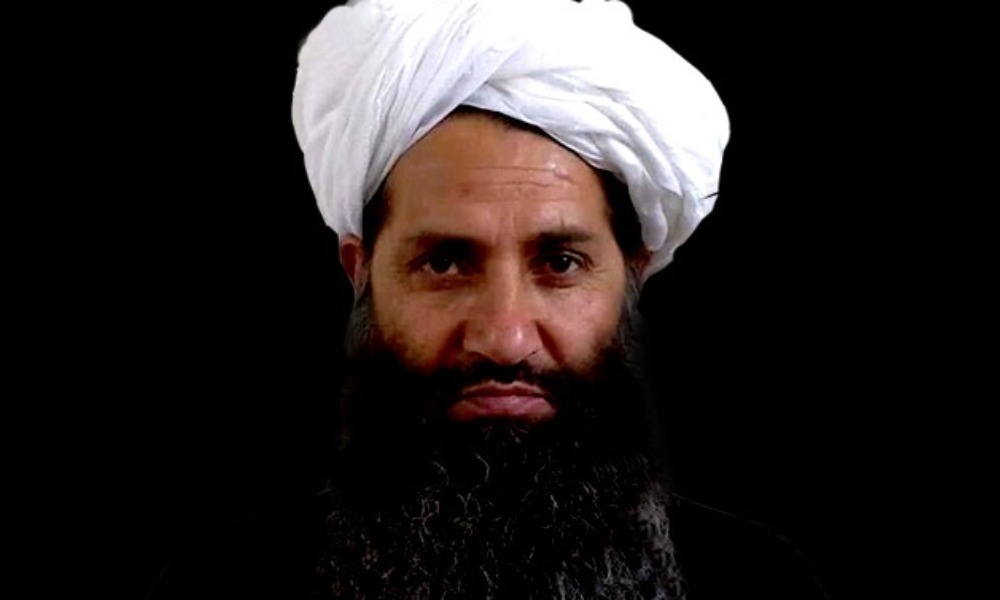
IEA supreme leader orders replacement of foreign terminology in official documents

IPL 2026: Rajasthan Royals, Delhi Capitals go top as double-header delivers thrills

Afghanistan hosts inaugural Afghanistan–Central Asia Consultative Dialogue to strengthen regional cooperation

IEA Supreme Leader issues Eid-ul-Fitr message urging unity and support for Islamic system

14 Pakistani soldiers killed after military post falls along Durand line: MoD

Afghanistan steps in to replace Iran in supplying fruits and vegetables to Russia

Afghan airstrikes target Pakistani military sites in retaliation for air attacks

Turkmenistan, Afghanistan discuss steps to speed up land acquisition for TAPI pipeline

Tahawol: Continuation of Middle East crisis discussed

Saar: Ongoing Kabul-Islamabad talks in China discussed

Tawsia: This week’s key economic developments in Afghanistan discussed

Tahawol: Start of talks between Kabul-Islamabad in China discussed

Saar: Ongoing US and Israeli attacks on Iran discussed
-
 Latest News5 days ago
Baradar approves 17 projects worth over one billion AFN
-
 Business3 days ago
Tripartite agreement to launch new Russia–Turkmenistan–Afghanistan transit corridor
-
 Latest News5 days ago
Afghan delegation heads to China for talks with Pakistan
-
 Latest News3 days ago
China says Afghanistan–Pakistan peace talks show progress
-

 Sport5 days ago
Punjab Kings edge Gujarat Titans in thrilling IPL clash as tournament gathers pace
-

 Sport5 days ago
Iraq seal final spot as FIFA World Cup 2026 line-up confirmed
-
 Latest News5 days ago
US eases asylum freeze for vetted migrants, keeps Afghanistan ban
-
 Latest News4 days ago
Afghanistan–Pakistan talks begin in China amid hopes for easing tensions