
Regional
Iran, US on verge of prisoner swap under Qatar-mediated deal

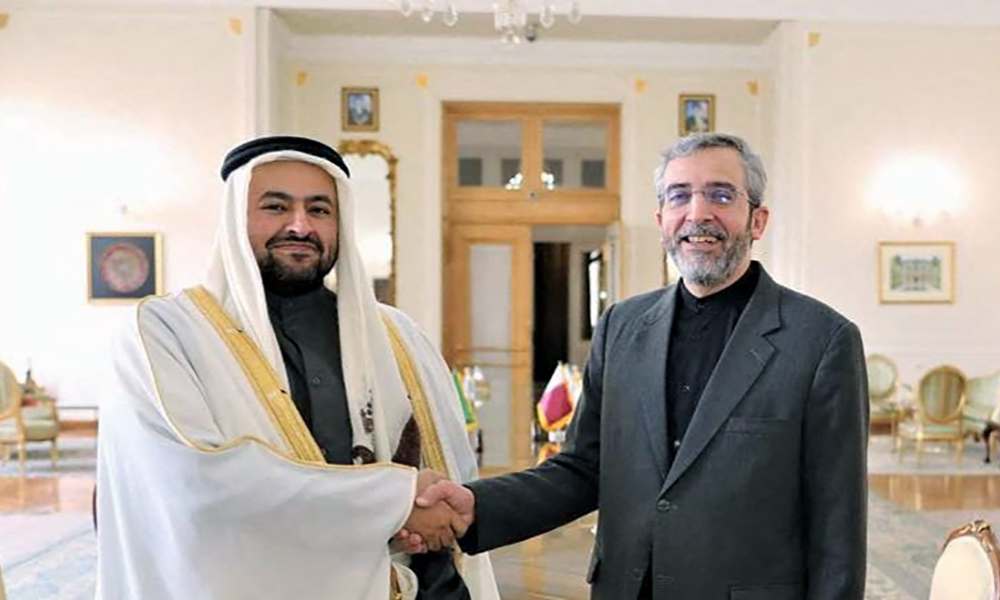
When $6 billion of unfrozen Iranian funds are wired to banks in Qatar as early as next week, it will trigger a carefully choreographed sequence that will see as many as five detained U.S. dual nationals leave Iran and a similar number of Iranian prisoners held in the U.S. fly home, according to eight Iranian and other sources familiar with the negotiations who spoke to Reuters.
As a first step, Iran on Aug. 10 released four U.S. citizens from Tehran’s Evin prison into house arrest, where they joined a fifth, who was already under house arrest. Later that day U.S. Secretary of State Antony Blinken called the move the first step of a process that would lead to their return home.
They include businessmen Siamak Namazi, 51, and Emad Sharqi, 59, as well as environmentalist Morad Tahbaz, 67, who also holds British nationality, the U.S. administration has said. The Tahbaz and Shargi families did not respond to requests for comment. A lawyer for the Namazi family declined to comment.
The identities of the fourth and fifth Americans, one of whom according to two sources is a woman, have not been disclosed. Reuters couldn’t establish which Iranian prisoners, in turn, would be swapped by the U.S.
At the centre of the negotiations that forged this deal between the superpower which Iran brands the “Great Satan” and the Islamic Republic which Washington calls a state sponsor of terrorism is the tiny but hugely rich state of Qatar.
Doha hosted at least eight rounds of talks involving Iranian and U.S. negotiators sitting in separate hotels speaking via shuttle diplomacy, a source briefed on the discussions said, with the earlier sessions focused mainly on the thorny nuclear issue and the later ones on the prisoner releases, Reuters reported.
Doha will implement a financial arrangement under which it will pay banking fees and monitor how Iran spends the unfrozen cash to ensure no money is spent on items under U.S. sanctions, and the prisoners will transit Qatar when they are swapped, according to three of the sources.
“Iran initially wanted direct access to the funds but in the end agreed to having access via Qatar,” said a senior diplomat. “Iran will purchase food and medicine and Qatar will pay directly.”
Reuters pieced together this account of previously unreported details about the extent of Qatari mediation of the secret talks, how the deal unfolded and the expediency that motivated both parties to clinch the prisoner swap deal. Reuters interviewed four Iranian officials, two U.S. sources, a senior Western diplomat, a Gulf government adviser and the person familiar with the negotiations.
All of the sources requested anonymity because of the sensitivity of a deal which hasn’t been fully implemented.
A State Department spokesperson said the U.S. was not ready to announce the exact timing of the prisoner release. The Department also declined to discuss the details of what the spokesperson termed “an ongoing and highly sensitive negotiation.”
The U.S. administration has not commented on the timing of the funds transfer. However, on Sept 5, South Korean foreign minister Park Jin said efforts were under way to transfer Iran’s funds.
“The U.S.-Iran relationship is not one characterized by trust. We judge Iran by its actions, nothing else,” the State Department spokesperson added.
Washington consented to the movement of Iranian funds from South Korea to restricted accounts held by financial institutions in Qatar, but no money is going to Iran directly, the spokesperson added.
Qatar’s Ministry of Foreign Affairs did not respond to Reuters’ request for comment on the details of negotiations, Qatar’s role in the talks or the terms of the final agreement.
Iran’s foreign ministry and its U.N. mission did not respond to detailed questions regarding this story, read the report.
The sources’ account of the negotiation shows how the deal sidestepped the main U.S.-Iran dispute over Iran’s nuclear aims, culminating in a rare moment of cooperation between the long-time adversaries, at odds on a host of issues from Iran’s nuclear program to the U.S. military presence in the Gulf.
Ties between the U.S. and Iran have been at boiling point since Donald Trump quit a nuclear deal with Iran as U.S. president in 2018. Reaching another nuclear deal has gained little traction since then, as President Joe Biden prepares for the 2024 U.S. election.
The State Department spokesperson also said there had been no change in Washington’s overall approach to Iran, “which continues to be focused on deterrence, pressure and diplomacy.”
Once the funds are transferred, they will be held in restricted accounts in Qatar, and the U.S. will have oversight as to how and when these funds are used, the State Department spokesperson added.
The potential transfer has drawn Republican criticism that Biden, a Democrat, is in effect paying ransom for U.S. citizens. But Blinken told reporters on Aug 10 the deal does not mean that Iran would be getting any sanctions relief, explaining that Washington would continue to push back “resolutely against Iran’s destabilising activities in the region”.
The Qatari-led mediation gained momentum in June 2023, said the source briefed on the discussions, adding at least eight rounds of talks were held since March 2022, with earlier rounds devoted mainly to the nuclear issue and later ones to prisoners.
“They all realised that nuclear (negotiation) is a dead end and shifted focus to prisoners. Prisoners is more simple. It’s easy to get and you can build trust,” he said. “This is when things got serious again.”
The Iranian, diplomatic and regional sources said that once the money reaches Qatar from South Korea via Switzerland, Qatari officials will instruct Tehran and Washington to proceed with the releases under the terms of a document signed by both sides and Qatar in late July or early August. Reuters has not seen the document.
The transfer to banks in Qatar is expected to conclude as early as next week if all goes to plan, the source briefed on the talks said. Reuters was unable to identify the banks involved.
“American prisoners will fly to Qatar from Tehran and Iranian prisoners will fly from the U.S. to Qatar, and then be transferred to Iran,” the source briefed on the talks told Reuters.
According to two Iranian insiders, the source briefed on the negotiations and the senior Western diplomat, the talks’ most complex part was arranging a mechanism to ensure transparency in the money transfer and respect for U.S. sanctions. The $6 billion in Iranian assets – the proceeds of oil sales – were frozen under sweeping U.S. oil and financial sanctions against Iran. Then president Trump in 2018 reimposed the sanctions when he pulled Washington out of a deal under which Iran had restricted its nuclear program.
Issues discussed included how to ensure Iran only spent the money on humanitarian goods and securing guarantees from Qatar on its monitoring of the process.
“To salvage the negotiations from collapse, Qatar pledged to cover the banking fees for the funds’ transfer from Seoul to Switzerland, and subsequently to Qatari banks, while also taking on the responsibility of expense oversight,” an Iranian insider briefed about the talks told Reuters.
The central bank governors of Iran and Qatar met in Doha on June 14 to discuss the funds transfer, a second Iranian insider and the source briefed on the talks said.
According to Reuters the Central Bank of Iran and the Qatar central bank declined to comment.
The talks were led by U.S. Special Envoy for Iran Robert Malley — now on unpaid leave because his security clearance is under review — and by U.S. Deputy Special Envoy Abram Paley and Iran’s chief nuclear negotiator, Ali Bagheri Kani, said one Iranian official, two sources briefed on the negotiations and the Western diplomat.
Mehdi Safari, Iran’s deputy foreign minister for economic affairs, joined the Iranian delegation at two meetings in Qatar for talks on the funds transfer, one senior Iranian diplomat told Reuters. Qatari Minister of State at the Foreign Ministry Mohammed Al-Khulaifi was the go-between mediator.
Malley declined to comment. Paley, Kani and Al Khulaifi could not be reached directly for comment.


Regional
Twelve US troops wounded in Iran strike on base in Saudi Arabia, US official says
Earlier on Friday, the U.S. military said 273 of them had already returned to duty. Thirteen U.S. troops have been killed in the conflict.

Twelve U.S. troops were wounded, two of them seriously, in an Iranian military strike on Prince Sultan Air Base in Saudi Arabia, a U.S. official told Reuters on Friday.
The latest casualties add to the more than 300 U.S. military service members who have been wounded since the war against Iran started on February 28.
Earlier on Friday, the U.S. military said 273 of them had already returned to duty. Thirteen U.S. troops have been killed in the conflict.
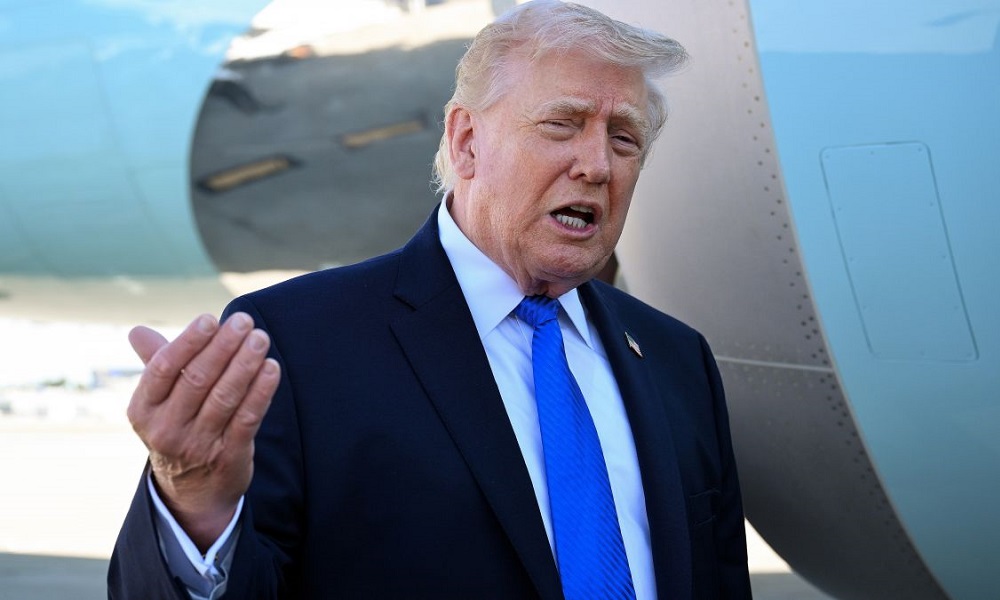
U.S. President Donald Trump announced a new extension of his deadline for Iran to reopen the Strait of Hormuz or face the destruction of its energy plants, after Iran rejected his 15-point proposal to end the war he launched with Israel.
Iran gave no direct indication that it was ready for negotiation or compromise. The Islamic Revolutionary Guard Corps issued a statement reaffirming that all shipping “to and from ports of allies and supporters of the Israeli-American enemies” to any destination was prohibited.
The war has spread across the Middle East, killing thousands of people and causing the biggest disruption in history to energy supplies, hitting the global economy with soaring oil, gas and fertiliser prices that have fuelled inflation fears.
The U.S. and Israel launched strikes on Iran on February 28 during talks with Tehran about its nuclear programme that had not yet yielded a deal. Attacks on Israel by Iran’s Lebanese ally Hezbollah then triggered an Israeli onslaught there that has displaced a fifth of Lebanon’s population.
On Thursday, Trump threatened during a cabinet meeting to increase pressure on Iran if it did not make a deal. He later posted on social media that he would pause threatened attacks on Iranian energy plants for 10 days until April 6 at 8 p.m. Eastern daylight time (0000 GMT on April 7).
“Talks are ongoing and, despite erroneous statements to the contrary by the Fake News Media, and others, they are going very well,” he added in his Truth Social post.
Regional
Russia sought to blackmail US using intelligence to Iran, Zelenskiy says
Zelenskiy, who said on Monday that Ukraine’s military intelligence has “irrefutable” evidence that Russia is continuing to provide intelligence to Iran.
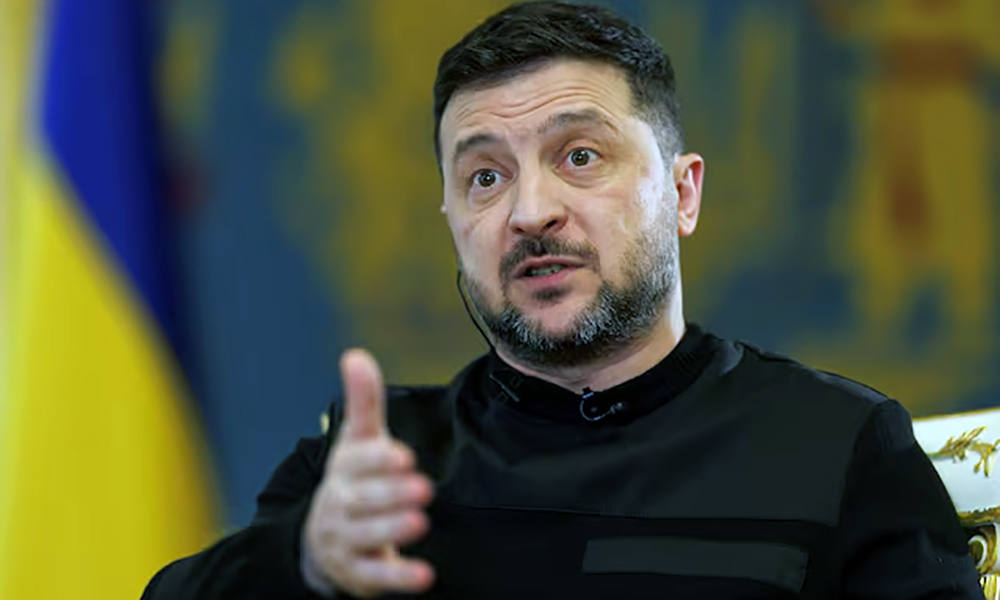
Russia sought to blackmail the United States by offering to stop sharing military intelligence with Iran if, in return, Washington would cut off Ukraine from its intelligence data, President Volodymyr Zelenskiy said on Wednesday.
Zelenskiy, who said on Monday that Ukraine’s military intelligence has “irrefutable” evidence that Russia is continuing to provide intelligence to Iran, told Reuters he had seen the data but provided no further details, Reuters reported.
Speaking in his presidential compound in Kyiv, Zelenskiy said that some Iranian drones, used to attack U.S. military assets and its allies during the war in the Middle East, contained Russian components.
“I have reports from our intelligence services showing that Russia is doing this and saying: ‘I will not pass on intelligence to Iran if America stops passing intelligence to Ukraine.’ Isn’t that blackmail? Absolutely,” Zelenskiy said.
He did not say who, according to the reports, Russia was addressing the comments to. Russia has denied assisting Iran in its month-old conflict with the United States and Israel – a denial that Washington said earlier this month that it had also received directly from Moscow when the issue was discussed.
Ukraine, which has faced sustained attacks by Iranian-designed Shahed drones since Russia launched its invasion in 2022, is helping several Gulf states – including Saudi Arabia, the United Arab Emirates, and Qatar – to counter drone attacks on their territory, the president said.
Zelenskiy said he hoped that Ukraine would be able to reach long-term deals with some Gulf countries that would raise funds for the production of Ukrainian drone interceptors or receiving much-needed air-defence missiles, read the report.


High-level Uzbek delegation arrives in Kabul to boost bilateral trade

Herat Chamber of Commerce donates 15 million AFN to the people of Iran

Severe floods in Badghis leave five dead

13 mountaineers in Balkh summit Alborz at 1,650 meters

Fazlur Rehman urges policy review on Afghanistan, warns of Pakistan’s regional isolation

Pakistani military jet downed in Afghanistan’s Jalalabad, pilot captured alive

Afghan Air Force conducts airstrikes in Islamabad, other cities

Prominent Muslim scholar issues fatwa calling for Afghanistan-Pakistan ceasefire

Afghan air force strikes key Pakistani military installations in retaliatory operation

IEA: Special circle in Pakistan has launched mission to destabilize region

Exclusive interview with Indrika Ratwatte, Deputy UN Special Representative for Afghanistan

Tawsia: Efforts to boost Afghanistan’s domestic production and economic diplomacy

Tahawol: Discussion on day 27 of Iran–US war

Saar: Islamic Emirate confident of Durand Line control

Tahawol: Efforts to release Mohammad Rahim from Guantanamo Bay Detention Camp
-
 Latest News2 days ago
Tajikistan shifts stance on Afghanistan amid rising border tensions
-

 Latest News4 days ago
Around 2.3 million tourists visited Afghanistan’s recreational areas during Eid: Ghufran
-

 Sport4 days ago
Afghanistan squad hit by withdrawals ahead of AFC Asian Cup Qualifiers
-
 Latest News4 days ago
Islamic Emirate releases American prisoner Dennis Coyle
-
 Latest News3 days ago
Two civilians killed, eight injured in fresh shelling by Pakistan in Kunar
-
 Regional4 days ago
US allies in Middle East ‘edging closer’ to joining conflict
-
 Regional4 days ago
Tehran rejects Trump’s claims of talks, accuses US of spreading ‘fake news’
-

 Sport3 days ago
IPL 2026: RCB sold for $1.78 billion in landmark deal